


Power Washing in Parkesburg, PA is often the first solution homeowners consider when their wood deck starts looking gray, blotchy, or worn out. The problem is that weather, moisture, algae, and UV exposure slowly strip color from wood, leaving it dull and tired. This doesn’t just hurt curb appeal—it can shorten the life of the deck itself. Ignoring discoloration allows rot, mold, and surface damage to take hold. The good news is that restoring deck color doesn’t always require replacement. With the right power washing approach, proper pressure washing techniques, and correct aftercare, wood can regain its natural tone and strength. This guide explains how deck color fades, how power cleaning works, and how to restore wood safely and effectively.
Why Wood Decks in Parkesburg Lose Their Color Over Time
Wood decks in southeastern Pennsylvania face a unique mix of seasonal stress. Cold winters, humid summers, and frequent rain cycles all contribute to surface deterioration.
Sun Exposure and UV Breakdown
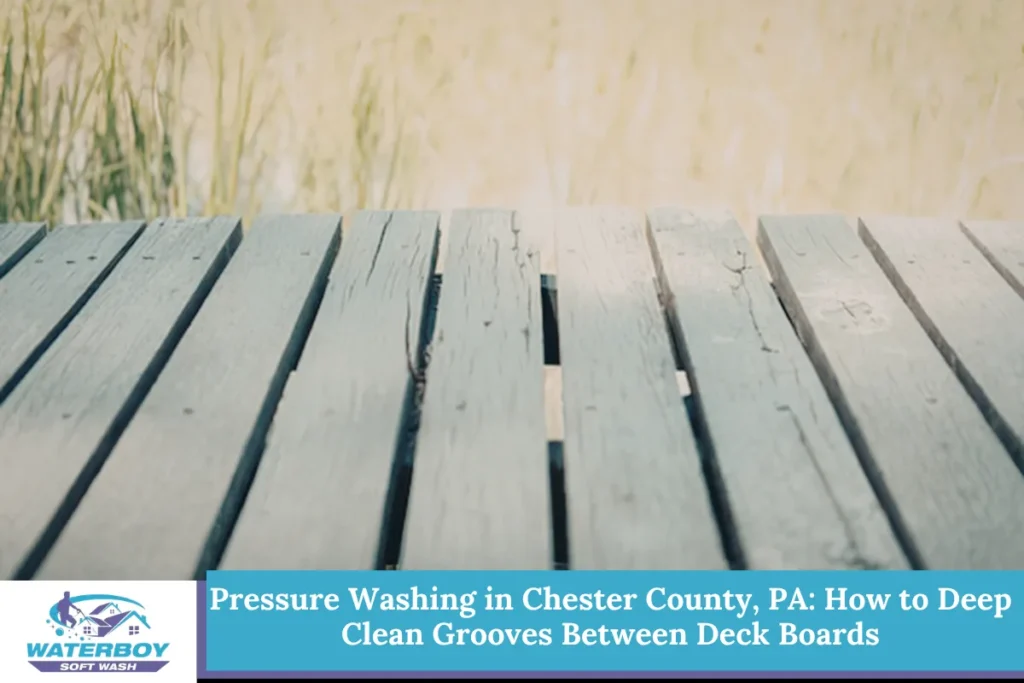
Sunlight breaks down lignin, the natural binder that gives wood its strength and color. As lignin degrades, wood fibers loosen and wash away, leaving a faded, gray appearance.
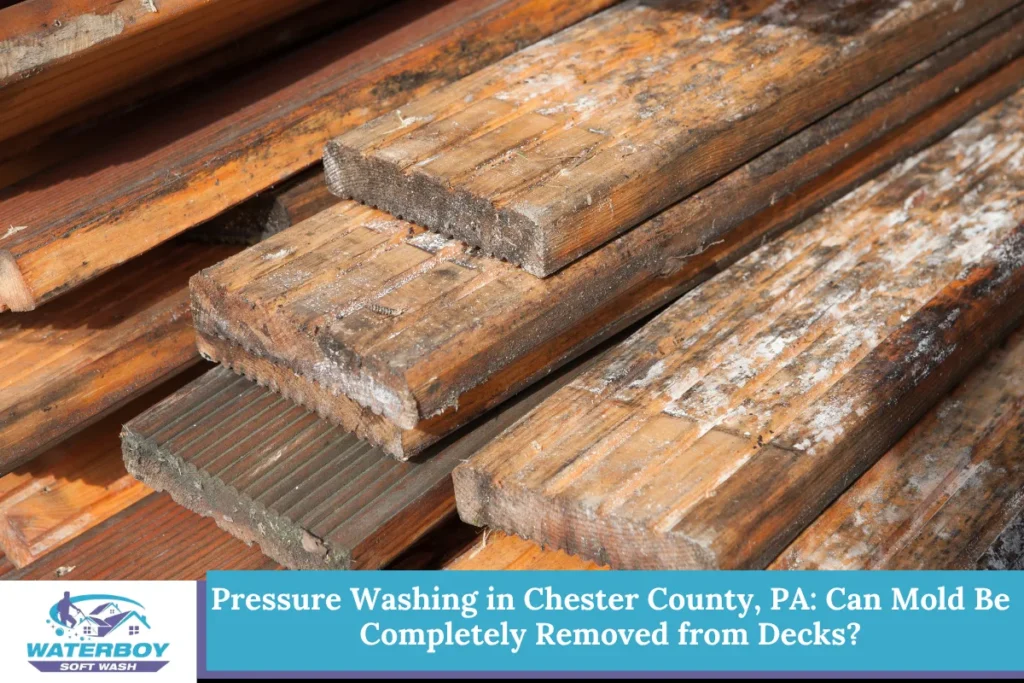
Moisture, Mold, and Organic Growth
Moisture trapped between deck boards encourages mold, mildew, and algae. These organisms stain the surface and make it slippery, especially in shaded areas.
Dirt, Pollen, and Environmental Residue
Airborne contaminants settle into porous wood. Over time, these layers darken the surface and hide the natural grain.
Improper Past Cleaning Methods
Using a power washer incorrectly can worsen discoloration. Too much pressure damages fibers and creates uneven coloration that is difficult to fix later.
How Power Washing Restores Wood Deck Color
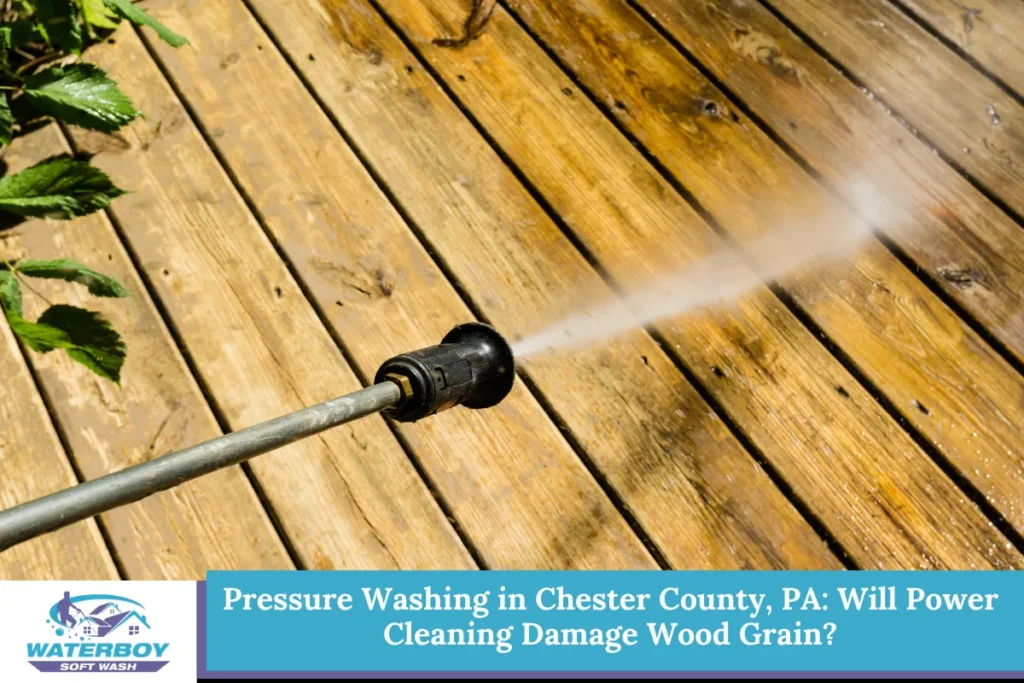
Power washing removes surface contaminants that block the wood’s natural appearance. When done correctly, it exposes clean fibers and prepares the deck for sealing or staining.
The Difference Between Power Washing and Pressure Washing
Pressure washing relies solely on water force, while power washing uses heated water. For wood decks, controlled pressure washing is often preferred to avoid fiber damage.
What Power Cleaning Removes from Wood
- Algae and mildew stains
- Dirt and pollen buildup
- Oxidized wood fibers
- Old residue from previous coatings
Removing these layers reveals brighter wood underneath and evens out discoloration.
Choosing the Right Power Washer Settings for Wood Decks
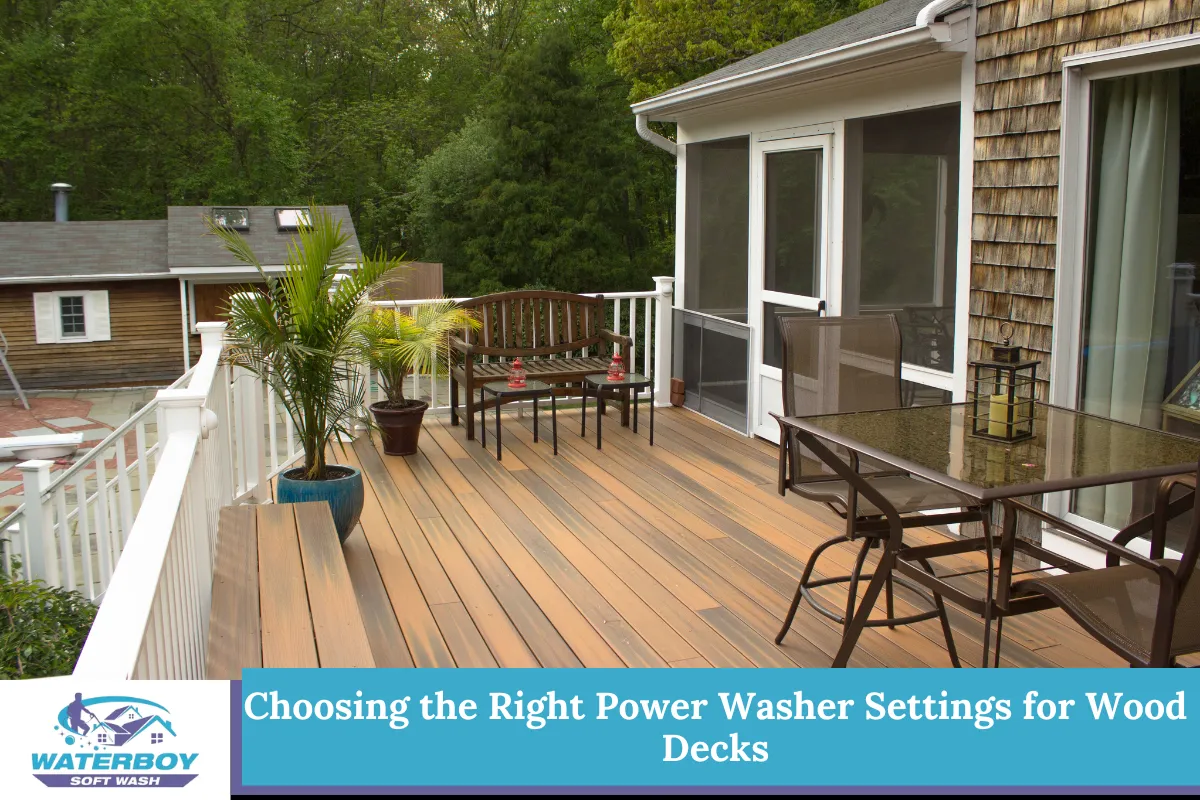
Wood is softer than concrete or brick, so pressure settings matter.
PSI Ranges That Are Safe for Wood
Most decks respond best to 500–1,200 PSI. Higher pressure risks gouging and striping the surface.
Nozzle Selection and Spray Angles
A wide-angle nozzle distributes water evenly and reduces the chance of damage. Narrow spray tips concentrate force and should be avoided on wood.
Distance from the Surface
Maintaining a consistent distance helps ensure uniform cleaning and prevents marks caused by lingering in one spot.
Preparing Your Deck Before Power Washing
Preparation improves results and reduces the risk of damage.
Inspecting Boards and Fasteners
Loose boards, protruding nails, or rotting sections should be addressed before cleaning begins.
Clearing Furniture and Surrounding Areas
Remove planters, grills, and outdoor furniture. Cover nearby plants to protect them from runoff.
Testing a Small Area First
Testing helps determine whether pressure levels and cleaning solutions are appropriate for your deck’s wood type.
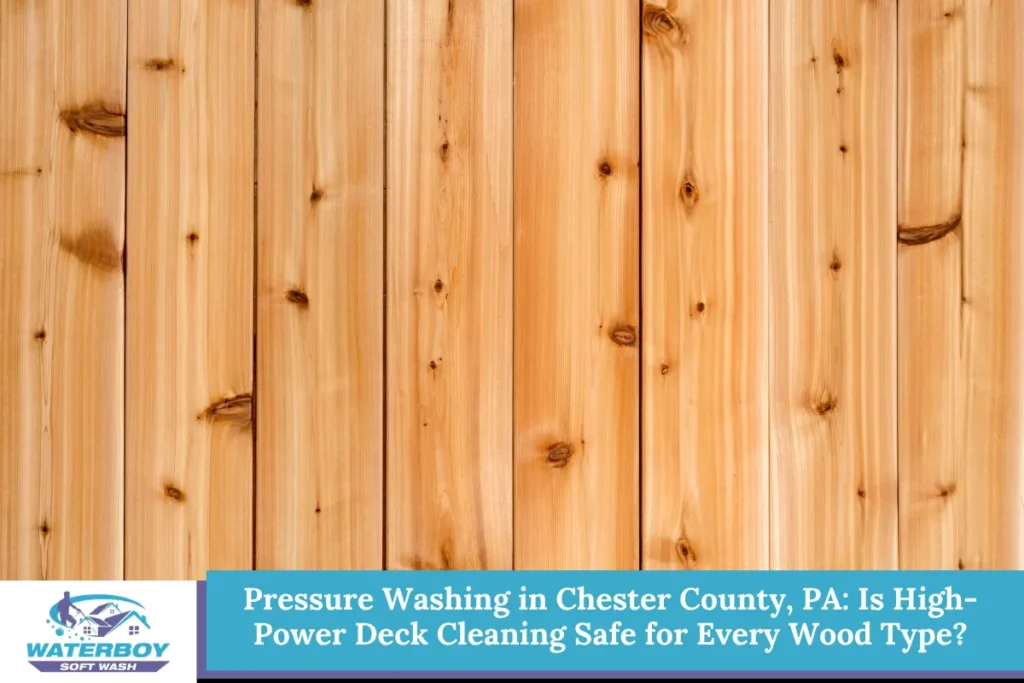
Wood Types Common in Parkesburg Decks and How They React
Different woods respond differently to power washing.
Pressure-Treated Lumber
This common material cleans well but can fuzz if pressure is too high.
Cedar and Redwood
Softer woods require gentler power cleaning to avoid surface erosion.
Hardwood Decking
Dense woods resist damage better but still need controlled water pressure to avoid uneven color.
Read Power Washing in Parkesburg, PA: Can I Clean Patio Furniture?
Using Cleaning Solutions to Enhance Color Restoration
Water alone may not remove deep stains.
Oxygen-Based Cleaners
These lift organic stains without damaging wood fibers.
Mild Detergents for Surface Dirt
Low-impact detergents help loosen grime and restore uniform tone.
Avoiding Harsh Chemicals
Bleach-heavy cleaners can weaken wood and create long-term discoloration issues.
Common Mistakes That Ruin Deck Color During Power Washing
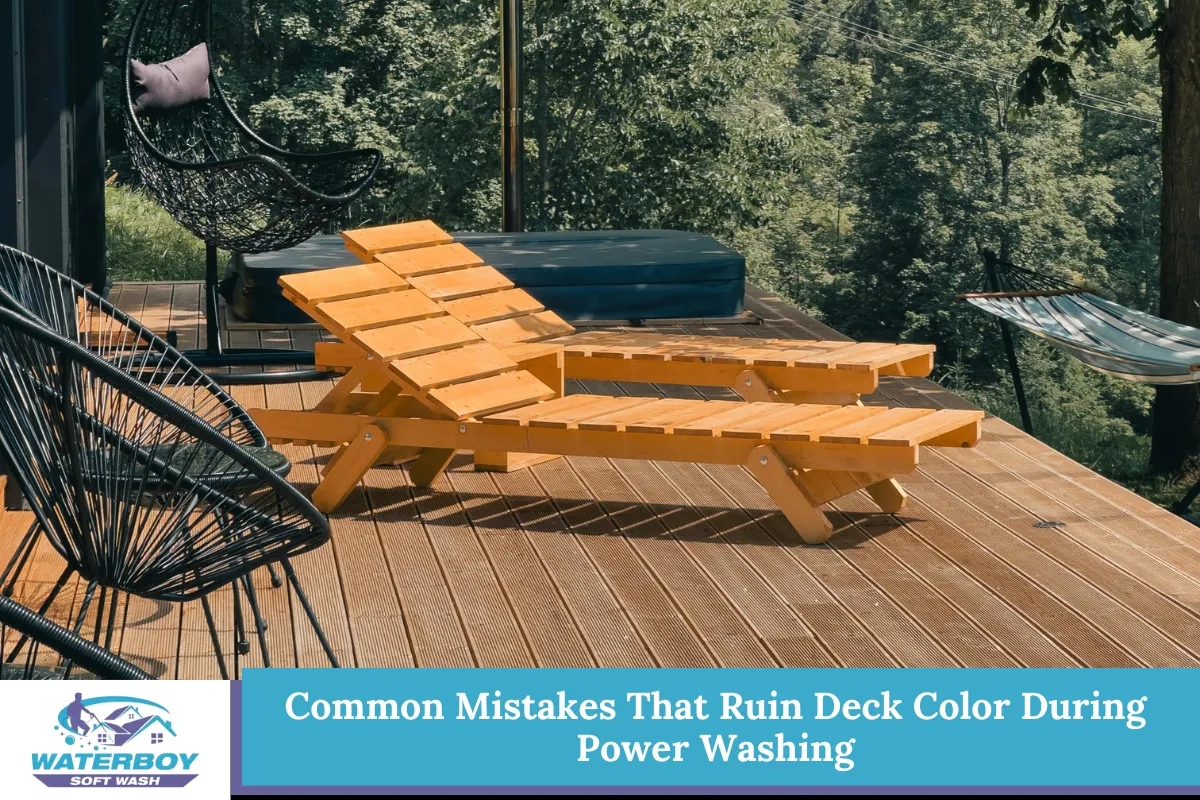
Even experienced homeowners make errors that affect results.
Using Excessive Pressure
High pressure can carve lines into wood, making color restoration uneven.
Washing Against the Grain
This raises fibers and creates a rough surface that looks dull after drying.
Skipping Neutralization and Rinsing
Leftover residue can interfere with staining and sealing later.
Drying Time and Post-Wash Color Assessment
After power washing, patience is important.
How Long Wood Needs to Dry
Most decks need 48–72 hours to dry fully, depending on weather conditions.
Evaluating Color Uniformity
Dry wood reveals its true color. This is the best time to assess whether additional cleaning is needed.
Enhancing Restored Color with Sealing or Staining
Power washing reveals clean wood, but protection is what preserves it.
Clear Sealers vs. Tinted Stains
Clear sealers highlight natural grain, while tinted stains enhance color and provide UV protection.
Timing After Pressure Washing
Applying products too soon traps moisture and causes blotching.
Long-Term Maintenance Benefits
Sealed decks resist moisture, fading, and organic growth longer.
Environmental and Legal Considerations in Parkesburg, Pennsylvania
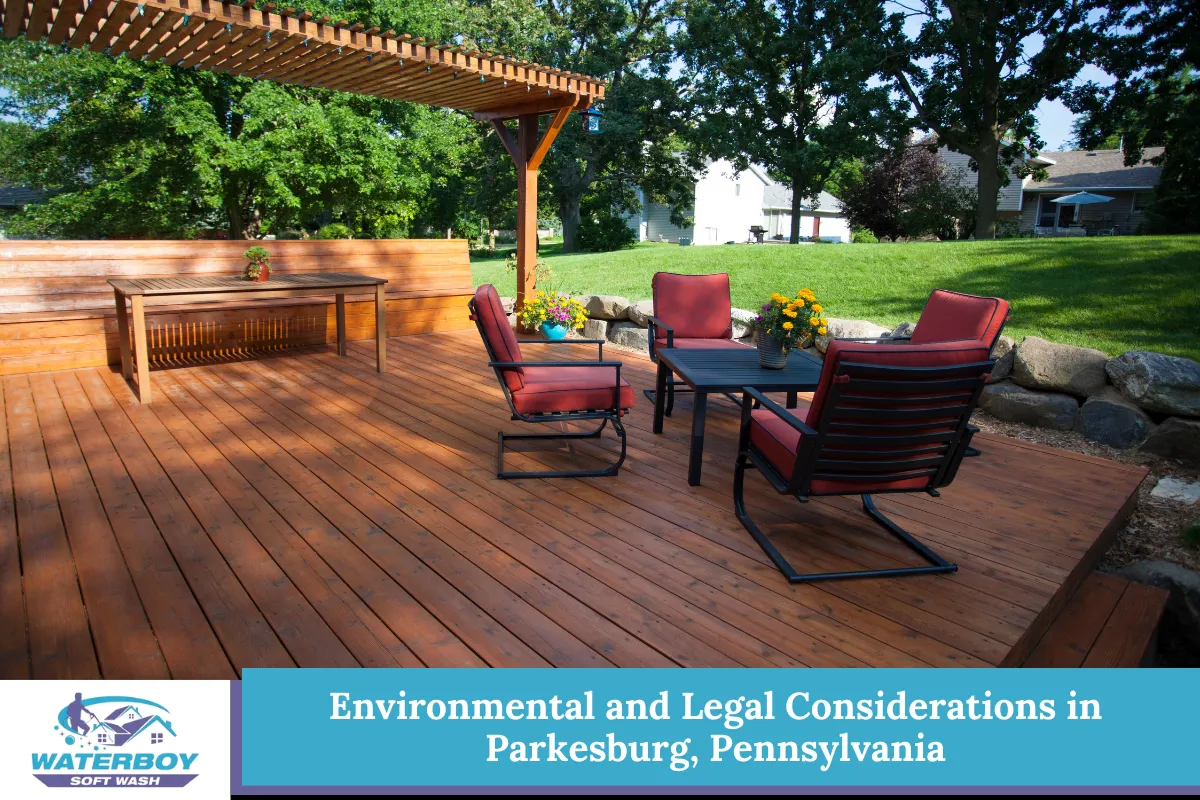
Local guidelines focus on environmental protection and safe runoff management.
Responsible Water Use
Avoid excessive water waste and uncontrolled runoff that could impact storm drains.
Chemical Runoff Awareness
Only approved cleaning agents should be used, and runoff should be minimized to protect soil and waterways.
Property and Safety Compliance
Deck cleaning should not damage neighboring properties or create slip hazards on walkways.
How Often Wood Decks Should Be Power Washed
Frequency depends on exposure and usage.
- Light exposure: every 18–24 months
- Heavy shade or moisture: annually
- Before sealing or staining: as needed
Consistent maintenance prevents deep discoloration and surface damage.
Power Washing in Parkesburg, PA – Water Boy Soft Wash
We know how frustrating it is to see your deck lose its color year after year. At Water Boy Soft Wash, we provide professional power washing services designed specifically for wood surfaces. Our team uses the right pressure, proper cleaning solutions, and proven methods to restore deck color without damaging the wood. We understand local conditions in Parkesburg, Pennsylvania and tailor our power cleaning approach to protect your property and landscaping. If your deck looks faded, gray, or uneven, we’re ready to help. Call us at (610) 812-7378 or fill out our contact form to schedule reliable power washing that brings your outdoor space back to life.
Frequently Asked Questions
Can power washing remove gray oxidation from old wood decks?
Yes, power washing can remove gray oxidation when done correctly. Oxidation occurs when UV exposure breaks down surface fibers, leaving a silvery layer. Controlled pressure washing removes this damaged layer and reveals healthier wood beneath. However, using excessive pressure can worsen the issue by tearing into deeper fibers. In some cases, an oxygen-based cleaner is needed to fully lift oxidation. After cleaning, sealing the deck helps prevent oxidation from returning too quickly and keeps the restored color looking consistent longer.
Is it safe to power wash a deck that has never been sealed?
Unsealed decks can be safely power washed, but extra care is required. Bare wood absorbs moisture more quickly and is more vulnerable to surface damage. Lower pressure settings and wider spray patterns help protect the fibers. Power cleaning unsealed wood often produces dramatic color improvement, but the deck should be allowed to dry thoroughly afterward. Applying a sealer after washing is strongly recommended to lock in the restored appearance and protect the wood from future discoloration.
Will pressure washing remove old stain unevenly?
Pressure washing may remove old stain unevenly depending on how deeply the stain penetrated the wood. Surface-level coatings often come off easily, while deeper pigments remain. This can create patchy results if not handled properly. In those cases, additional cleaning or light sanding may be needed to achieve uniform color. Testing a small section first helps determine whether pressure washing alone is sufficient or if further preparation is required before refinishing.
Does power washing shorten the lifespan of wood decking?
When done improperly, power washing can shorten a deck’s lifespan by damaging fibers. However, professional or well-controlled power cleaning actually extends the life of wood by removing moisture-trapping contaminants. The key is using appropriate pressure, correct techniques, and proper drying time. Regular maintenance washing prevents rot, mold growth, and surface breakdown that cause more serious structural issues over time.
What weather conditions are best for deck power washing?
Mild, dry weather is ideal for deck power washing. Avoid freezing temperatures, heavy rain, or extremely hot days. Moderate conditions allow the wood to dry evenly and reduce the risk of moisture retention. In Parkesburg, spring and early fall often provide the best balance. Proper weather conditions also improve the effectiveness of cleaning solutions and ensure better results when applying sealers or stains afterward.
Disclaimer: This article is for general informational purposes only. Cleaning methods, materials, and regulations may vary based on property conditions and local requirements. Always follow applicable safety guidelines and environmental regulations in Parkesburg, Pennsylvania when performing power washing or related services.