

Does Pressure Washing Really Remove Mold from Decks?
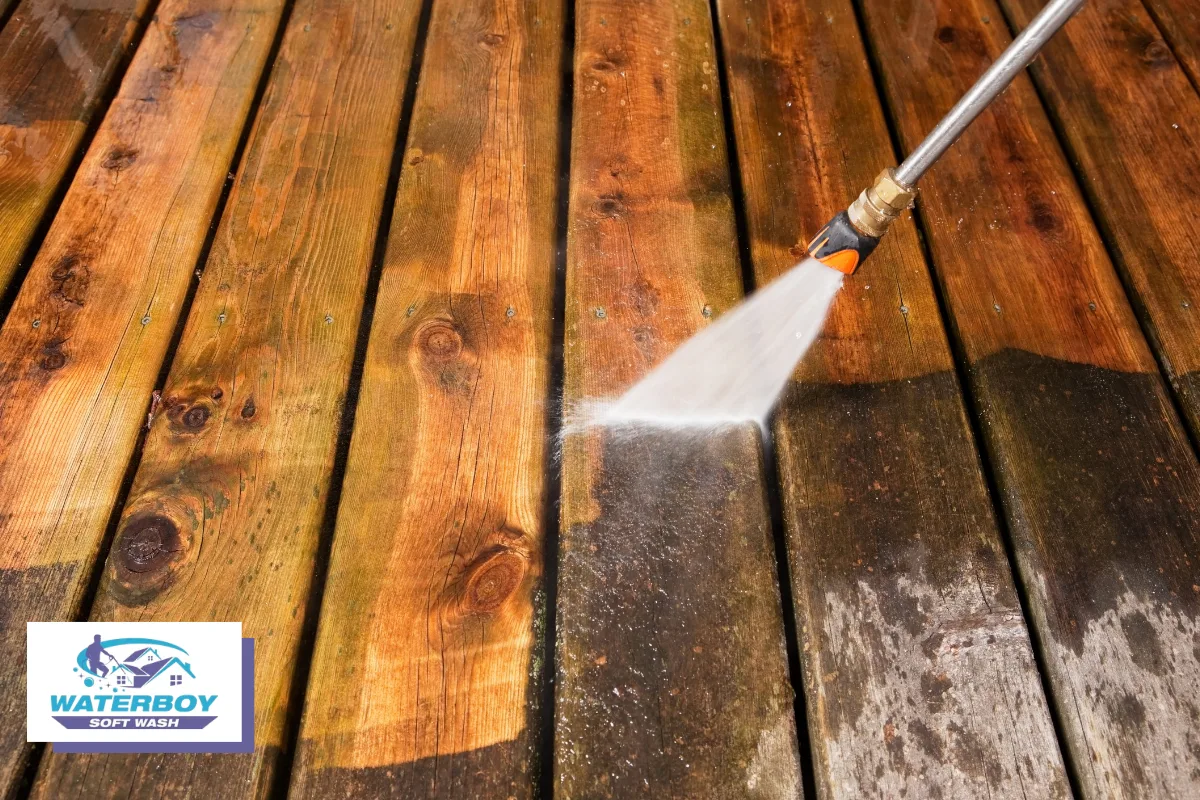
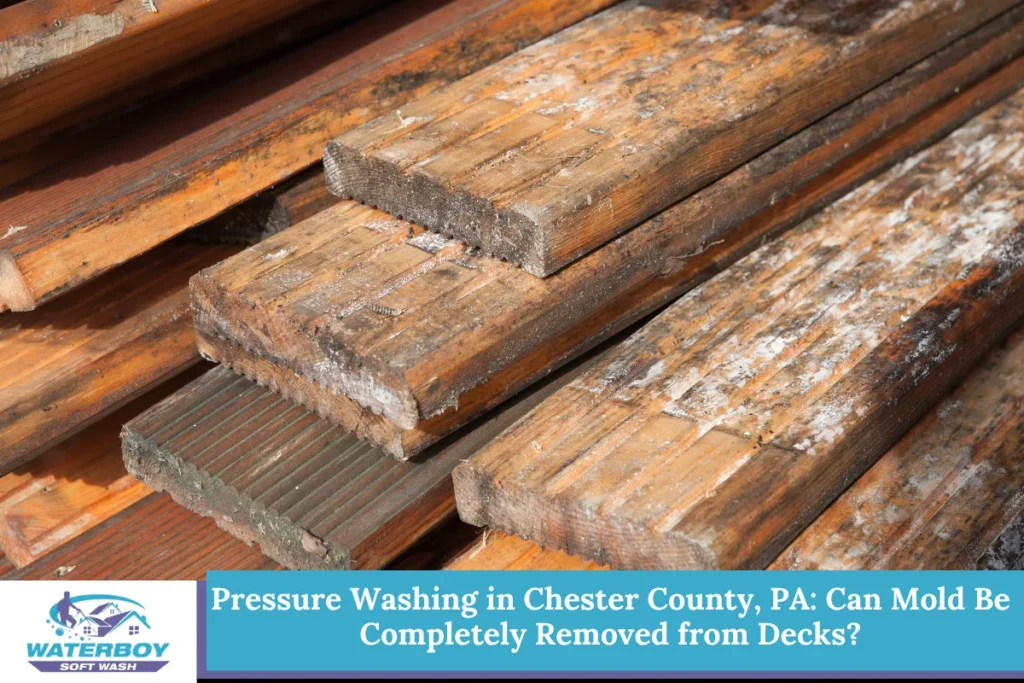
If you have been searching for pressure washing in Chester County, PA to deal with a moldy deck, you are not alone. Across the region, homeowners watch dark green and black patches spread across their railings, stairs, and deck boards every season. The problem grows worse each year, especially on shaded decks tucked beneath mature trees. Left alone, mold creates slippery, unsightly surfaces that threaten both curb appeal and safety. The solution starts with choosing the right cleaning method and understanding what it can and cannot accomplish. This article breaks down whether pressure cleaning can truly eliminate mold, which approach works best for your deck material, and what you can do to keep mold from coming back.
The short answer is that a thorough wash can remove visible mold from decks, but it does not always kill all spores hiding deep inside wood grain or gaps between boards. Chester County's humid climate, heavy tree cover, and frequent rainfall create conditions where mold and algae thrive on outdoor surfaces. Whether you are working with cedar, pressure-treated pine, or composite decking, the method you choose, the chemicals you apply, and the material itself all determine how completely mold can be removed.
Key Takeaways
- Pressure washing can remove visible mold from most deck surfaces, but complete and permanent eradication is unlikely without ongoing moisture control and maintenance.
- Pressure washing alone does not guarantee complete mold removal. Pairing low-pressure cleaning with mold-killing chemical treatments produces far more effective and lasting results.
- Soft washing is typically safer than high-pressure methods for most Chester County decks, especially older wood, sealed boards, and composite materials.
- Regular maintenance, proper drainage, trimmed tree cover, and routine inspections are essential to preventing mold from returning season after season.
- Deck material matters. Composite decks often restore to a near-new appearance, while older wood may hold faint staining even after a thorough cleaning.
Think of this guide as a practical roadmap. By the end, you will know exactly how to approach your next deck cleaning project with realistic expectations and a clear plan.
How Mold Grows on Chester County Decks and Why It's Hard to Eliminate
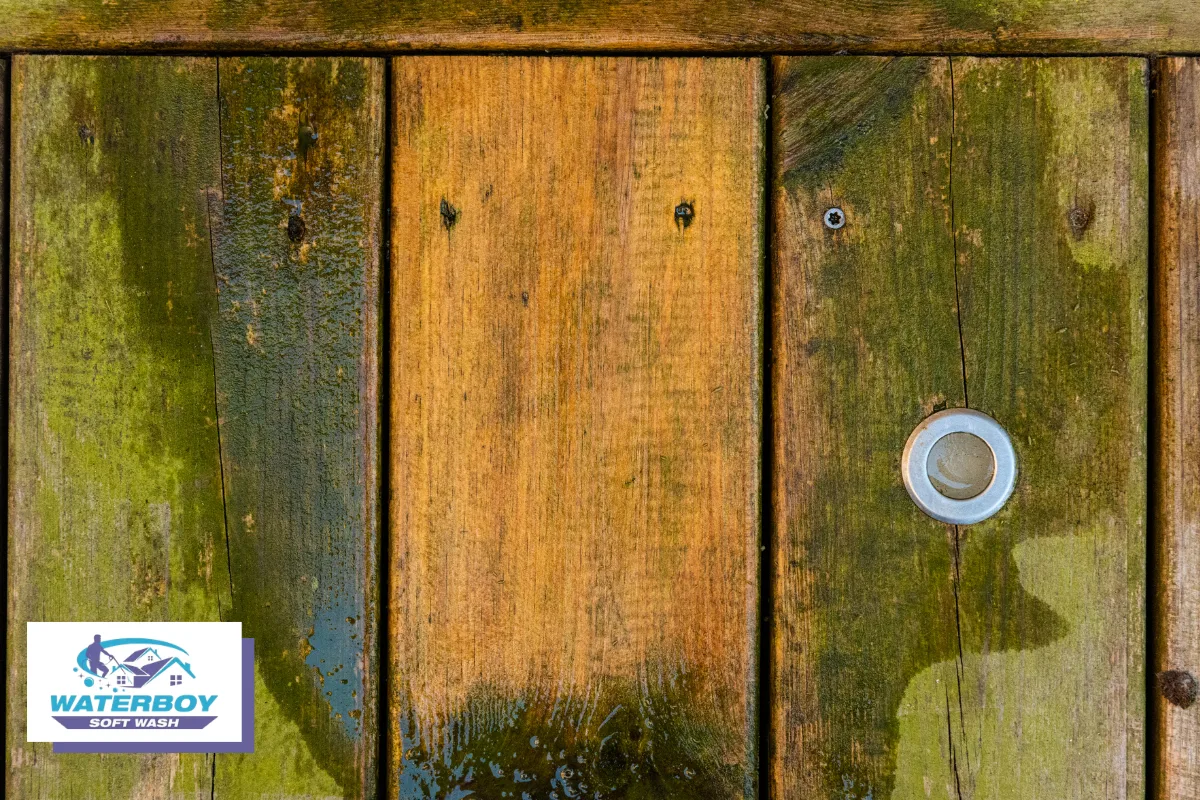
Before picking up a pressure washer or calling a professional, it helps to understand what you are actually fighting. Setting realistic expectations starts with knowing how mold behaves on outdoor surfaces.
Chester County has a humid continental climate that fosters mold growth throughout much of the year. Summers bring warm temperatures in the 80s and 90s paired with high humidity. Morning dew collects on deck boards, and afternoon thunderstorms add even more moisture. In fall, wet leaves accumulate and sit on surfaces for weeks. North-facing decks and those shaded by dense canopy rarely dry out completely between rain events, creating a near-constant mold buffet.
There is a meaningful difference between what you see on the surface and what is happening beneath it. Surface mold appears as green, gray, or black discoloration that you can often scrub away. But mold also sends thread-like structures called hyphae into the pores, checks, and end grain of wood. These root-level colonies are much harder to reach with water alone.
Mold spores are naturally present in the environment and can lead to regrowth after any cleaning. They travel by air and water, landing on moist surfaces and germinating when conditions are right. Environmental conditions like shade, poor drainage, and trapped debris all influence the likelihood of mold returning on decks. That is why no single cleaning, no matter how aggressive, offers a permanent fix outdoors.
Material also plays a role. Porous wood decks absorb more moisture and give hyphae deeper places to hide, while capped composite boards resist penetration. Composites can still develop mold on accumulated dirt and pollen, but deep-rooted colonies are less common.
Pressure Washing vs. Soft Washing: Which Cleans Moldy Decks Better?
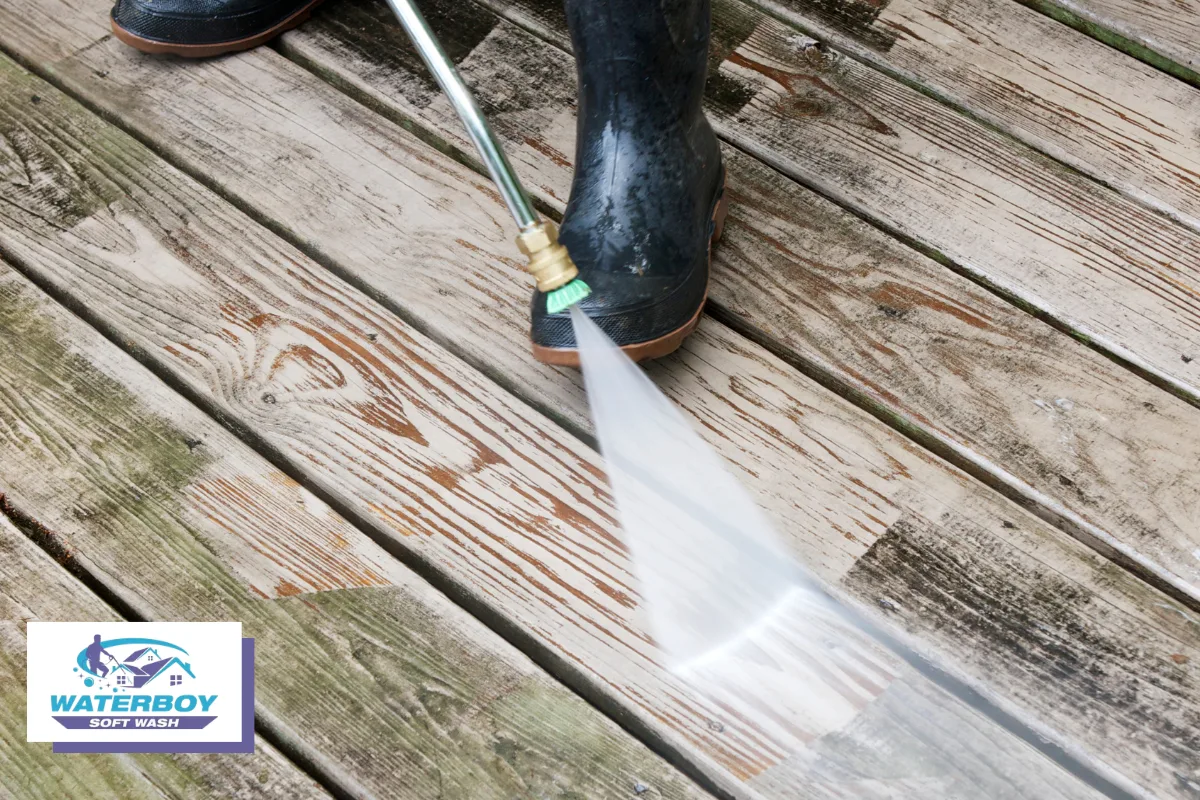
When it comes to exterior cleaning for decks, homeowners generally choose between two approaches: traditional high-pressure water jets or a gentler soft wash method. Each has clear strengths and weaknesses, and knowing the difference can save your deck from unnecessary damage.
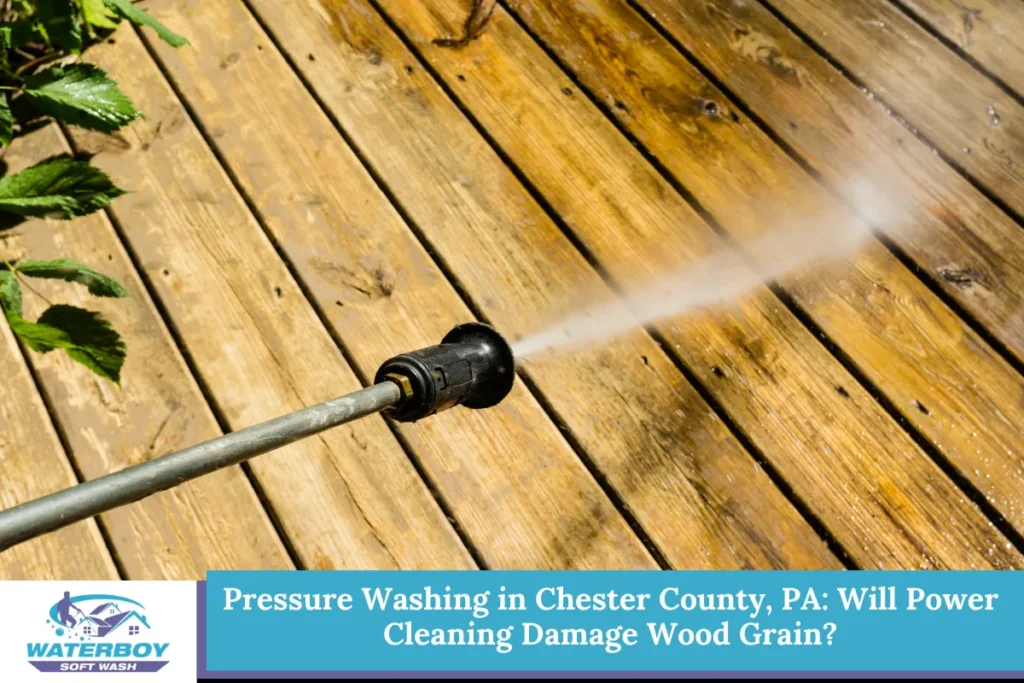
Pressure washing uses forceful water, often between 1,000 and 3,000 PSI, to blast away visible mold, dirt, and grime from deck boards and the gaps between them. It works quickly and can strip heavy buildup in a single pass. However, pressure washing blasts away visible mold but leaves spores behind. Worse, high pressure can push mold spores deeper into surfaces rather than removing them. It can also damage surfaces like wood and stucco if used carelessly.
Soft washing uses low pressure, typically under 500 PSI, and special cleaning solutions to do the heavy lifting. Instead of relying on brute force, the chemical agents kill mold at the cellular level while the gentle rinse carries debris away. Soft washing effectively kills mold at the root level, reaching places high pressure water cannot. It is safer for delicate surfaces and prevents damage to boards, railings, and fastener heads.
The trade-off is time. Soft washing requires proper dwell time for the cleaning solution to work, and the chemistry needs to be matched to the surface and the type of growth. But the results tend to last longer because you are not just removing the visible layer; you are addressing the organism itself.
Many professionals in Chester County use a hybrid approach: apply a mold-killing solution, allow it to penetrate, then follow with a controlled, moderate-pressure rinse. This balances effective cleaning with surface protection, especially on decks that sit in constant shade or have years of accumulated growth.
It is also worth noting that steam cleaning uses superheated water vapor to sanitize surfaces. While less common for full deck jobs, steam can be useful for targeted spot treatment on stubborn patches where chemical dwell time alone is not enough.
Safe PSI Levels and Techniques for Deck Pressure Washing in Chester County
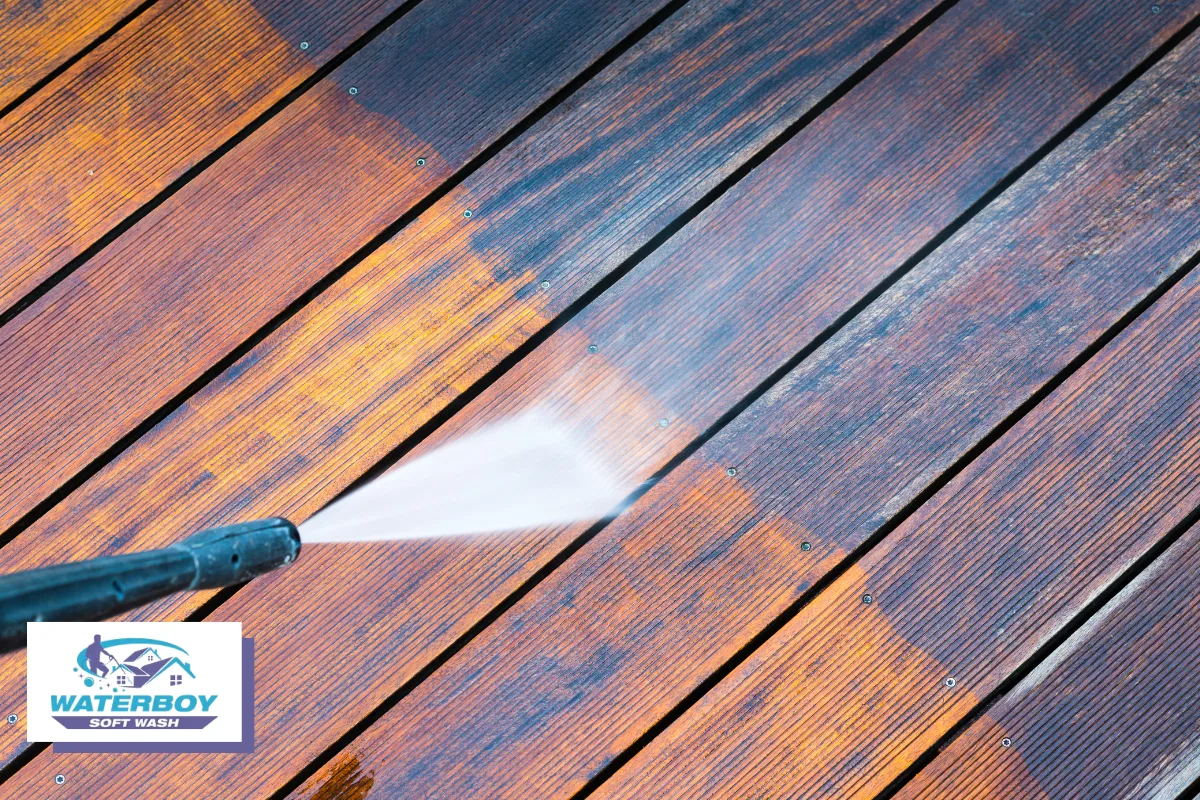
Incorrect pressure washer settings rank among the top causes of deck damage, splintering, and premature aging. The right PSI depends on your deck material and condition.
Here are general guidelines:
- Softwoods like pine and cedar: 500 to 800 PSI for routine cleaning. Go up to roughly 1,200 PSI only on thicker, older boards that can handle it.
- Pressure-treated lumber: similar range to softwoods, with most work falling between 800 and 1,200 PSI.
- Composite decking: check your manufacturer's warranty first. Many brands cap the recommendation at 1,500 PSI or lower to avoid stripping the protective shell.
Beyond the number on the dial, technique matters just as much:
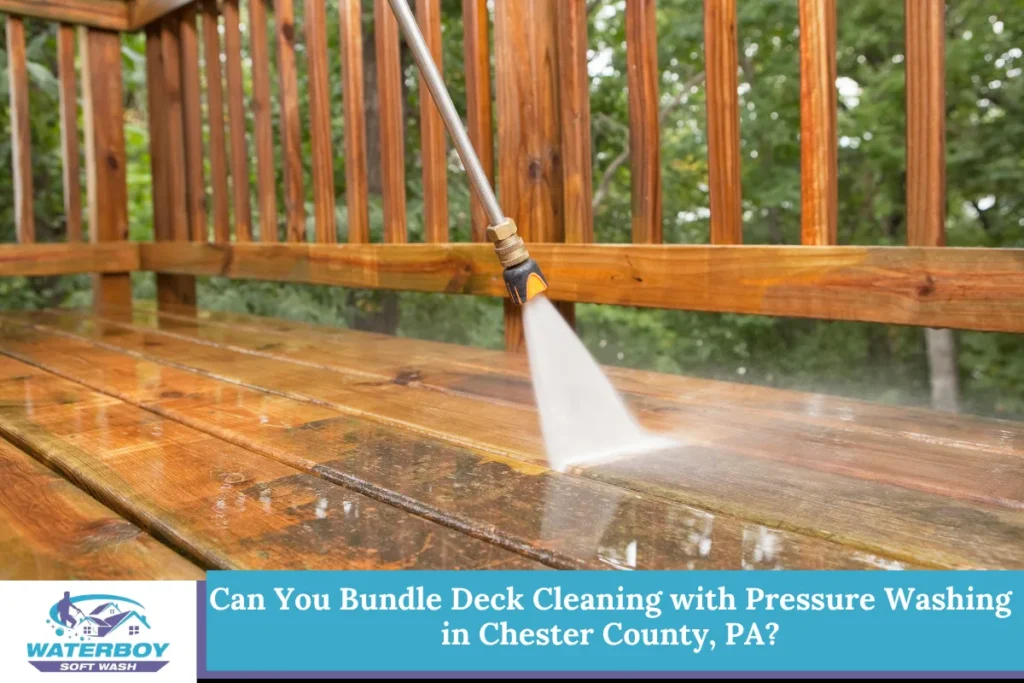
- Use a wide fan tip, such as a 25-degree or 40-degree nozzle, to spread force across a larger area. Avoid narrow zero-degree tips entirely on deck surfaces.
- Keep the nozzle moving in steady strokes that follow the grain. Stopping in one spot causes gouging and visible burn marks.
- Maintain a consistent distance of roughly 6 to 12 inches from the boards. Pulling back to 12 to 18 inches on softer or older wood is even safer.
High-pressure washing can damage wood fibers and lead to further moisture retention. When you etch or roughen a board, you create tiny channels that hold water longer, which invites more mold. Pressure washing can damage softer surfaces like wood decks, especially at rail posts, stair edges, and around fasteners where wood is thinnest.
Chester County property owners should also be aware that local municipal stormwater ordinances require responsible runoff control. Wash water carrying mold, debris, or chemicals should not be directed into storm drains or nearby waterways. Plan your job so that runoff stays on pervious ground and does not leave your property.
Read Can Stubborn Deck Rust Stains Be Removed with Pressure Washing in Chester County, PA?
Chemicals and Eco Friendly Cleaners That Actually Kill Deck Mold
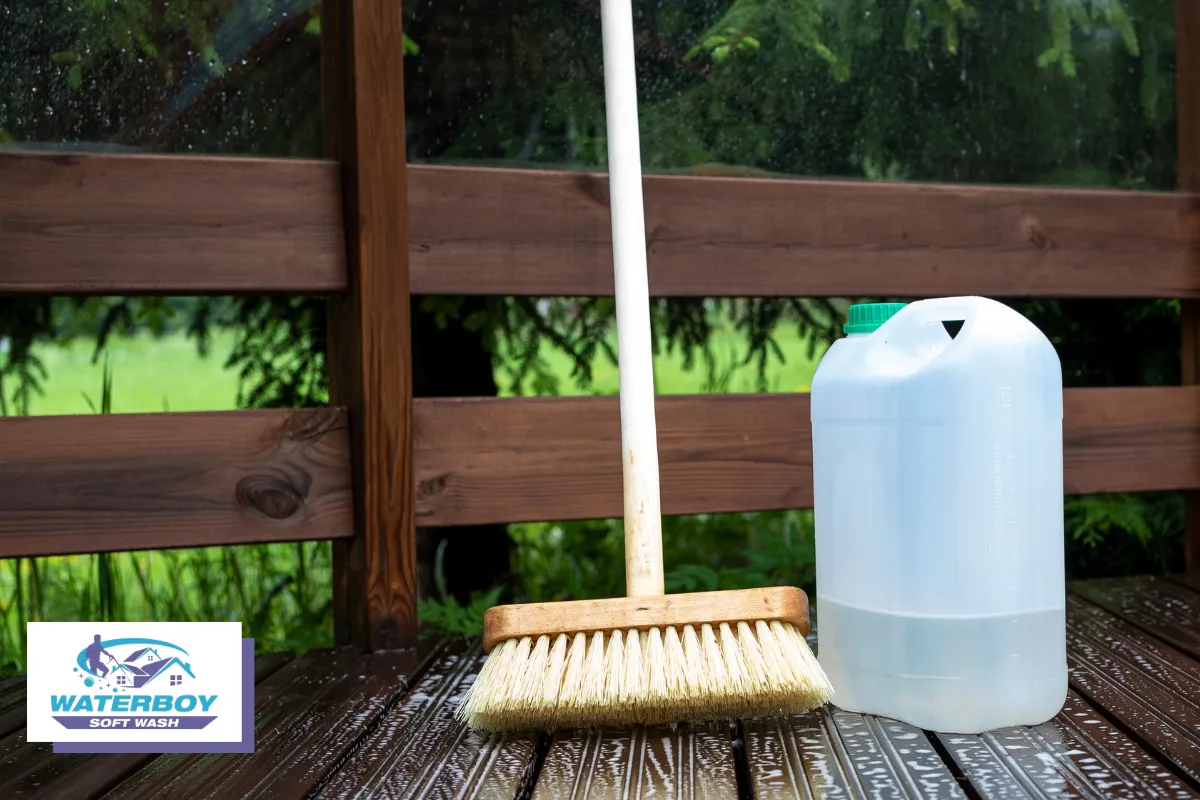
Water alone is not enough to kill mold spores on decks in a damp climate like ours. Chemical treatments should accompany pressure washing for effective mold control. The right cleaning solution does what water pressure cannot: it penetrates growth and kills organisms at the root before you rinse them away.
Here are the most common types of mold-killing solutions used for deck and house washing:
- Diluted sodium hypochlorite (bleach): effective at killing mold and mildew on contact. Typically used in controlled concentrations and paired with surfactants that help the solution cling to vertical and textured surfaces.
- Oxygen bleach (sodium percarbonate): safe for wood and plants and effectively lifts mold without the harshness of chlorine-based products. A solid choice for homeowners concerned about their landscaping.
- Commercial deck cleaners: formulated specifically for mold and mildew eradication, often buffered to minimize wood damage while maximizing cleaning power.
- Vinegar: a natural option that can kill mold roots without harsh chemicals. It works best on lighter infestations and as part of a regular maintenance routine rather than a primary treatment for heavy buildup.
Biodegradable solutions effectively kill mold and algae while being safer for the environment around your deck, garden beds, and lawn. Biodegradable cleaning solutions reduce the risk of harming soil biology and local waterways compared to petroleum-based products.
Proper application matters. Let the solution sit on the surface long enough to break down organic growth, typically 10 to 15 minutes, but do not let it dry on the boards. Drying can leave residues or cause staining, especially in direct sunlight.
Proper rinsing is crucial to protect surrounding landscaping from chemical cleaners. Pre-wet plants and ground cover before applying any solution, and rinse thoroughly afterward to dilute any runoff.
Always wear gloves, eye protection, and appropriate clothing when handling deck cleaners. Never mix different chemical products together, and follow label directions closely.
Can Mold Be Completely Removed from Wood and Composite Decks?
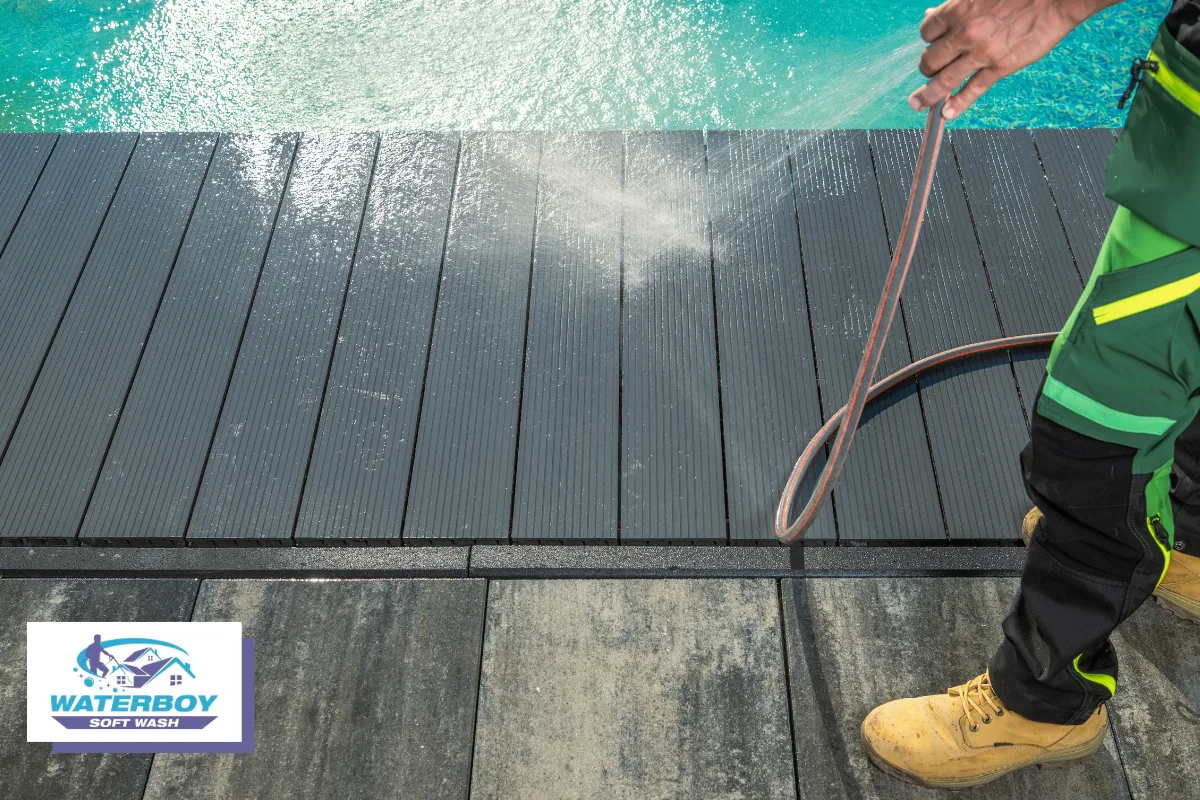
This is the question at the heart of the article, and the honest answer is nuanced.
On most decks, you can remove all visible mold and significantly reduce spore levels with the right combination of chemistry and controlled rinsing. But complete, permanent elimination of mold outdoors is not a realistic goal. Mold removal requires killing spores at the root level, and even then, new spores arrive constantly from the surrounding environment.
For older wood decks, deep staining from years of embedded growth may leave faint dark streaks or gray discoloration in the grain even after thorough washing. Dead mold should be physically removed rather than simply killed in place, because dead organic material left on surfaces can still support new growth. Using a wood brightener after cleaning can restore wood's natural appearance and even out tone before you apply a finish.
For composite decks, the outlook is better. Because mold on composites typically grows on accumulated surface dirt and pollen rather than penetrating the material itself, cleaning can often restore a nearly new look when done correctly.
Several factors determine how complete the results appear and how long they last:
- Sunlight exposure speeds drying and discourages regrowth.
- A consistent sealing or staining schedule protects wood from water absorption.
- Proper drainage beneath and around the deck prevents standing moisture.
Mold resistance can be improved by applying a water-repellent sealant post-cleaning. Allowing a deck to dry completely after cleaning is necessary before applying sealants, which typically means waiting 24 to 48 hours or longer depending on shade and weather.
Long-Term Strategies to Keep Deck Mold from Coming Back
A single deep clean is only part of the equation. Prevention and ongoing maintenance matter just as much as the initial wash, and they directly affect your investment in deck care.
Regular maintenance includes removing organic debris that supports mold growth. Fallen leaves, pollen, seed pods, and tracked-in dirt create a food source that helps mold establish itself quickly. Sweep or blow off your deck regularly, especially during fall.
Practical moisture-control steps include:
- Trimming overhanging branches to allow more sunlight to reach the deck surface.
- Improving airflow underneath the deck by keeping the area clear of stored items, mulch, or vegetation growing against the framing.
- Redirecting downspouts and gutters so water does not splash back onto deck boards or pool near the structure.
For Chester County homeowners, scheduling an annual or semiannual soft wash or gentle scrub to remove early organic buildup is one of the most effective ways to maintain outdoor decks in a region with this much moisture.
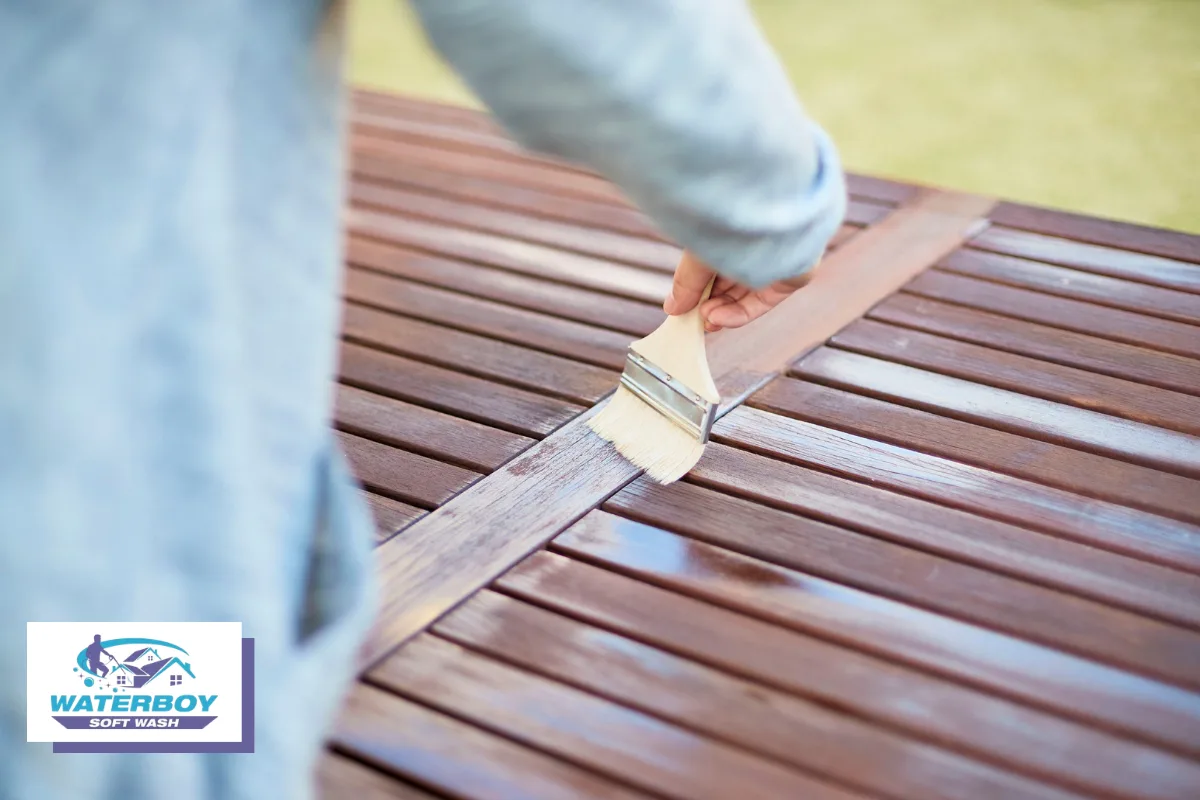
Sealing or staining your wood deck after it dries creates a moisture barrier that slows water absorption and makes future cleaning easier. Choose breathable products that repel liquid water but allow trapped moisture vapor to escape, which helps protect the boards from peeling and blistering.
Routine inspections and early cleaning can prevent extensive mold growth before it becomes a larger problem. Periodically check for slow leaks, clogged roof gutters, and planters that sit directly on deck boards. These are common moisture traps that homeowners overlook until mold has already taken hold.
DIY Deck Cleaning vs Hiring a Professional in Chester County
Some homeowners prefer to handle deck cleaning themselves, while others value the efficiency and safety that come with hiring a professional team. Both approaches have their place.
DIY can be reasonable when you have:
- A small, lightly soiled deck at ground level.
- Access to an adjustable pressure washer with a wide fan tip.
- Comfort handling cleaning solutions and managing runoff.
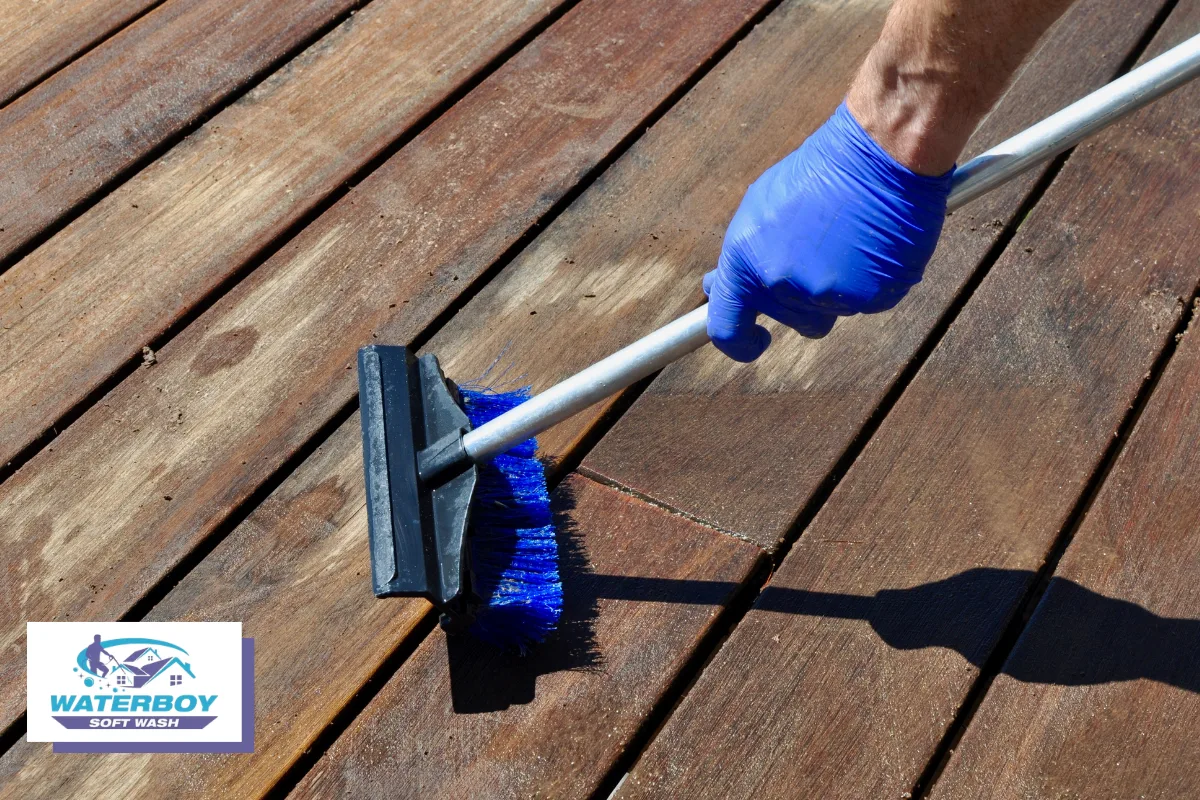
- Manual cleaning with a scrub brush can effectively clean decks that have only light mold or surface grime.
Hiring a professional makes more sense when:
- Your deck is elevated, on a second story, or involves complex railing and stair configurations.
- Mold and algae growth is severe, slippery, or covers a large area.
- Wood is older, fragile, or has visible checks where high pressure could cause further damage.
- You need help managing chemical runoff near sensitive landscaping or waterways.
Professionals in Chester County typically combine soft washing techniques, calibrated equipment, and proper chemistry to safely restore decks without causing damage. An experienced team knows how to adjust pressure, select the right nozzle, and handle dwell times for different deck materials.
Before taking on a challenging or heavily stained deck project yourself, consider requesting a free estimate or free quote from a reputable local company. The cost of a professional service is often less than repairing boards damaged by incorrect pressure settings or harsh chemical use.
Pressure Washing in Chester County, PA – Water Boy Soft Wash
At Water Boy Soft Wash, we proudly serve property owners across Chester County, Pennsylvania, including communities in and around West Chester. Our experienced team specializes in gentle, effective deck cleaning, house washing, and exterior cleaning for homes dealing with mold, mildew, and algae. We use calibrated low-pressure methods and carefully chosen eco-friendly cleaning solutions to restore your property's exterior without gouging, etching, or causing damage to your deck surfaces, siding, roof, brick, stucco, fences, patios, pavers, or driveway. Whether your home needs a single deck treatment or a full exterior service plan, we are here to help you protect your investment and restore your curb appeal. Call us at (610) 812-7378 or fill out our contact form to schedule a free estimate today. Let our team handle the job so you can enjoy your outdoor space again.
Frequently Asked Questions
Is Spring or Fall Better for Mold Removal on Chester County Decks?
Both seasons work well, but each has advantages. Late spring is ideal because mild temperatures help cleaning solutions work effectively, and longer daylight hours give the deck time to dry thoroughly before evening. Many homeowners schedule their deck and house washing in late spring to clear winter grime before summer entertaining begins. Early fall is another strong window, removing summer mold and algae before freezing conditions arrive. Avoid cleaning on days when heavy rain is forecast within 24 hours or when overnight lows drop below freezing, as lingering moisture can refreeze and stress wood fibers. Professionals can plan around most typical weather patterns in the area, but booking early during busy seasons helps secure your preferred date.
How Long After Cleaning Should I Wait Before Using My Deck Again?
Light foot traffic is generally fine once the surface looks and feels dry to the touch, which can happen within a few hours on a sunny day. However, moving heavy furniture, grills, or planters back onto the deck should wait at least a full day. If you plan to stain or seal the wood after washing, the boards typically need 24 to 48 hours of drying time, sometimes longer in shaded areas or during humid stretches. Composite decks usually dry faster than thick wood boards, particularly in direct sunlight. Follow any specific guidance your contractor provides. Using the deck too soon can grind residual moisture or loose particles into the grain and shorten the lifespan of any finish you apply afterward.
Can Mold on My Outside Deck Affect My Family's Health?
Outdoor mold is common and generally less concentrated than indoor infestations, but it can still affect sensitive individuals. People with allergies or asthma may experience sneezing, eye irritation, or respiratory discomfort when spending time near heavy mold growth. Beyond respiratory concerns, thick mold and algae create slippery surfaces that pose a real slip-and-fall risk, especially on stairs and high-traffic walkways near doorways. Keeping steps, railings, and seating areas clean reduces both health and safety hazards. Regular cleaning combined with good airflow and sunlight exposure minimizes buildup near the areas your family uses most. If anyone in your household has persistent respiratory issues that could be linked to outdoor allergens, consult a healthcare provider for guidance.
Will Staining or Painting My Deck Stop Mold from Coming Back?
Quality stains and sealers can significantly slow water absorption into wood, making future cleanings easier and reducing the environment mold needs to thrive. However, no coating guarantees mold will never return. Transparent and semi-transparent stains allow you to spot early mold growth quickly, while solid stains may hide discoloration but can trap moisture underneath if not applied correctly. Breathable coatings that shed liquid water while allowing moisture vapor to escape generally outperform thick, non-breathable films that tend to peel and blister. Always clean and let the deck dry fully before applying any finish to avoid sealing moisture and spores inside the wood. Between major refinishing projects, periodic light cleaning and quick inspections go a long way toward keeping your deck in top shape.
How Often Should I Schedule Professional Deck Cleaning in Chester County?
A good starting range is every one to three years, depending on how much shade, tree cover, and rain exposure your deck receives. Heavily shaded or north-facing decks may need power washing or soft washing annually, while sunlit decks in open yards can often go two to three years between professional cleanings. Pairing deck service with regular house washing visits can be efficient and helps keep your entire home's exterior looking sharp. Watch for early signs of mold, algae, or dark streaks forming on boards, and contact a professional before growth becomes thick or creates a slippery hazard. A quick evaluation from a local team can help you build a custom schedule based on your specific property, deck material, and surrounding landscape conditions.
Disclaimer: This article provides general information about deck mold removal and exterior cleaning practices in Chester County, PA. It is not a substitute for professional on-site assessment, manufacturer guidance, or legal advice regarding local environmental and stormwater regulations.
Read Pressure Washing in Chester County, PA: Will Power Cleaning Damage Wood Grain?