


How Exterior Cleaning Affects Your Patio Furniture
Exterior cleaning is one of the most effective ways to restore the look and function of a home, but what happens to patio furniture sitting a few feet from the spray nozzle? In Chester County, where humid summers and heavy spring pollen coat every outdoor surface, furniture collects mildew, leaf tannins, and rust stains faster than most homeowners expect. Left unprotected during a house wash, those pieces absorb detergent runoff, take pressure hits, and end up worse than before. The solution: move, pre-rinse, gently wash, and protect each piece using methods that match the material. Cleaning patio furniture requires a material-specific approach. This article walks through step-by-step care by material type, how professionals coordinate furniture cleaning with washing services, and how to keep your outdoor space looking fresh between visits.
Key Takeaways
- Patio furniture should always be cleared and cleaned before or during exterior cleaning so it does not get damaged by detergents, overspray, or high water pressure.
- Different materials in an outdoor space, including wood, metal, plastic, wicker, and fabric, each need different cleaning methods and often benefit from soft washing instead of high pressure.
- Chester County’s humid climate promotes algae, mildew, and pollen buildup on furniture, so homeowners should clean at least every spring and fall.
- Safe practices include low pressure, surface-appropriate detergents, and compliance with local runoff and environmental rules in Chester County.
Preparing Patio Furniture Before Exterior House Washing Begins

Preparation is the single most overlooked step in any exterior washing project. A few minutes of staging can prevent scratched finishes, waterlogged cushions, and chemical stains on fabric.
Choosing the Right Day
Pick a dry, mild day with temperatures between 50 and 80 degrees Fahrenheit and light wind. Under these conditions, cleaning solutions work as intended, cushions dry fully within a day, and detergent mist does not blow back onto freshly washed siding. Chester County spring and fall days often hit this range, making April and late September ideal windows.
Clearing the Outdoor Space
Work methodically. Remove small items first: lanterns, planters, outdoor rugs, and any toys your family may have left on the deck or patio. Stack lightweight resin chairs on the lawn. Slide tables away from house walls, railings, and fences so a pressure washing crew has clear access to every surface.
Outdoor furniture cleaning should start with debris removal before cleaning solutions are applied. Shake off leaves, brush away cobwebs, and knock loose dirt from frame crevices before any water touches the furniture.
What Goes Indoors
Bring these items into a garage or shed before exterior house cleaning starts:
- Fabric cushions and outdoor pillows
- Umbrellas and canopy covers
- Electronics (speakers, string-light controllers)
- Decorative textiles or throws
Covering Heavy Pieces
For cast iron sets, built-in benches, or large stone-top tables that cannot be moved, drape breathable waterproof covers or plastic sheeting over them and secure the edges with painter’s tape. Avoid sealing them airtight; trapped moisture underneath can cause condensation stains.
Keep walkways and emergency exit paths clear when rearranging furniture, a practical safety step and a requirement under local building codes.
Staging for the Wash
Group movable furniture in the center of the patio or on the lawn. This arrangement lets the contractor clean siding, railings, driveways, and concrete first, then move to furniture last once heavy runoff has finished flowing.
Cleaning Different Types of Patio Furniture Safely During Exterior Cleaning
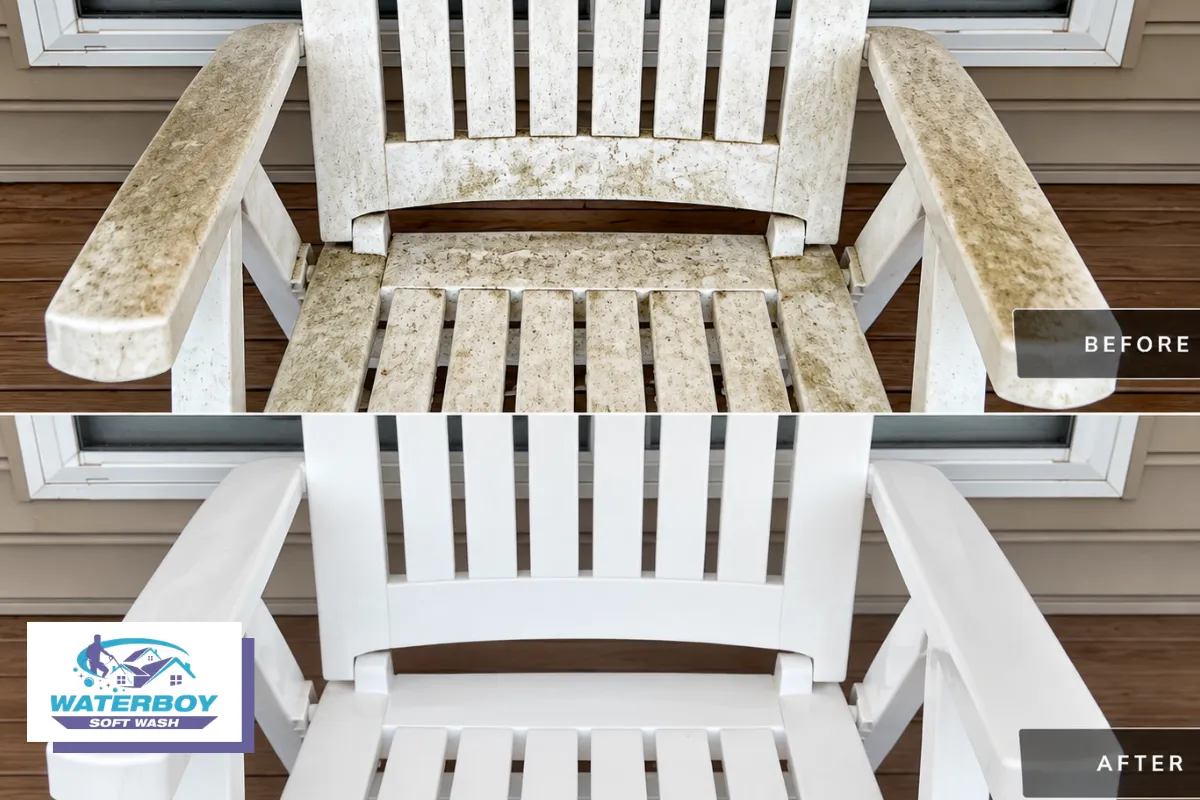
Not all materials tolerate the same water pressure or detergents. Before reaching for a spray nozzle, check manufacturer labels and start with the gentlest method available. A gentle cleaning method is recommended for outdoor furniture to avoid damage, and using a mild soap solution is generally safe for most patio furniture materials.
Soft washing principles apply well to furniture care: low-pressure rinsing, dwell time with mild detergents, and thorough rinsing coordinated with the larger house wash.
Metal Furniture: Aluminum, Wrought Iron, and Steel
Mild dish soap and water clean metal furniture effectively. Mix a few drops of Dawn dish soap (which is safe for cleaning outdoor furniture) into a bucket of warm water, then scrub frames and surfaces with a soft-bristle brush. This removes pollen, mildew, and grime without stripping powder coatings or paint.
After scrubbing:
- Rinse with a garden hose or a low-pressure tip.
- Inspect for rust spots, especially on wrought iron joints.
- Sand any rust with 220-grit sandpaper, prime, and touch up with rust-inhibiting paint.
Use a rust-preventative coating on metal furniture in humid seasons to slow corrosion between cleanings. Chester County’s summer humidity, which often sits between 70 and 75 percent relative humidity, accelerates oxidation on bare or chipped metal.
Read How to Clean Garden Statues and Planters With Professional Exterior Cleaning in Chester County, PA?
Wood Furniture: Teak, Cedar, Eucalyptus, and Pressure-Treated Lumber
Wood furniture should be cleaned gently to avoid removal of protective finishes. Pre-rinse the piece with plain water, then scrub along the grain using a wood-safe cleaner and a soft brush. Never scrub across the grain; doing so opens fibers and invites moisture penetration.
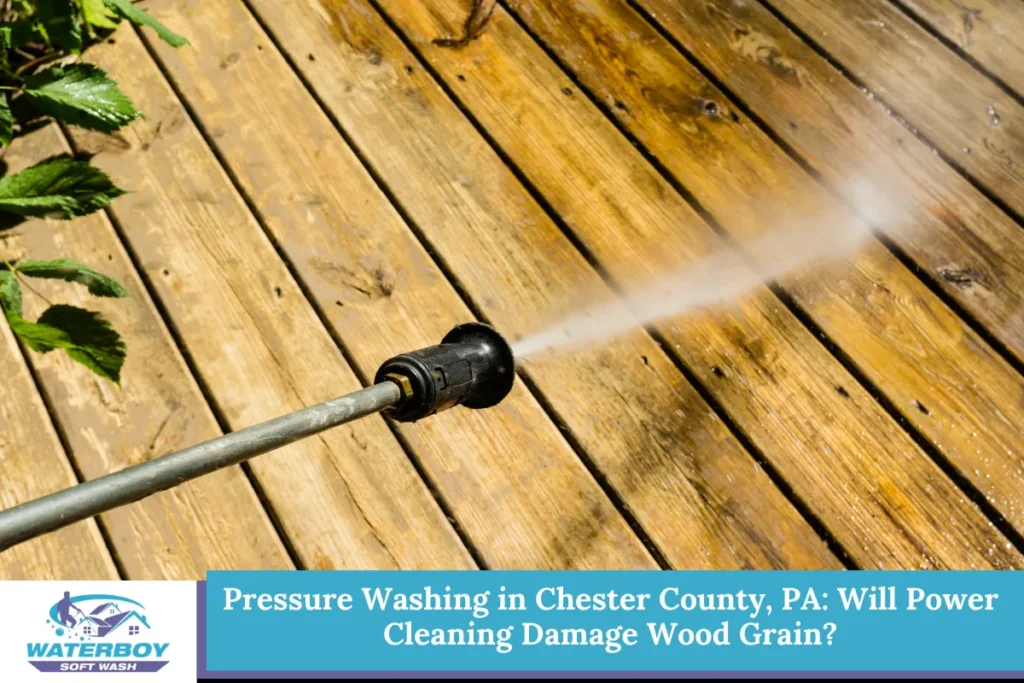
If you use a pressure washer on wood, keep the pressure at or below 600 PSI. Higher settings can feather and splinter the grain, leaving permanent damage.
Allow wood to dry fully, usually 24 to 48 hours, before applying teak oil, sealant, or stain. Apply waterproofing sealant annually to wooden furniture so moisture and UV exposure do not degrade the material over time. If you prefer the natural silvery patina that teak develops, skip the oil but still clean the surface to prevent mildew from taking hold.
Plastic and Resin Furniture
Plastic furniture requires only mild dish soap for cleaning. A bucket of warm soapy water and a non-abrasive sponge handle most dirt and discoloration. For textured resin surfaces, a soft nylon brush works into grooves where pollen and algae collect.
If you use a pressure washer, set it to a low PSI, attach a wide fan-tip nozzle, and maintain at least 12 inches of distance. Test a small, hidden area first.
A UV protectant helps prevent fading on plastic furniture. Spray it on after cleaning and drying to preserve color through months of direct sunlight.
Wicker and Rattan: Natural and Synthetic
Synthetic resin wicker is cleaned the same way as plastic. Natural wicker and rattan, however, are fragile. Water trapped in tightly woven fibers causes swelling, cracking, and mold.
- Vacuum loose debris first using a brush attachment.
- Wipe with a damp cloth and a small amount of diluted cleaner.
- Dry immediately with a towel, then place in sunlight.
- Never blast wicker with high-pressure water. The force can break or fray the weave.
Use a toothbrush to reach crannies where dirt hides between strands.
Fabric Elements: Cushions, Sling Chairs, and Umbrellas
Check tags for cleaning codes before applying any solution. Most performance fabrics like Sunbrella and Olefin tolerate a mix of water and mild detergent for spot cleaning. For removable covers, machine wash on cold and air dry flat.
Regular rinsing and keeping cushions dry can reduce mildew growth. After cleaning, prop cushions vertically on their edges in a sunny, breezy area so both sides dry completely. Plan for at least 24 hours of drying time before replacing them on frames.
Store cushions indoors during harsh weather to prevent damage from freeze-thaw cycles and prolonged moisture exposure.
Glass Tabletops
Remove the glass from its frame if possible. Lay it on a soft surface like a folded blanket, wash both sides with a glass cleaner or a vinegar-water solution, and rinse carefully. This prevents residue from exterior house washing detergents from drying on the glass and leaving streaks.
Choosing Cleaners That Protect the Environment
Chester County’s stormwater management regulations, updated under the Act 167 model ordinance in 2022, require homeowners and contractors to manage the volume, rate, and direction of runoff from their property. Choose biodegradable, plant-based detergents when cleaning furniture outdoors. Rinse water should flow onto pervious surfaces like lawn or garden beds rather than directly into storm drains.
Coordinating Patio Furniture Care With Pressure Washing and Soft Washing

Professional pressure washing of exteriors and soft washing can be sequenced so furniture is protected rather than damaged. The key is order of operations and communication.
The Right Sequence
The ideal workflow during a full exterior house washing project looks like this:
- Wash house siding and railings first.
- Clean decks, patios, and driveways.
- Detail the patio furniture once heavy runoff from upper surfaces has finished.
This order prevents dirty water from settling onto freshly cleaned chairs and tables.
Nozzle and Pressure Choices Near Furniture
Soft washing uses low pressure to clean delicate surfaces safely, making it the better option when working near furniture. Wide fan-tip nozzles spread the spray and reduce force per square inch. Contractors and DIY homeowners should keep extra distance from lightweight items that could tip over.
Pressure washing can damage furniture finishes and loosen joints if the PSI is too high or the nozzle too narrow. Soft washing prevents damage to older stone and masonry surfaces as well, which matters for Chester County homes with flagstone patios or brick accent walls.
Protecting Cushions During the Wash
Keep all fabric elements stored indoors until every spraying and rinsing pass is complete. Detergent overspray can leave spots on fabric that are difficult to remove once they dry.
Communicating With Your Contractor
Tell your exterior washing company which pieces are fragile, antique, or irreplaceable. Ask how they plan to shield or move them. A reliable crew will have a process for this.
Professional cleaning removes dirt, algae, and mildew from surfaces that homeowners struggle to reach, including under-table brackets, between railing spindles, and along deck board gaps. Deck and patio cleaning improves safety and comfort of outdoor spaces by stripping away slippery buildup that accumulates over months.
Drainage and Runoff During the Job
Check where water from decks and patios flows. If furniture is sitting in a low spot where cleaning solution pools, move it uphill or onto the lawn. Pooled chemical water can stain finishes and damage fabric in minutes.
When to Reassemble
Wait until every surface, both the patio and the furniture, is fully dry before putting cushions back. Placing metal legs on wet wood creates rust transfer marks that are difficult to sand out.
Long-Term Care Tips to Keep Patio Furniture Clean Between Exterior Washing Visits
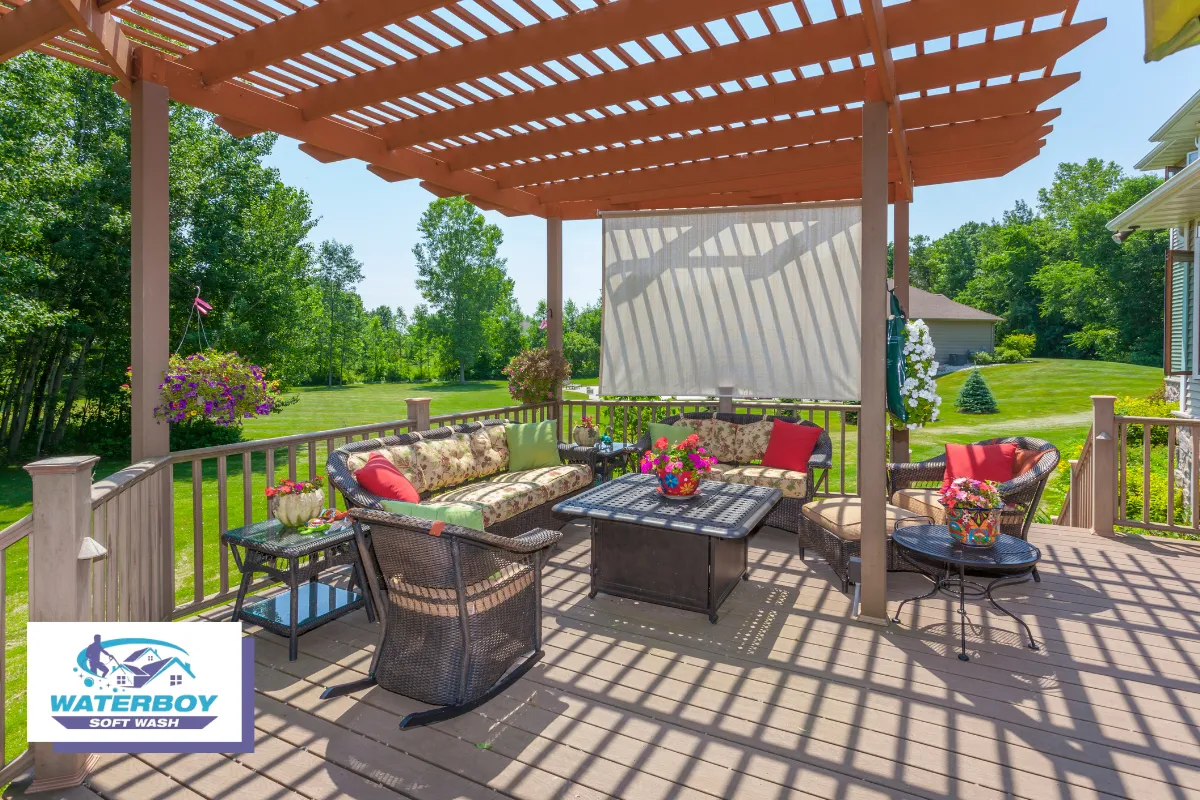
Routine cleaning is easier and safer than waiting for heavy soiling before a deep clean. Regular light maintenance between scheduled exterior cleaning visits prevents the kind of buildup that requires aggressive scrubbing or chemical treatment.
Seasonal Routines
In early April and again in late September, perform a gentle wash of all furniture to remove pollen, leaf stains, and mildew before they set into surfaces. Chester County’s pollen season deposits thick coatings on furniture, especially under trees. Removing it early prevents staining and odor.
Regularly clean outdoor furniture to prevent dirt buildup. Regular cleaning prevents dirt and grime buildup on outdoor surfaces, keeping your pieces looking new for years.
Covers and Storage
Protective covers prevent UV damage and dirt accumulation during weeks when furniture is not in use. Breathable covers help prevent moisture accumulation under outdoor furniture, so choose covers made from ventilated materials rather than solid vinyl.
Over winter, stack chairs and bring cushions into a dry basement or shed. Slightly raise furniture feet off damp ground using small risers or rubber pads to slow corrosion and rot.
Protective Products Worth Applying
Apply waterproofing wood sealant annually to protect wood furniture from moisture and sun. Mold, mildew, and grime thrive in humid and damp conditions, so these treatments are not optional in this area; they are necessary maintenance.
Quick Cleanups Between Deep Cleans
Wipe spills, bird droppings, and tree sap promptly with a damp cloth and mild soap. These substances etch finishes and stain fabrics if left for more than a day or two.
Aligning Furniture Care With Whole-Home Schedules
Professional cleaning can extend the life of outdoor areas when it is done on a consistent schedule. Professional power washing enhances curb appeal and property value, and pairing furniture care with an exterior cleaning visit every 12 to 24 months keeps the entire property in top condition. Homes with heavy tree cover, shade, or proximity to water may need the shorter interval.
With proper care, including twice-yearly deep cleaning and mid-season touch-ups, outdoor furniture of mixed materials can last 10 to 20 years.
Exterior Cleaning in Chester County, PA – Water Boy Soft Wash
We are Water Boy Soft Wash, and we specialize in exterior cleaning that protects your siding, deck, patio, and the patio furniture that makes your outdoor space comfortable. We serve residential homes throughout Chester County, Pennsylvania, tailoring our soft washing and low-pressure methods to local building materials and climate conditions. Our crew carefully moves or covers patio furniture, avoids harsh pressure near delicate pieces, and can include furniture rinsing as part of our washing services when requested. Whether you need your home’s siding refreshed, your driveway restored, or your fences cleaned, we handle the job with care and professionalism. We are fully insured, and we treat your property with the same respect we give our own. Call us at (610) 812-7378 or fill out our contact form to schedule a visit. You can trust Water Boy Soft Wash to leave your home and outdoor space looking their best.
Frequently Asked Questions
How often should patio furniture be cleaned in Chester County’s climate?
Twice-yearly deep cleaning, once in spring and once in fall, keeps furniture in good condition given Chester County’s humidity, pollen, and storm debris. During peak use months from May through September, plan a light wipe-down at least once a month to remove fresh pollen, bird droppings, and surface grime. Furniture placed in shaded or tree-covered areas collects organic growth faster and may need attention every two to three weeks. Cushion covers benefit from more frequent care than frames because fabric traps moisture and odor. Homeowners who schedule regular exterior cleaning can request that their contractor spot-rinse furniture at the same time, keeping everything on a single maintenance calendar.
Is it safe to use a pressure washer on patio furniture?
High-pressure washing is generally not recommended for most furniture materials. It can strip paint from metal, scar wood grain, tear wicker weave, and blast holes through fabric. If you use a pressure washer yourself, stay under roughly 1,200 PSI for hard plastics and metal frames, and under 600 PSI for any wood piece. Select a wide fan-tip nozzle (25 or 40 degrees) and test on a hidden spot before spraying visible surfaces. Soft washing or a standard garden hose combined with manual scrubbing is safer for wicker, painted metals, and upholstered pieces. When in doubt, consult a professional exterior washing company familiar with furniture-safe techniques.
How can I remove tough stains like tree sap or sunscreen from patio furniture?
For oily stains like sunscreen on metal or plastic, apply a mild degreasing dish soap directly to the stain, let it sit for five minutes, then wipe with a soft cloth and rinse thoroughly. Tree sap on metal or hard plastic can be loosened with a small amount of mineral spirits on a rag; test on an inconspicuous area first and rinse immediately. On wood, avoid solvents that strip finish; instead, use a wood-safe cleaner and a plastic scraper to lift sap gently. For fabric cushions, enzyme-based or oxygen-based cleaners break down organic and oily stains without bleaching color. Follow manufacturer guidelines on dwell time and always rinse completely.
What is the best way to prevent mildew on outdoor cushions?
Allow cushions to dry fully after every rain by propping them vertically in a sunny, breezy spot. If they will not be used for more than a few days, store them in breathable storage bags or bins rather than sealed containers, which trap humidity. Clean cushions periodically with a mild solution of water and fabric-safe cleaner, rinse thoroughly, and dry before returning them to frames. Trimming nearby landscaping and keeping at least a few inches of clearance around seating areas improves airflow and reduces the persistent moisture that mildew needs to grow. In Chester County’s humid summers, these habits make the difference between fresh cushions and ones that need replacing.
Should I use bleach when cleaning patio furniture during exterior cleaning?
Avoid routine use of undiluted household bleach on furniture. Bleach corrodes aluminum, weakens natural wicker fibers, fades colored fabrics, and can kill surrounding plants if it runs off into garden beds. If you face severe mildew on a hard, colorfast surface like white resin, a diluted solution of one cup of oxygen bleach per gallon of warm water is a safer alternative. Spot-test first, let it dwell for about 15 minutes, then rinse completely. For fabrics, enzyme-based or manufacturer-approved cleaners outperform bleach without the risks. Always wear gloves and eye protection when using any strong cleaner, and rinse all residue before anyone sits on the furniture again.
Disclaimer
This article provides general information only and is not a substitute for manufacturer instructions, local Chester County regulations, or professional advice. Consult a qualified exterior cleaning professional before making care decisions for your specific patio furniture and property.
Read Can House Washing Remove Black Streaks From Siding in Chester County, PA?