
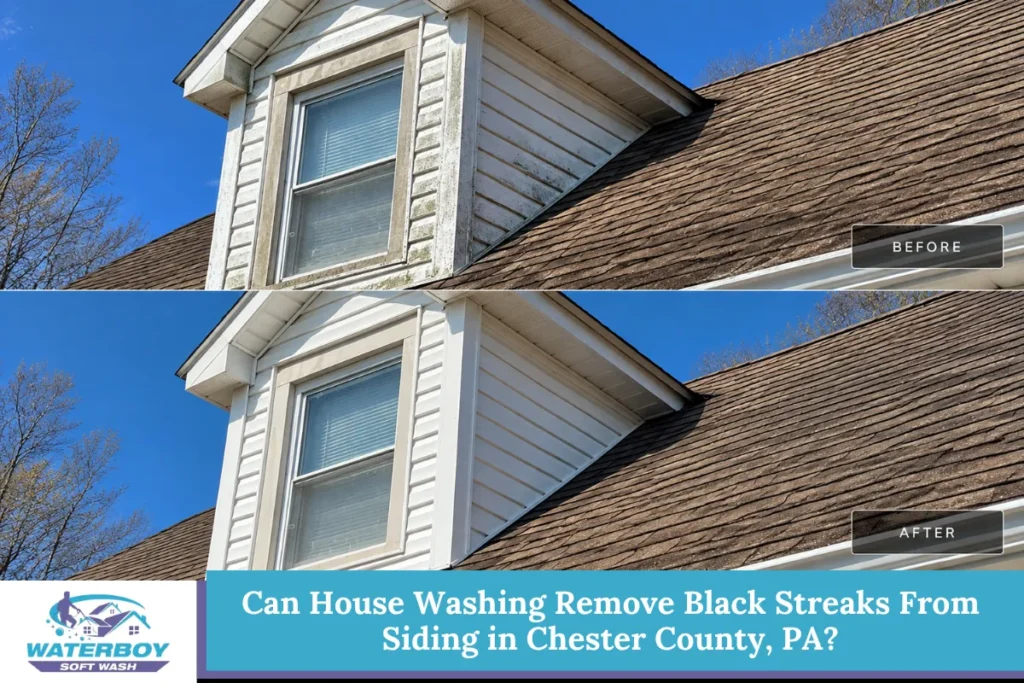

Can House Washing Really Remove Black Streaks From Siding?
House washing is one of the most effective ways to eliminate those dark, unsightly streaks that homeowners across Chester County, PA have noticed creeping down their siding. The short answer is yes. In most cases, a proper wash can restore your exterior surfaces to their original appearance.
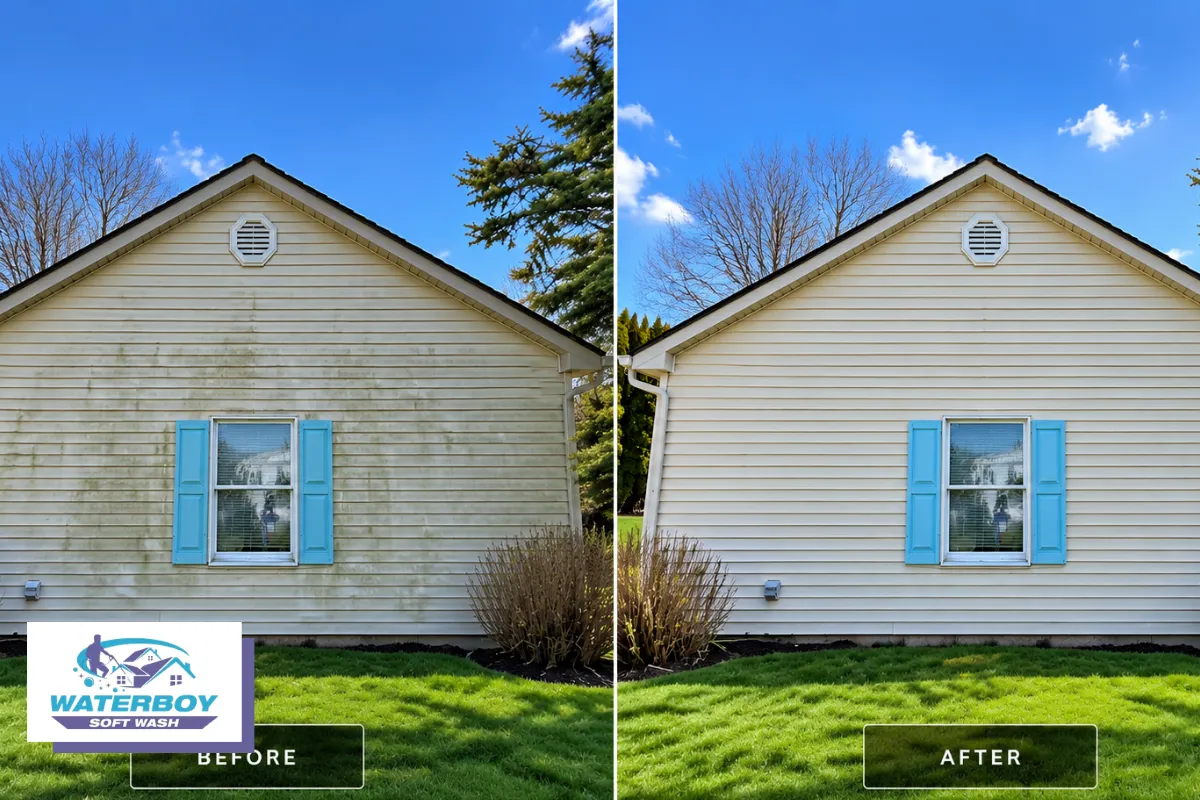
If you have lived in Chester County long enough, you have probably seen it. Vertical black streaks running beneath windowsills. Tiger-striping under roof overhangs. Dark drip marks trailing from gutters and downspouts. These patterns are incredibly common on homes surrounded by mature trees, near creeks, or in neighborhoods with heavy shade.
What makes these streaks so stubborn is their composition. They are typically a mix of algae, mildew, road soot, and debris washed down from asphalt shingles. A garden hose or a bucket of soapy water will not cut it. The organisms behind those streaks need to be killed at the root, not just rinsed off.
That is where the soft washing process comes in. Soft washing effectively removes algae, mold, and mildew by combining low pressure water delivery with biodegradable detergents or diluted bleach-based solutions. The cleaning agents are applied at gentle pressure, allowed to dwell on the surface for several minutes, and then rinsed away. This method restores the true color of your siding, protects caulking and trim, and avoids forcing moisture behind panels. When performed correctly by a trained professional, it is the safest and most thorough approach for residential exterior cleaning in Chester County.
Key Takeaways
- Modern house washing methods, particularly soft washing with low pressure and specialized cleaning solutions, can safely remove most black streaks from siding on Chester County homes.
- Soft washing is preferred over high pressure washing for vinyl siding, stucco, painted wood, and other delicate surfaces because it avoids water intrusion and material damage.
- Black streaks on siding are usually caused by organic growth such as algae, mold, and mildew, along with atmospheric pollutants and roof runoff. Water alone will not solve the problem.
- Hiring a trained local professional helps protect your property, landscaping, and siding integrity while keeping your cleaning process in line with Chester County environmental expectations.
- Routine soft washing every 12 to 24 months prevents regrowth, preserves curb appeal, and maintains long-term home value.
What Are Those Black Streaks on Chester County Siding Made Of?
Before choosing a cleaning method, it helps to understand exactly what you are dealing with. Different types of stains respond to different treatments, and misidentifying the source can lead to wasted effort or even damage.
Here are the most common culprits behind black streaks on siding in this region:
- Algae, mold, and mildew: These are the most frequent offenders. Black streaks on siding are often caused by organic growth that thrives in damp, shaded conditions. Algae growth is fueled by humid climates and moisture, making Chester County’s warm, wet summers an ideal breeding ground. A cyanobacterium called Gloeocapsa magma is especially notorious for creating dark stains on both roofing and siding.
- Airborne pollutants: Soot, vehicle exhaust, pollen, and road dirt can settle onto exterior surfaces and bond with moisture. Homes near busy roads or intersections tend to accumulate this grime faster.
- Roof runoff: Every time it rains, water cascading off your roof carries asphalt shingle granules, dirt, moss, and algae spores onto your siding. This is particularly visible beneath eaves, around downspouts, and along any section where gutters are clogged or leaking.
- Oxidation: On older vinyl siding or painted aluminum, years of sun exposure can cause a chalky, dull appearance. This is less of a streak and more of a general fading, but it often gets mistaken for dirt or mildew buildup.
Homes tucked into wooded lots or positioned with north-facing and west-facing walls tend to dry more slowly after rain. Less direct sunlight means more moisture retention, which feeds organic growth. After heavy Pennsylvania rainstorms, many residents notice new streaks appearing seemingly overnight.
Understanding whether stains are organic, environmental, or oxidation-based matters because each responds best to a specific approach. Specific commercial outdoor cleaners can safely remove organic streaks, while oxidation may require gentler treatment or even repainting. This knowledge is what separates a lasting clean from a temporary rinse.
Soft Washing vs. Pressure Washing for Black Streak Removal
Two primary methods dominate exterior cleaning: soft washing and pressure washing. They sound similar, but the difference in how they work and what they are suited for is significant.
Soft washing uses low pressure under 300 PSI for cleaning, paired with specialized cleaning solutions that do the heavy lifting. The detergent kills algae, mold spores, and bacteria on contact. The low water pressure simply delivers and rinses the solution without stressing the surface. Soft washing is recommended for vinyl siding and stucco, as well as painted wood, brick, and fiber cement.
Power washing, by contrast, typically uses high pressure over 3,000 PSI to blast away grime with powerful equipment. It relies on the sheer force of high pressure water rather than chemistry. This method works well on durable surfaces like concrete driveways, walkways, and stone patios, but it introduces real risks when turned on siding.
Here is a quick comparison for Chester County homeowners:
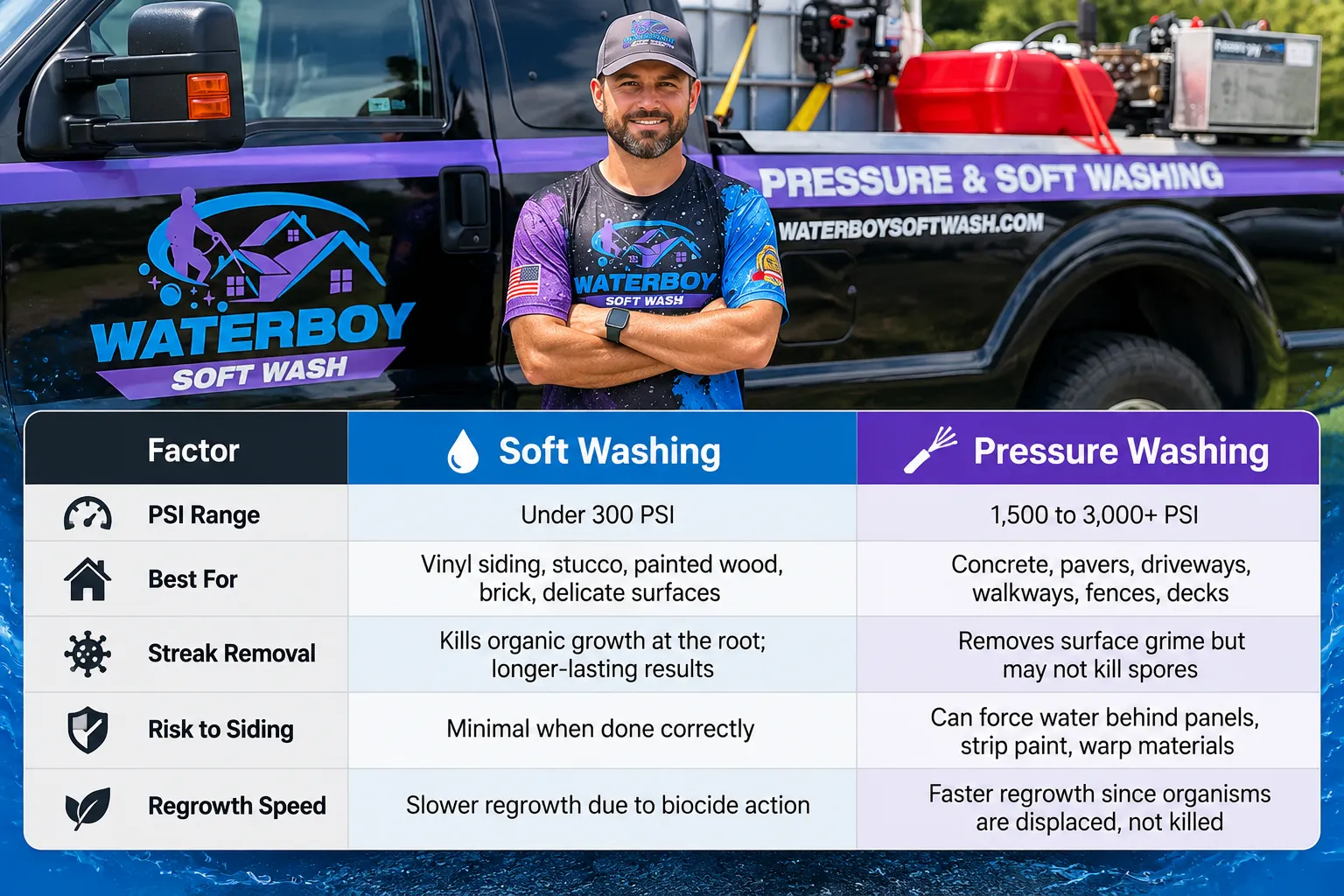
High pressure washing can damage delicate exterior materials. It can crack vinyl, loosen caulk, and drive water behind siding where it causes hidden rot and mold inside walls. Power washing can damage delicate surfaces like siding if the operator is not extremely careful with distance and nozzle selection.
Soft washing is safer for vinyl, brick, or wood siding because it preserves the integrity of seams, trim, and paint. Soft washing also helps preserve paint and finishes on surfaces, which is especially valuable for homeowners who want to extend the life of their exterior between repainting jobs. For most residential properties in Chester County, soft washing prevents rapid regrowth of black streaks compared to high pressure washing, making it the smarter long-term investment.
Read Is Soft House Washing Safe for Painted Exteriors in Chester County, PA?
How Professional House Washing Removes Black Streaks Step by Step
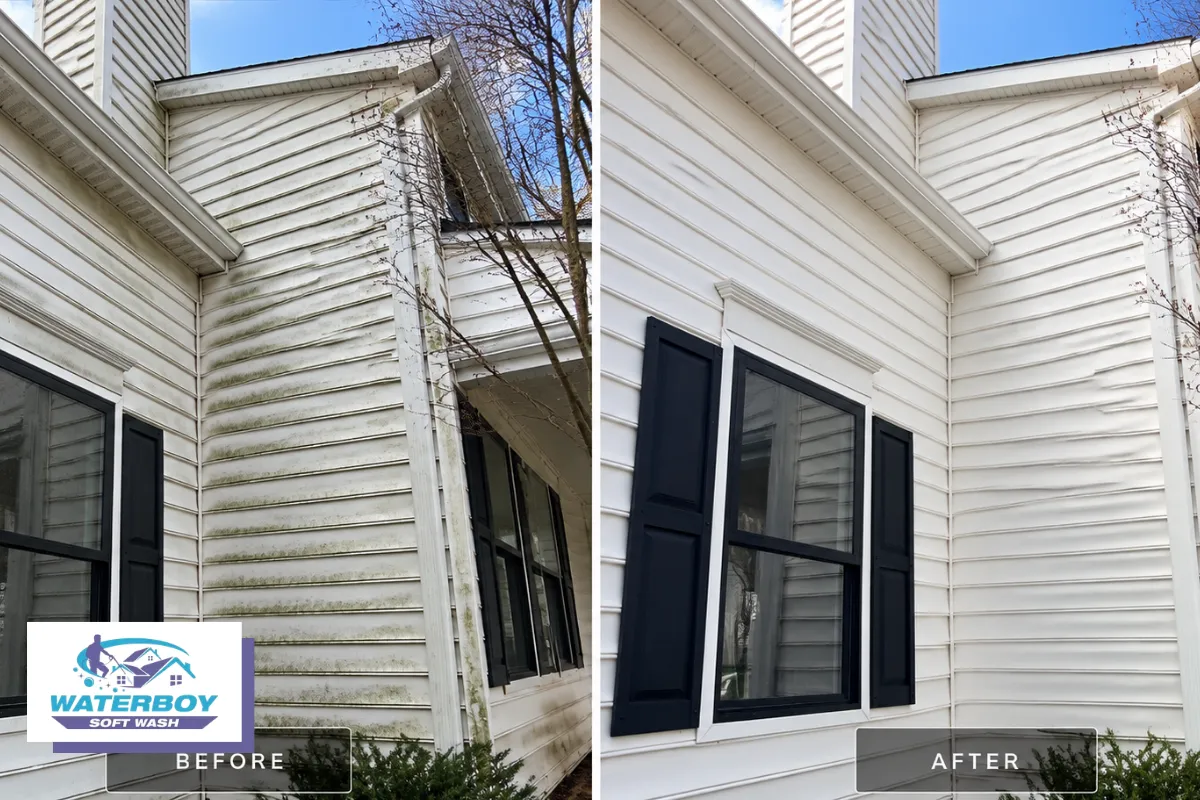
Reputable contractors in Chester County follow a structured, repeatable cleaning process designed to protect your home while delivering a thorough clean. Here is what a professional service typically looks like:
- Inspection and assessment. The technician examines your siding material, identifies the type of staining, and checks the condition of windows, trim, caulk, flashing, and downspouts. They also evaluate the surrounding landscaping and property slope to plan for runoff.
- Detergent selection. Based on the siding type and severity of streaks, the crew selects the appropriate solution. Diluted bleach solutions can be effective for stubborn black streaks, typically applied at 0.5 to 1.5 percent active chlorine concentration for siding. Biodegradable detergents can effectively kill algae and mold spores while being gentler on surrounding vegetation. Oxygen-based alternatives are also available for homeowners who prefer bleach-free options.
- Protecting the surroundings. Plants and landscaping should be protected before applying cleaning solutions. Technicians pre-wet flower beds, cover sensitive shrubs, and position drop cloths where needed. This step is not optional.
- Solution application. The cleaning solution is applied using low pressure equipment, typically spraying from the bottom up or top down depending on the specific method and siding layout. Even coverage is essential.
- Dwell time. The solution sits on the surface for five to fifteen minutes, giving the active ingredients time to penetrate and break down the organic growth, grime, and buildup embedded in the siding texture.
- Gentle rinse. Using wide fan nozzles at low pressure, the technician rinses the loosened contaminants away. Around windows, doors, electrical outlets, and vents, experienced cleaners reduce pressure even further to prevent water from being forced behind the siding.
- Runoff management and cleanup. Wash water is carefully managed. Plants are rinsed if any chemical solution contacted them. Equipment is cleaned, and the property is left in the condition it was found.
Adjustments are made for each material. Fiber cement and stucco are porous and may require longer dwell times. Painted wood demands mild detergent and a test spot in an inconspicuous area. Vinyl is more tolerant of bleach but sensitive near seams and overlapping panels.
Safety, Regulations, and Best Practices in Chester County, PA
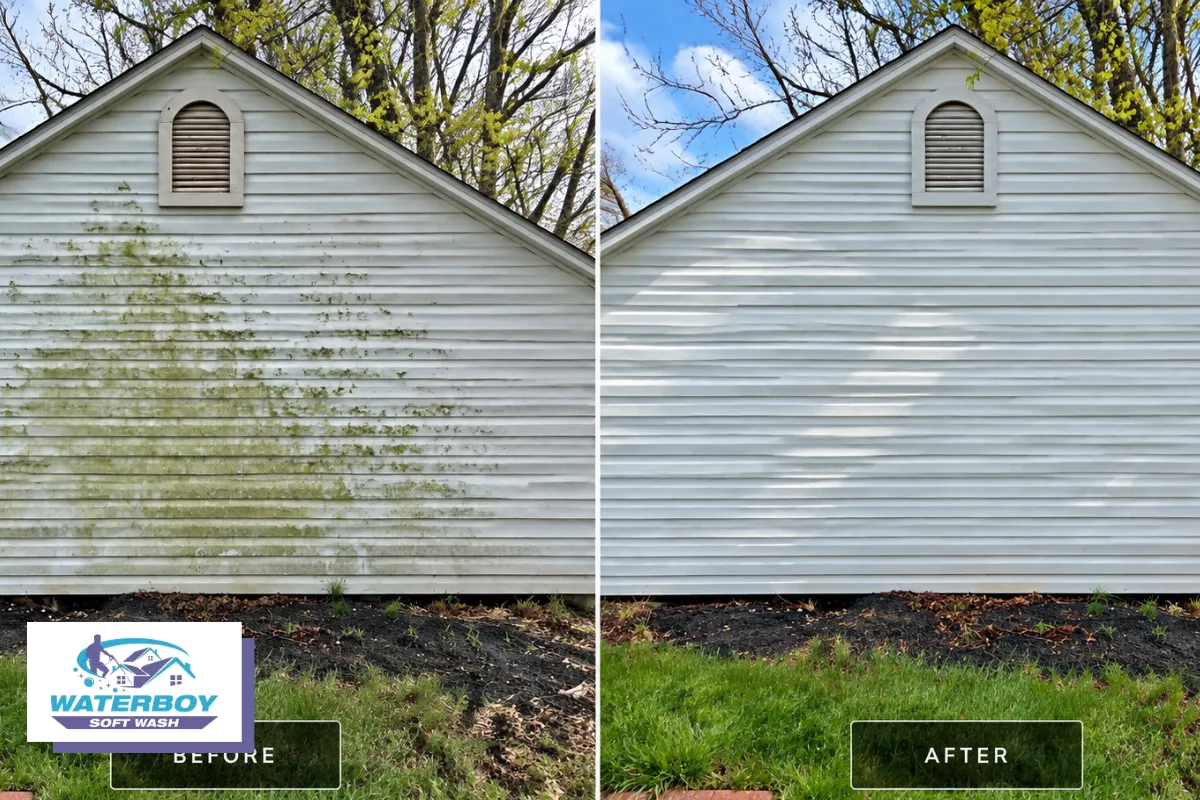
Getting your siding clean matters, but how the job is done matters just as much. Improper methods can lead to structural damage, environmental issues, and unnecessary expense.
Using the right nozzles and keeping water pressure low protects delicate surfaces, window seals, and paint from being stripped or damaged during a house soft washing service. Multi-story homes require secure ladder setups or lift equipment, and operators should always wear gloves, eye protection, and appropriate gear when handling chemical solutions.
In Chester County, professionals are expected to be mindful of where wash water flows. Pennsylvania environmental regulations, including guidance under Title 25 of the state code regarding wash water discharge, direct contractors to avoid sending contaminated runoff into storm drains, public streets, or waterways. Responsible companies contain or neutralize their wash water and follow all product label directions for dilution and use.
Eco-conscious practices make a real difference for your property. Pre-wetting plants, covering sensitive landscaping where appropriate, and rinsing vegetation after the cleaning process help keep gardens healthy and reduce chemical exposure. Using biodegradable cleaning products whenever possible is a growing standard among professionals in the region.
Before hiring anyone, ask about their insurance, training, and how they plan to protect your siding, roof, and other exterior surfaces. A contractor who cannot explain their method or refuses to discuss environmental precautions is not worth the risk.
How Often Should You Wash Siding to Prevent Black Streaks Returning
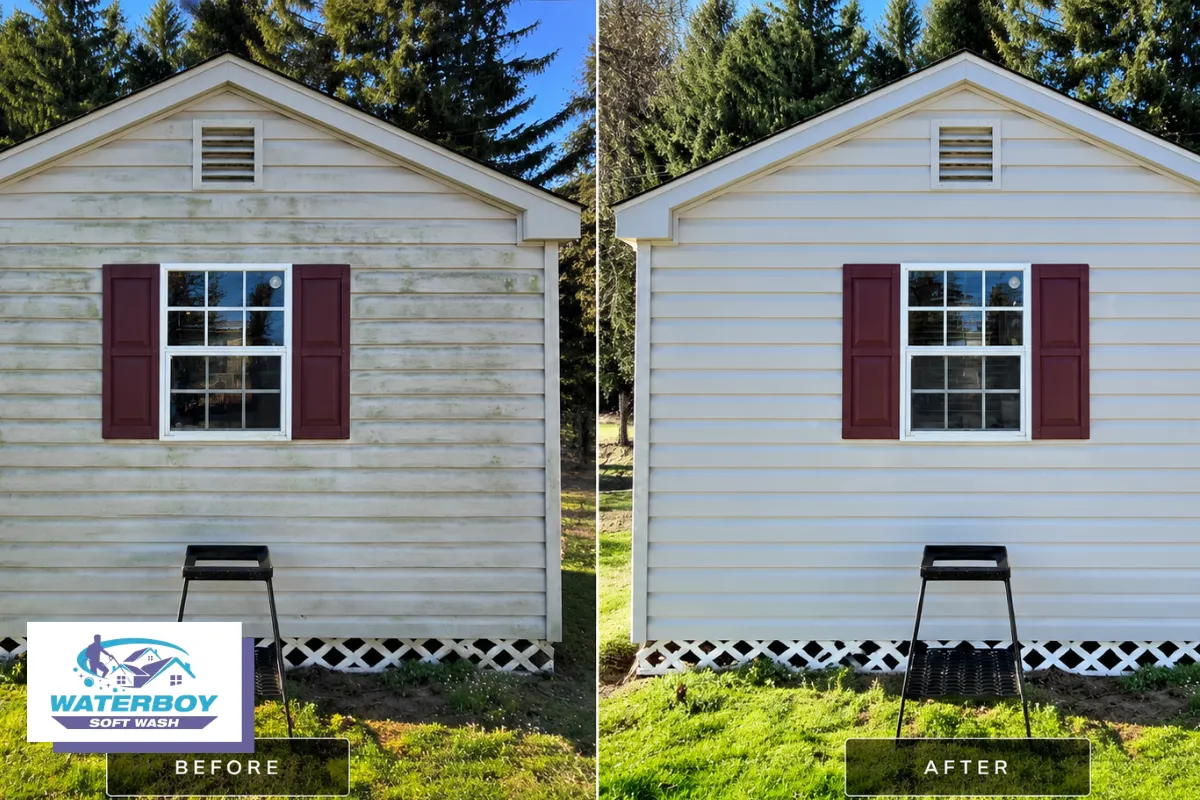
Prevention is always easier and less expensive than letting streaks build up until your home looks dirty and neglected.
For most homes in Chester County, routine soft washing can keep homes clean for 12 to 24 months. Homes benefit from washing every 12 to 24 months, with the shorter end of that range applying to properties that sit under heavy tree canopy, face north, or are located near busy roads where airborne pollutants settle faster. Roof cleaning may be needed every two to three years if dark streaks from algae become visible on shingles.
Regular house cleaning of your exterior prevents organic growth from embedding deeply into textured siding, which makes each subsequent wash easier and less costly. Most homes in Chester County cost between 250 and 500 dollars or more for a professional wash, depending on square footage, siding condition, and accessibility.
Here are a few practical steps homeowners can take between professional cleanings:
- Inspect siding after wet seasons, especially spring and fall, to catch early spots of mildew near gutters, downspouts, and sheltered walls.
- Trim back trees and vegetation near siding to increase sun exposure and airflow, reducing shade and humidity that feed algae.
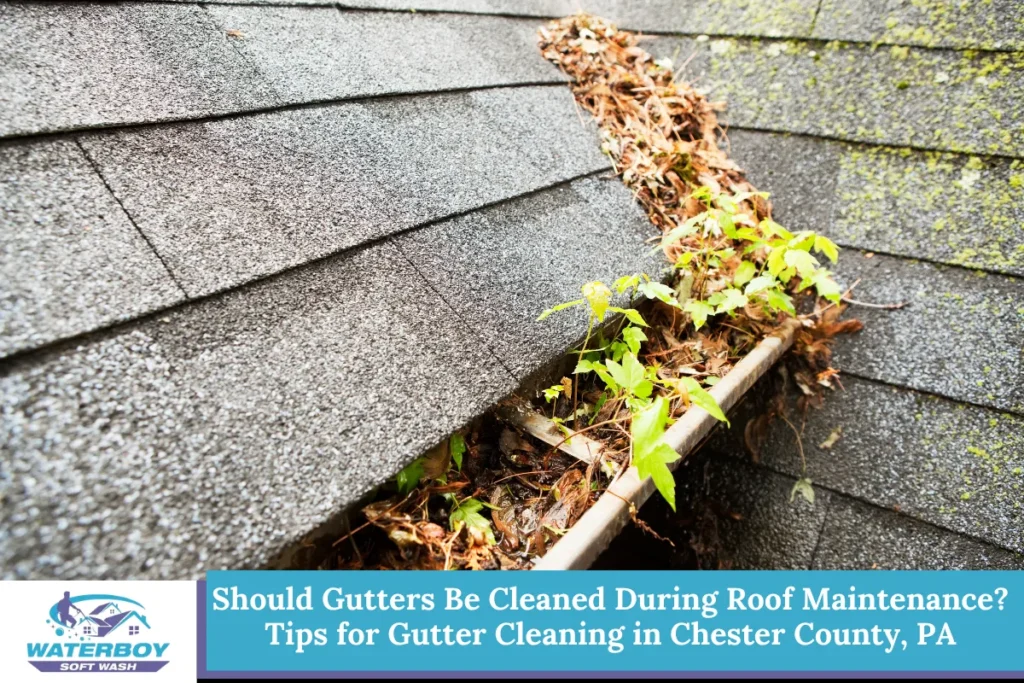
- Keep gutters and downspouts clear of debris so roof runoff does not cascade down siding panels.
- Address minor roof issues, cracked flashing, or loose shingles that contribute to dirty runoff stains.
Scheduled soft washing is not just about keeping your house looking fresh. It is part of a long-term exterior maintenance plan that protects curb appeal, extends the life of your siding, and preserves your home’s value for years to come.
House Washing in Chester County, PA – Water Boy Soft Wash
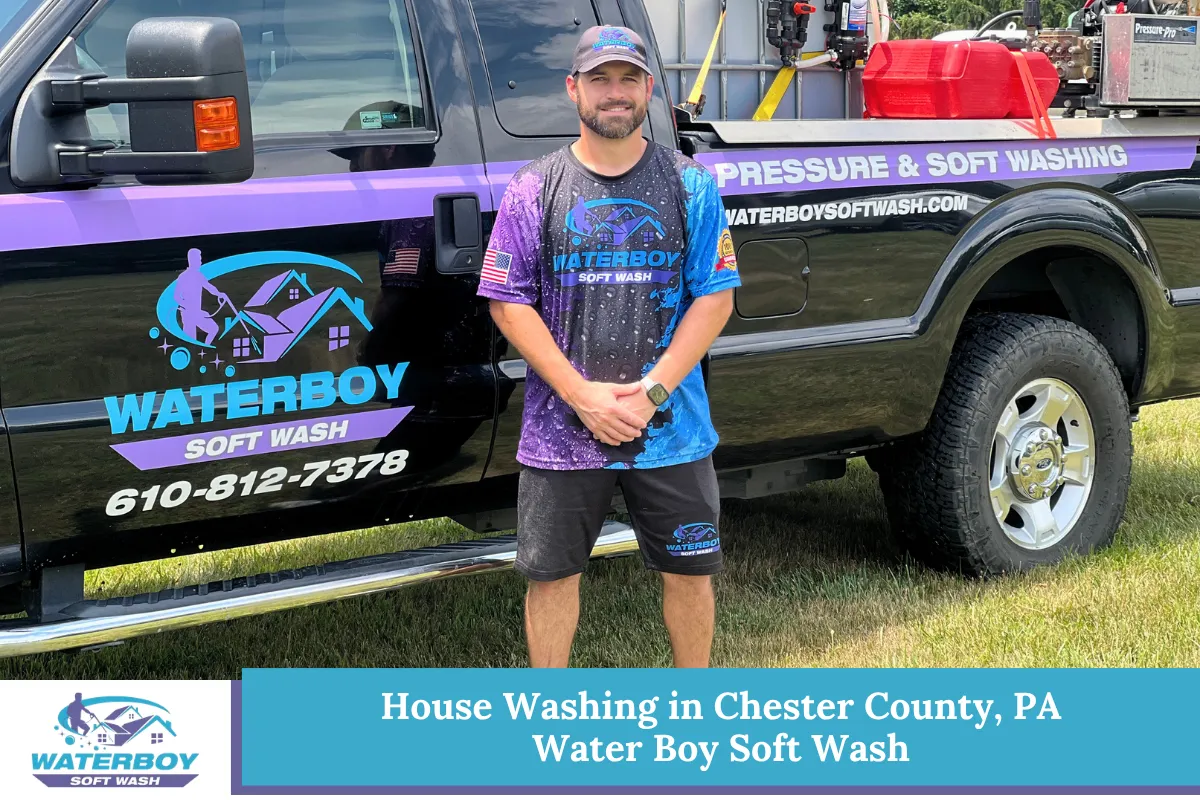
We are Water Boy Soft Wash, a locally owned house washing company proudly serving homeowners throughout Chester County, Pennsylvania. Our team specializes in gentle, effective soft washing that removes black streaks, algae, mildew, and grime from siding without risking damage to your property. We take great pride in great communication, attention to detail, and protecting your landscaping and exterior surfaces during every job. Whether your home needs a seasonal refresh or a deep clean to treat years of buildup, we deliver results you can see from the curb. Call us at (610) 812-7378 or fill out our contact form to schedule your estimate. We look forward to serving you.
Frequently Asked Questions
Can black streaks permanently stain siding if left untreated?
In most cases, black streaks will not cause permanent staining if addressed within a reasonable timeframe. However, the longer algae, mold, or mildew remain on your siding, the more deeply they can embed into the surface texture, especially on porous materials like stucco or fiber cement. Extended exposure can also degrade paint and protective coatings, leading to discoloration that persists even after cleaning. Vinyl siding is generally more forgiving, but neglect over several years may result in faint shadowing that requires more aggressive treatment or, in extreme cases, panel replacement. The best approach is to treat streaks early before they have a chance to root deeply into your exterior.
How should I prepare my home before a professional wash?
Start by closing all windows and doors tightly. Move any outdoor furniture, potted plants, grills, or decorative items away from the walls being cleaned. If you have delicate flower beds or garden features close to the foundation, let your technician know so they can take extra precautions. Retract awnings and remove any hanging items from hooks on the siding. Make sure exterior electrical outlets have their protective covers in place. Clear a path along the perimeter of your home for the crew to move freely with their equipment. These small preparations help the job go smoothly and protect your belongings from accidental overspray or moisture exposure.
Does weather affect the results of a house wash?
Yes, weather plays a meaningful role in how effective a wash turns out. Ideal conditions include mild temperatures, overcast skies, and low wind. Direct, intense sunlight can cause cleaning solutions to dry too quickly before they have time to work, reducing their effectiveness against organic growth. Rain during or immediately after a wash can dilute the solution and rinse it away prematurely. Freezing temperatures are also a concern in Chester County winters, as water can ice on surfaces and create hazards. Most professionals in this area schedule jobs during spring through fall when conditions are most favorable for a thorough, lasting result.
Are DIY methods safe for removing black streaks from siding?
Homeowners can handle light surface dirt with a garden hose and a mild detergent, but tackling embedded algae or mildew streaks with store-bought cleaners and a rented pressure washer introduces real risk. Without proper training, it is easy to use too much pressure and damage siding, crack caulk, or force water behind panels where it causes hidden moisture problems. Chemical mixing errors can harm your landscaping or produce dangerous fumes. If your streaks are anything beyond light surface grime, consulting a professional who understands the right solution strength, dwell time, and rinse technique for your specific siding material is the safer and more effective path.
Should I add roof cleaning when scheduling a siding wash?
If you have noticed dark streaks on your roof as well as your siding, combining both services in a single visit is a smart move. Roof streaks are commonly caused by the same organisms that stain siding, particularly Gloeocapsa magma. Left untreated, roof algae can reduce the life of asphalt shingles by ten years or more. A professional can apply a roof-safe soft wash solution at a slightly higher concentration than what is used on siding, killing the growth without damaging shingles. Bundling roof cleaning with your siding service also reduces the chance that spores from an untreated roof will quickly recolonize your freshly cleaned siding below.
Disclaimer: This article provides general educational information about house washing in Chester County, PA. Homeowners should consult a qualified professional for property-specific recommendations and follow all applicable product directions and local regulations.
Read Is Soft House Washing Safe for Painted Exteriors in Chester County, PA?