

The Truth About High-Power Deck Cleaning
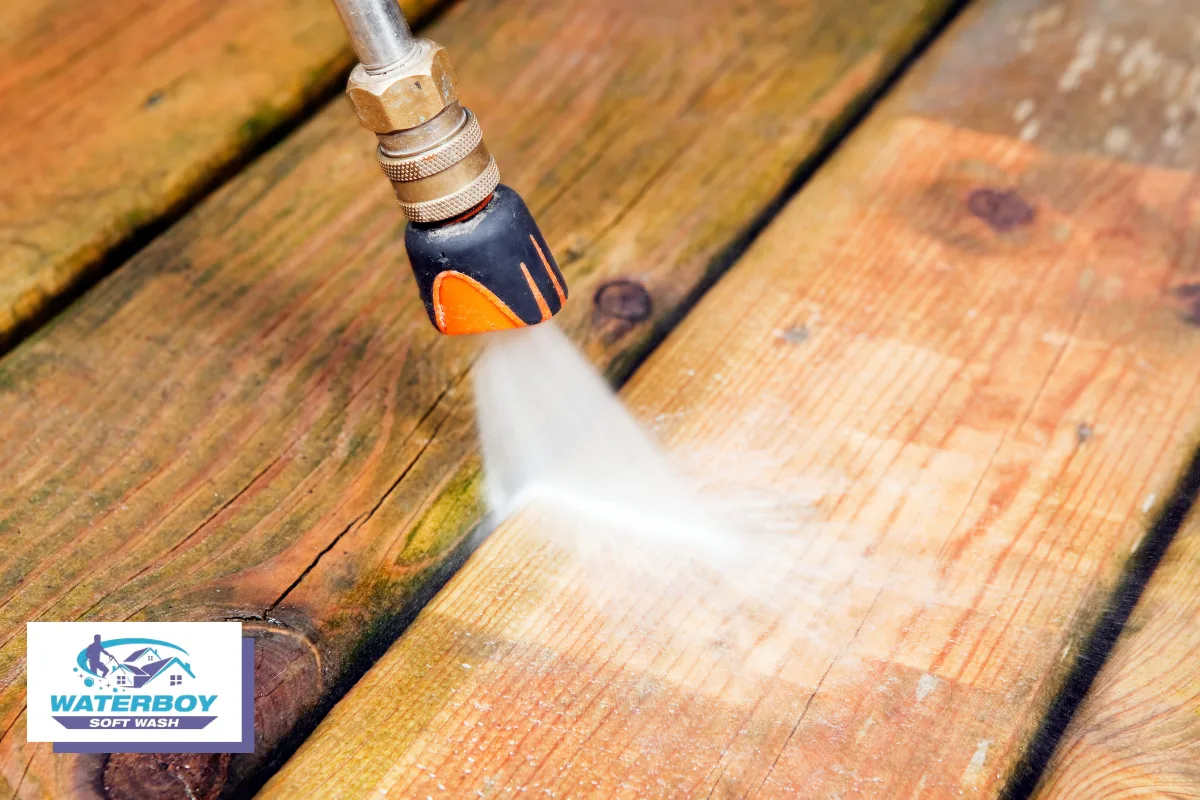
Pressure washing in Chester County, PA is one of the fastest ways to restore a dirty deck, but cranking the machine to full power is not always the answer. Every spring, property owners look at their gray, algae-streaked boards and assume the strongest setting will deliver the quickest results. That assumption can leave you with splintered surfaces, raised grain, permanent wand marks, and a deck that looks worse than when you started. Most residential pressure washers can reach 2,000 to 4,000 PSI, which is far more force than many wood decks can handle safely. The real solution is matching your cleaning method, whether that is a controlled pressure wash or a gentle soft washing approach, to the specific material under your feet. This guide walks you through how wood species, age, moisture content, and prior coatings determine what is safe and when calling a professional is the smarter move.
Key Takeaways
- High-power pressure washing is not safe for every wood type. Softer woods like cedar and older decks are at the highest risk of permanent damage from excessive force.
- Safe PSI ranges vary by material: approximately 500 to 800 PSI for softwoods, 800 to 1,200 PSI for pressure-treated pine, up to 1,500 PSI for dense hardwoods, and manufacturer-specific limits for composite boards.
- Always use a wide fan nozzle (25 to 40 degrees) and maintain a consistent distance of 8 to 18 inches from the deck surface.
- Soft washing is often safer and more effective for fragile, older, or previously stained decks, using chemistry rather than brute force to remove organic buildup.
- Homeowners in West Chester and across Chester County should assess their deck's wood type, age, and structural condition, or consult a local professional, before reaching for a powerful machine.
How Deck Material and Age Affect Safe Pressure Levels
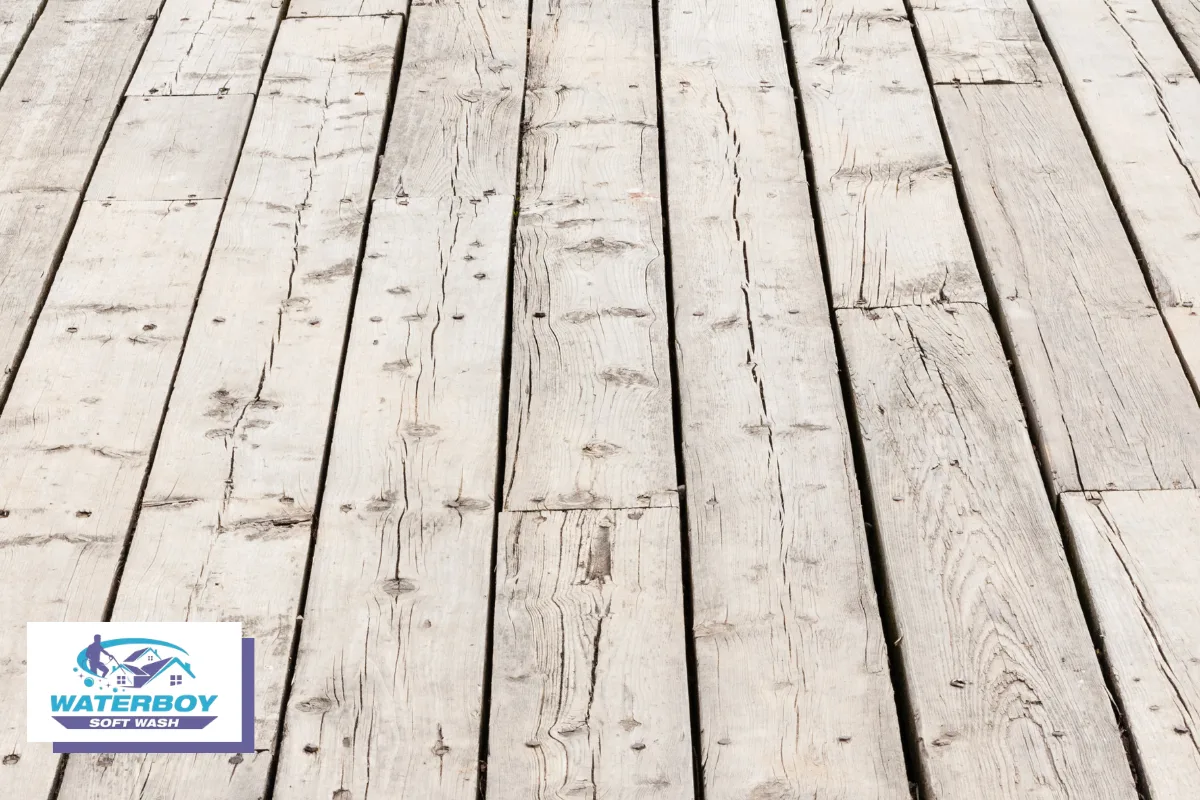
The safety of power washing any deck depends far more on what the deck is made of than on how much dirt or grime covers the surface. Wood density, porosity, grain structure, and the overall structural condition of the boards all dictate how much force they can absorb before fibers lift, split, or gouge. A technique that works perfectly on a concrete driveway, which can withstand 1,500 to 3,000 PSI without issue, will chew through a soft cedar plank in seconds. Chester County experiences a humid continental climate with significant seasonal fluctuations, and those conditions accelerate weathering, meaning a five-year-old deck may behave very differently from a brand-new one under the same spray.
Here is how common deck materials found throughout Chester County neighborhoods break down:
- Pressure-treated pine is the most popular choice in the area. It is affordable and widely available, but still a softwood. The recommended pressure for washing wood decks of this type is roughly 800 to 1,000 PSI with a fan-tip nozzle. Newer boards in good condition can tolerate slightly more, while older, sun-bleached planks need less.
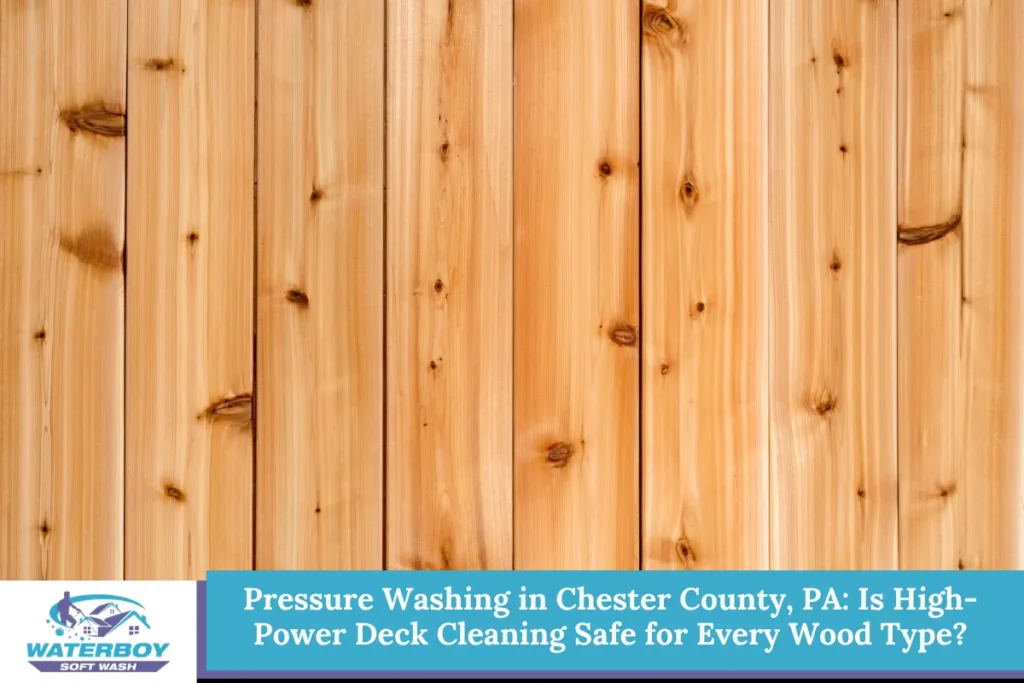
- Cedar and redwood are prized for their natural beauty and insect resistance, but both are softer and more fibrous than treated pine. Safe ranges sit between 500 and 800 PSI. Even small jumps above that threshold can raise the grain and leave a fuzzy, rough texture that is difficult to sand away.
- Tropical hardwoods such as ipe, cumaru, and mahogany are dense enough to handle 1,200 to 1,500 PSI. Their tight grain offers more protection, but that does not make them bulletproof. Narrow tips or close distances still cause visible scarring.
- Composite and PVC decking require following the manufacturer's specific cleaning instructions to avoid damage. Many cap their recommendations at or below 1,500 PSI with a wide fan tip, though select product lines allow higher settings under strictly controlled conditions.
Wood decks require lower pressure to avoid splintering, period. Age, sun exposure, and prior staining or sealing further change the equation. A board that was sealed two years ago has a protective film that moderate pressure can strip unevenly. A board with checking, cupping, or early signs of dry rot should be treated with a low-pressure rinse and specialized cleaners rather than aggressive force. Always evaluate the condition of the material before choosing your settings.
Risks of High-Power Deck Cleaning on Different Wood Types
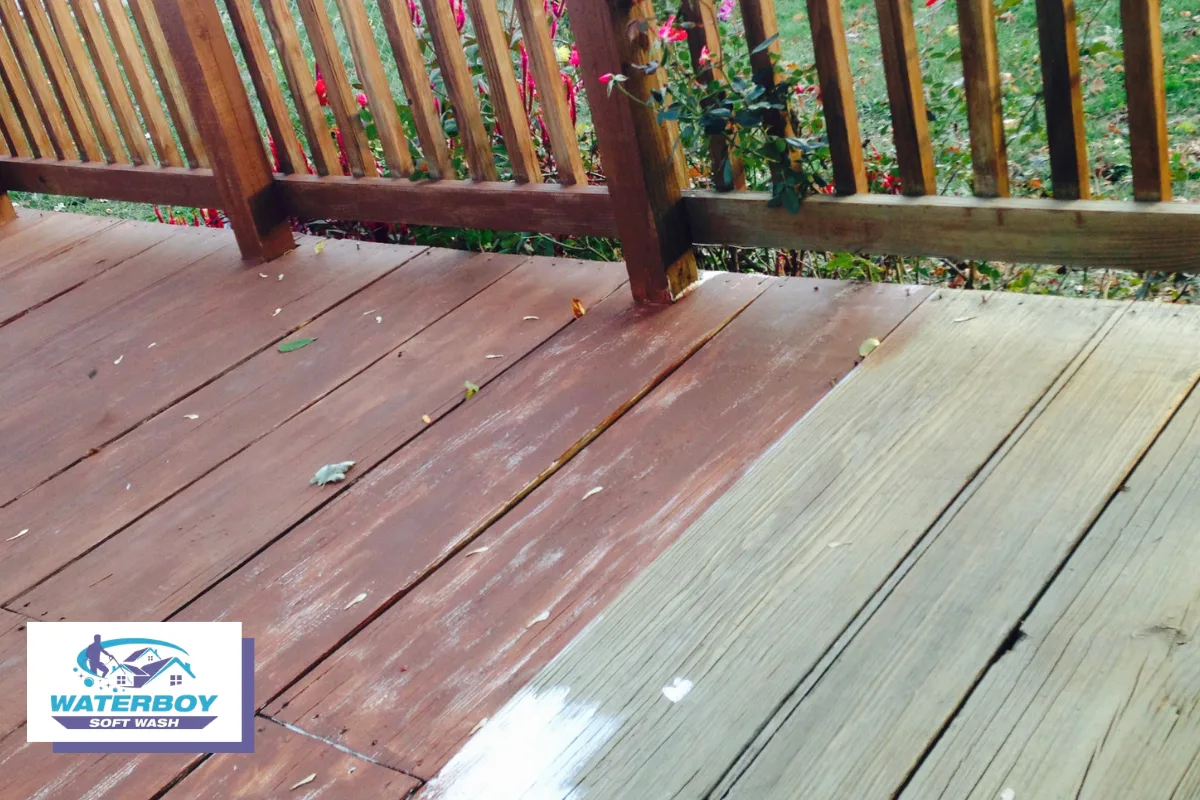
Understanding what can go wrong is just as important as knowing the correct PSI. Here is what happens when too much force meets the wrong surface.
Using too much pressure can damage wood decks in ways that are immediately visible and sometimes irreversible. On pressure-treated pine, which is common around West Chester and suburban Chester County, exceeding roughly 1,000 PSI or holding the wand too close etches the softer spring wood between grain lines. The result is a washboard texture that traps dirt and moisture faster than a smooth board ever would.
Cedar and redwood are even more vulnerable. Using too much pressure can splinter wood decks made from these species because the fibers are naturally weaker. You end up with raised grain, a fuzzy surface that catches bare feet, and loss of natural oil that gives cedar its character. Once those oils are blasted out, they do not come back.
Tropical hardwoods tolerate moderate pressure better, but they are not immune. High-pressure washing may disrupt factory grain patterns in hardwoods like ipe, leaving uneven color patches and wand marks that show through subsequent finishes. These marks become permanent reminders of a rushed job.
Composite decks should not use high pressure settings. The polymer cap on capped composite boards can scar, dull, or develop tiger-striping under concentrated spray. Pressure washing can void warranties on some composite decks and other decking materials, turning a weekend cleaning project into an expensive replacement conversation.
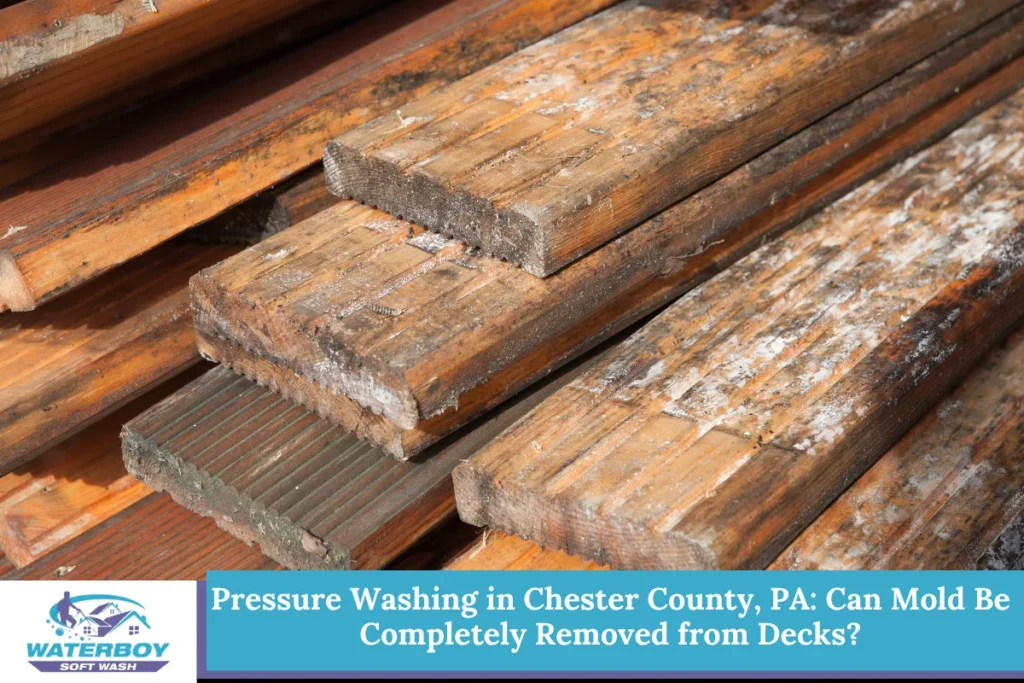
Beyond surface aesthetics, high-pressure washing can accelerate wood rot and structural breakdown by forcing water deep into joints, end grain, and fastener holes. High-pressure washing also delays drying time and invites rot because saturated wood buried under boards or near ledger connections takes far longer to release that moisture. In Chester County's humid climate, high-pressure washing frequently causes biological growth like algae and mildew to return rapidly when pores are opened without proper chemical treatment. Using only water will not eliminate mold or algae problems because the root structures survive below the surface and regrow within weeks.
There are environmental considerations as well. Pressure washing older decks treated with CCA can leach arsenic and chromate, contaminating the surrounding soil and water. And while a pressure washer can strip paint from a surface, it will not fully remove it, leaving behind patchy remnants that make refinishing more difficult. Using excessive pressure can also reduce the effectiveness of future stains and sealants because damaged fibers absorb product unevenly.
Read Can You Bundle Deck Cleaning with Pressure Washing in Chester County, PA?
Safe Techniques: From Nozzle Choice to Soft Washing Alternatives

Method matters as much as raw PSI. A well-executed cleaning job at moderate pressure with the right detergent and nozzle will outperform a reckless blast at maximum power every time. The elements of safe deck cleaning include proper pre-treatment, adequate dwell time for cleaning solutions, a controlled rinse, and post-wash care.
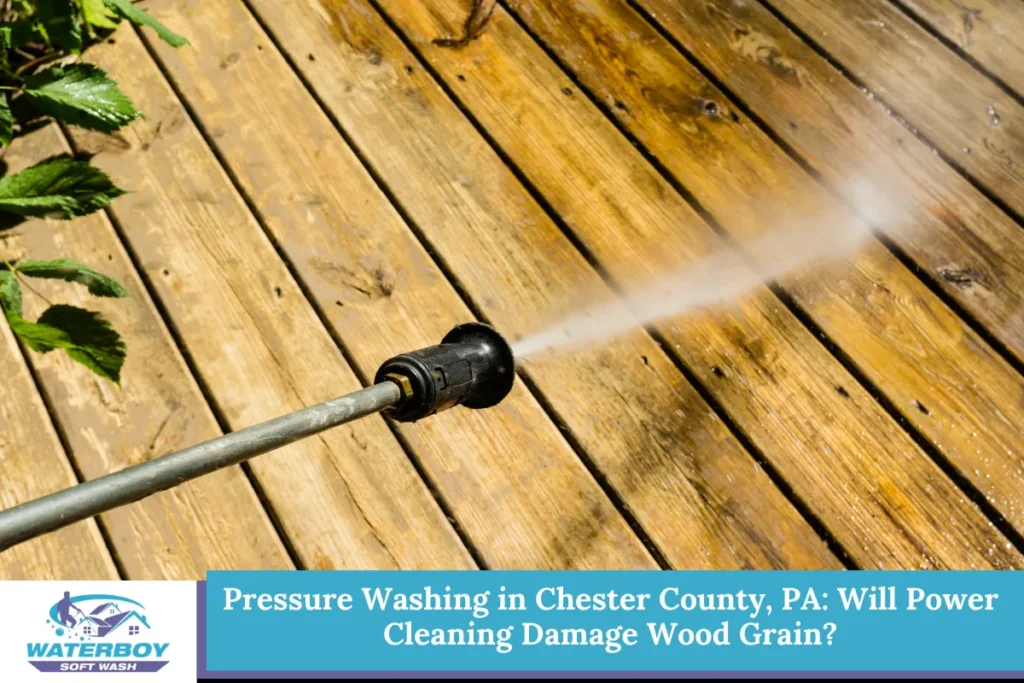
Start with nozzle selection. Use wide fan tips rated at 25 to 40 degrees for any wood or composite deck. A 0-degree nozzle poses an unnecessary safety risk to both the operator and the surface and has no place in residential deck work. Start pressure washing with a low-pressure nozzle in an inconspicuous spot, such as a board hidden by furniture or near the edge of the deck, to watch for fuzzing, gouging, or color change before committing to the full area.
Maintain a consistent distance of 8 to 12 inches from the board for most materials, extending to 12 to 24 inches for softer woods like cedar. Move the wand smoothly along the grain, never across the boards. Sweeping across the grain removes lignin unevenly and leaves lap marks that are nearly impossible to fix without sanding.
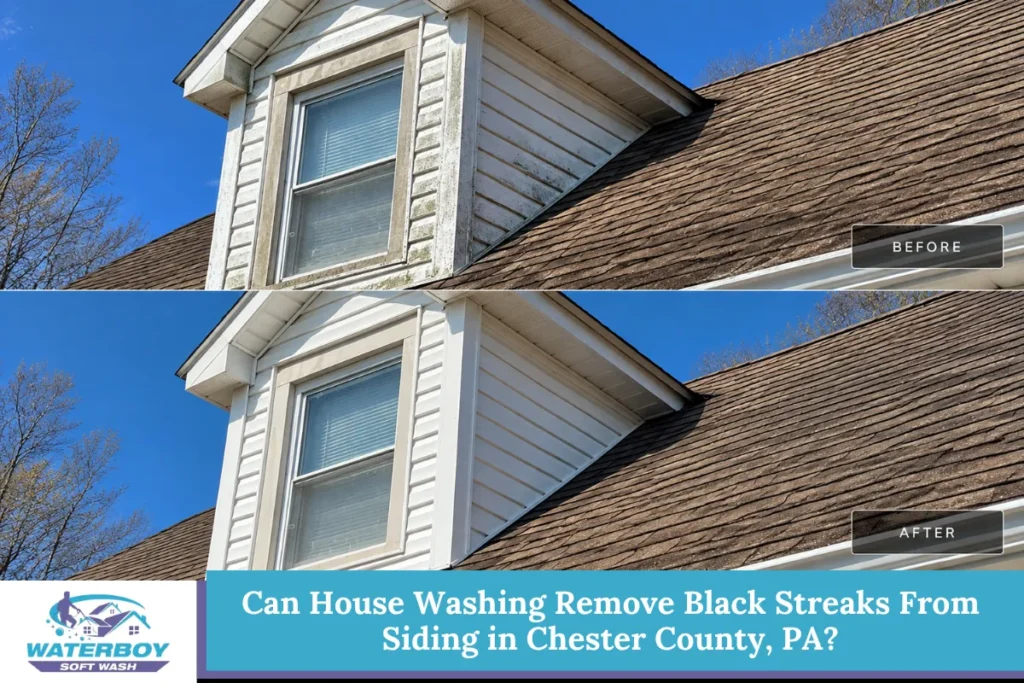
Soft washing is the preferred alternative for fragile, older, or previously damaged decks and railings. This method uses specialized cleaning solutions instead of high pressure, relying on oxygen bleach, mild surfactants, or oxalic acid-based brighteners to break down mold growth, algae, mildew, and grime at the chemical level. A low-pressure rinse is necessary after applying wood cleaners and detergents to wash away loosened debris without tearing into fibers. Soft washing is also preferred for delicate surfaces like roofs, where pressure washing can damage asphalt shingles, and for stone or flagstone patios that chip under concentrated spray. By contrast, vinyl siding can typically withstand pressure washing without damage, making it a better candidate for moderate-pressure house washing.
When deciding between high pressure and soft washing, consider the task. Algae removal and gray oxidation cleanup respond well to chemistry plus gentle rinsing. Prepping a deck for staining benefits from soft washing because the surface stays smooth and ready to accept a finish. Heavy buildup of caked dirt or moss on a structurally sound hardwood deck may justify moderate pressure, but always pair it with a pre-treatment cleaner for the best results.
Safety precautions in a residential setting include wearing gloves and eye protection when handling chemicals, ensuring all nearby outlets are GFCI-protected, routing hoses to avoid trip hazards, and keeping family members and pets away from the work site during the job.
Local Factors in Chester County That Impact Deck Cleaning Decisions
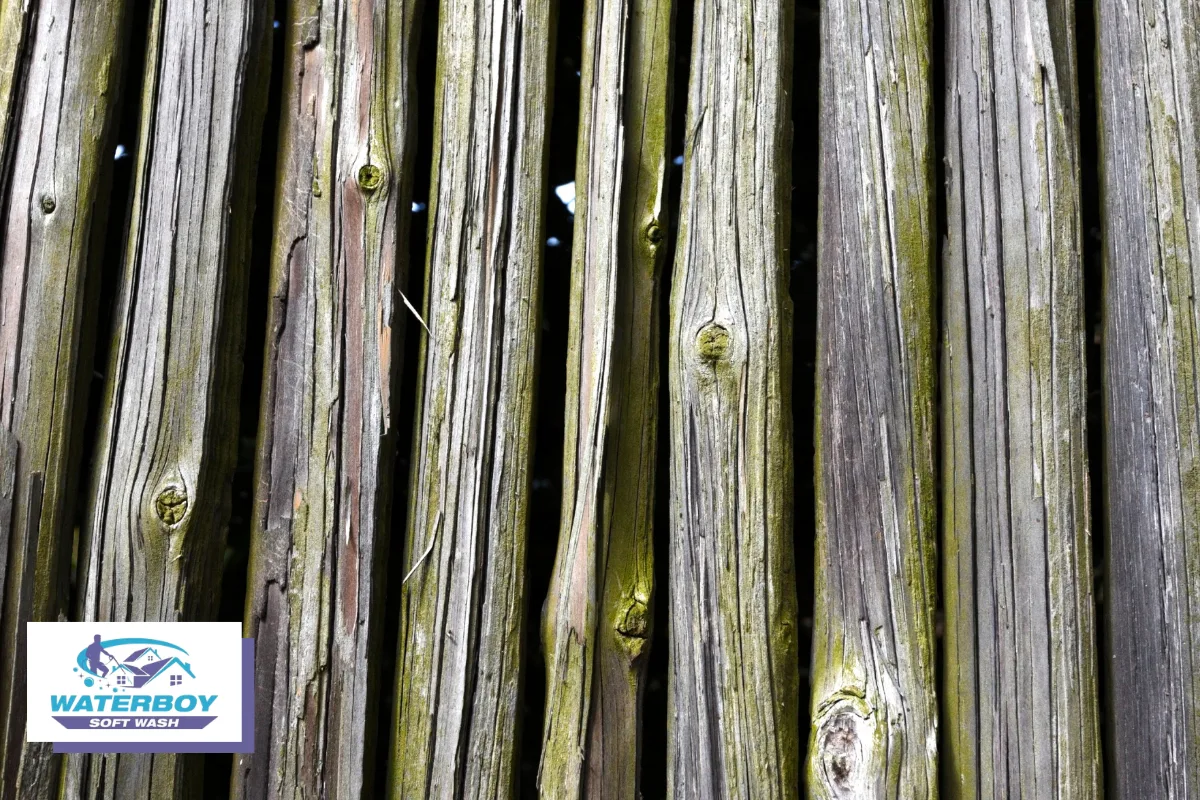
Chester County's climate and landscape create specific challenges that homeowners elsewhere may not face. The region's freeze-thaw cycles during winter can exacerbate damage to wood decks, widening existing cracks and loosening fasteners season after season. Spring brings heavy pollen deposits, summer delivers extended hours of humidity and heat, and fall drops thick layers of leaf debris from mature deciduous trees. All of this feeds organic growth on shaded decks and accelerates surface deterioration.
Many local properties back up to wooded lots or sit over damp ground where moisture retention stays high year-round. In these conditions, gentle soft washing paired with fungicidal cleaners tends to be more effective than brute force pressure cleaning. Blasting a shaded, moisture-laden deck with high pressure often drives water deeper into the structure rather than cleaning it, creating the conditions for long-term rot in joists and ledger boards.
If you have a concrete driveway or paver walkway adjacent to your deck, those surfaces can handle 1,500 to 3,000 PSI, but the same machine at the same setting will destroy your deck boards if you do not adjust. Always step down pressure and swap nozzles when transitioning from hard surfaces to wood.
Before renting or purchasing a powerful machine, check your decking manufacturer's care guidelines and any HOA recommendations within your Chester County community. Some associations have specific expectations about finishes, stain colors, and approved maintenance methods. Environmental stewardship discourages harsh chemical runoff into the local ecosystem, so choose eco-conscious detergents, protect nearby landscaping with tarps or pre-soaking, and divert wash water away from storm drains and streams. Taking these precautions helps keep your property's exterior clean while keeping the surrounding environment safe.
Preparing, Cleaning, and Protecting Your Deck the Right Way
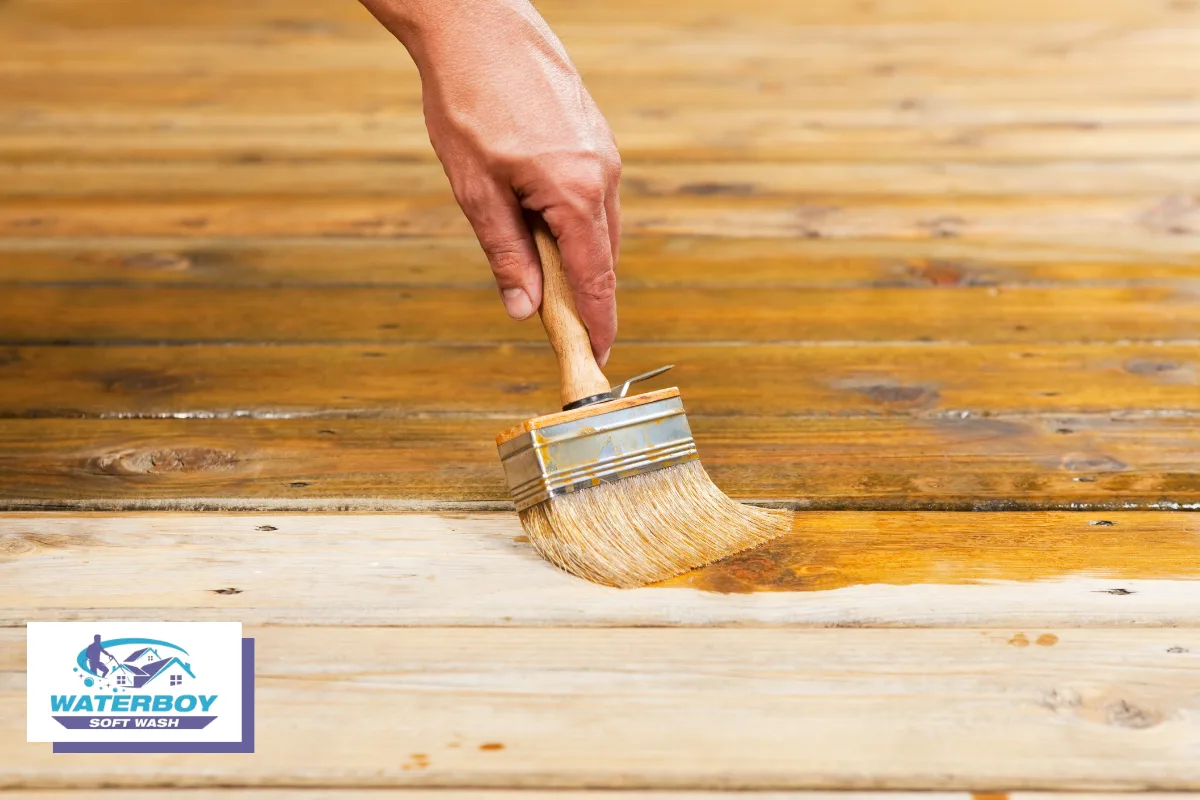
A successful deck cleaning project starts well before the machine turns on. Proper preparation saves time, prevents damage, and sets you up for a finish that lasts.
Before any wash:
- Clear the deck of all furniture, planters, grills, and debris
- Cover electrical outlets and outdoor lighting fixtures
- Wet nearby plants and landscaping to dilute any cleaner contact
- Walk the entire surface and assess for loose boards, popped nails, failing railings, or spongy spots that water pressure could worsen
- Identify your wood type and choose the correct PSI range and nozzle
Follow a safe cleaning sequence:
- Apply a deck-appropriate cleaner using a pump sprayer, working in manageable sections
- Allow the product to dwell for the recommended time, typically 10 to 15 minutes, without letting it dry on the surface
- Agitate stubborn stains with a stiff-bristle brush rather than increasing pressure
- Rinse each section with low to moderate pressure, moving the wand with the grain in steady, overlapping passes
- Work from the house outward so dirty water flows away from clean areas
After washing, allow the deck to dry thoroughly. In warm, dry weather this takes 24 to 48 hours. During cooler or more humid stretches in PA, plan for 48 to 72 hours. Use a moisture meter if available and confirm wood moisture content is below roughly 15 percent before applying any stain or sealer. Rushing this step traps moisture beneath the finish, leading to peeling, bubbling, and accelerated decay.
Proper sealing or staining after cleaning is what truly extends the life of your deck. A quality finish resists future moisture intrusion, blocks UV damage, and slows organic growth, reducing how frequently vigorous washing is needed. For most wood decks in Chester County, plan on re-sealing every two to three years depending on sun exposure and foot traffic.
For multi-level decks, intricate railings with spindles, or heavily weathered surfaces where you cannot correctly identify the wood type or condition, hiring an experienced local exterior cleaning team can save you from a costly mistake. Professionals bring the right equipment, the right chemicals, and the judgment to adjust technique board by board.
Pressure Washing in Chester County, PA – Water Boy Soft Wash
We are Water Boy Soft Wash, and we specialize in pressure washing and soft washing for decks, siding, roof surfaces, and complete house washing throughout Chester County, Pennsylvania, including communities in and around West Chester. Our trained team takes the time to evaluate your deck's wood type, age, and condition before selecting the right pressure levels and cleaning solutions. We do not believe in a one-size-fits-all approach because we have seen firsthand what happens when the wrong technique meets the wrong material. We proudly serve local homeowners and deliver results that restore curb appeal without sacrificing the health of your boards. Whether you need a gentle soft wash for an aging cedar deck or a thorough cleaning before re-staining, we build a plan around your property. Call us at (610) 812-7378 or fill out our contact form online for a free quote and a personalized exterior cleaning estimate. Trust our team to protect your investment and leave your outdoor spaces looking their best.
Frequently Asked Questions
Can I Use a Consumer-Grade Pressure Washer on My Older Deck?
Most consumer-grade machines produce 2,000 to 3,000 PSI at full output, which is often far more than aging or weathered wood can handle safely. If your deck is more than five years old, start at the lowest available setting with a 40-degree fan nozzle and test in a hidden spot, such as under a step or behind a planter. Watch for fiber lifting, fuzzing, or color change before moving to visible areas. If any damage appears, switch to a soft washing approach or manual scrubbing with a deck cleaner and brush. Structural red flags like deep cracks, soft spots, or loose fasteners mean the deck needs repair first and should only receive very gentle cleaning afterward.
How Often Should I Professionally Clean and Seal My Deck in Chester County?
Plan on cleaning every 12 to 24 months depending on your deck's exposure to shade, tree cover, and foot traffic. Sealing or staining is generally recommended every two to three years for most wood decks in the area. Shaded or north-facing decks, or those sitting beneath heavy foliage, tend to accumulate algae and mildew faster due to local humidity and may benefit from more frequent gentle washing. Monitor how water behaves on the surface: if it soaks in rather than beading up, the protective finish is wearing thin and the deck is ready for another round of treatment. Staying on schedule prevents the kind of heavy buildup that tempts homeowners to reach for dangerously high pressure.
Will Pressure Washing Remove All Gray Weathering From My Deck Boards?
The gray color on weathered decks is oxidized wood fiber, not just surface dirt. A careful wash using appropriate cleaners can remove much of this discoloration, but boards that have been neglected for many years may never return to their original appearance. Over-aggressive washing in pursuit of that brand-new look often causes more harm than good, stripping healthy wood along with the gray layer. A wood brightener applied after cleaning can help restore a more natural tone, and a quality semi-transparent stain will even out remaining color differences. This balanced approach lets you improve the look without sacrificing the structural integrity of your boards.
Is It Safe to Pressure Wash My Deck Before Selling My Home?
A properly cleaned deck can significantly boost curb appeal and make a strong first impression on potential buyers. Clean railings, steps, and boards signal that the property has been well maintained. However, visible wand marks, splintering, or uneven stain removal caused by a rushed high-pressure DIY job can have the opposite effect, raising red flags about deferred maintenance. If you are preparing to list your home, consider having a professional handle the deck and house washing on a timeline that allows for proper drying and, if needed, a fresh coat of sealer before photography and showings. The small investment in professional care often pays for itself in perceived home value.
What Signs Tell Me My Deck Is Too Damaged for Pressure Washing at All?
Look for these red-flag conditions before turning on any machine: spongy or soft boards that flex underfoot, widespread rot visible as dark discoloration and crumbling wood, deep structural cracks that extend through the full thickness of a board, loose or wobbling railings, and joists that are pulling away from the house or showing signs of decay. In these situations, introducing pressurized water can accelerate deterioration by forcing moisture into already compromised areas and speeding the breakdown of remaining sound wood. The right course of action is to prioritize repair or partial replacement of damaged sections first, then consider a very gentle cleaning plan using soft washing or careful hand scrubbing under professional guidance.
Disclaimer
Disclaimer: This article provides general exterior cleaning guidance for Chester County, Pennsylvania homeowners and is not a substitute for on-site professional inspection or advice. Always verify manufacturer guidelines, local regulations, and structural conditions before cleaning any deck or surface.
Read How to Clean Gutters With a Power Washer: Gutter Cleaning Tips in Chester County, PA