


A Slippery, Stained Pool Deck Isn’t Just an Eyesore
Power Washing in Parkesburg, PA is one of the most effective ways to clean pool decks that have become slippery, stained, and unsafe over time. Algae, sunscreen residue, mildew, and dirt don’t just make your pool area look neglected—they create a serious slip hazard and slowly break down the surface material. Many homeowners try to scrub or rinse the area, only to see stains return weeks later. Others turn to harsh chemicals that damage concrete or pavers. The solution is using the right power cleaning approach, with the correct pressure, water flow, and surface-safe techniques. When done properly, power washing restores traction, improves appearance, and protects your pool deck for years to come.
Why Pool Decks in Parkesburg Get Dirty Faster Than Expected
Parkesburg’s seasonal weather plays a major role in how quickly pool decks become dirty. Warm summers, frequent rain, and shaded areas create the perfect environment for organic growth. Pool water itself also contributes to buildup.
Environmental Factors That Affect Pool Decks
- High humidity encouraging algae and mildew
- Rainwater carrying dirt and pollen onto surfaces
- Shade from fencing, trees, or nearby structures
- Freeze-thaw cycles loosening surface pores
Pool-Related Causes of Buildup
- Chlorine overspray leaving white residue
- Saltwater pools causing mineral deposits
- Sunscreen, oils, and body lotions staining surfaces
- Foot traffic grinding debris into porous materials
Over time, these factors combine and embed contaminants deep into concrete, stone, or pavers, making basic rinsing ineffective.
Understanding Pool Deck Materials Before Cleaning
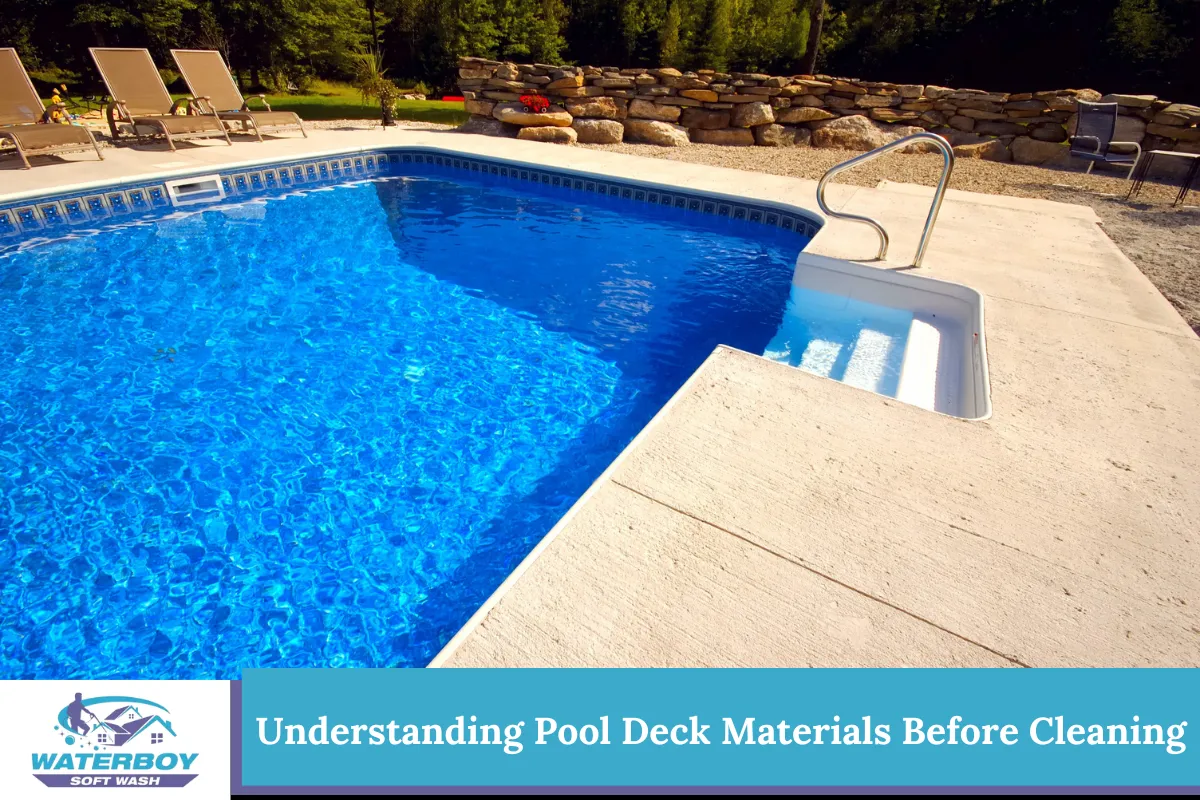
Not all pool decks can handle the same level of pressure washing. Using a power washer incorrectly can permanently damage the surface, leading to costly repairs.
Concrete Pool Decks
Concrete is durable but porous. High pressure can etch the surface, exposing aggregate and weakening the slab. Proper power wash methods rely on controlled pressure and even water distribution.
Paver Pool Decks
Pavers are attractive but vulnerable. Excessive pressure can dislodge joint sand and destabilize the surface. Careful power cleaning preserves both structure and appearance.
Natural Stone and Decorative Surfaces
Travertine, flagstone, and stamped concrete require special care. These materials often need lower pressure and targeted cleaning to avoid surface erosion.
The Difference Between Power Washing and Pressure Washing for Pool Decks
Although often used interchangeably, there is a practical distinction.
Pressure Washing
Uses high-pressure cold water to remove dirt and buildup. Effective for sturdy surfaces but risky when overused.
Power Washing
Incorporates heated water, which helps break down organic growth and oils more efficiently. This method often requires less pressure, reducing surface damage.
For pool decks, the goal is not maximum force—it’s controlled cleaning that lifts contaminants without harming the surface.
Safety Considerations for Pool Deck Cleaning
Cleaning a pool deck isn’t just about appearance. Safety is a major concern, especially in residential areas.
Slip Hazard Reduction
Algae and mildew create slick biofilm that increases fall risk. Proper power washing restores natural traction.
Drainage Awareness
Parkesburg regulations require wastewater to be managed responsibly. Runoff should not enter storm drains or neighboring properties. Pool deck cleaning must follow local environmental guidelines, using water responsibly and avoiding chemical discharge into public systems.
Surface Integrity
Overwashing weakens surfaces. Once damaged, decks become more prone to cracking and staining.
Preparing Your Pool Deck for a Power Wash
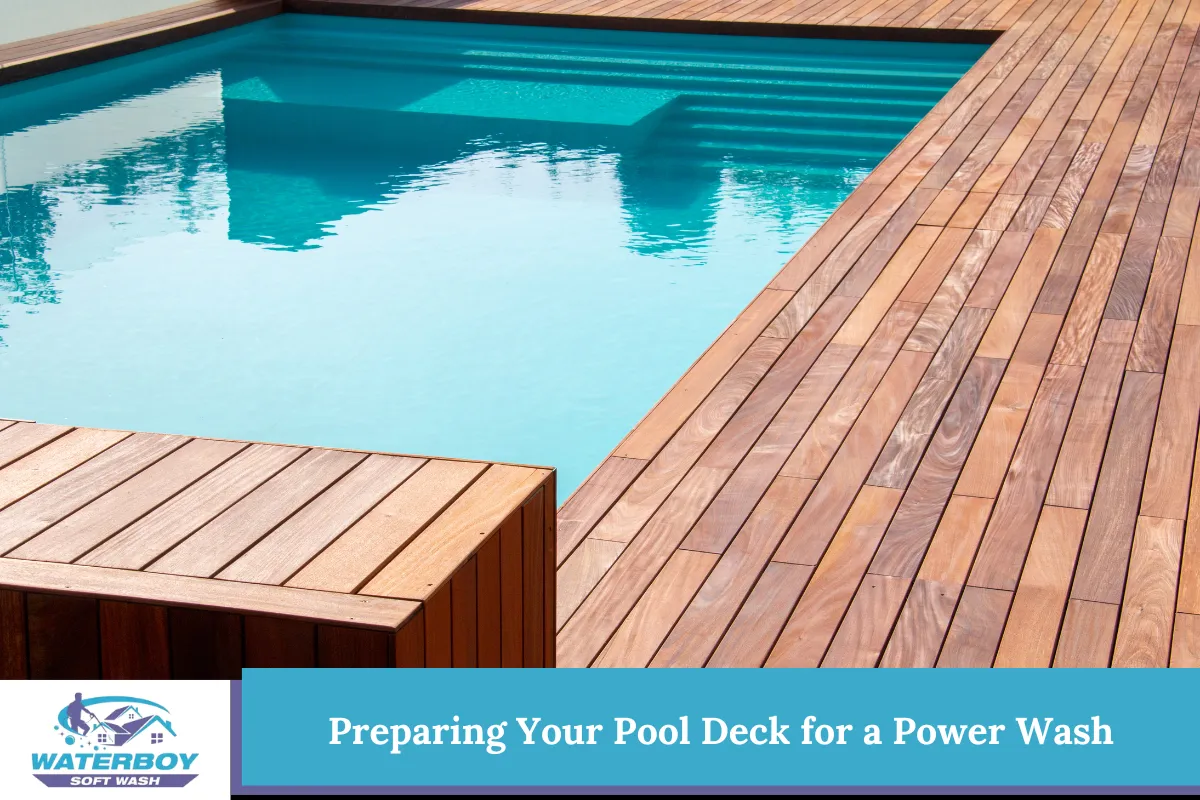
Preparation improves results and protects nearby features.
Steps to Take Before Cleaning
- Remove furniture, planters, and pool accessories
- Sweep loose debris to prevent grinding dirt into the surface
- Check for cracks or loose pavers
- Protect nearby landscaping from runoff
- Shut off pool equipment exposed to overspray
Proper preparation ensures an even clean and prevents unintended damage.
Cleaning Solutions: What Works and What to Avoid
Not all cleaning agents are safe for pool decks.
Effective Cleaning Options
- Mild detergents designed for exterior surfaces
- Oxygen-based cleaners for organic stains
- Hot water combined with controlled pressure
Products to Avoid
- Harsh acids that etch concrete
- Bleach overuse, which can weaken surfaces
- Abrasive cleaners that remove protective layers
Using the wrong solution may clean temporarily but cause long-term deterioration.
Read Power Washing in Parkesburg, PA: How to Remove Chewing Gum?
Step-by-Step Pool Deck Power Cleaning Process
A professional-grade approach follows a systematic process.
Initial Rinse
A low-pressure rinse removes loose debris and prepares the surface for deeper cleaning.
Targeted Power Wash
Pressure is adjusted based on material type. The surface is cleaned in consistent passes to prevent streaking or uneven marks.
Stain Treatment
Stubborn algae, rust, or mineral stains receive focused treatment without oversaturation.
Final Rinse
A thorough rinse removes residue and ensures no slippery film remains.
This method delivers a deep clean without compromising durability.
Common Pool Deck Stains and How They’re Removed
Different stains require different techniques.
Algae and Mildew
Best removed using warm water and controlled pressure. Scrubbing alone rarely reaches root growth.
Rust and Metal Stains
Often caused by furniture or water minerals. These require targeted treatment to prevent discoloration.
Sunscreen and Oil Residue
These stains penetrate porous surfaces and need heat-assisted power washing for effective removal.
How Often Should Pool Decks Be Cleaned?
Cleaning frequency depends on usage and exposure.
- High-traffic pools: once or twice per season
- Shaded or wooded areas: more frequent cleaning
- Light-use residential pools: annual cleaning
Routine power washing extends surface life and reduces long-term maintenance costs.
DIY Pool Deck Cleaning vs Professional Power Washing
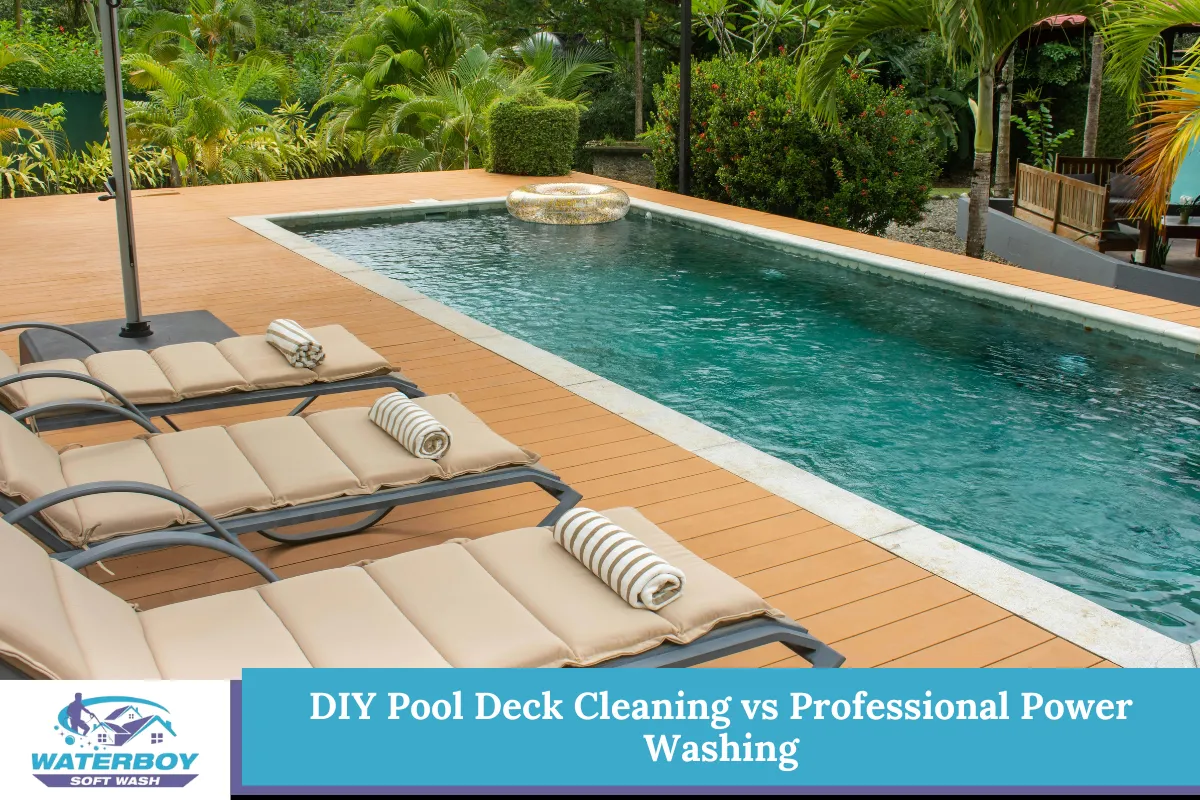
Many homeowners consider renting a power washer, but risks are often underestimated.
DIY Risks
- Surface etching from excessive pressure
- Uneven cleaning patterns
- Displaced paver sand
- Water intrusion under slabs
Professional Advantages
- Correct pressure calibration
- Knowledge of local conditions
- Proper runoff management
- Consistent, uniform results
In many cases, professional service prevents expensive repairs later.
Environmental Responsibility in Parkesburg, Pennsylvania
Local guidelines emphasize responsible water use and runoff control. Pool deck cleaning should never allow chemicals or debris to flow into public drainage systems or nearby properties. Using minimal detergents, controlled water flow, and proper disposal aligns with community standards and environmental protection efforts.
Long-Term Benefits of Proper Pool Deck Power Washing
When done correctly, power washing delivers more than cosmetic improvement.
- Enhanced safety for family and guests
- Increased property value
- Reduced surface deterioration
- Improved curb appeal
A clean pool deck creates a healthier and more enjoyable outdoor space.
Power Washing in Parkesburg, PA – Water Boy Soft Wash
Water Boy Soft Wash specialize in power washing solutions designed specifically for Parkesburg homeowners. When it comes to cleaning pool decks, we understand how local weather, pool usage, and surface materials affect results. Our team uses proven power washing methods that remove algae, mildew, and stains without damaging your deck. We focus on safety, surface protection, and long-lasting cleanliness. From concrete to pavers, our power cleaning approach restores traction and appearance while following local guidelines. If your pool deck is slippery, discolored, or overdue for a deep clean, we’re ready to help. Call us at (610) 812-7378 or fill out our contact form to schedule service in Parkesburg, Pennsylvania and see the difference professional power washing makes.
Frequently Asked Questions
Can power washing damage a pool deck?
Yes, if done incorrectly. Excessive pressure or improper techniques can etch concrete, loosen pavers, and strip protective layers. Proper power washing relies on adjusting pressure based on surface type and using consistent motion. That’s why professional methods focus on controlled cleaning rather than maximum force.
Is it safe to power wash around pool drains and coping?
It can be safe when handled properly. Care must be taken around expansion joints, drains, and pool coping to prevent water intrusion or displacement. A controlled power wash avoids forcing water into vulnerable areas while still removing buildup effectively.
Does power washing remove slippery algae permanently?
Power washing removes existing algae and mildew, restoring traction. However, organic growth can return over time due to moisture and shade. Routine cleaning and proper drainage help slow regrowth and keep surfaces safer longer.
Can I power wash a sealed or painted pool deck?
Yes, but with caution. Sealed or coated surfaces require lower pressure to avoid peeling or stripping. Testing a small area first is essential to prevent damage and ensure the finish remains intact.
What time of year is best for pool deck power washing?
Late spring through early summer is ideal, as it prepares the area for peak pool use. However, cleaning can be done anytime temperatures allow water to drain properly without freezing, following local weather conditions.
Disclaimer: This article is for general informational purposes only. Cleaning methods and results may vary based on surface type, condition, and environmental factors. Always follow local regulations and safety guidelines when performing power washing. For specific concerns, consult a qualified professional.
Read Power Washing in Parkesburg, PA: Can I Clean Patio Furniture?