

Chester County Concrete Cleaning starts with a common frustration—unsightly oil stains ruining your driveway or patio. Maybe you’ve tried scrubbing or store-bought cleaners but those tough stains just won’t budge. Over time, these marks not only look bad but can weaken your concrete and hurt curb appeal. Ignoring them can even lower property value. But there’s a proven solution: the right techniques and products make a real difference. In this article, you’ll find out how to successfully remove oil stains from concrete using effective concrete washing methods, pressure washing, and safe concrete cleaners. Whether you’re a homeowner or business in Chester County, you’ll learn step-by-step solutions for cleaner, brighter surfaces—all using best practices recommended by professionals.
Why Oil Stains Are a Problem for Concrete Surfaces
Oil stains are more than an eyesore. They penetrate deep into porous concrete, making removal difficult if not handled promptly. As oil seeps in, it can cause long-term discoloration and even erode the surface, leading to pitting or spalling. These stains also make your property look poorly maintained, affecting the impression you give neighbors, guests, or customers.
How Oil Damages Concrete Over Time
Oil’s chemical structure binds to the minerals in concrete, leading to persistent stains. Left untreated, oil can weaken the surface, making future cleaning more difficult. Additionally, oil creates a slick surface—posing a slip hazard.
Step-by-Step: How to Remove Oil Stains From Concrete in Chester County

Cleaning oil stains from concrete isn’t complicated, but you’ll need patience and the right approach. Here’s a detailed guide to restoring your surface.
Gather the Necessary Supplies for Concrete Cleaning
- Absorbent material (cat litter, baking soda, or sawdust)
- Commercial concrete cleaner or degreaser
- Stiff bristle brush
- Garden hose or pressure washer
- Rubber gloves and eye protection
Absorb Fresh Oil Spills Immediately
- Blot, Don’t Rub: As soon as oil spills, blot it up with a rag or paper towel. Avoid rubbing, which spreads the stain.
- Apply Absorbent: Cover the area with a thick layer of cat litter or baking soda. Let it sit for at least one hour, or overnight for best results.
- Sweep Up: After absorption, sweep up the material and dispose of it properly.
Apply the Right Cleaner
- Choose a Quality Concrete Cleaner: Look for products labeled as degreasers or enzymatic cleaners, specially formulated for concrete washing.
- Apply According to Instructions: Pour or spray the cleaner on the stain, covering it completely. Allow it to soak as per the product’s directions—usually 10 to 20 minutes.
- Scrub Vigorously: Use a stiff bristle brush to agitate the cleaner into the concrete. This lifts the oil from the pores of the surface.
Use Pressure Washing for Deep Cleaning
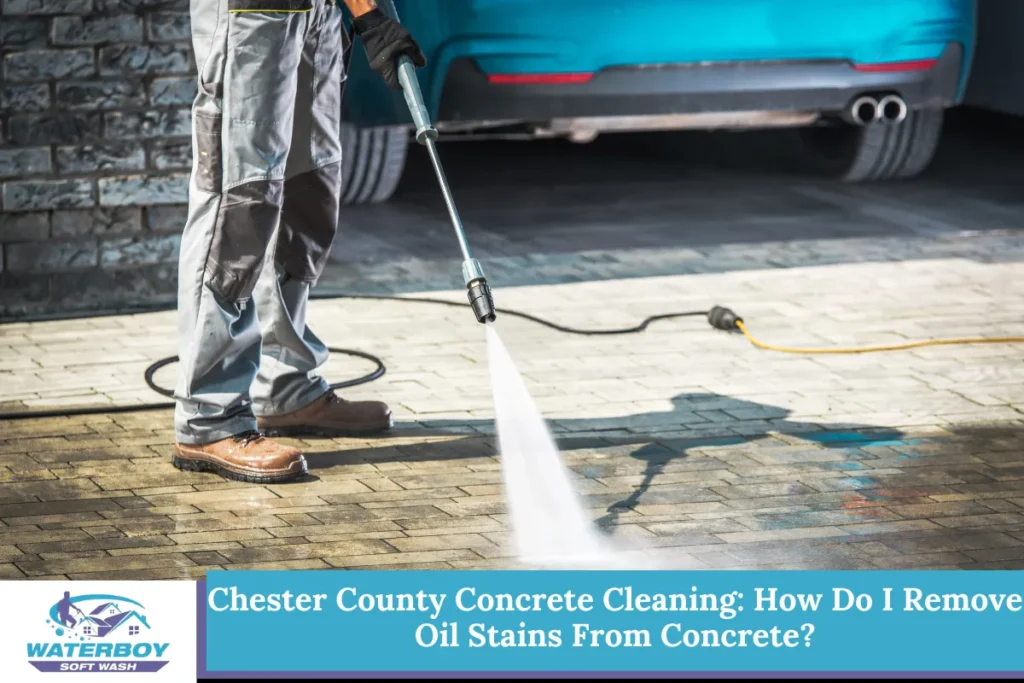
Concrete pressure washing is highly effective for stubborn stains and larger areas. Here’s how to do it safely:
- Set Up the Pressure Washer: Use a machine rated at 3,000 PSI or less. Higher pressures can damage concrete.
- Spray Evenly: Hold the wand about a foot above the surface and sweep back and forth. Start at the lowest pressure setting and increase only if necessary.
- Rinse Thoroughly: Rinse away all cleaner and debris.
The Best Concrete Cleaners for Oil Stain Removal

Not all concrete cleaners are created equal. In Chester County, you can find many reputable products at local hardware stores or online. Consider these top choices:
- Enzymatic Cleaners: Break down oil naturally and are safe for the environment.
- Degreasers: Effective for heavy-duty oil removal; ideal for garage floors and driveways.
- Biodegradable Solutions: Protect nearby landscaping while cleaning concrete efficiently.
DIY Concrete Cleaning Solutions
If you prefer a homemade option, try a paste of baking soda and water or mix dish soap with hot water. These options work well for smaller or fresher stains but may not match the power of professional-grade cleaners.
Read Chester County Concrete Cleaning: What is the Best Way to Clean Concrete Surfaces?
Preventing Future Oil Stains on Concrete Surfaces
Keeping your Chester County property clean isn’t just about removal—it’s about prevention, too.
Seal Your Concrete
Applying a quality sealer creates a barrier, making it harder for oil to penetrate. Re-seal your concrete every two to three years for best results.
Address Leaks Promptly
Inspect vehicles regularly for leaks. Place drip pans under areas prone to oil drips.
Routine Maintenance
Sweep and wash your driveway or patio regularly. This prevents the buildup of oil, dirt, and debris.
Professional Concrete Pressure Washing: When to Call an Expert
Sometimes, DIY methods aren’t enough. Deep-set stains, large areas, or delicate surfaces may need a professional touch. Expert concrete washing companies in Chester County use commercial-grade equipment and specialized detergents for superior results.
Benefits of Professional Concrete Cleaning Services
- Fast, effective stain removal
- Protects your investment and extends surface life
- Improves property value and curb appeal
- Uses eco-friendly products and methods
Restore and Protect Your Property with the Right Concrete Cleaning Methods
Oil stains on concrete don’t have to be permanent. Whether you tackle them yourself with proven cleaning solutions or hire a professional service for concrete pressure washing, you have options to restore your property’s curb appeal. Prevention—like sealing and regular maintenance—helps keep future stains at bay. If you need a trusted local solution, Water Boy Soft Wash in Chester County stands ready to deliver effective, safe, and affordable concrete cleaning services.
Chester County Concrete Cleaning – Water Boy Soft Wash

When it comes to restoring the beauty of your concrete surfaces, Water Boy Soft Wash delivers the best results in Chester County and surrounding areas. Our team specializes in concrete cleaning and concrete pressure washing, tackling stubborn oil stains, dirt, and grime with advanced techniques and professional-grade cleaners. Don’t let unsightly stains ruin your property’s curb appeal. Call Water Boy Soft Wash at (610) 812-7378 for a free consultation, or fill out our easy contact form online. We’re quick to respond and committed to protecting your investment. Let us help you enjoy a cleaner, safer, and more attractive home or business surface today.
Frequently Asked Questions
How long does it take to remove an oil stain from concrete?
The time needed depends on how old and deep the stain is. Fresh spills, when treated immediately, can be removed in less than an hour with absorbent material and cleaner. Older or set-in stains may require multiple treatments, possibly over several days, especially if using enzymatic or eco-friendly solutions that work more slowly but penetrate deeper. In some cases, professional cleaning services can significantly reduce the time needed by using commercial equipment and powerful cleaners. For most situations, expect the process to take anywhere from one hour to a few days for full results.
Is it safe to use bleach or muriatic acid on concrete stains?
Bleach and muriatic acid are not recommended for concrete stain removal. Bleach can discolor the concrete and damage surrounding plants or grass. Muriatic acid, while effective at dissolving some stains, can erode and weaken concrete surfaces, posing a safety risk and reducing the lifespan of your driveway or patio. For safe and effective results, use products specifically formulated as concrete cleaners or degreasers, and always follow manufacturer recommendations. If in doubt, consult a professional cleaning service for guidance.
Will pressure washing alone remove old oil stains from concrete?
Pressure washing is excellent for removing dirt, algae, and loose grime from concrete, but it may not completely eliminate old oil stains. These stains penetrate below the surface and can require pre-treatment with specialized concrete cleaning solutions before pressure washing. For best results, combine pressure washing with a degreaser or enzymatic cleaner designed to break down oil. This approach maximizes the chances of restoring your concrete to a like-new condition.
Are environmentally friendly concrete cleaners effective on oil stains?
Yes, many eco-friendly concrete cleaners, such as enzymatic formulas, are effective at breaking down oil and grease without harming nearby landscaping or posing health risks. While these cleaners may take longer to fully remove deep stains compared to harsh chemicals, they are a safe and sustainable choice, particularly for residential areas or locations with children and pets. Always look for products labeled as biodegradable and suitable for oil stain removal.
How often should I have my concrete surfaces professionally cleaned?
For optimal appearance and longevity, it’s a good idea to schedule professional concrete cleaning at least once a year, especially in high-traffic areas or places exposed to vehicles. Regular maintenance not only removes stains but also prevents buildup of dirt, mold, and other contaminants that can damage your concrete over time. Properties with frequent oil spills or heavy use may benefit from more frequent cleaning, such as every six months. Consulting with a local expert will help you determine the best schedule for your needs.
Disclaimer: This article is for informational purposes only. Always follow manufacturer instructions for any cleaning product, and consult a professional for significant or hazardous stains. Results may vary based on the condition of the concrete and the type of stain.
Read How to Avoid Damage During Concrete Cleaning in Chester County, Pennsylvania