
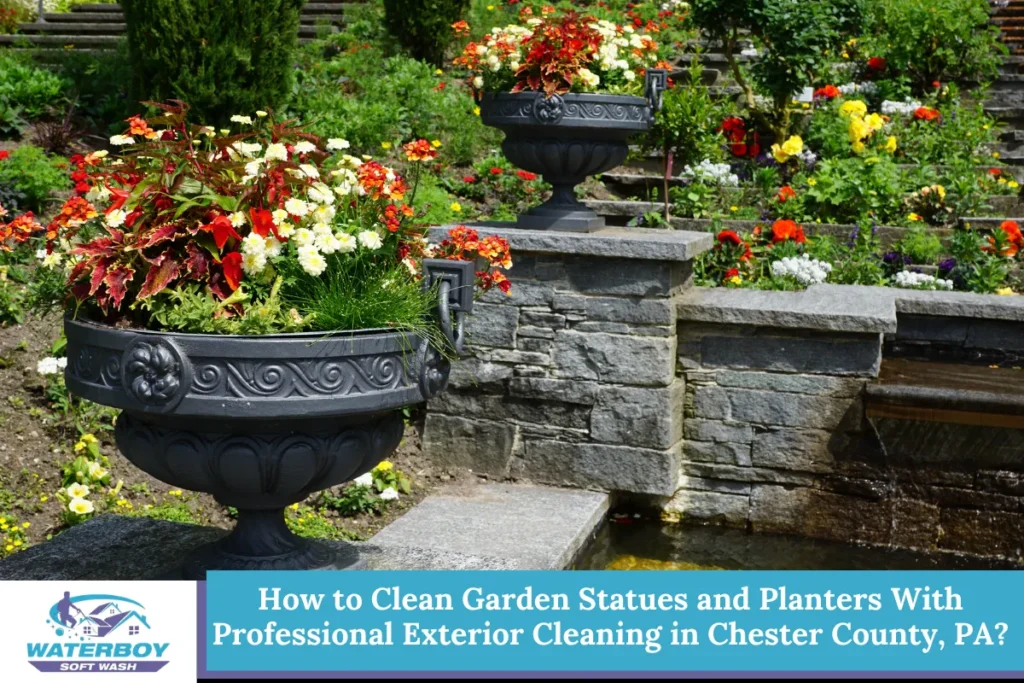

Exterior cleaning is one of those home maintenance tasks that most people associate with siding, roofs, and driveways, but it applies just as much to the garden statues, birdbaths, and planters that define your outdoor living space. If you live in Chester County, PA, you already know that southeastern Pennsylvania’s weather does a number on anything left outside. Humid summers, heavy shade, freeze-thaw winters, and constant leaf debris create the perfect recipe for moss, algae, mildew, and mineral stains that slowly eat away at your favorite garden pieces.
The good news is that keeping those pieces in great shape is not complicated once you understand which cleaning method matches which material. This guide walks through everything from safe do-it-yourself techniques to knowing exactly when to call in professionals who specialize in exterior washing for homes and outdoor features throughout the county.
Key Takeaways
- Garden statues and planters across Chester County collect algae, mildew, and soil stains year-round due to the region’s humid summers, shaded lots, and frequent precipitation. Regular care prevents permanent damage.
- Gentle hand-washing paired with professional exterior cleaning keeps concrete, stone, resin, and metal decor looking fresh for years without the risk of surface damage.
- Soft wash methods are safer than high pressure for most garden ornaments and the landscaping around them, while standard power washing can destroy fragile garden ornaments if applied carelessly.
- Homeowners should avoid harsh acids, wire brushes, and untrained pressure washing that can chip, etch, or discolor outdoor surfaces.
- Partnering with a fully insured, local Chester County exterior house cleaning company is the most reliable way to protect outdoor decor and maintain curb appeal season after season.
Keeping Garden Statues and Planters Clean in Chester County’s Climate
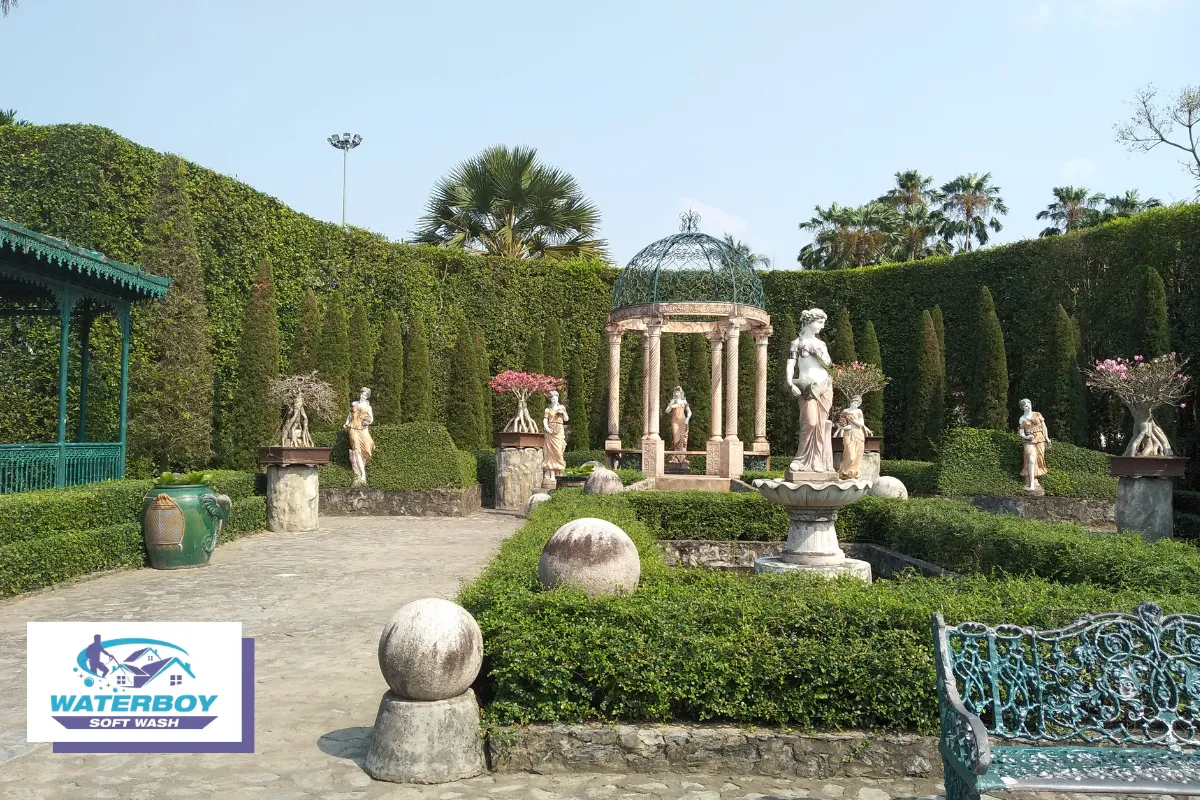
Chester County sits in a humid continental climate zone with hot, sticky summers, regular rainfall, and cold winters that bring repeated freeze-thaw cycles. Shaded yards, which are common in communities like West Chester, Downingtown, and Kennett Square, hold moisture longer than sun-drenched lots. That lingering dampness is exactly what algae, lichen, and black mildew need to colonize any outdoor surface they can reach.
The process is gradual. A thin green film shows up on a concrete birdbath in spring. By midsummer, dark streaks run down the sides of a cast-stone figure. Come fall, the buildup has worked its way into the pores of the material, making it harder to remove and accelerating wear. Cleaning garden statues and planters depends heavily on the material, but the underlying principle is the same for all of them: biological growth and mineral deposits trap moisture, and trapped moisture leads to cracking, spalling, and discoloration over time.
Concrete and natural stone are porous materials, so they absorb water readily. When that water freezes inside the pores during a January cold snap, it expands and fractures the surface from within. Resin and fiberglass pieces may not crack the same way, but UV exposure and biological buildup degrade paint and sealers, leaving them faded or peeling. Metal urns and sculptures develop rust or lose their patina when exposed to acidic runoff or harsh scrubbing.
Cleaning methods vary based on the material of garden decor. A limestone angel needs a completely different approach than an iron planter or a glazed terracotta pot. Recognizing that difference is what separates a cleaning job that restores beauty from one that causes damage. Most homes benefit from washing every 12-24 months, and the same rhythm works well for the garden pieces around them. Routine cleaning every spring and fall prevents deep staining and scaling, saving homeowners from premature replacement costs that can easily run into the hundreds.
Professional power washing services working around garden areas must be adjusted carefully to protect plants, mulch beds, and landscape lighting. A skilled crew will know how to redirect rinse water, cover sensitive shrubs, and choose the right method for every surface within reach of the spray.
Safe DIY Cleaning Methods for Different Statue and Planter Materials
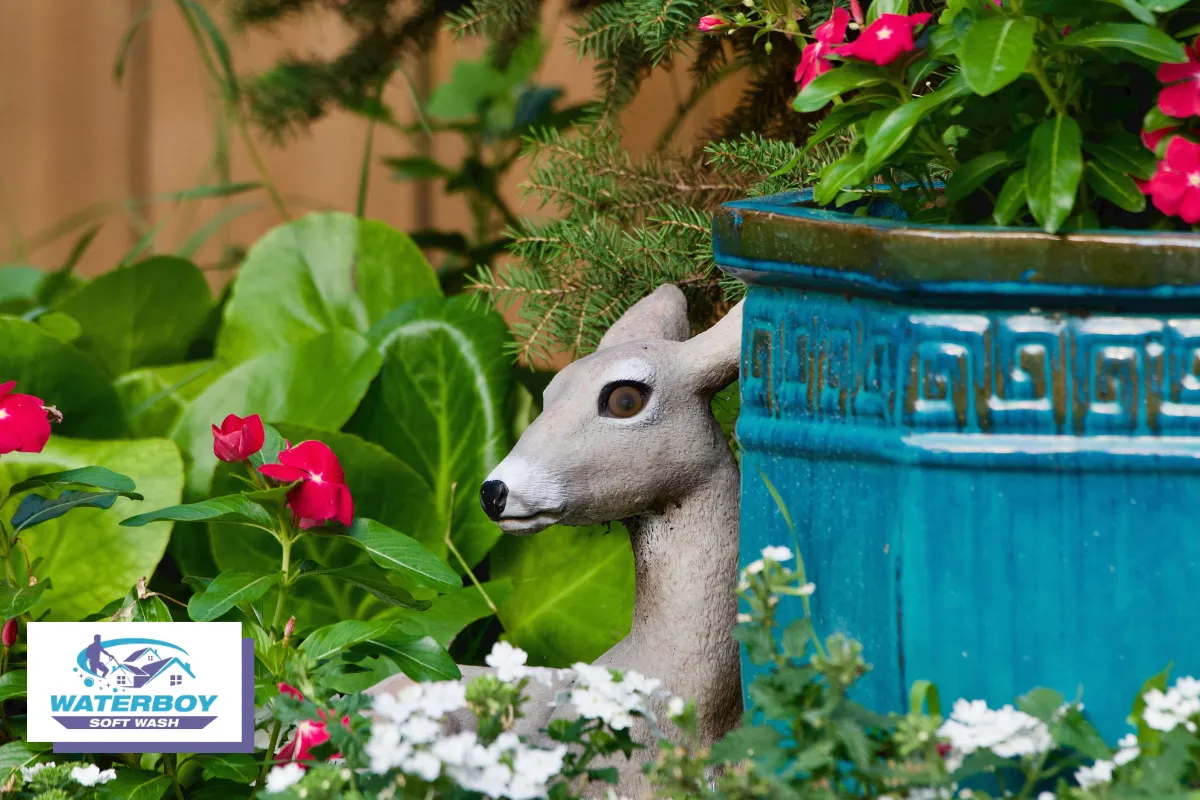
Not every garden statue or planter should be pressure washed. Many require nothing more than low-pressure rinsing and gentle scrubbing. The key is matching the technique and the cleaner to the material so you remove dirt without causing harm. Improper cleaning can strip finishes or degrade the material far faster than the grime itself.
Concrete and Cast Stone
- Pre-rinse with a standard garden hose to remove loose debris, leaves, and surface dirt.
- Mix a bucket of warm water with a small amount of non-toxic, eco-friendly dish soap. Using non-toxic, eco-friendly dish soap is recommended for concrete and cast stone because it lifts grime without introducing chemicals that can seep into porous surfaces.
- Scrub with a soft nylon or natural-bristle brush. Work from the top down so dirty water flows away from cleaned areas.
- Rinse thoroughly with a gentle hose stream.
- Allow the piece to dry completely, then apply a breathable masonry sealer if the manufacturer recommends one.
For tougher green or black spots, a mild, plant-safe oxygen bleach solution can remove stubborn algae or moss without the risks associated with chlorine bleach. Harsh dish soaps and bleach can harm porous materials, so always read labels carefully and test a small hidden area first.
Painted Resin and Fiberglass
These lightweight garden pieces are popular throughout Exton and surrounding neighborhoods because they are affordable and easy to move. Clean them with a damp sponge or soft cloth and a gentle soap solution. Avoid abrasives, strong solvents, and direct high pressure. A UV-protective clear coat applied once a year helps maintain the original color and prevents sun-driven fading.
Metal Statues and Urns
Iron, bronze, copper, and aluminum each react differently to cleaners. Use pH-neutral soap and a soft brush. Heavy scrubbing or acidic cleaners can cause rust in cast iron and bronze, and they may strip the natural patina that gives older metal pieces their character. After cleaning, dry the surface completely to avoid water spots or flash rust. An optional coat of protective wax or a clear corrosion inhibitor extends the life of the finish between cleanings.
Natural Stone and Terracotta
Limestone, sandstone, and slate should never meet acidic cleaners. A soft wash approach works best: pre-wet the stone, apply a stone-safe cleaner, gently brush, and rinse. Terra cotta planters must be rinsed thoroughly and dried completely before replanting, especially heading into cooler months when trapped moisture invites freeze damage.
Protecting Your Landscaping
Biodegradable and eco-friendly detergents should be used around plants. Always divert soapy rinse water away from vegetable beds, herb gardens, and pollinator-friendly plantings. Pre-wet nearby shrubs before you begin, and consider placing a tarp at the base of the piece you are cleaning to catch runoff.
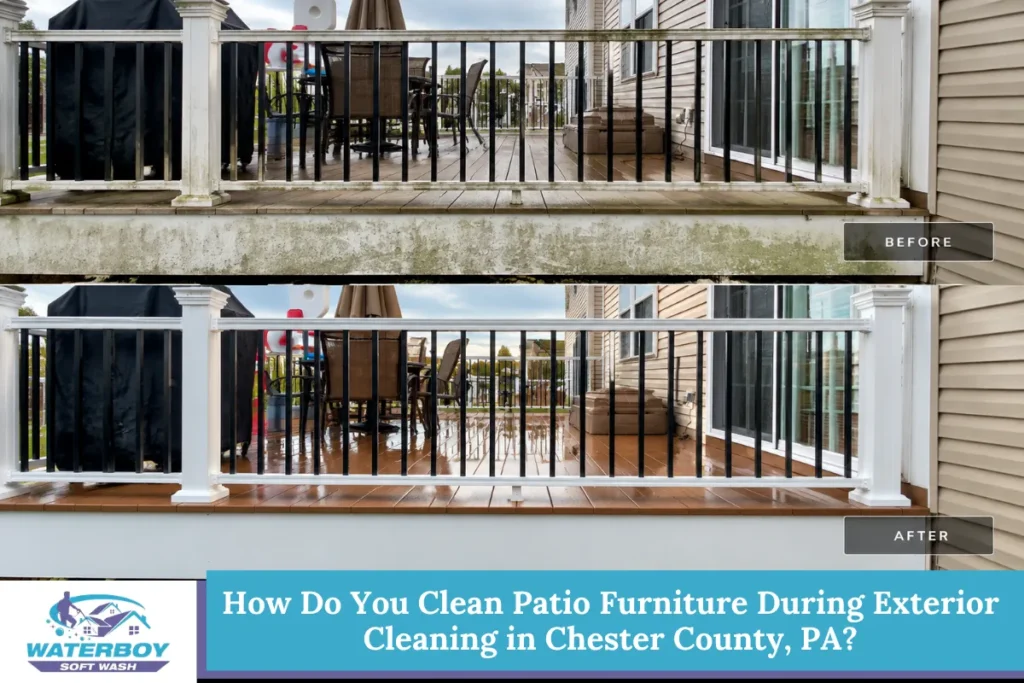
Read How Do You Clean Patio Furniture During Exterior Cleaning in Chester County, PA?
When and How to Use Professional Power Washing Around Garden Decor
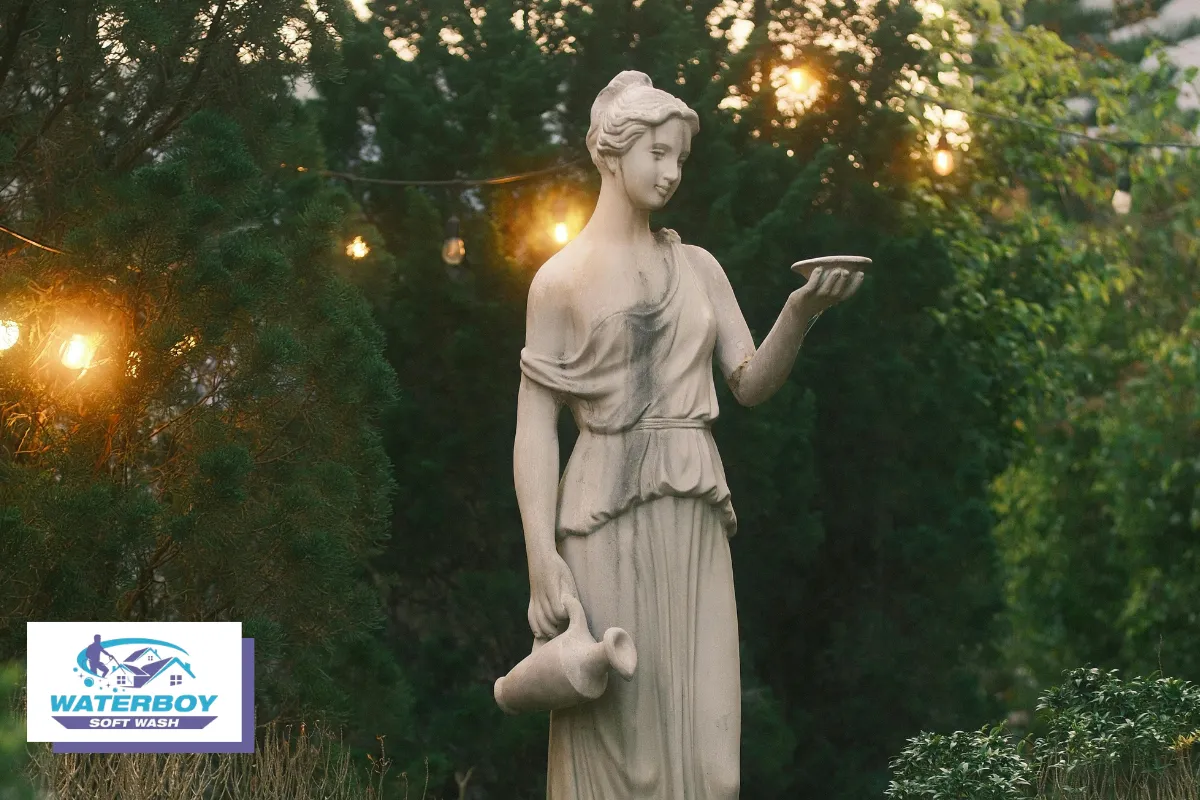
Pressure washing is excellent for the hardscapes that frame your garden, including patios, walkways, concrete driveways, and retaining walls. It is far less forgiving on the statues and planters themselves. The difference between a clean surface and a damaged one often comes down to PSI, nozzle selection, and the experience of the person holding the wand.
Pressure washing typically uses over 3,000 PSI to blast away ground-in grime on hard, flat surfaces. Concrete driveways require high-pressure washing over 3,000 PSI to cut through oil stains and embedded dirt. But that same force directed at a carved limestone figure or a painted resin angel will etch, chip, or shatter it. High-pressure washing can etch concrete and damage delicate items when used without the right adjustments.
Soft washing uses low-pressure cleaning techniques combined with cleaning solutions that do the heavy lifting chemically rather than mechanically. For delicate surfaces, soft washing uses under 300 PSI, relying on specially formulated detergents and extended dwell times to kill mold, algae, and mildew at the root. Soft washing is recommended for vinyl siding and stucco on the home’s exterior, and it is equally appropriate for fragile garden ornaments, older stone surfaces, and anything with a painted or sealed finish. Vinyl siding benefits from soft washing under 300 PSI, while soft washing is also recommended for stucco and roofing materials.
High pressure can damage older stone and masonry surfaces, particularly pieces that have been outdoors for decades and already show hairline cracks or weathering. Older stone surfaces need low-pressure soft washing to avoid damage. Meanwhile, decks and patios can be cleaned with specialized soft wash techniques that remove buildup without splintering wood or lifting pavers.
When to Call Professionals
- Heavy black mildew on pedestal bases or wall surfaces behind statues
- Thick green algae on retaining walls or slippery surfaces along walkways to raised planters
- Mineral staining from hard water or runoff that a garden hose and scrub brush cannot remove
- Historical, heirloom, or high-value pieces with delicate carving or metalwork
A trained exterior cleaning technician will move or cover statues and planters near the wash area, mask landscape lighting and irrigation controls, and adjust nozzles, distance, and PSI for each material on the property. In Chester County, professionals should also be mindful of Pennsylvania Department of Environmental Protection guidelines that prohibit discharging cleaning wastewater into storm drains or waterways. Responsible contractors use biodegradable detergents and direct runoff into vegetated areas where it can infiltrate the ground safely.
Seasonal Care Checklist for Statues and Planters in Chester County
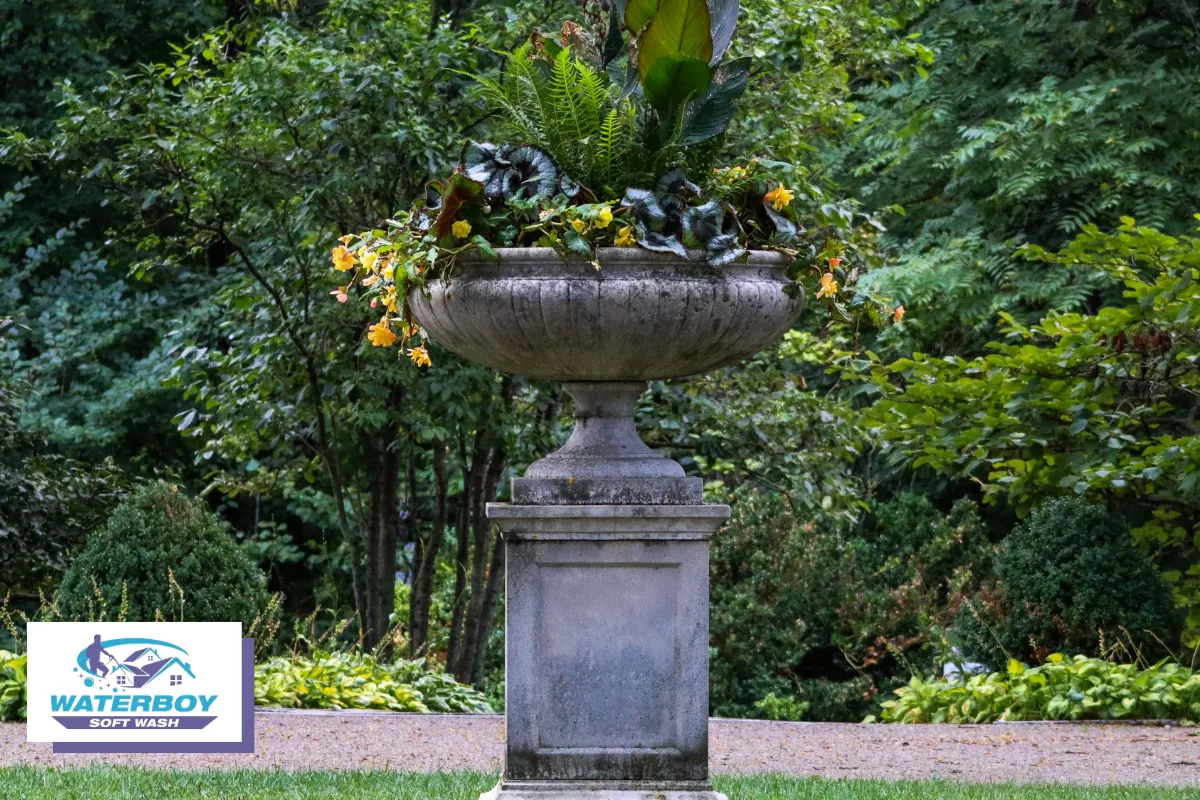
Planning your exterior washing schedule around Chester County’s seasons keeps maintenance manageable and prevents the kind of neglect that leads to expensive repairs.
Spring
- Remove winter debris, fallen leaves, and any protective covers from statues and planters.
- Inspect every piece for cracking, flaking paint, or spalling caused by freeze-thaw cycles.
- Gently wash all statues and planters using the material-appropriate method described above.
- Soft wash surrounding masonry, walkways, and seat walls if mildew has taken hold over winter.
- Reseal concrete or stone once surfaces are completely dry.
Summer
- Spot-clean birdbaths and fountains every two to three weeks to prevent algae slime.
- Check shaded pieces for fresh biological growth, especially after stretches of humid weather.
- Lightly pressure wash exteriors such as walkways and patios that frame garden displays. Keep high pressure away from the statues themselves.
Fall
- Clean and dry all porous planters before the first hard frost.
- Move fragile resin, ceramic, or terracotta pieces into a shed, garage, or other protected area.
- Schedule any larger exterior house washing projects before ground temperatures drop, so runoff can infiltrate soil and nearby plants are not stressed by cold-water shock.
Winter
- Leave heavy concrete statues in place, but elevate them slightly off saturated soil with stone pavers or pressure-treated shims.
- Use breathable covers such as burlap rather than plastic, which traps moisture and accelerates frost damage.
- Avoid cleaning porous outdoor surfaces during active freeze-thaw periods.
Keep a simple list documenting statue locations, materials, and any prior repairs. When a professional exterior house cleaning company visits your property, this list helps them tailor their approach and avoid accidental damage to pieces that need specialized care.
Choosing a Chester County Exterior Cleaning Company for Garden Decor
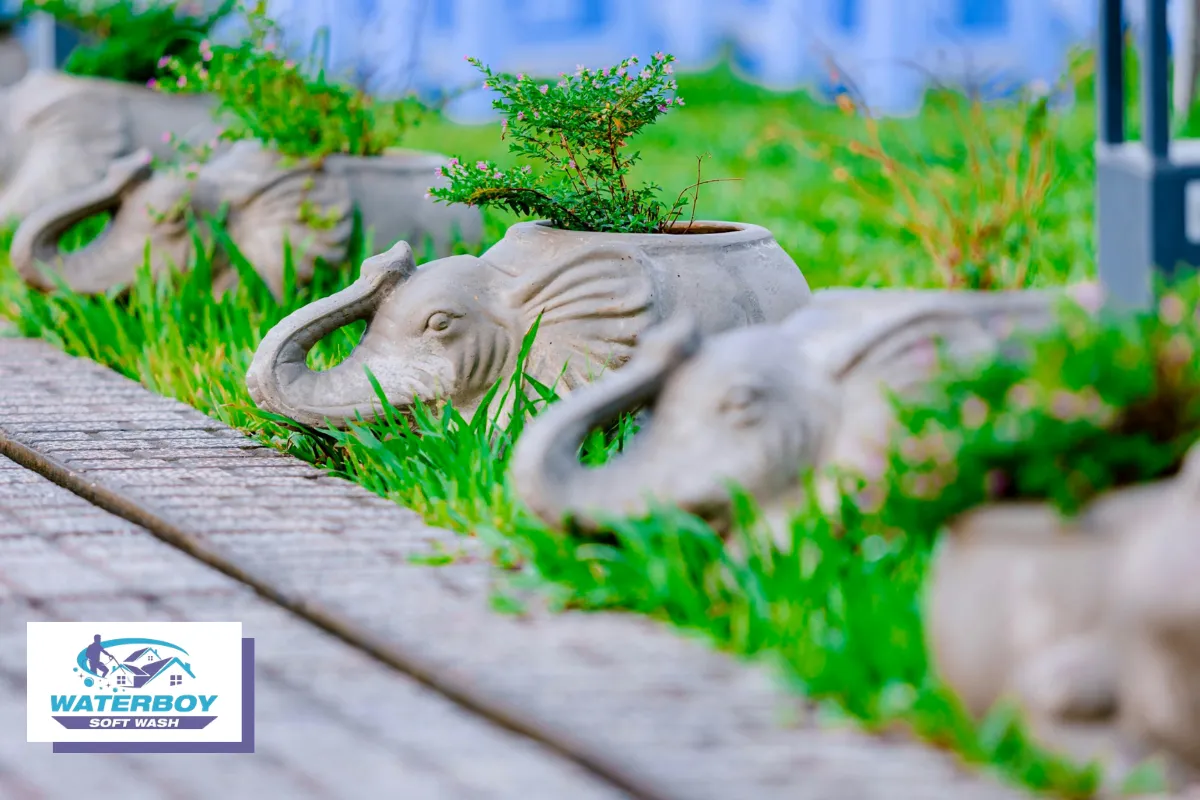
Not every pressure wash provider has experience with fragile garden ornaments. Some crews are set up exclusively for driveways and siding and may not own the adjustable equipment or gentle detergents needed for detailed statue work. Asking the right questions before you hire protects both your property and your budget.
Start by confirming that the company is fully insured and experienced with soft wash techniques. In Chester County, several providers carry industry certifications. Chester County Power Washing is insured and certified. Simple Clean LLC holds PWNA certification for power washing. Chesco Exterior Soft Wash specializes in deck and patio cleaning. Knowing that a contractor meets recognized standards gives you confidence that they understand safe PSI limits and material compatibility.
Ask how they protect landscaping. A reputable team will cover delicate shrubs, redirect runoff, and use plant-safe detergents around beds with herbs, vegetables, or pollinator-friendly flowers. Specialized care is needed for delicate or antique garden pieces, and a knowledgeable contractor will ask about the age and condition of your statues before they start.
Hiring a professional is beneficial for oversized or heavily weathered pieces that are too large to move and too fragile for a DIY approach. Most single-family homes cost $250 to $500 or more for a full soft wash. Some local providers run seasonal promotions: homes under 2,000 square feet are priced at $399 during spring promo periods, homes between 2,000 and 3,000 square feet at $499, and homes between 3,000 and 4,000 square feet at $599. Driveways, patios, and decks are priced separately from home washing, and adding statue or planter detailing may carry an additional charge depending on the scope of the project.
Getting a free estimate is straightforward. Most companies offer online contact forms where you can upload photos of your statues and planters, or you can schedule an on-site inspection of your patios, walkways, fences, and garden features. Look for a provider who can bundle services like house washing, patio cleaning, driveway washing, and careful garden statue care into one efficient visit. That approach saves time, reduces total cost, and ensures consistent results across your entire property.
A reputable Chester County contractor will explain clearly when they plan to use a soft wash versus a higher-pressure method, and they will never rush or guess on delicate materials. If a company cannot tell you the PSI they intend to use on your limestone pedestal versus your brick walkway, keep looking.
Exterior Cleaning in Chester County, PA – Water Boy Soft Wash
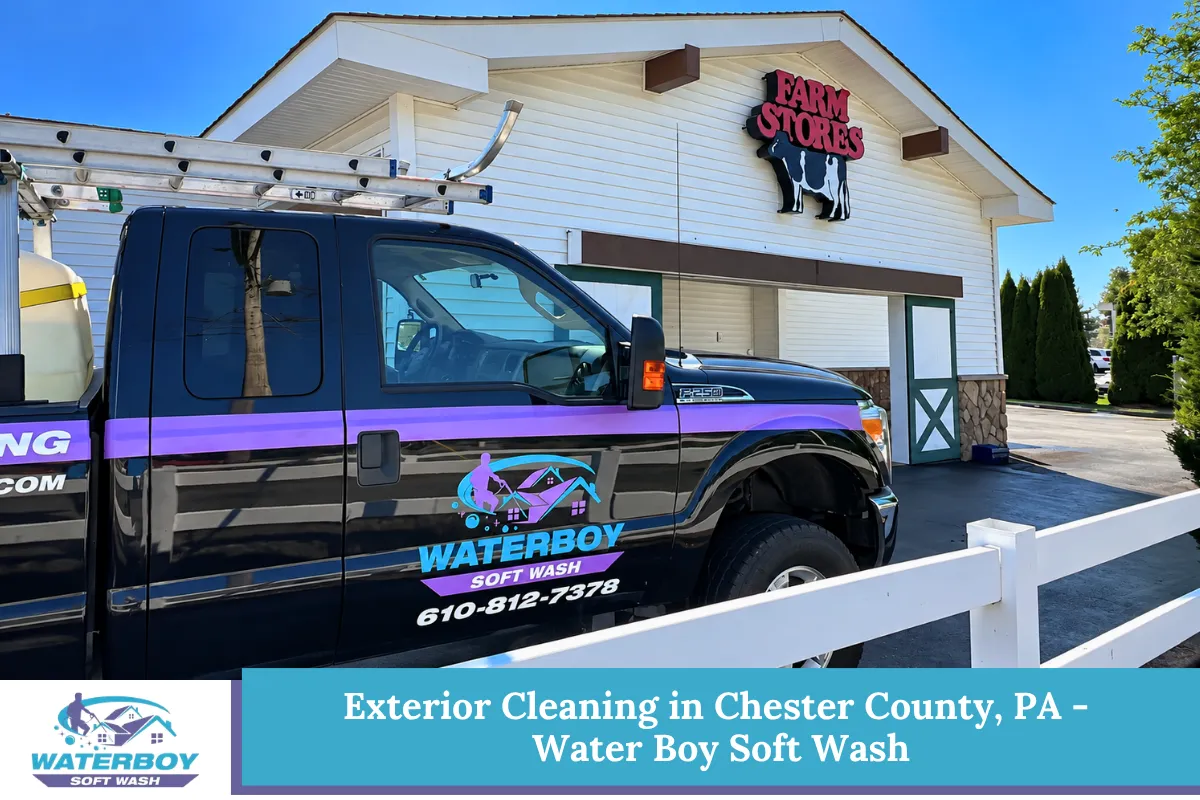
We are Water Boy Soft Wash, and we proudly serve homeowners throughout Chester County, Pennsylvania, with professional exterior cleaning designed to protect what matters most on your property. Our team specializes in soft wash and low-pressure solutions that are ideal for patios, walkways, roofs, siding, and the areas around your garden statues and planters.
We are fully insured and trained to handle every surface with the right method, from high-pressure concrete driveway restoration to gentle, garden-safe washing that preserves the beauty of your outdoor decor. Our professionals use biodegradable detergents and carefully chosen equipment to deliver great results without risking damage to flowerbeds, shrubs, or beloved garden pieces.
Ready to raise your home’s curb appeal and give your outdoor space a fresh look? Call us at (610) 812-7378 or fill out our contact form to schedule a free quote on house washing, patio cleaning, deck restoration, and more. We make it easy to keep your property looking its best, and your garden statues will thank you.
Frequently Asked Questions
How Much Pressure Is Safe for Cleaning Garden Statues Without Damage?
Safe PSI depends on the material. Dense stone like granite can tolerate 500 to 1,200 PSI with a wide fan tip and a stand-off distance of at least 12 to 18 inches. Softer stone such as limestone or sandstone should stay under 500 to 800 PSI, and many experts recommend skipping pressure altogether in favor of a soft wash. Resin and painted fiberglass pieces should never see more than about 600 to 800 PSI. Always test on a small, hidden area before cleaning the entire surface. Use a 25- to 40-degree nozzle rather than a zero-degree tip, which concentrates force enough to cut into even hard concrete. When in doubt, start with the gentlest setting and increase only if needed.
Are There Kid- and Pet-Safe Cleaners I Can Use Around My Planters?
Yes. Look for cleaners labeled biodegradable, plant-safe, and free of chlorine bleach or strong acids. Oxygen-based bleach alternatives, diluted white vinegar for non-stone surfaces, and pH-neutral dish soaps are widely available and effective for light to moderate buildup. Always rinse surfaces thoroughly after applying any cleaner and keep children and pets away from the area until the surface is completely dry. If you are unsure about a product, a professional washing services provider will carry approved, environmentally responsible cleaners that are safe for use near play areas, pet zones, and edible gardens.
How Much Does Pressure Washing Around My Garden Typically Cost?
How much pressure washing cost depends on square footage, soil level, site access, and whether statues require hand detail work. For general hardscape cleaning around garden areas, including patios, walkways, and retaining walls, expect prices to vary based on the size of the job and the level of grime. If the crew also needs to hand-clean individual statues or move planters, that specialty work often adds 20 to 50 percent over standard surface cleaning. Request a free estimate from a local provider so you can compare scope and pricing before committing to the project.
Can I Clean Garden Statues in Winter If We Get a Warm Day?
Cleaning porous concrete or stone during winter is risky even on a mild afternoon. If temperatures drop below freezing within 24 to 48 hours of cleaning, water trapped inside the material’s pores can expand and cause cracks or surface spalling. If you must clean during a warmer spell, choose a stretch where daytime highs stay above 50 degrees Fahrenheit for at least two consecutive days and nighttime lows remain above freezing. For smaller resin or metal pieces, consider bringing them indoors to a garage or basement where you can wash and dry them safely away from the unpredictable ground-level conditions outside.
What Should I Tell an Exterior Cleaner Before They Work Near My Garden?
Share a list of every fragile or valuable piece in the work area, including statues, birdbaths, urns, and decorative planters. Point out any hairline cracks, previous repairs, or areas where paint is already peeling. Identify sensitive plantings, such as vegetable beds, herb containers, or newly installed perennials, and discuss which pieces must not be moved or sprayed directly. Mention any irrigation lines, landscape lighting, or electrical outlets near the site. The more information you provide upfront, the better a professional team can plan nozzle selection, PSI adjustments, and runoff management to keep your garden environment safe while they handle the job.
Disclaimer: This article provides general guidance on cleaning garden statues and planters in Chester County, PA. Always verify material compatibility, follow manufacturer instructions, and consult local regulations regarding wastewater discharge before beginning any exterior cleaning project.
Read Is Soft House Washing Safe for Painted Exteriors in Chester County, PA?