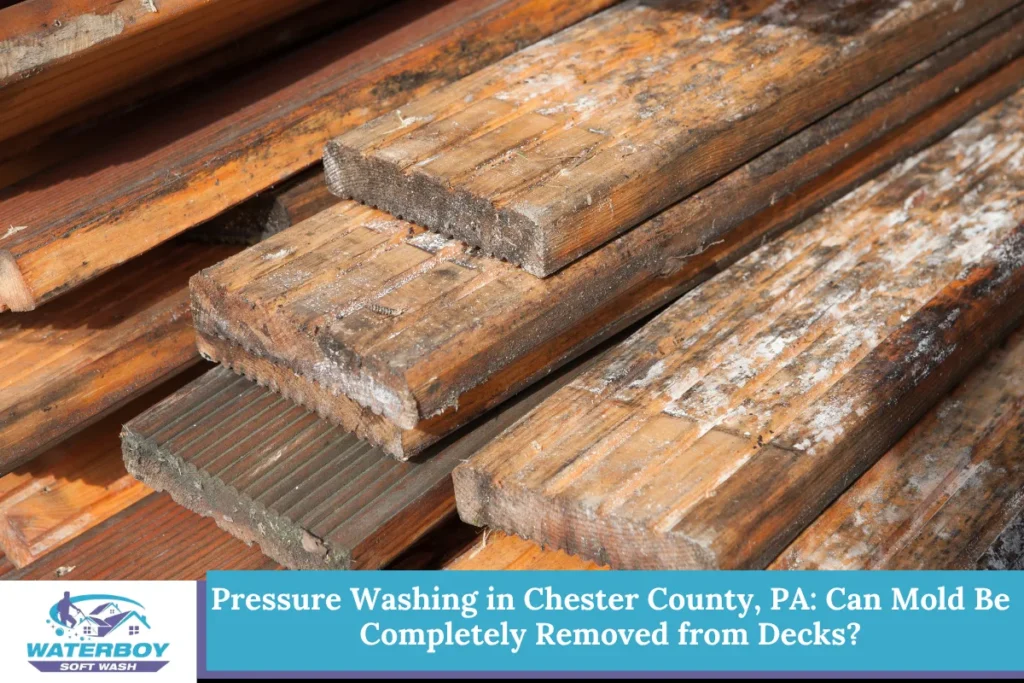

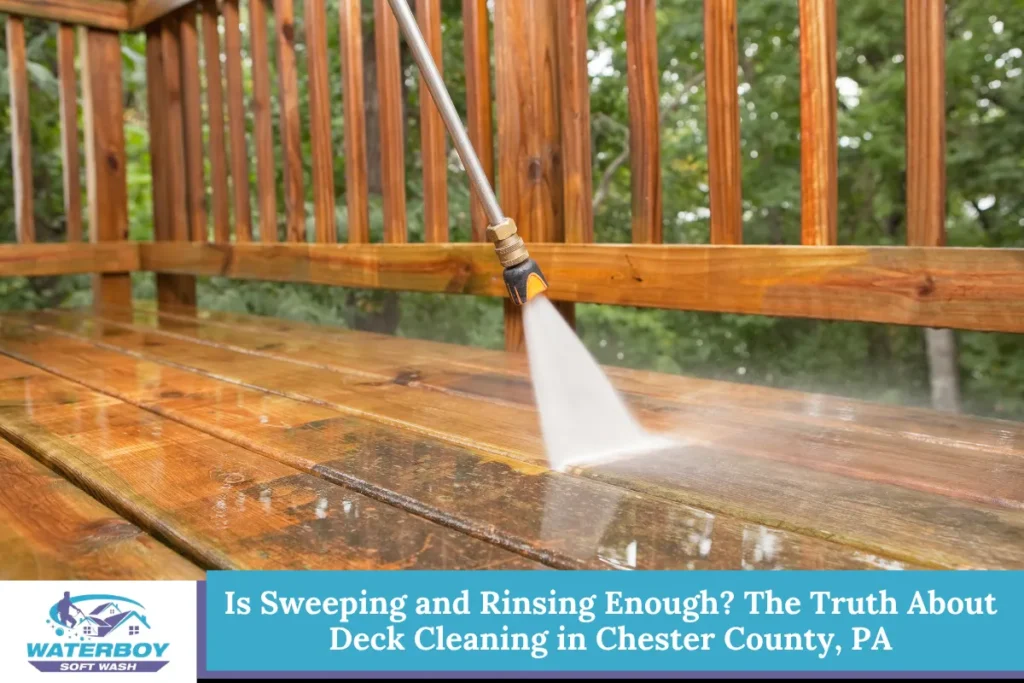

Deck cleaning is one of those tasks that most homeowners in Chester County assume they have covered. A quick sweep, a spray from the garden hose, and the boards look passable. But here is the uncomfortable truth: what you cannot see is often worse than what you can.
Beneath that freshly rinsed surface, algae colonies, mildew spores, and trapped moisture are quietly breaking down your boards. Biofilm clings to wood fibers and composite caps in ways that no broom or hose stream can reach. In gaps between boards, under railings, and around post bases, organic growth thrives in the wet springs, humid summers, and shaded yards that define this part of PA.
The solution is not necessarily aggressive power washing. A layered approach that combines routine sweeping with periodic deep cleaning using safe methods like low-pressure or soft washing keeps your outdoor space safe, attractive, and structurally sound without risking damage to the materials underneath.
Key Takeaways
Sweeping and rinsing alone is rarely enough for decks in Chester County, PA. The region’s damp climate, heavy shade, and seasonal pollen create conditions where mold, algae, and mildew thrive on deck surfaces year-round. Here is what every homeowner should know before grabbing the broom and calling it done.
- High humidity and seasonal pollen exacerbate deck maintenance issues in Chester County, making deeper cleaning necessary at least once or twice a year.
- Light sweeping is solid weekly maintenance, but microscopic organic films remain after just sweeping and rinsing, leaving behind slippery surfaces and embedded grime that require proper detergents and controlled washing.
- Wood, composite, and PVC decks each need different cleaning methods to avoid costly surface damage, voided warranties, or raised grain.
- A proper deck cleaning requires a targeted wash and a protective seal to keep boards looking fresh and structurally sound for years.
- Knowing when DIY maintenance is fine and when to call a professional deck cleaner can save money and prevent irreversible damage.
Why Chester County’s Climate Makes Decks Dirtier Than They Look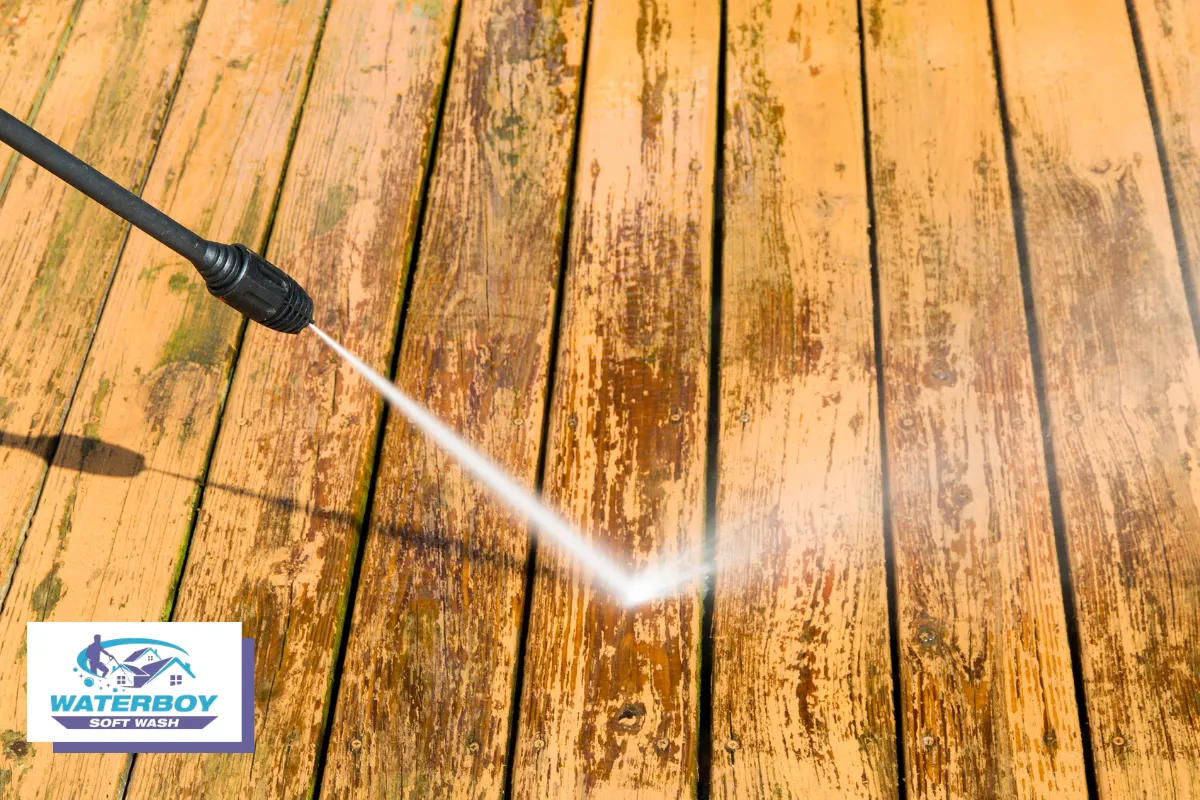
Chester County receives roughly 45 to 48 inches of precipitation per year, spread fairly evenly across all four seasons. Average summer highs hover around 82 degrees with lows near 62 degrees, and winter temperatures swing between 25 and 41 degrees. That consistent moisture combined with moderate warmth creates a nearly ideal environment for organic growth on any horizontal surface exposed to rain and shade.
Spring delivers heavy pollen that settles into every crack and rail joint. Fall brings leaves and acorns that collect in corners, feeding mildew as they decompose. Chester County decks often face aggressive weathering, mold, algae, and mildew growth as a result of these seasonal cycles. Climate projections suggest temperatures may climb by nearly six degrees over the next few decades, potentially extending the growing season for green algae and other biological contaminants even further.
Shaded decks on the north side of a house or tucked beneath mature oaks and maples stay damp far longer after each rain. That lingering moisture promotes slippery surfaces covered in dark biofilm and black spotting along board edges. Freeze-thaw cycles in late winter and early spring drive water deeper into wood fibers and hairline cracks in composite materials, accelerating deterioration from the inside out.
Sweeping only removes the loose debris sitting on top. It does nothing to address the biofilm or staining that bonds chemically and physically to your boards and railings. Deep cleaning is recommended twice a year for decks in Chester County, with more frequent attention for heavily shaded or high foot traffic areas. At a minimum, decks should be cleaned at least once a year for maintenance, and most decks should be cleaned every one to two years for optimal upkeep depending on exposure and usage.
What Sweeping and Rinsing Actually Do (and What They Cannot Fix)
Regular cleaning with a broom and garden hose still matters. Routine sweeping can help prevent moisture retention on deck boards by clearing leaves, grit, and dirt before they trap water against the surface. It also gives you a chance to spot early problems like raised nails, loose boards, or flaking paint and stain before those issues get expensive.
But sweeping and rinsing alone are generally inadequate for deck cleaning when it comes to addressing what accumulates over weeks and months. Here is what light maintenance cannot handle:
- Oily barbecue grease and sunscreen drips that bond to the surface
- Tannin stains from decomposing leaves that penetrate porous wood
- Established algae and mildew colonies protected by extracellular biofilm
- Slippery coatings on stairs and landings that create genuine slip hazards
- Tough stains around planters, grill pads, and high-use walkways
Simple rinsing does not sanitize surfaces or break down the slick films that make steps dangerous. Over time, relying only on sweeping and rinsing allows contaminants to slowly discolor your deck, shorten the life of stain or sealer, and create conditions where natural wood decks can rot without proper cleaning and maintenance. A clean deck can increase your property’s value significantly, but only when the cleaning goes deeper than the surface.
Light maintenance is step one. It is not a substitute for periodic deck washing with appropriate cleaners and an effective cleaning method suited to your materials.
Different Deck Materials, Different Cleaning Needs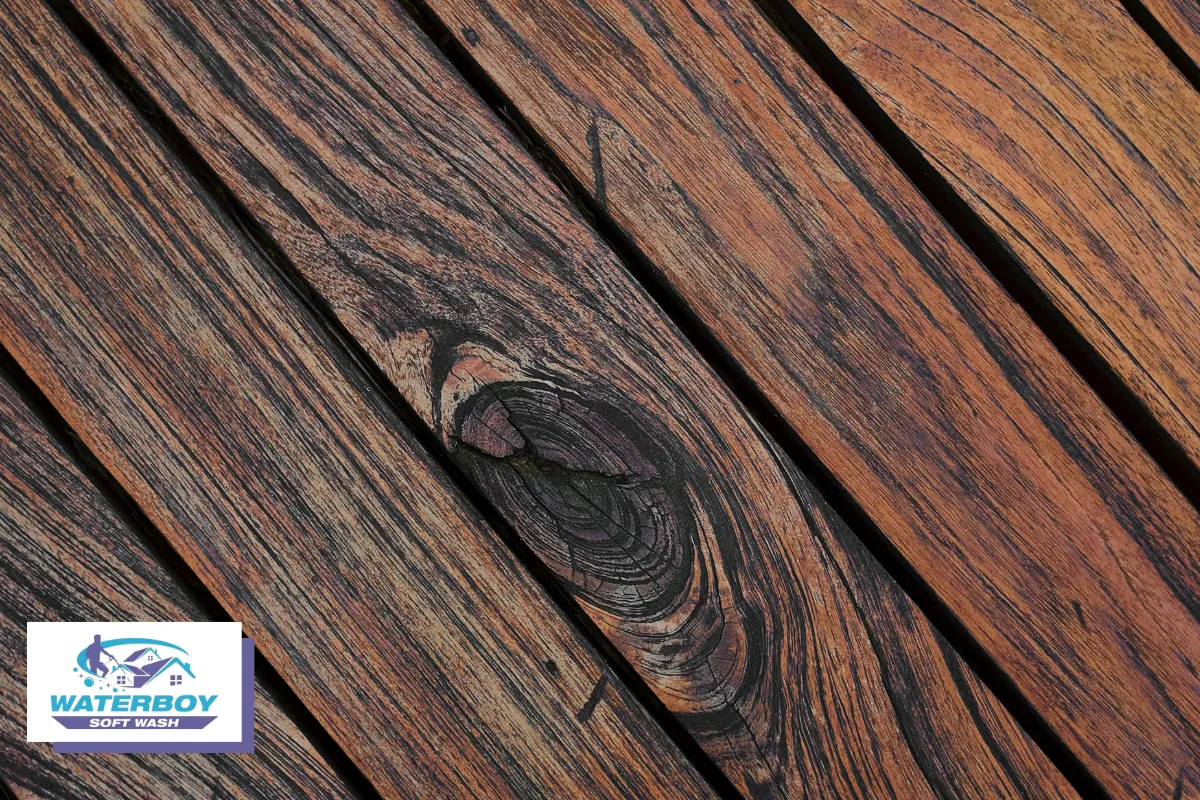
Not every deck in Chester County is built from the same stuff, and what works safely on one material can damage another. Natural wood, pressure treated lumber, composite boards, and synthetic lumber each respond differently to water, chemicals, and scrubbing.
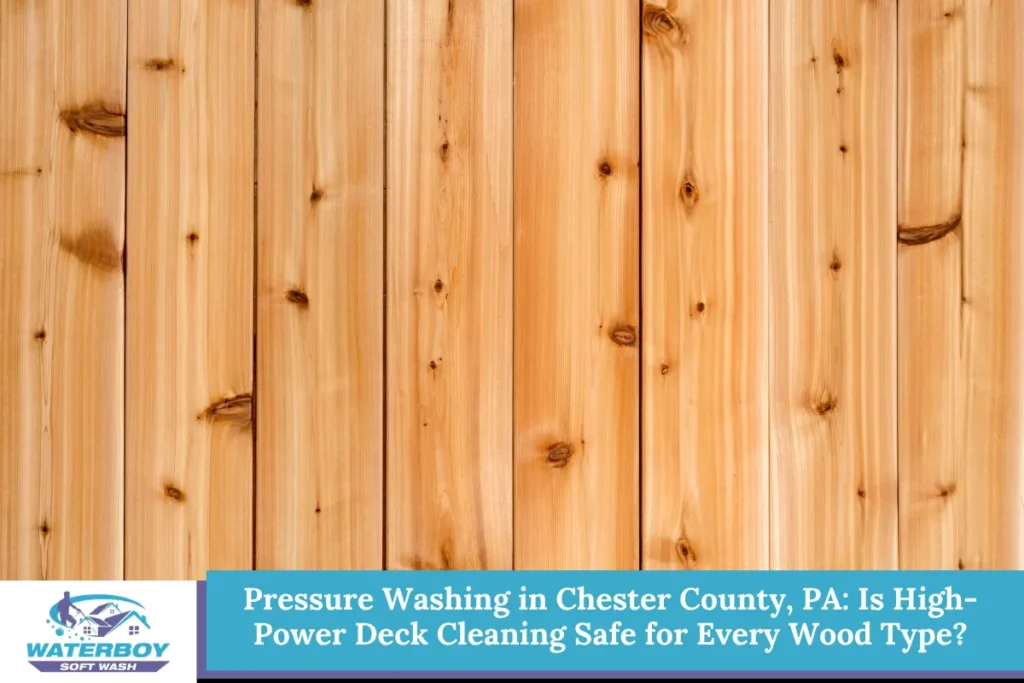
Natural wood decks built from cedar, pine, or redwood are more porous than engineered alternatives. That porosity means moisture and spores penetrate deeper, but it also means aggressive pressure can lift wood fibers, create splinters, and leave fuzzy, uneven textures. Natural wood decks require cleaning at least once a year to prevent graying, checking, and decay. New wood decks should be cleaned within three to six months after installation to remove mill glaze and prep the surface for its first coat of sealer or stain.
Pressure treated wood decks resist rot better than untreated lumber thanks to chemical preservatives forced into the grain, but the surface is still vulnerable to fuzzing and wand marks under high pressure. Pressure treated wood decks also need yearly cleaning for maintenance to keep them looking and performing their best.
Composite decks from brands like Trex and TimberTech blend wood and plastic with a protective cap layer. They resist rot and insects, but mildew, food spills, and sunscreen can still stain the surface. Composite decking should be cleaned two to three times a year, and harsh chemicals or concentrated spray can etch or discolor the cap. Composite decks generally need less maintenance than wood decks, but they are not maintenance-free.
Synthetic lumber decks are made from PVC or polystyrene materials, making them nearly impervious to moisture and rot. They still collect pollen, algae, and grime where water pools around rail posts or under planters, and benefit from regular attention with gentle cleaners.
How to Match Cleaning Methods to Your Deck Surface
Choosing the wrong cleaning method can void warranties or cause repairs that cost more than the deck washing itself. Before you spray anything, consider these guidelines:
- Use lower PSI and wider fan tips on soft woods like cedar. Keep the wand 12 to 18 inches from the surface and always move along the grain.
- Check manufacturer guidelines for composite brands before using any pressure washer or chemical cleaner. Many specify maximum PSI limits and approved products.
- Test cleaners and pressure settings in a small, hidden area first, such as underneath a step or behind a planter.
- Avoid stiff wire brushes on softer woods, which can score the grain and create grooves that trap more dirt later.
- Surrounding features like painted railings, aluminum balusters, vinyl siding, and stone trim also influence which products and pressure settings you can safely use nearby.
Read Deck Cleaning in Chester County, PA: How to Tell If You Need a Light Wash or Deep Clean
Soft Washing vs Pressure Washing: Which Is Safer for Your Deck?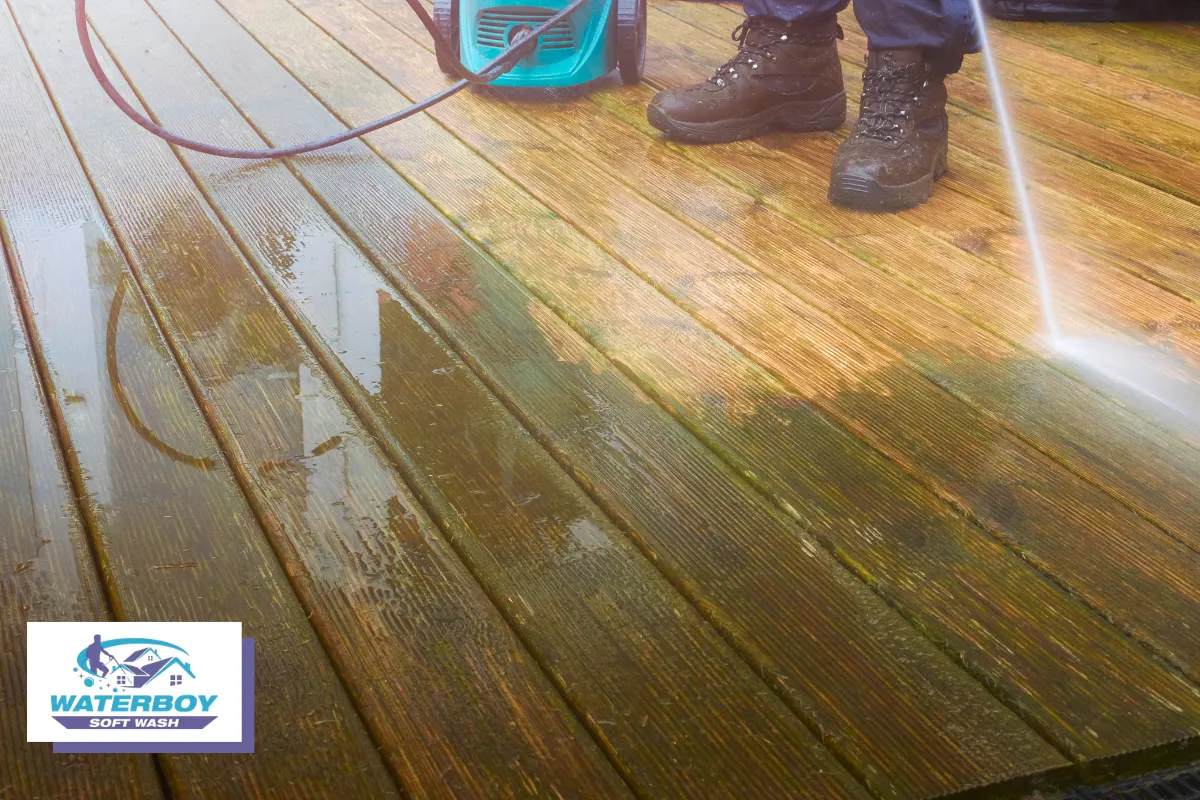
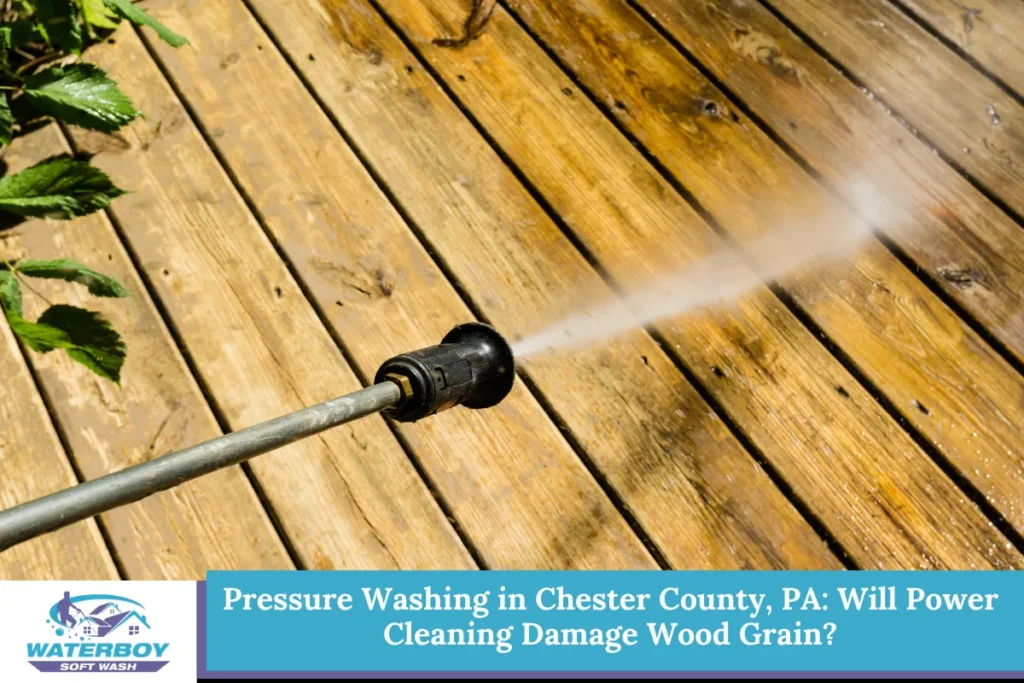
Pressure washing decks involves high PSI equipment that can strip away grime, moss, and old coatings quickly. The problem is that high-pressure washing can damage wood and composite surfaces when settings are too aggressive, nozzles are too narrow, or the wand lingers too long in one spot. Pressure washing can damage wood decks if done incorrectly, leaving behind streaks, gouges, raised grain, and water forced deep into end cuts and fastener holes where it promotes hidden rot.
Soft washing takes a different approach. Instead of relying on brute force, it combines lower pressure with carefully selected cleaning solutions that loosen and kill biological growth before gentle rinsing washes everything away. Soft washing uses lower pressure, around 1200 to 1500 PSI, depending on the surface and the deck cleaner applied. Research on facade and deck boards has shown that chemical cleaners can remove nearly all mold and algae growth, while water-only rinsing performs about the same as doing nothing at all. The chemistry does the heavy lifting, not the water.
Using a low-pressure setting is important when using a pressure washer on decks of any material. Controlled pressure washing prevents fuzzing and damage to wood while still delivering the power needed to rinse away loosened grime. For many Chester County PA homeowners, soft washing is the safer and more durable option, especially on older wood deck surfaces, composite boards with delicate caps, and areas near your home’s exterior walls, windows, and roof lines.
A well-chosen deck cleaner paired with the right technique does most of the work. Water should mainly be used for rinsing, not blasting. Skilled professionals are trained to adjust PSI, nozzles, and spray angles depending on the material and level of soiling, which is why professional results tend to last longer than DIY efforts.
Signs Your Deck Needs More Than a Broom and Hose
Not sure whether your deck has crossed the line from “needs sweeping” to “needs a real wash”? Here is a practical checklist:
- Visual cues: Boards that stay dark when wet, dull gray discoloration, black or green streaks along edges, and white or fuzzy patches on railings or post caps.
- Tactile signs: The surface feels slick underfoot, especially on stairs and landings. You notice rough, lifted fibers or splinters that were not there before.
- Odor: A musty or earthy smell after rain suggests active mold or mildew colonies on or beneath the boards.
Periodic deep cleaning is needed when green or black growth appears on any section of your deck. If two or more of these signs are present, a proper deck washing with detergent and controlled water pressure is overdue.
Safe DIY Deck Washing Steps for Chester County Homeowners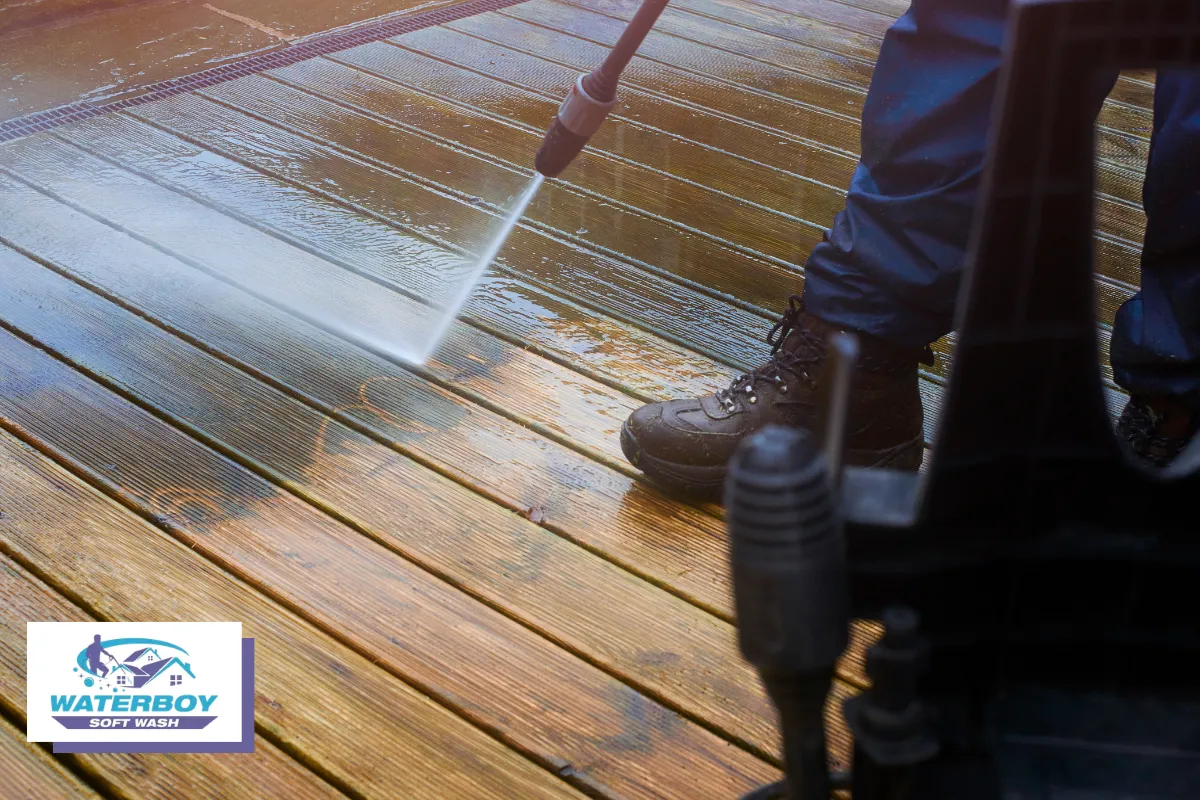
Before starting any deck wash project, read the labels on every product you plan to use, follow all safety warnings, and check that your approach aligns with your deck manufacturer’s maintenance guidelines.
Here is a reliable step-by-step process that works for most residential decks:
- Remove all furniture, grills, planters, and accessories from the surface.
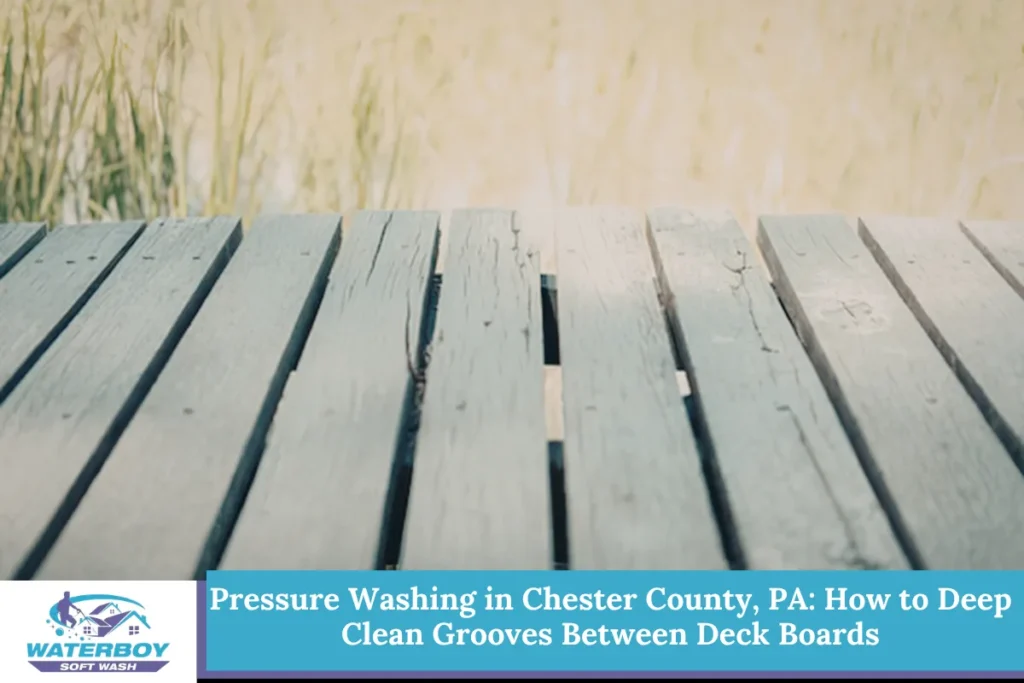
- Dry sweep thoroughly to clear loose leaves, dirt, and debris. Deck cleaning should include clearing debris from gaps between boards using a putty knife or stiff plastic tool.
- Pre-rinse the entire surface lightly with a garden hose to wet the boards.
- Apply a suitable cleaning solution using a pump-up sprayer for even coverage. Specialized eco-friendly cleaners can break down mold and grime efficiently without harsh chemical runoff.
- Allow the cleaner to dwell for 10 to 15 minutes, but do not let it dry on the surface.
- Lightly agitate heavily soiled areas like stairs, grill zones, and railings with a soft- to medium-bristle brush on a pole. Avoid scrubbing with metal brushes on any material.
- Rinse using a wide fan tip, keeping PSI appropriate for your deck material and maintaining a consistent distance from the boards.
Protect your landscaping by pre-wetting plants and soil around the deck before you begin. Cover delicate shrubs where appropriate, and rinse all nearby greenery again after you finish. This simple step prevents cleaner residue from drying on leaves and roots.
Preparing a Deck for Staining or Sealing After Cleaning
Deck washing is the critical first step before any stain or sealer will bond properly. Cleaning should be followed by staining or sealing for wood decks to lock in the restored appearance and protect against future moisture and UV damage.
Allow wood decks to dry for 48 to 72 hours before applying sealant or stain. In Chester County’s often-humid conditions, shaded decks or cool, cloudy stretches may require even longer drying time. If possible, check moisture levels with a simple pin-type moisture meter-most stain manufacturers recommend applying product only when the wood reads below 15 percent moisture content.
Lightly sand raised fibers or “fuzzies” that appear after cleaning. This step improves comfort underfoot and helps the finish adhere evenly, restoring the original color and a fresh, smooth feel. Clear sealers highlight the natural grain, while semi-transparent stains add color along with UV protection. Sealing is an investment that extends the life of every board.
Safety, Environmental, and Legal Considerations in Chester County, PA
Responsible deck washing means thinking about more than curb appeal. Slip safety, chemical runoff, and protecting the surrounding environment all matter.
Algae-covered decks and steps are a genuine hazard. Immediately after cleaning, surfaces can remain slippery until fully dry-keep family members, guests, and pets off the deck until boards are no longer damp.
When choosing products, select cleaners labeled for exterior use and follow all label instructions. Minimizing runoff into storm drains and nearby streams is important in Chester County, which sits within multiple active watersheds. Use only the necessary amount of cleaner, avoid over-application, and never dump concentrated chemicals into drains or onto exposed soil.
Dispose of any leftover product and rinse water according to label guidelines and local ordinances. While there are no Chester County regulations specific to residential deck washing, general environmental rules about chemical runoff apply, and homeowner association protocols may set maintenance expectations.
Personal safety basics for any wash job:
- Wear gloves, non-slip footwear, and eye protection
- Keep children and pets off the deck until it is completely rinsed and dry
- Use caution with pressure washer equipment-misdirected spray can gouge skin or damage nearby concrete, siding, walls, and interior surfaces through open windows
When to Call a Professional Instead of DIY Deck Washing
Some decks and situations are better handled by experienced pros with the right equipment, training, and technique. There is no shame in recognizing when a job exceeds DIY scope-protecting your investment is the point, not proving you can do everything yourself.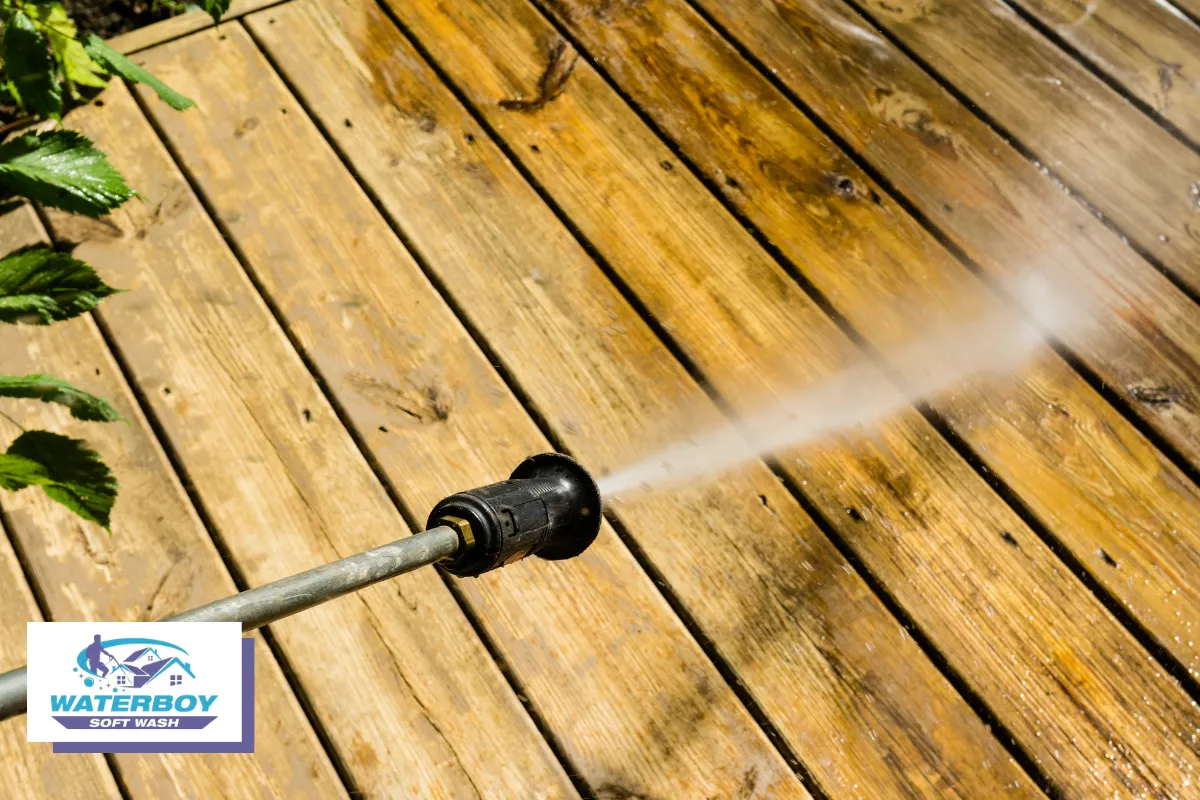
Consider calling a professional when:
- Your deck is large, multi-level, or has complex railings, glass panels, or built-in benches
- Heavy algae, black mold, or deep staining covers large areas of the surface
- You have older natural wood that needs restoration, or previous cleaning attempts have caused visible damage
- The deck is elevated, near pool decks, steep slopes, or tight spaces where ladders and overspray create fall and damage risks
- You are unsure about the right cleaning method for your specific material
Professional cleaning prevents mold and mildew growth on decks by using targeted solutions and controlled water pressure that DIY equipment often cannot replicate. Professional cleaning eliminates algae and mildew hazards, removes dirt and stains, and restores the original appearance of weathered boards. A quality exterior wash from skilled professionals typically includes inspection for loose boards, popped nails, and early signs of rot or structural concerns.
Regular cleaning protects your deck investment and extends its life. Professional cleaning removes algae, mold, and mildew from decks more thoroughly than most homeowner-grade equipment can achieve. For homeowners across Chester County and surrounding communities, hiring a pro is not just a cosmetic upgrade-it is a way to safely clean and restore one of the most-used features of your home.
Deck Cleaning in Chester County, PA – Water Boy Soft Wash
We are Water Boy Soft Wash, and we specialize in gentle, effective deck cleaning throughout Chester County, Pennsylvania. Our soft washing techniques are tailored to each surface, whether you have a natural wood deck, composite boards, or PVC lumber. We lift algae, mildew, and grime without relying on harsh pressure that can break down boards, raise grain, or void warranties.
Our process creates safer, non-slip surfaces with renewed color and a fresh look that lasts. We take pride in protecting your outdoor space and helping you enjoy it more months of the year. Regular professional service from our team can extend the life of your deck finish and keep your cost of maintenance low over time.
Call us at (610) 812-7378 or fill out our contact form to schedule a quote. We are ready to help homeowners across West Chester and the rest of Chester County restore their decks the right way.
Frequently Asked Questions
How Often Should I Deep Clean a Partially Covered Deck?
Partially covered decks create micro-climates. Sections under a roof overhang or pergola stay drier and collect less algae, but they also accumulate dust and pollen that rain would otherwise wash away. Open sections exposed to weather tend to develop organic growth faster. Inspect the entire deck each spring for algae patterns, dark spots, and grime buildup. Plan at least one thorough cleaning per year for the whole surface, with spot treatments or touch-ups on exposed sections mid-season if green or black growth appears. Covered areas may need more manual rinsing or light scrubbing since they do not get the natural rinse that sun and rain provide to open boards.
Do I Need to Move Furniture, Grills, and Planters Before Deck Cleaning?
Moving as much as possible off the deck lets cleaners reach all boards evenly and prevents “clean and dirty” outlines that look obvious once the job is done. Heavy grills can be carefully shifted to one side, cleaned around, and then moved back after the deck is fully dry. Empty or relocate planters temporarily, because trapped moisture and soil contact underneath pots leave dark rings and stains that are difficult to remove later. If you are hiring a professional service, ask whether they prefer items cleared before arrival or if they handle repositioning as part of the job. Either way, clearing the deck beforehand speeds up the process and produces better results.
Should I Seal, Stain, or Leave My Deck Bare After Washing?
Clear sealers allow the natural grain and color to show through while adding water repellency. Semi-transparent stains introduce color and offer UV protection that slows graying and checking. Solid stains cover the grain entirely and provide maximum protection but require more maintenance. Leaving a wood deck completely bare allows it to weather and gray naturally, but accelerates splitting, checking, and moisture damage over time. Most natural and pressure treated decks in Chester County benefit from some form of UV and water protection. If the deck already has a stain layer in good condition, applying a fresh maintenance coat after cleaning is usually the best approach. Composite and PVC decks typically do not need stain or sealer.
Is Winter Deck Cleaning a Good Idea, or Should I Wait for Spring?
Effective deck washing needs temperatures above freezing and enough drying time to avoid icy or slick conditions afterward. Cleaning a deck in January or February in Chester County risks leaving residual moisture that freezes overnight, creating a dangerous surface and potentially driving water deeper into the grain. In most cases, late spring or early fall offers ideal weather for cleaning and drying-warm enough for products to work properly and dry enough for boards to reach the right moisture level before sealing. Light brooming to remove leaves and snow through winter is still helpful. It prevents moisture pockets from forming under debris piles, which is one of the main causes of mold development during colder months.
How Long Should Kids and Pets Stay Off the Deck After Cleaning?
Keep people and pets off the deck until it is fully rinsed and visibly dry. Walking on a freshly cleaned, still-damp deck risks slipping, and foot traffic can track cleaning residue into the house and onto interior floors. In typical Chester County weather during warmer months, decks may dry within a few hours on a sunny day, but shaded or cooler areas can take considerably longer. If a protective coating like stain or sealer was applied after cleaning, drying and curing times extend further-sometimes 24 to 48 hours or more depending on the product. Always follow the specific re-entry guidance on the cleaning product label or from your professional service provider before allowing anyone back on the surface.
Disclaimer
This article provides general information about deck care in Chester County, PA. Always follow product labels, manufacturer guidelines, and consult qualified professionals for specific structural or material concerns related to your deck.
Read How Do You Remove Mildew During a Deck Cleaning in Chester County, PA?