

Stopping Mildew Fast: Why Your Chester County Deck Keeps Turning Green
Deck cleaning in Chester County, PA gets complicated when stubborn mildew reappears after every stretch of rain and humidity. If you own a home in this part of southeastern Pennsylvania, you already know the frustration. Your deck boards turn gray-green, steps become dangerously slippery, and a musty smell drifts up every time the sun heats the surface. For families with kids, pets, or anyone dealing with allergies, those mildew spores floating around the patio are more than an eyesore.
The good news is that removing mildew does not require guesswork or brute force. This article walks through exactly how to treat mold and mildew on both wood and composite decks, which deck cleaning products actually work, how to use a pressure washer without destroying your boards, and how to prevent the problem from cycling back every few weeks. Whether you plan to tackle it yourself or you are leaning toward hiring skilled professionals for deck washing, you will find step-by-step guidance built around Chester County conditions.
Key Takeaways
- Effective deck cleaning for mildew relies on a mildewcide wash, gentle scrubbing along the grain, and low-pressure rinsing rather than aggressive blasting that can splinter boards.
- Wood and composite decks require different cleaners and techniques. Oxygen bleach is preferred for wood, while composite surfaces need manufacturer-approved detergents to avoid etching or discoloration.
- Chester County’s humid summers, mature tree canopy, and frequent rain create ideal conditions for mold and mildew, making regular maintenance essential to keeping your outdoor space safe and attractive.
- If mildew is severe, deeply embedded, or keeps returning within weeks, professional deck soft washing offers calibrated equipment and eco-friendly solutions that protect your investment.
Why Decks in Chester County, PA Grow Mildew So Quickly
Local climate and yard conditions drive mold and mildew growth on decks more aggressively than most homeowners expect. It is not just about a dirty surface. The environment itself feeds the problem.
Chester County’s hot, humid summers run from roughly May through September, with frequent thunderstorms that soak deck boards and keep them damp well into the next morning. Relative humidity stays high overnight, especially in neighborhoods with mature oaks, maples, and tulip poplars casting heavy shade. Decks in shaded areas are more prone to mildew growth because moisture lingers for hours longer than on sun-exposed surfaces.
Common site conditions that accelerate the problem include:
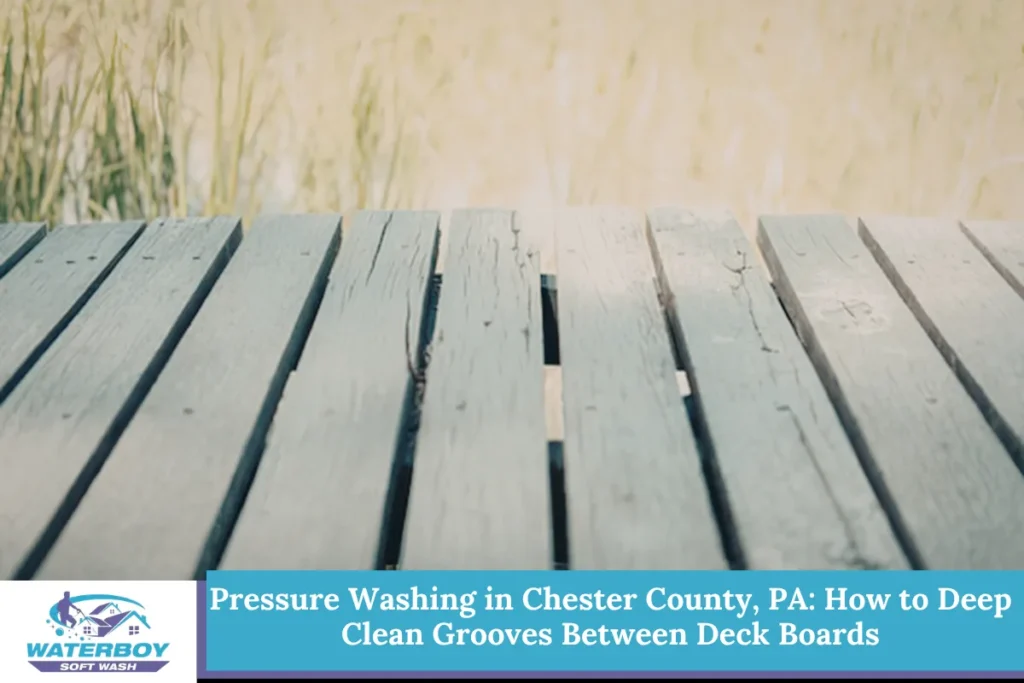
- Tight board spacing that traps moisture and debris between deck boards
- Fallen leaves, acorns, pine needles, and pollen sitting on the deck surface for days, creating food for spores
- Poorly directed downspouts or sump pump discharge overflowing onto the structure
- North-facing decks and low airflow between closely spaced houses
Mildew thrives in damp, shaded environments, making regular cleaning essential. Left alone, superficial mildew can progress into deeper mold growth that penetrates wood fibers and compromises the life of your boards. Early removal keeps the process simple and protects your deck’s appearance long term.
Identifying Mildew Versus Other Deck Stains
Getting the identification right matters. Using the wrong deck cleaner or dialing up excessive pressure on a stain that turns out to be tannin bleed wastes time and can cause real harm to the surface.
Here is how to tell what you are looking at:
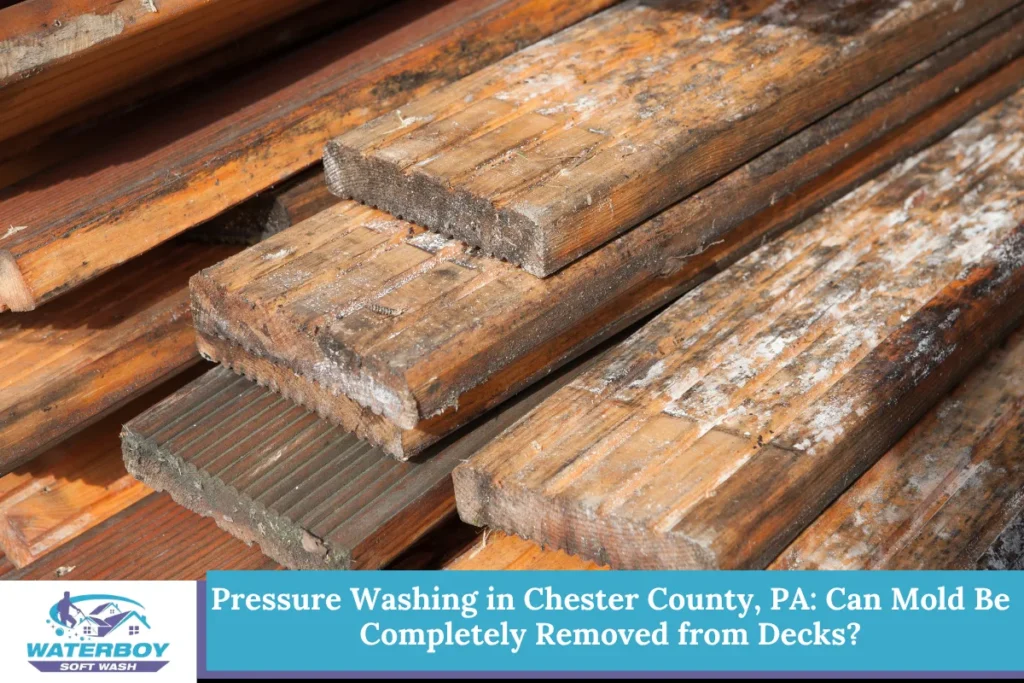
- Mildew usually appears dry, powdery, and flat on surfaces. It shows up as a white, gray, or light green film that wipes away relatively easily. Visible green or black stains on your boards often indicate mold or mildew presence.
- Mold typically appears slimy, fuzzy, and raised on decks. It tends to be darker, forming black or deep-green patches in consistently damp corners, around planters, or beneath a table or chair that has been sitting in one spot all season.
- Algae forms a thin, slick green film that creates serious slip hazards. Over time, algae growth can cause damage to wooden deck boards by holding moisture against the grain.
- Moss shows up as thick, soft, bright green clumps, usually where water pools or shade is heaviest.
A quick rag test can help: press a damp white cloth against the stain and rub gently. Mildew stains often transfer as a faint smudge, while tannin or rust stains will not lift. If you see widespread black growth or detect musty odors rising from beneath the deck, that may justify a professional inspection before you attempt a DIY approach.
Safety Prep Before You Start Removing Mildew
Safe deck cleaning protects you, your plants, your pets, and the deck structure itself. Rushing past this step is where most DIY projects go sideways.
Start with personal protective equipment:
- Chemical-resistant gloves
- Eye protection (safety glasses or goggles)
- Non-slip footwear with good tread
- A simple respirator or dust mask if you are working with concentrated solutions or disturbing heavy mold
Protect your landscaping before any solution hits the deck. Pre-wet nearby plants and garden beds thoroughly with a garden hose. For delicate shrubs or flower beds close to the deck, drape breathable fabric or light plastic sheeting and rinse everything again after cleaning.
Prepare the deck surface itself:
- Remove all furniture, grills, rugs, planters, and pet bowls.
- Sweep or blow off leaves, acorns, pollen, and loose dirt.
- Clear debris caught between boards using a putty knife or stiff brush.
Pennsylvania regulations require that wash water containing detergent or bleach not be discharged into storm drains, streets, or waterways in ways that violate environmental protection standards. Work in small sections, minimize waste water, and direct runoff away from storm sewers or nearby streams.
Always test any cleaner on a small area of the deck first, especially on older stain or paint finishes, to check for unexpected discoloration or reactions before treating the entire surface.
Read Can I Pressure Wash a Deck? A Guide for Chester County Homeowners
Choosing the Right Cleaner for Wood and Composite Decks
Picking the correct deck cleaner matters more than the amount of pressure you throw at the problem. The wrong product can strip color, corrode fasteners, or void a warranty.
Cleaners for a Wood Deck
Oxygen bleach, which contains sodium percarbonate, is preferred for cleaning wood decks because it is gentler than chlorine bleach. When mixed with water, sodium percarbonate breaks down into hydrogen peroxide and soda ash, lifting mildew stains and grime without aggressively stripping lignin from the grain. It is also safer for the environment compared to harsher alternatives.
Chlorine bleach, or sodium hypochlorite, can kill mold on contact, but there are trade-offs. Bleach kills mold on contact but may not penetrate deeply into porous wood. Used at concentrations above roughly two percent, bleach can damage unpainted wood if used excessively, lighten color unevenly, and corrode metal hardware. It also poses a risk to nearby plants if runoff is not managed carefully.
Vinegar is mildly acidic and may repel some types of mold. Vinegar can penetrate porous surfaces better than bleach and is safer for the environment compared to bleach, making it a reasonable option for very light growth. Homemade deck cleaners using vinegar, washing soda, or diluted oxygen bleach can effectively treat mold and mildew on lightly affected surfaces.
Products like DeckWise Wood Deck Cleaner are formulated specifically to prevent mold and algae growth on wood surfaces while being gentle on the grain.
Cleaners for Composite Decks
For composite decks, stick with manufacturer-approved detergents or non-chlorine mildew removers labeled safe for capped composite surfaces. Avoid harsh solvents, straight household bleach, or abrasive powders on composite boards. These can etch the protective cap, leave dull spots, or void the manufacturer’s warranty.
Always follow the manufacturer’s directions for dilution ratios and dwell times printed on the label. Stronger is not better.
Step-by-Step: How to Remove Mildew by Hand
Manual mildew removal works well for light to moderate growth and is the safest starting point for homeowners without a pressure washer.
Mixing and Applying
Fill a bucket or pump sprayer with water and your chosen deck-safe solution at the recommended ratio. For oxygen bleach, that is typically one cup of powder per gallon of warm water. Warm water accelerates the reaction.
Apply the solution to a manageable section of the deck, keeping the surface wet but not flooded. Let it sit for the recommended dwell time, usually five to fifteen minutes depending on the product. Do not let cleaning solutions dry on a deck, as this can lead to ineffective cleaning results and streaking.
Scrubbing
A stiff-bristle scrub brush is effective for removing mildew from deck surfaces. Work along the grain of wood with steady, even strokes using a long-handled brush. On composite boards, switch to a soft-bristle brush or a mop to avoid scratching the capping layer. Focus scrubbing on areas with visible mildew stains and discoloration.
Rinsing
Rinsing a deck thoroughly after cleaning is necessary to remove dead mildew and residue. Use a garden hose with a spray nozzle, working from the farthest point back toward the house and away from downspouts. Rinse each section completely before moving on.
For stubborn spots, repeat the spot treatment rather than scrubbing aggressively or jumping to a stronger chemical. After the deck dries fully, consider applying a deck brightener, which restores the wood’s natural pH and surface appearance after cleaning, especially if you plan to stain or seal.
Using Pressure and Soft Washing Safely on Decks
There is an important distinction between pressure washing decks and deck soft washing, and understanding it can save you from expensive board replacement.
Pressure Ranges That Protect Your Boards
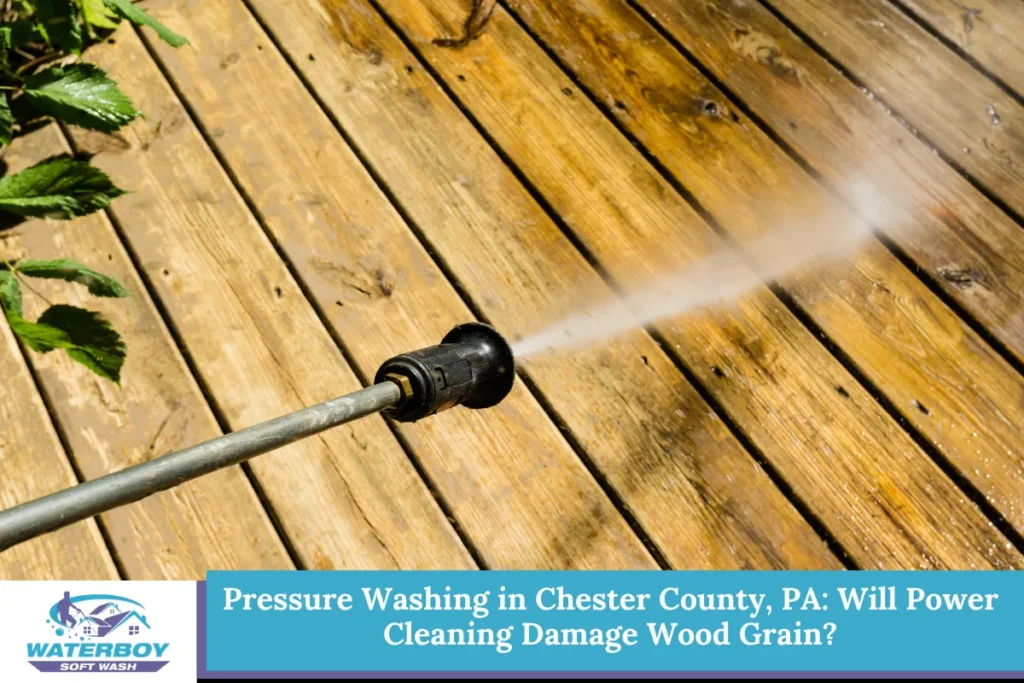
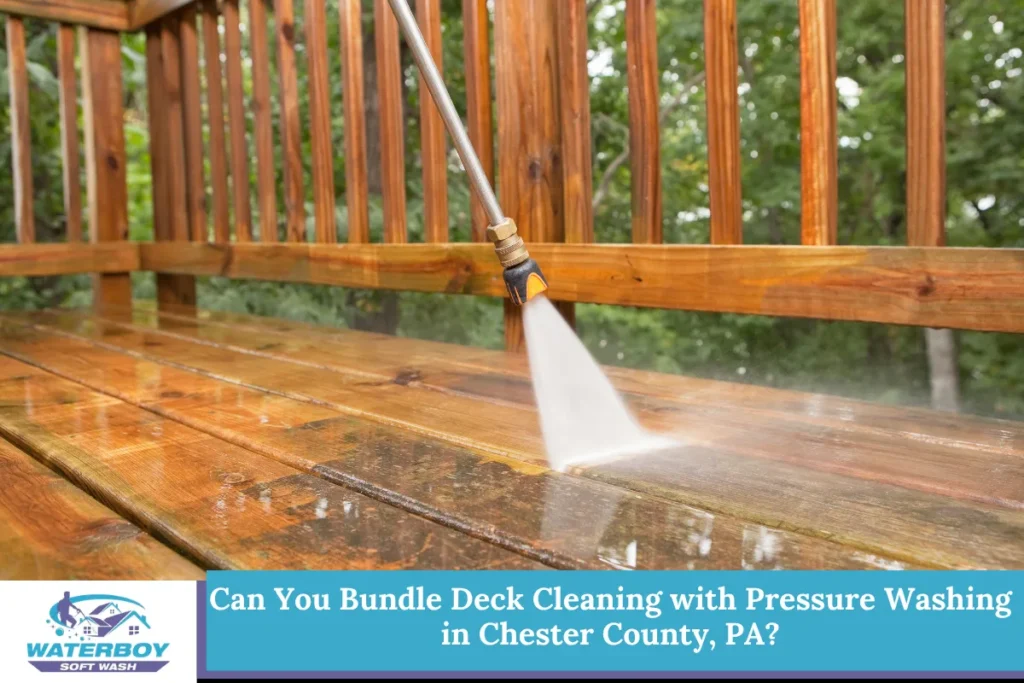
Excessive pressure washing can damage wood fibers and should be avoided when cleaning. For older or softer wood, keep the pressure washer around 500 to 800 PSI. For newer, harder wood or most composite surfaces, stay under 1,200 PSI and use a wide fan tip, never a zero-degree nozzle.
Power washing can remove tough stains from decks, but only when the pressure and nozzle are matched correctly to the material. Even moderate pressure applied too close to the board or against the grain can gouge, ridge, or splinter the surface permanently.
Soft Washing Approach
Soft washing applies a biodegradable cleaner at low pressure, allowing chemistry rather than force to eliminate mold mildew and grime. The process involves spraying the solution, letting it dwell, and then rinsing gently. This method is especially effective on wood decks where preserving the grain and any existing stain or sealer coat matters.
Technique Tips
- Maintain a consistent distance from the deck surface, typically twelve to eighteen inches
- Keep the wand moving with the grain, never lingering in one spot
- Avoid aiming the spray directly at board ends or gaps where water intrusion can cause swelling
- Stay clear of electrical outlets, deck lighting, and door thresholds
In Chester County, many homeowners choose professional soft washing specifically to avoid accidentally carving lines into their deck boards or forcing water into the house structure. If you are not confident calibrating a pressure washer, this is a process worth outsourcing.
Preventing Mildew from Coming Back After Cleaning
In our humid Pennsylvania climate, prevention is just as critical as the initial mildew removal. A clean deck can start showing new growth within weeks if conditions are not addressed.
Routine Maintenance
- Light rinse with a hose every few weeks during peak season to wash away pollen and dirt
- Sweeping leaves, acorns, and debris regularly so organic matter does not sit and feed spores
- Cleaning should be performed shortly after major pollen events to prevent mildew from gaining a foothold
- Schedule a thorough wash once or twice per year depending on your deck’s sun exposure
Design and Landscape Improvements
Trimming vegetation around the deck improves airflow and helps prevent mildew growth. Cut back overhanging branches to let sunlight reach the surface for more hours each day. Improve ventilation under the deck with lattice vents, and redirect downspouts or sump pump discharge away from deck posts and footings. These adjustments extend the time between cleanings significantly.
Protective Treatments
For wood decks, applying a water-repellent sealant with mildewcide can protect against future growth. Penetrating stains and sealers with mildewcide additives reduce moisture absorption and discourage spores from colonizing. Reapply at the manufacturer’s suggested interval, typically every two to three years depending on how exposed the deck is to rain and sun.
For composite decks, regular soap-and-water cleanings and promptly addressing spills or soil accumulation keep the surface inhospitable to growth. Move potted plants and rugs periodically so moisture does not get trapped underneath.
Inspect railings, stairs, and shady corners annually for early mildew spots. Catching them before they turn into deep mold saves time, money, and the structural integrity of your boards.
When to Call a Professional Deck Cleaning Service
Some mildew problems are straightforward weekend projects. Others are not, and pushing a DIY approach too far can cost more than hiring help in the first place.
Consider calling a professional when you are dealing with:
- Large, multi-level decks or second-story walkouts where working on wet, slippery surfaces creates a fall risk
- Extensive black mold growth that has penetrated into the wood or settled beneath peeling coatings
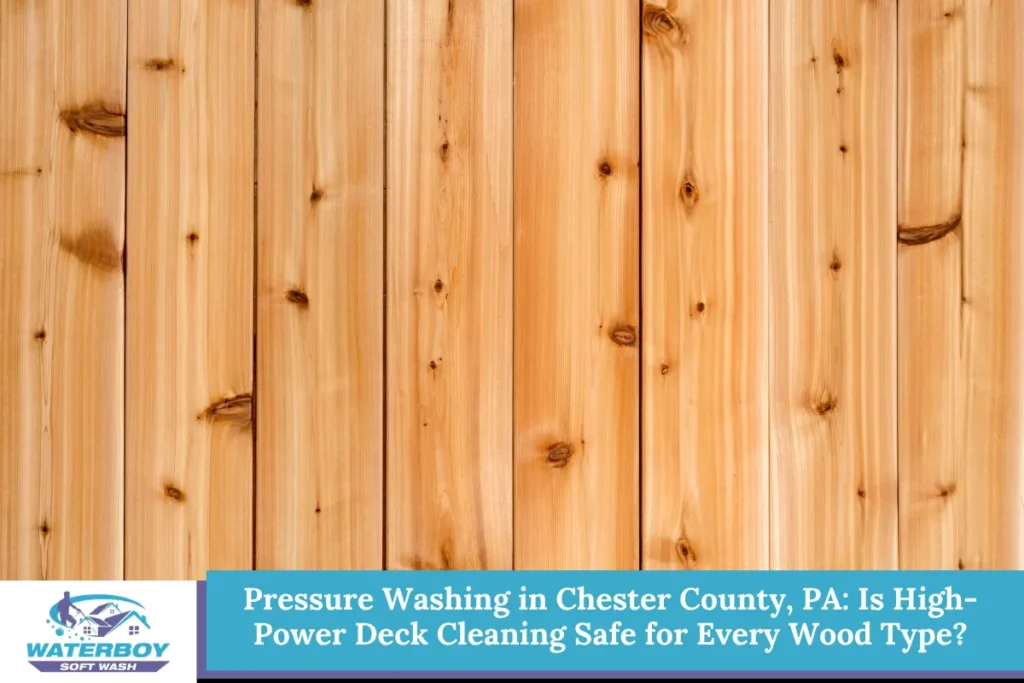
- Delicate materials like exotic hardwoods, older cedar, or capped composite with active warranties
- Decks near streams, ponds, or sensitive landscaping where chemical runoff must be managed carefully
- Situations where mildew keeps returning within weeks despite proper cleaning, which may signal hidden moisture problems or structural issues
Trained technicians bring professional-grade soft wash equipment, calibrated nozzles, and deck-specific detergents that prevent damage to wood fibers and surrounding landscaping. A reputable Chester County provider will carry full insurance, explain their process clearly, and respect Pennsylvania guidelines for managing detergent runoff responsibly.
When vetting a company, ask about their experience with both wood and composite decks, how they protect nearby gardens, stone walkways, windows, and outdoor furnishings during the service, and whether they include a post-wash brightener or sealer recommendation as part of the job.
Deck Cleaning in Chester County, PA – Water Boy Soft Wash
At Water Boy Soft Wash, we specialize in safe, effective deck cleaning throughout Chester County, Pennsylvania. We use low-pressure soft washing methods paired with eco-friendly detergents that target mold and mildew without chewing up wood grain or scuffing composite boards.
We pre-rinse all nearby plants, move or cover your furniture as needed, and rinse every surface thoroughly so your outdoor space is ready to enjoy the same day. Our team understands local conditions, from heavily shaded yards and mature tree canopy to the humid summers that make maintaining a clean deck a year-round priority in this area.
Call us at (610) 812-7378 or fill out our online contact form for a no-obligation estimate and a customized plan built around your deck’s material, condition, and exposure. We treat every deck like our own, inspecting boards, railings, and stairs so we choose the safest process for each surface.
Frequently Asked Questions
How Often Should I Schedule a Professional Deck Cleaning in Chester County, PA?
Most decks in Chester County benefit from a professional cleaning once per year, typically in late spring after pollen season winds down. If your deck is heavily shaded by mature trees, sits near a body of water, or faces north with limited sunlight, twice per year is a better target. The ideal schedule depends on your deck material, tree coverage, and how much organic debris accumulates. Wood decks exposed to consistent moisture may need more frequent attention than composite surfaces. A professional can assess your specific conditions and recommend a maintenance rhythm that keeps growth in check without over-cleaning.
Is It Safe to Use Household Bleach on My Deck to Remove Mildew?
Diluted chlorine bleach can kill mildew on a deck, but it comes with real risks if mishandled. At concentrations stronger than about one to two percent, it can lighten wood unevenly, soften the grain, and corrode metal screws and fasteners over time. On composite decks, bleach may void the manufacturer’s warranty entirely. It also poses a threat to surrounding plants and aquatic life if runoff reaches garden beds or storm drains. Oxygen bleach is a safer alternative for most situations. If you do use chlorine bleach, dilute it heavily, limit dwell time, rinse completely, and protect all nearby vegetation with pre-soaking and tarps.
Can I Clean My Deck in Cold Weather, or Should I Wait Until Spring?
Most deck cleaning products work best when the surface temperature is above fifty to sixty degrees Fahrenheit. Below that threshold, chemical reactions slow down significantly, and cleaners may not break down mildew effectively. Cold, wet surfaces also increase slip risk for anyone walking or scrubbing on the deck. In Chester County, the ideal windows for deck cleaning fall in late spring through early fall, when temperatures are warm enough for products to activate and the deck can dry fully within twenty-four to forty-eight hours before the next rain event. If you notice heavy mildew in winter, a light vinegar spray can help hold it in check until warmer weather allows a full treatment.
Will Power Washing Remove My Deck’s Stain or Sealer?
It depends on the pressure setting, nozzle type, and technique. High pressure with a narrow tip at close range can absolutely strip stain, sealer, and even paint from a deck surface. However, moderate pressure with a wide fan tip, held at a consistent distance and moved along the grain, can refresh the surface without fully removing an existing finish. Soft washing is generally the safer choice if you want to preserve a coat of stain or sealer while still getting rid of mildew and grime. If the finish is already peeling or flaking, a more aggressive wash may actually be the right first step before recoating.
What Should I Do If Mildew Keeps Coming Back a Few Weeks After Cleaning?
Rapid regrowth usually points to an underlying moisture or airflow problem rather than a failure of the cleaner itself. Start by checking whether your deck has adequate drainage, whether downspouts are directing water away from the structure, and whether overhanging branches are blocking sunlight. Evaluate whether the cleaner you used included a mildewcide component, as a standard detergent will clean the surface but will not eliminate spores that remain in the wood. If you have addressed drainage, trimmed back vegetation, improved airflow, and the problem persists, consider a professional assessment. There may be trapped moisture beneath the boards, a failing ledger board connection, or hidden mold inside the substructure that requires more targeted treatment.
Disclaimer: This article provides general guidance for informational purposes and is not a substitute for on-site professional inspection. Always follow product labels, manufacturer guidelines, and applicable Chester County and Pennsylvania regulations regarding exterior cleaning and stormwater management.
Read The Ultimate Guide to Commercial Concrete Cleaning for Warehouses in Chester County, PA