

Deck Cleaning in Chester County: Is Pressure Washing Actually Safe?
Deck cleaning is one of those seasonal tasks that every Chester County homeowner thinks about once the pollen settles and the grill comes out. Your boards are coated in green film. There is mildew creeping along the shaded sections. Maybe last fall’s leaf stains never quite faded. You grab the pressure washer from the garage and wonder: will this thing destroy my deck, or save it?
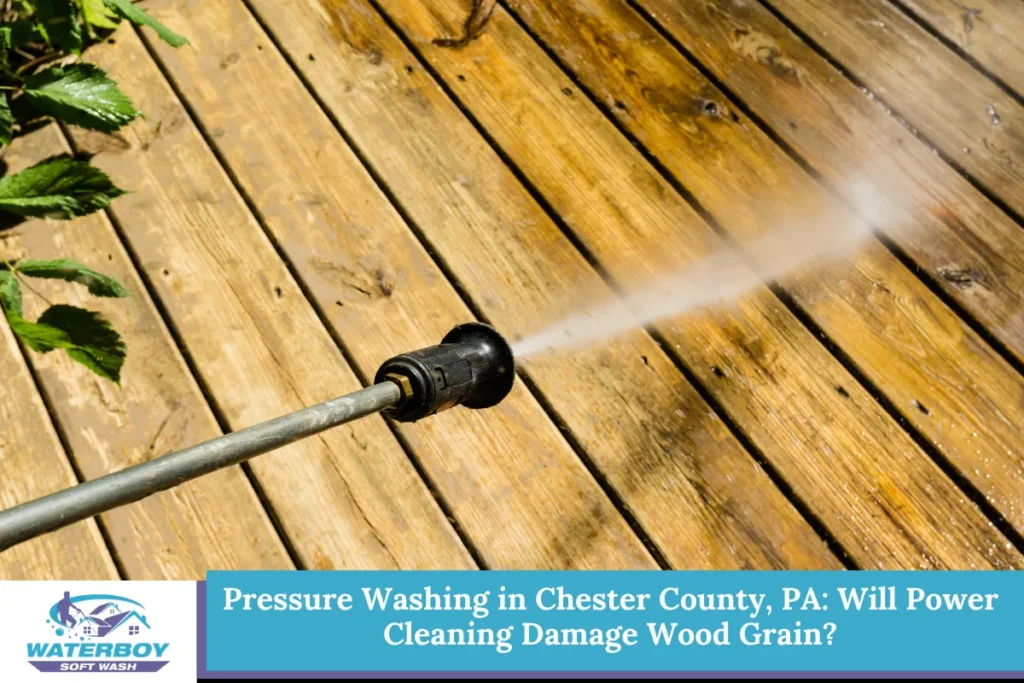
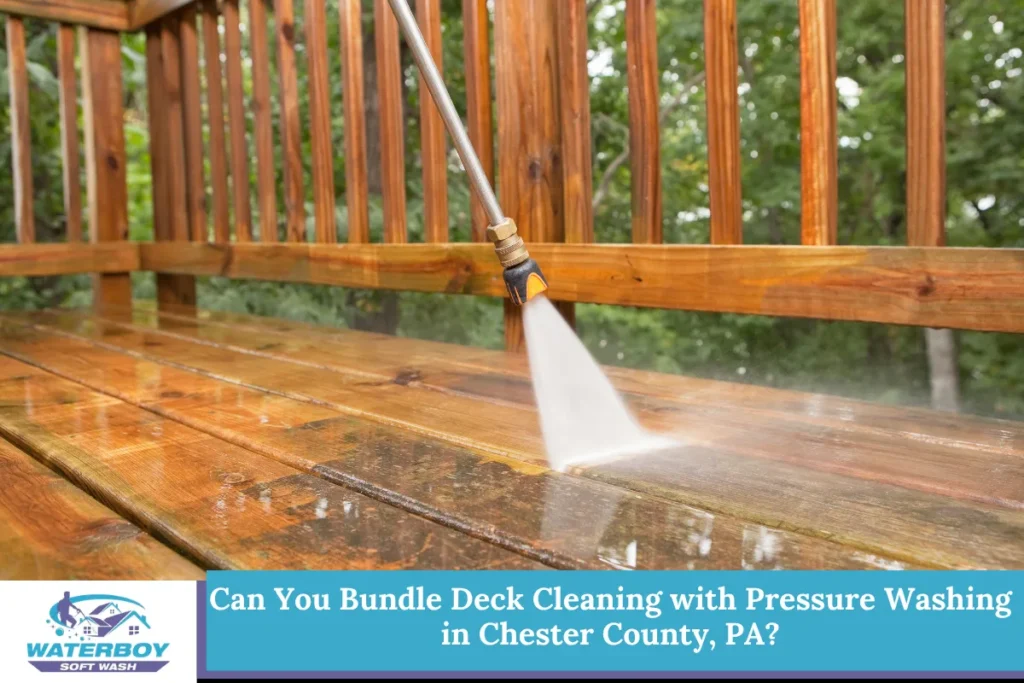
Here is the short answer. Pressure washing can damage surfaces if used incorrectly, but done right, it is one of the most effective ways to remove dirt, algae, and exterior stains from a tired-looking deck. The method works because pressure washing blasts dirt with high-pressure water, stripping away grime that scrubbing alone cannot reach.
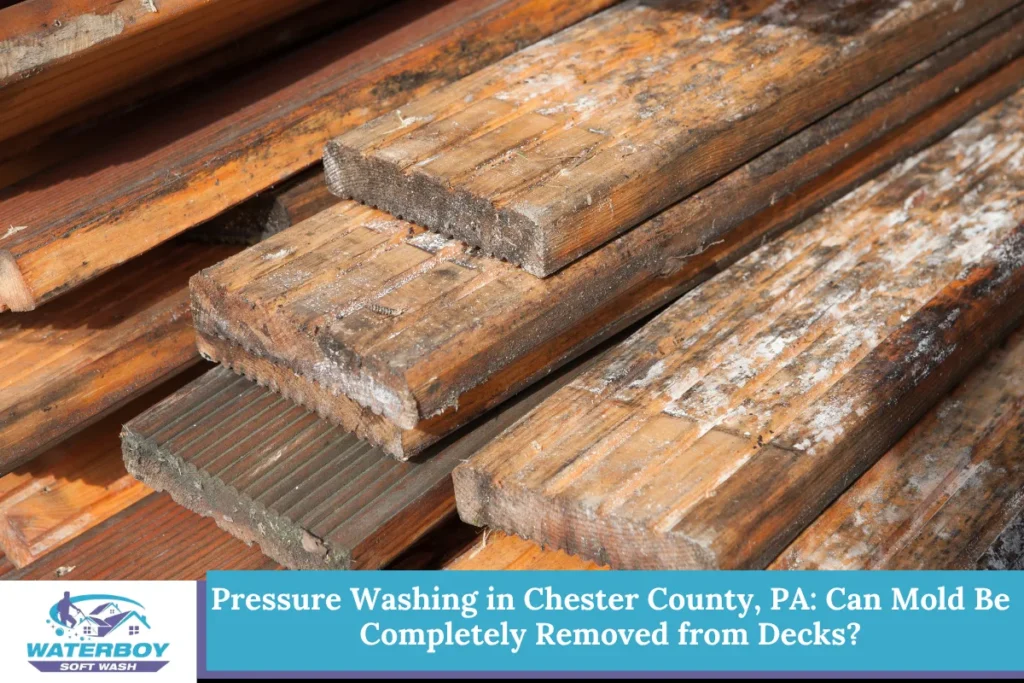
Chester County’s four-season climate creates the perfect recipe for organic growth on outdoor surfaces. Humid summers, frequent moisture, and heavy shade from oak and maple canopies mean that mold and algae growth is nearly inevitable on decks in communities like West Chester, Downingtown, and Phoenixville. The freeze-thaw cycles of PA winters only accelerate weathering.
Key Takeaways
- It is safe to pressure wash a deck with the correct technique, but only at low pressure settings, with the right nozzle, and proper working distance from the surface.
- Soft washing or gentle methods are usually safer for older wood, composite boards, railings, and other delicate exterior features.
- Incorrect pressure, harsh cleaning solutions, or poor technique can gouge wood, void manufacturer warranties, and create slippery surfaces that pose fall hazards.
- The safest way to pressure wash a deck is to use low pressure and a wide fan tip, spray with the wood grain, and test an inconspicuous area first.
- When dealing with a large, weathered, or high-value deck in Chester County, consider hiring skilled professionals who understand local materials and climate conditions.
The good news is that homeowners have options. A standard pressure washer can handle many jobs when dialed to the right settings. Soft washing offers a gentle alternative for fragile materials. And sometimes a simple scrub with the right deck cleaner is all you need. This guide walks through every consideration so you can clean your deck safely, protect the surface, and keep your property looking fresh through every season.
Know Your Deck: Wood, Composite, and PVC Surfaces Respond Differently
Not every deck responds the same way to a power washer. Before you connect a hose, identify what your boards are made of.
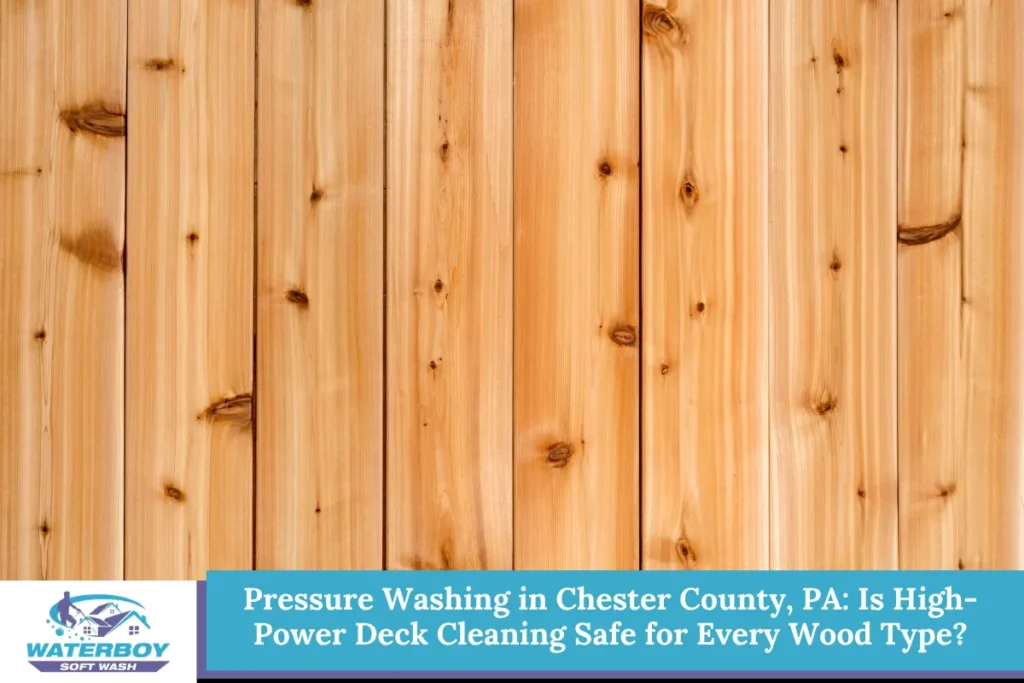
- Pressure-treated pine, cedar, and redwood are the most common materials on older Chester County homes, especially those built before 2000. These softwoods are more vulnerable to gouging and fiber raising from high pressure water. Spray too close or too hard, and you will splinter the surface and expose raw wood grain that is difficult to repair without sanding.
- Composite decking blends wood fibers with plastic. Capped composites have a protective shell, but aggressive power washing can scour that cap and void the manufacturer warranty. Brands like Trex and TimberTech publish care manuals that typically cap allowable PSI and specify approved cleaning solutions. Using unapproved chemicals or excessive pressure may eliminate your warranty coverage entirely.
- PVC and vinyl deck systems are less porous, but they are not immune to damage. A narrow spray nozzle held too close can leave permanent scars on the surface. These materials respond best to a gentle wash with a wide fan tip and mild detergent.
Railings, lattice panels, and built-in benches are more delicate than deck boards. Soft washing is often the smarter method for these features, since it is also safer for delicate surfaces like roofs and siding that may be nearby. Older boards that are cracked, sun-dried, or showing loose nails and screws need extra caution or professional evaluation before any wash begins.
When Pressure Washing a Deck Makes Sense (and When It Doesn’t)
Pressure washing is a strong choice when your deck is structurally sound, the boards are firm, and the buildup is light to moderate. Common Chester County problems like green algae film, surface mildew, muddy footprints, and grill oil or grease respond well to careful power washing. Decks under heavy tree cover should focus on cleaning mold and mildew, since that biological layer holds moisture against the wood and accelerates rot.
Pressure washing effectively removes dirt, algae, and stains from decks, and it can save homeowners money on repairs by catching deterioration early. It also removes harmful buildup like algae and mold that would otherwise break down protective finishes and shorten a deck’s life.
There are clear situations where you should hold off. Avoid pressure washing if the deck has loose or rotting boards, because high pressure water can worsen structural damage and send debris flying. If you spot flaking paint – especially on older structures that may contain lead-based paint – stop and have the coating tested before disturbing it. Severely weathered lumber with deep checking is also a poor candidate for aggressive washing.
Very high pressure machines rated at 3,000 PSI or above, the kind typically used for concrete cleaning on driveways and walkways, should never be aimed directly at deck boards. That level of force is designed for stone, brick, and concrete, not wood or composite. If your deck shows signs of rot, spongy spots, or structural concerns, consider professional deck soft washing or an inspection before any effective cleaning begins.
Safe Pressure Washer Settings and Nozzles for Deck Washing
Getting the settings right is the difference between a clean deck and a ruined one. Here is what matters most.
- PSI range for softwood decks: Use a low setting of 1,000 to 1,500 PSI to avoid splintering wood. Hardwoods like ipe can tolerate slightly higher pressure, up to about 1,800 PSI, but more is rarely better. For a broader safe window, many professionals recommend staying within 1,500 to 2,500 PSI depending on the machine and nozzle combination, always erring toward the lower end.
- Nozzle selection: A wide fan-tip nozzle, such as a 40-degree nozzle, is recommended for pressure washing decks. The 25-degree green tip also works well for effective cleaning of stubborn areas. Never use a 0-degree pencil jet or 15-degree tip on decking – they concentrate force into a tiny point and will carve visible lines into the surface.
- Working distance: Keep the nozzle 8 to 12 inches from the surface to prevent gouging. On lighter machines, you can maintain a consistent distance of 12 to 18 inches from the deck surface during washing and still get solid results.
- Technique: Moving the wand with the grain of the wood prevents damage. Use smooth, overlapping sweeps. Keep the nozzle moving to prevent visible marks or gouges on the surface, and never dwell in one spot.
- Electric vs. gas units: Smaller electric pressure washer models are more forgiving for DIY work and typically max out around 1,800 PSI. Gas-powered units can exceed 3,000 PSI and require more control to avoid over-cleaning.
- Always test first: Test the pressure washer in an inconspicuous area to check for damage before committing to the full deck. This is especially important on historic Chester County homes where original lumber may be irreplaceable.
Choosing the Right Deck Cleaner and Soft Washing Solutions
Pressure alone does not do the whole job. Apply a specialized wood deck cleaner to break down mildew and dirt before you ever pull the trigger on your washer. A dedicated deck cleaner is formulated to lift biological growth from wood fibers without destroying them the way undiluted bleach or harsh acids would.
Soft washing uses low pressure and special cleaning solutions to eliminate mold and algae without relying on force. This method is ideal for composite boards, painted railings, and any surface where high pressure poses a risk. Soft washing effectively kills mold and algae at the root, which means growth takes longer to return compared to blasting it off the surface with water alone.
Here is a quick breakdown of common cleaning solutions:
- Oxygen-based cleaners (sodium percarbonate) are biodegradable and safe for surrounding plants and pets. They work well on wood and most composites.
- Surfactant-based blends help water penetrate grime layers and rinse clean. They are gentle enough for regular cleaning throughout the season.
- Chlorine bleach can be effective in small, diluted amounts but risks stripping color, corroding metal fasteners like nails and screws, and harming landscaping.
Commercial deck cleaners are recommended for treated wood decks, as they are pH-balanced for the preservatives in the lumber. Many composite manufacturers publish lists of approved products, and using anything outside that list can affect warranty coverage.
In Chester County, environmental responsibility matters. Pennsylvania’s Clean Streams Law and municipal stormwater regulations restrict the discharge of wash water containing chemicals into storm drains. Direct rinse water onto previous landscape beds rather than hard surfaces that drain to the street. Choose biodegradable products whenever possible to protect the environment and local waterways.
Read How Do You Remove Mildew During a Deck Cleaning in Chester County, PA?
Step-by-Step Deck Washing Process for Chester County Homes
Follow this process to wash your deck safely and thoroughly.
- Prepare the area. Remove all furniture and debris before pressure washing to protect surroundings. Move grills, planters, and rugs off the surface. Cover electrical outlets and light fixtures with plastic. Wet down surrounding plants and shrubs to dilute any overspray or chemical contact.
- Inspect the deck. Walk every board. Look for popped nails, loose screws, rot, and soft spots that are common after Pennsylvania winters. Tighten or replace fasteners, and set aside any boards that need replacement. Do not wash over damaged areas.
- Apply your cleaner. Mix your chosen deck cleaner to the correct dilution and apply it across a manageable section. Let it dwell for 5 to 15 minutes, keeping the surface damp but not flooded. This gives the solution time to break down mildew, oil, and embedded dirt.
- Wash with the right technique. Start at one end and work in smooth, overlapping passes along the length of each board. Keep your spray nozzle at the correct distance, maintain steady speed, and follow the grain. Work in small sections so the cleaner does not dry on the surface.
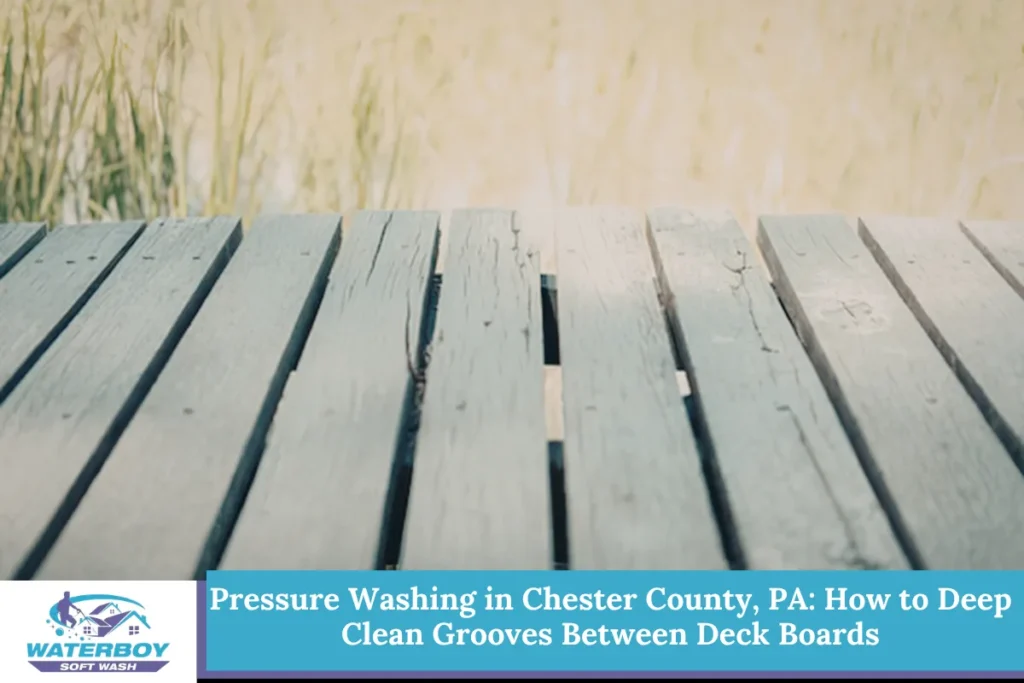
- Rinse thoroughly. Rinse the deck thoroughly to prevent chemical residue from attracting dirt. Go over each section with clean water at reduced pressure, paying attention to gaps between boards where dirty water can pool.
- Scrub stubborn areas. If any spots remain after rinsing, use a stiff-bristle brush to scrub them by hand rather than cranking up the pressure.
- Dry before sealing. After washing, let the deck dry for at least 24 to 48 hours before sealing or staining. Chester County’s humidity, especially in shaded yards, can extend this drying period. Check that the wood feels dry to the touch and is not damp before applying any finish.
Wear protective gear like safety goggles and sturdy shoes while pressure washing. Wet deck boards create slippery surfaces, so move carefully, especially on stairs.
Preventing Damage: Common DIY Mistakes with Power Washing Decks
Even with the right equipment, technique errors can turn a simple cleaning job into an expensive repair. Here are the mistakes to avoid.
Using too much pressure. This is the most common error. Homeowners often use the same PSI they would for a driveway or patio, which can exceed 3,000 PSI. That kind of force will fur and splinter wood deck boards beyond recovery. Always dial down for decking.
Wrong nozzle, wrong distance. A 0-degree or 15-degree tip held close to the surface will leave visible wand marks and gouges that look like someone dragged a knife across the boards. Stick with fan tips and maintain proper distance.
Skipping the cleaner. Relying only on pressure to remove dirt can drive contaminants deeper into the wood grain instead of lifting them out. This makes future staining uneven and can trap mold spores beneath the surface.
Washing in direct sun. Cleaning in full midday sun on a hot Chester County summer day causes cleaners to dry too fast. The result is blotchy, streaky boards and poor stain adhesion later. Aim for overcast mornings or shaded periods.
Safety oversights. Wet stairs are a fall risk. Hoses create tripping hazards. Overspray can force water under siding, behind walls, or into door thresholds, causing indoor moisture problems. Direct your spray away from house openings and keep your work area tidy.
Ignoring runoff. When possible, direct wash water toward landscaped beds rather than paved surfaces that feed storm drains. Chester County municipalities under MS4 permits may restrict non-stormwater discharges, especially when cleaning solutions are involved.
Long-Term Deck Care: Sealing, Staining, and Maintenance Schedule
A clean deck is only the starting point. Freshly washed wood is vulnerable to UV damage, moisture absorption, and new biological growth unless you protect it with a quality sealer or stain.
Transparent and semi-transparent stains let the natural grain show through but fade faster. Solid stains offer more protection and longer wear but hide the wood’s character. Choose based on your preference and how much maintenance you want to commit to. The best time for deck maintenance is mid-spring or early fall for proper drying, when temperatures in Chester County sit between 50 and 85 degrees and humidity is manageable.
For general upkeep, it is recommended to wash your deck at least once a year in Chester County. Annual or bi-annual cleaning is recommended for decks in humid areas, and cleaning frequency depends on environmental conditions and buildup. Decks that sit under heavy canopy or face north may need attention more often. Most wood decks in southeastern Pennsylvania benefit from restaining every two to three years.
High-wear zones like stairs, railings, and walkways may need touch-ups between full applications. Simple in-season habits make a difference: sweep leaves before they stain, wipe up spills, and rinse pollen periodically. This kind of regular cleaning reduces the need for aggressive future washing.
Pressure washing increases curb appeal significantly and regular pressure washing can prolong your home’s lifespan by catching problems before they grow. A clean environment reduces health risks for homeowners by limiting exposure to mold and mildew. Consistent care also helps maintain property value across Chester County neighborhoods, whether you plan to stay or sell.
Deck Cleaning in Chester County, PA – Water Boy Soft Wash
We are Water Boy Soft Wash, and we specialize in professional deck cleaning for homeowners throughout Chester County, Pennsylvania. Our team uses soft washing and calibrated low-pressure methods to safely remove algae, mildew, and stubborn grime from wood and composite decks without risking damage to your boards or voiding manufacturer warranties.
We understand the local climate, the materials common to homes in this region, and the best practices for preparing your deck for staining or seasonal use. Whether you need a single wash or ongoing exterior care, we are ready to help restore and protect your investment.
Call us today at (610) 812-7378 or fill out our contact form to schedule a free estimate. Let our experienced team handle the dirty work so you can enjoy your deck all season long.
Frequently Asked Questions
What Is the Best Season to Wash a Deck in Chester County?
Late spring and early fall are the ideal windows. In Chester County, PA, you want temperatures consistently between 50 and 85 degrees Fahrenheit with moderate humidity. Spring washing removes winter grime and prepares the surface for a fresh coat of sealer or stain before summer use. Fall washing clears pollen, sap, and organic growth before freeze-thaw cycles set in. Avoid washing during the hottest weeks of July and August, when cleaners dry too quickly and direct sun causes blotchy results. Overcast mornings offer the best working conditions. If you plan to stain after washing, early fall gives you enough warm days for the finish to cure properly before winter.
Are Deck Surfaces Safe for Children and Pets After Washing?
Safety depends on the products you use and how well you rinse. Oxygen-based cleaners and biodegradable surfactants are generally safe once they have been thoroughly rinsed and the deck has dried completely. Chlorine bleach residue can irritate skin and paws, so if you use any bleach-based product, flush the surface multiple times with clean water. Wait until the deck is fully dry before allowing children or pets back on it. If you used a commercial-grade chemical stripper, follow the manufacturer’s safety data sheet for recommended wait times. As a general rule, a full 24-hour drying period after a final rinse provides a safe, clean surface for family activity.
How Do I Remove Spotted Lanternfly Residue from My Deck?
Spotted lanternflies leave behind a sticky honeydew substance that attracts sooty mold. This is a growing concern across Chester County and much of southeastern Pennsylvania. To clean it, start with a garden hose rinse to remove loose residue, then apply an oxygen-based deck cleaner and let it sit for 10 to 15 minutes. Scrub the affected area with a soft-bristle brush and rinse thoroughly. For heavy accumulations, a low-pressure wash at around 1,200 PSI with a 40-degree tip can help. Avoid using harsh solvents, as they may strip finishes or harm the deck material. If sooty mold has penetrated the wood, a second application of cleaner or light sanding may be needed before restaining.
Is It Worth Hiring a Professional Instead of Doing It Myself?
DIY washing is feasible if your deck is in good structural condition and you have access to the right equipment. However, professional service often makes sense for large decks, multi-level structures, or surfaces with significant mold, previous coating failure, or unknown material composition. Professionals bring calibrated equipment, commercial-grade yet surface-safe cleaners, and experience reading how different materials respond under pressure. They also manage runoff and chemical handling in compliance with local stormwater regulations. Cost varies, but many Chester County homeowners find that a professional wash and stain prep costs less than repairing damage caused by an aggressive DIY attempt. Get at least two estimates before deciding.
What Should I Do If My Deck Was Already Damaged by High Pressure?
If you notice furred fibers, visible wand marks, or splintering after a wash, you will need to sand the affected boards before applying any stain or sealer. Use 60- to 80-grit sandpaper for heavy damage and finish with 100-grit to smooth the surface. A random orbital sander speeds up the process on large areas. After sanding, sweep and vacuum the dust, then wipe the boards with a damp cloth. Let everything dry before applying a penetrating stain or sealer. Steam cleaning, which uses superheated water vapor to sanitize surfaces, is sometimes suggested as a gentler alternative for future maintenance. If boards are deeply gouged or structurally weakened, replacement is safer and more cost-effective than repeated sanding.
Disclaimer: This article provides general guidance and is not a substitute for professional inspection, manufacturer instructions, or local code compliance in Chester County, Pennsylvania. Homeowners are responsible for safe equipment use, chemical handling, and adherence to applicable regulations regarding wash water and runoff.
Read Can Concrete Cleaning Professionally Up-Level Your Business Image in Chester County, PA?