


Gutter cleaning is one of those tasks that most homeowners know they should do but keep pushing to next weekend. The problem is that in Chester County, PA, “next weekend” can quickly become next season, and by then your gutters are packed with compacted leaves, silt, and roofing granules that a garden hose simply will not budge. Left alone, that buildup leads to overflowing water, damaged fascia, and moisture creeping toward your home’s foundation. The good news is that a pressure washer can clean gutters thoroughly when you use the correct PSI, the right nozzle, and a gutter cleaning wand designed for the job. Many homeowners in West Chester, Malvern, and surrounding townships prefer this method because it lets them work from the ground and finish in a fraction of the time. The rest of this article will walk you through every step, from choosing tools to knowing when it makes more sense to call a professional in the county.
Key Takeaways
- Homeowners can use a pressure washer with the right attachments and nozzle settings to clean gutters effectively from the ground, reducing the need to climb a ladder.
- Safety comes first: keeping PSI within the recommended range, maintaining proper distance, and wearing protective gear are all critical for Chester County homes.
- Twice-yearly maintenance, timed around spring storms and fall leaf drop, prevents costly roof, fascia, and foundation damage.
- Complex, high, or badly clogged gutter systems are better handled by local soft washing professionals who bring specialized equipment and training.
How Clogs Form in Chester County Gutters and Why It Matters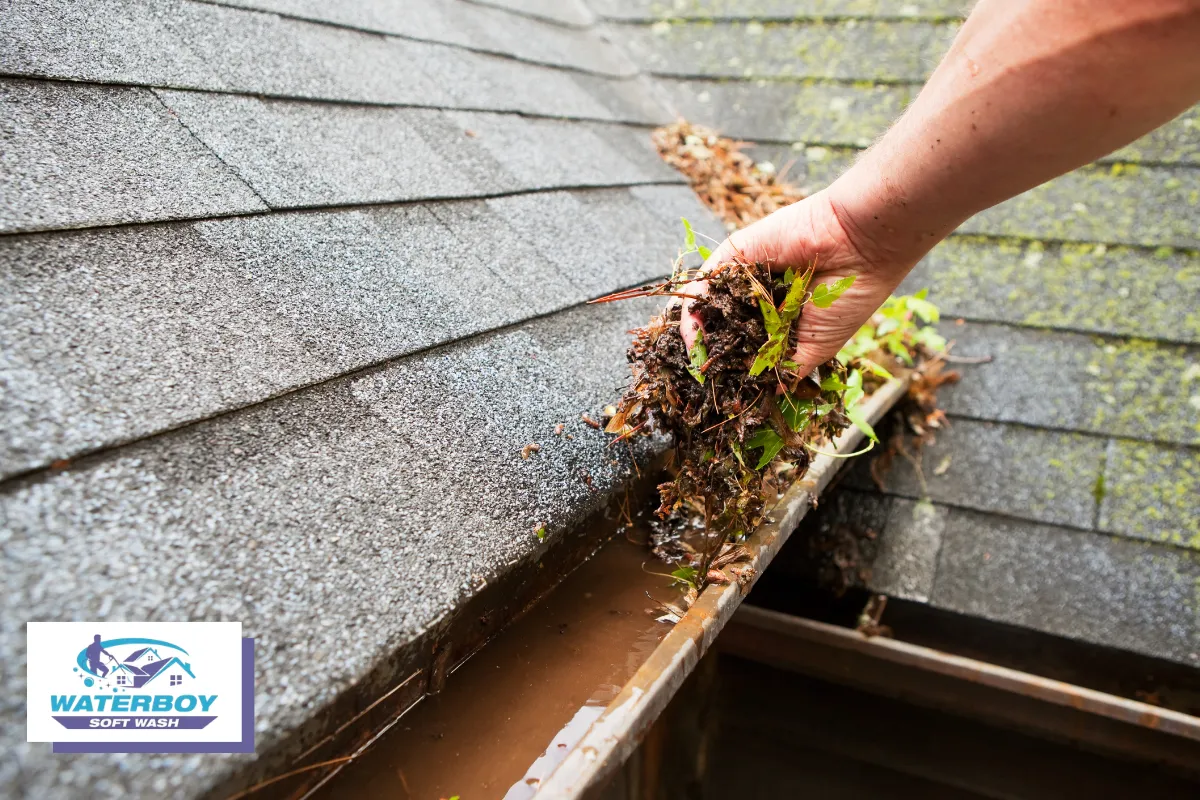
Chester County sits under a dense canopy of mature oaks, maples, and beeches that shed massive amounts of leaves each fall. Chester County properties may experience heavy leaf drop affecting gutter needs from mid-October through early December, and that window alone can fill an unprotected trough several times over. Spring brings its own wave of maple seed pods, pollen, and wind-blown dirt that settles into a fine sludge along the channel floor.
Common sources of clogs include:
- Oak and maple leaves
- Pine needles from hemlocks or white pines
- Twigs and small branches after storms
- Roofing granules shed by asphalt shingles
- Airborne silt and organic debris
Heavy rain events, which are frequent through April and May and again during summer thunderstorms, push all of this material toward your downspouts. Even a small blockage at an elbow or vertical section creates backpressure, and water begins to pool. That standing water attracts pests like mosquitoes, encourages mildew growth along the trough, and adds weight that strains hangers and seams.
Visible signs you might notice from the ground in West Chester or any surrounding community include overflowing edges during a storm, dark staining on siding, and mini waterfalls pouring over the lip instead of draining through downspouts. But the hidden consequences are often worse. Clogged gutters can cause cracked foundations from concentrated water pooling at the base of your walls. Regular cleaning prevents roof and ceiling water damage by keeping water moving through the system as designed. Excess water that spills over the edge can also lead to garden and landscaping erosion, washing away mulch beds and exposing root systems.
Using a pressure washer correctly can remove compacted debris more thoroughly than hand scooping alone because the pressurized stream reaches seams, corners, and packed-down sludge that a scoop or leaf blower simply passes over.
Is Power Washing Gutters Right for Your Home?
Not every roofline or gutter condition is a good match for pressurized water. Before you decide to pressure wash gutters, evaluate a few factors specific to your property.
Gutter material matters. Half-round gutters are traditional and prone to clogging because their open shape catches and holds leaves easily. K-style gutters resemble the letter K in profile and transport more water, making them the most common choice on Chester County colonials and newer builds. Fascia gutters are seamless and custom-built from aluminum, offering fewer joints where leaks develop but still requiring careful pressure selection to avoid finish damage. High-pressure water can dent aluminum and damage seals, so knowing what you have is the first step.
Power washing is appropriate when:
- Gutters are structurally sound with no visible sagging, rust holes, or separated seams
- Debris is moderate and not multiple seasons old
- You have safe access and clear yard space below
- Weather conditions are favorable, with no freezing temperatures or high winds
You should avoid DIY washing when gutters are brittle or loose, when older paint on the exterior may contain lead, when overhead power lines run close to the roofline, or when vinyl gutters have aged past the point where they can handle even moderate pressure in cold weather. In borderline cases, local soft wash professionals can assess whether a low-pressure or hand-cleaning method is the safer option for your home.
Tools, Attachments, and Safety Gear for Cleaning Gutters With a Power Washer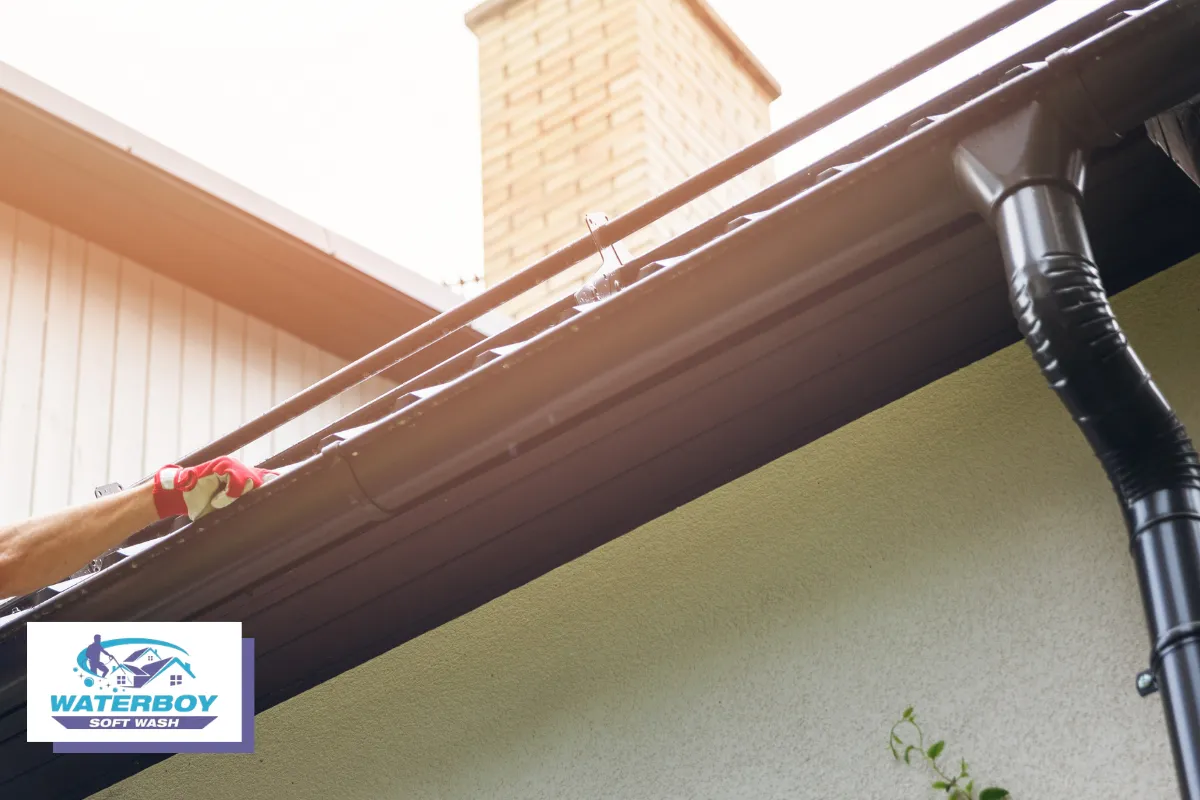
Think of this section as your shopping and prep list before you start the job.
Pressure Washer Specs
A minimum of 1.2 GPM and 1,500 PSI is required for effective cleaning of most residential gutters. Electric units with adjustable PSI offer the safest control for homeowners who prefer to manage pressure precisely. Gas-powered models deliver more force but require a careful hand to avoid overdoing it on painted aluminum or older vinyl.
Wands and Attachments
Use a gutter cleaning wand rather than a bare lance. A telescoping wand can extend up to 24 feet for high gutters, letting you reach second-story troughs without leaving the ground. U-shaped or hook-style attachments shoot water back along the channel, directing the stream where it needs to go instead of spraying across the roof or into soffit vents.
Nozzle Selection
A wide fan nozzle should be used for rinsing and general clearing of gutters. The 40-degree white tip is your default for sweeping debris along the channel. Step up to a 25-degree green tip only for stubborn, compacted grime. Avoid narrow 0-degree red tips entirely when working near siding, shingles, or seams, as the concentrated blast can punch through paint and bend thin metal.
Personal Protective Equipment
Use protective equipment like safety goggles and gloves when cleaning gutters. Non-slip boots, hearing protection for gas-powered units, and a rain jacket or splash-resistant top round out the essentials. Long sleeves and pants protect skin from debris spray.
Ladder Safety
Have sturdy ladders available only when absolutely necessary. Set them on level ground, maintain three points of contact at all times, and never overreach past the side rails. Before starting any spraying, identify and stay clear of overhead electrical lines and service drops near your home.
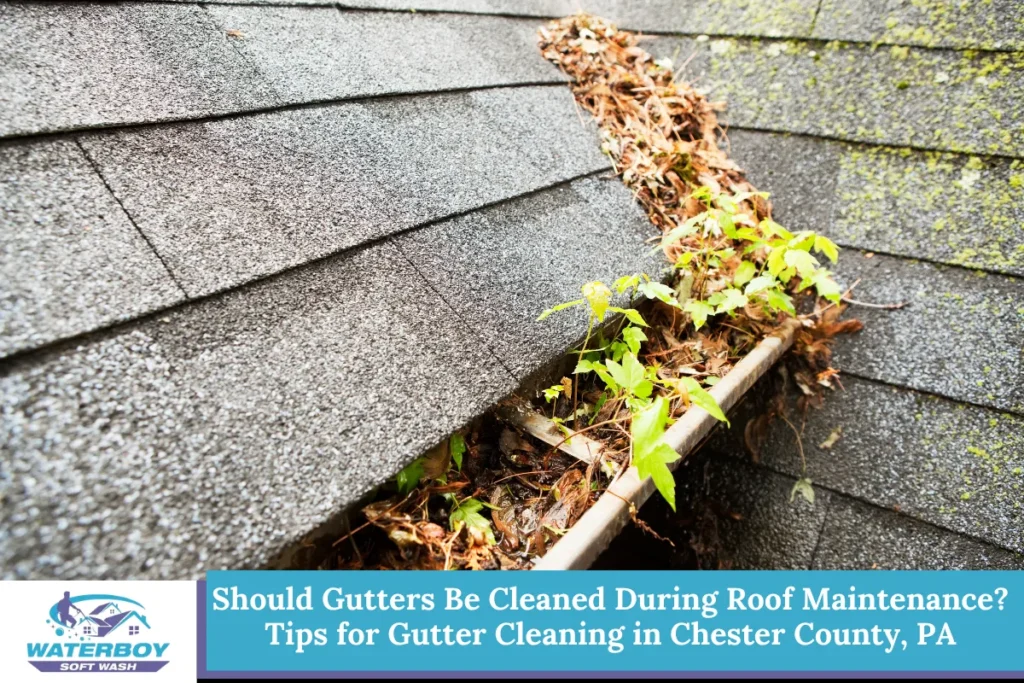
Read Should Gutters Be Cleaned During Roof Maintenance? Tips for Gutter Cleaning in Chester County, PA
Step-by-Step: How to Clean Gutters With a Power Washer Safely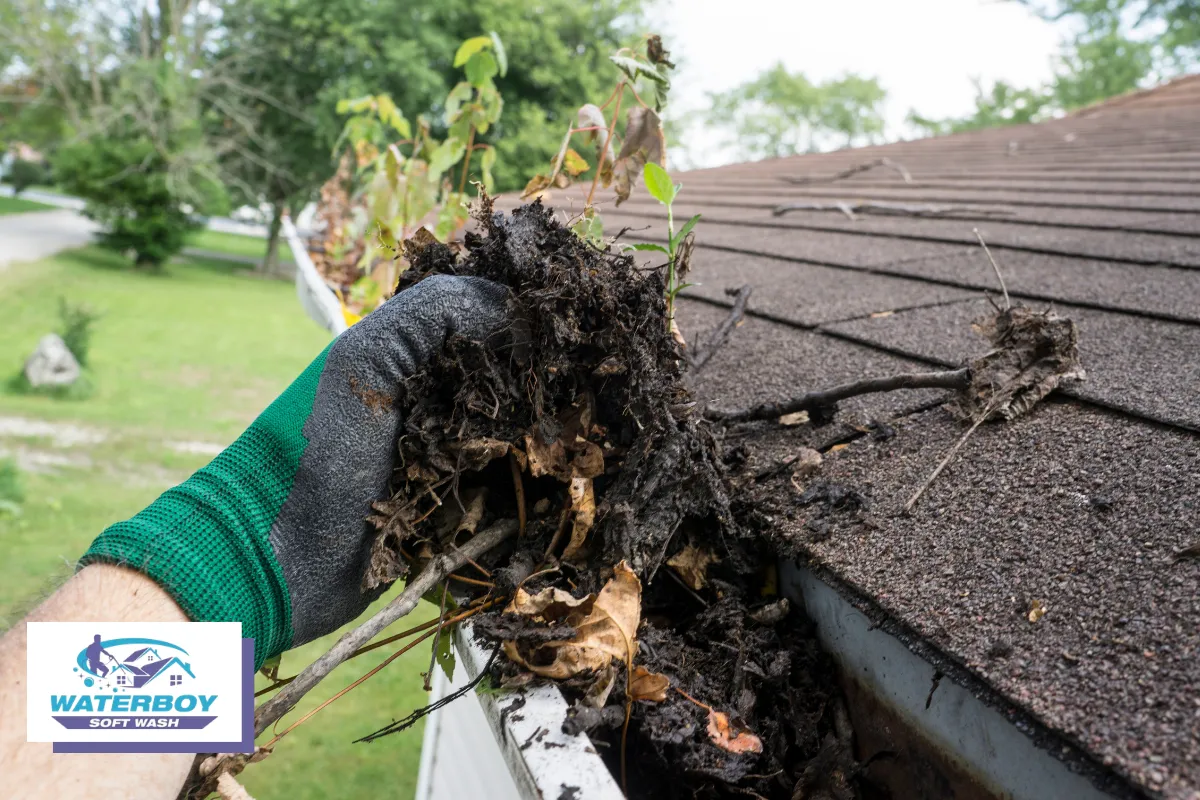
Here is the practical roadmap for Chester County homeowners who want to tackle this process themselves on a dry, calm day.
- Inspect gutters for damage before pressure washing to avoid exacerbating issues. From the ground, use binoculars or a phone camera to check for loose hangers, cracks, rust spots, and sagging. Note where every downspout exits and whether any sections look detached from the fascia.
- Prepare the work area. Move vehicles away from the drip zone, cover delicate landscaping with tarps or plastic sheeting, and relocate patio furniture, grills, and pet bowls.
- Clear heavy debris from gutters manually before using a power washer. A gutter scoop or leaf blower removes the bulk of leaves and twigs so the pressure washer acts as a flush, not a battering ram.
- Pre-rinse soffits, siding, and nearby plants with a gentle stream of water to loosen surface grime and reduce detergent impact if you plan to brighten the exterior face of your gutters with a mild, exterior-safe cleaner. Keep detergent out of the interior channel to protect the environment and your downspout system.
- Attach the curved gutter wand to your telescoping pole and start cleaning gutters at the end farthest from the downspout, flushing debris toward the exit. This keeps the drainage path open so material can flow out instead of compacting against a blocked opening.
- Use smooth, controlled passes. Keep the nozzle moving to avoid forcing water under shingles or behind the fascia board. Never spray water upward into the roofline while cleaning gutters.
- Ensure downspouts are clear before applying high volumes of water. After the channel is flushed, confirm strong flow at each downspout exit. Pressure washing can clear clogs in downspouts quickly by directing a burst from the bottom opening upward through the elbow, or you can use a plumber’s snake for stubborn blockages.
- Collect and manage debris to prevent it from entering stormwater systems. Keep potential chemicals and debris out of storm drains while cleaning gutters, in line with Chester County’s stormwater ordinances under Act 167.
- Rinse the sidewalk, patio, and driveway to remove leaf piles, sludge, and organic stains so your yard looks better than when you started.
- After everything dries, walk the perimeter for a final inspection. Look for drips, new leaks, or any brackets that may have shifted during the wash.
Best Power Washer Settings and Techniques for Chester County Homes
For aluminum gutters, stay in the 1,200 to 1,500 PSI range on external faces and drop to roughly 800 to 1,000 PSI when flushing the interior trough of older or thinner material. Vinyl gutters should be cleaned below 1,300 PSI, and never when temperatures dip below 40 degrees because cold vinyl turns brittle.
Stand back at a safe distance, generally six to twelve inches from the gutter surface, and adjust pressure gradually rather than starting at full power. Angle the spray so water travels along the channel toward the downspout rather than directly at the roof edge or up under shingles. Avoid using power washers while standing on a ladder to prevent falls. Working from the ground with a telescoping wand is a far safer and more effective method.
Seasonal weather in Chester County adds another layer of planning. Avoid washing during freezing temperatures, lightning storms, or the high winds that often accompany seasonal transitions between fall and winter.
Common Mistakes to Avoid When Pressure Washing Gutters
- Using too much pressure and causing dents, cracked seals, or blown-off paint. A pressure washer can clean gutters effectively without needing extreme force.
- Spraying upward into soffit vents or under shingles, which drives moisture into the attic.
- Flushing everything toward an already clogged downspout, which compacts the blockage instead of clearing it.
- Standing on the top rungs of a ladder while handling a strong spray gun, which can throw you off balance.
- Ignoring runoff: uncontrolled sludge and water can stain concrete, erode flower beds, and carry pollutants into storm drains.
If gutter brackets flex, seams start to leak, or you notice paint peeling away from the fascia, stop immediately and reassess before continuing
Seasonal Gutter Maintenance Plans for Chester County Properties
A predictable schedule prevents emergency repairs and storm-related damage. Gutters should be cleaned at least twice a year: once in late spring after maple seeds, pollen, and roof grit settle, and once in late fall after the bulk of leaf drop finishes in late November or early December.
Gutter maintenance requires a strategic approach in heavily wooded areas. Homes on wooded lots or near streams and parks in West Chester, Malvern, or surrounding townships may need an additional mid-season check, bringing the total to three or even four cleanings per year.
Pair gutter washing with other exterior tasks like roof inspections, downspout extension checks, and a quick walk around the foundation looking for signs of water damage. Gutter guards reduce but do not eliminate the need for maintenance; screens and mesh still require periodic rinsing to stay effective. Documenting each cleaning with dates, photos, and notes can help with resale value and answer questions during home inspections.
If you prefer to stay off ladders entirely, combine your own visual checks from the ground with scheduled professional service to ensure nothing is missed.
DIY vs. Professional Gutter Washing in Chester County
The cost savings of doing it yourself are real, but so are the risks. Balancing safety, time, and quality of results is the honest way to choose your approach.
A handy homeowner can safely clean gutters on a single-story ranch with a gentle slope, light debris, and clear ground below. If you have the right equipment, a calm day, and a few hours to spare, DIY is a reasonable option.
Professional help makes more sense for multi-story houses, complex rooflines, steep yards, or any property with a history of water intrusion. Pros bring specialized soft wash systems, high-reach equipment, and trained crews who manage runoff and cleanup efficiently. They also spot early warning signs such as loose fasteners, failing seams, or fascia rot that might need gutter repair before the next storm season.
When people weigh the decision, safety should lead the conversation. If the job requires you to climb higher than you are comfortable, or if the equipment and protective gear are not readily available, calling a professional is the smarter and often more cost-effective option in the long run.
Gutter Cleaning in Chester County, PA – Water Boy Soft Wash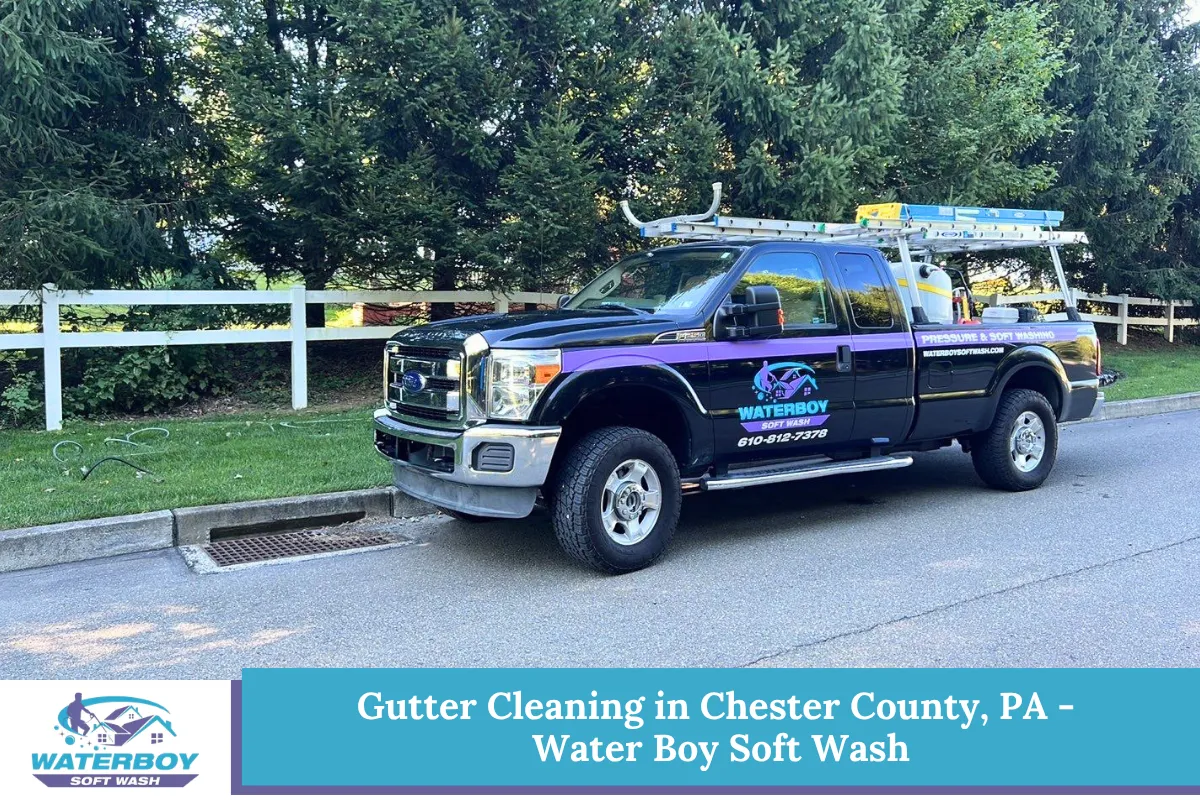
We are Water Boy Soft Wash, and we specialize in gutter cleaning for homeowners throughout Chester County, Pennsylvania. Whether you live in West Chester, Malvern, or any of the surrounding communities, our team brings professional-grade soft wash equipment and the hands-on experience to safely remove every bit of debris from your gutters and downspouts. We protect your roof, siding, and landscaping during every visit, and we leave your driveways and walkways clean when the job is done. Our customers trust us because we treat every property with care and follow local safety standards from start to finish. Call us today at (610) 812-7378 or fill out our online contact form for a fast estimate and convenient scheduling. Let us handle the hard part so you can enjoy a home that drains the way it should.
Frequently Asked Questions
Do I Need to Shut Off My Water or Utilities Before Pressure Washing My Gutters?
You do not need to shut off your main water supply. The only connection that needs to be functional is the outdoor spigot feeding your garden hose, which supplies water to the pressure washer. Gas and electric services can remain on, but you should avoid spraying directly at electrical meters, junction boxes, or exterior outlets. Cover outdoor receptacles with waterproof caps before you begin, and test any GFCI outlets afterward to confirm they still trip correctly. Check the manufacturer labels on exterior security cameras and light fixtures to verify they carry a wet-location rating. Taking these small precautions keeps the job safe without any service interruptions.
Can Power Washing My Gutters Help With Basement Moisture Problems?
There is a direct connection between clogged gutters and damp basements. When gutters overflow, water cascades down exterior walls and saturates the soil directly against your home’s foundation. Over time, that hydrostatic pressure forces moisture through tiny cracks and porous block or stone. Maintaining clean gutters and properly positioned downspout extensions can significantly reduce water pooling near basement walls. However, pressure washing alone is not a cure-all. If you notice persistent dampness, efflorescence on interior walls, or mold in your basement, you may also need grading improvements, French drains, or interior waterproofing. Consult both an exterior drainage specialist and an interior moisture expert for a complete solution.
How Long Does a Typical Gutter Power Washing Job Take for a Chester County Home?
For a small single-story ranch with standard aluminum K-style gutters, expect the entire process to take roughly one to two hours, including setup and cleanup. A larger two-story colonial or townhome with multiple roof sections and several downspouts can take two to four hours, especially if debris is heavily compacted. Factors like the number of downspouts, ease of access around the lot, and whether gutter guards need to be removed all affect the timeline. Professional crews often finish faster because they arrive with dialed-in equipment, proper ladders, and a systematic workflow. Plan extra time on your end to move vehicles, cover plants, and walk the perimeter for a post-cleaning inspection.
Will Pressure Washing Damage My Gutter Guards or Should I Remove Them First?
It depends on the type of guard. Micro mesh guards have tiny holes to keep debris out and can generally handle a gentle rinse with a wide fan nozzle at moderate pressure. Solid surface or reverse-curve guards are similarly durable if the spray stays at a low angle. Brush guards trap debris but need removal for cleaning because pressurized water can push trapped material deeper into the bristles rather than clearing it. Foam inserts should always be pulled out before any water hits the channel. If your guards are older or loosely fastened, remove them by hand, clean them separately, and reinstall once the gutter trough is flushed. When in doubt, check the manufacturer instructions or ask a professional which approach your specific brand and style require.
How Can I Tell If My Gutters Need Repair Instead of Just Cleaning?
Several warning signs point toward a gutter repair need rather than a simple washout. Persistent leaks at seams that continue dripping after you have thoroughly flushed and dried the system suggest failed sealant or joint separation. Visible gaps between the gutter and the fascia board mean hangers have pulled loose or the wood behind them is rotting. Sagging sections indicate that brackets can no longer support the weight of water and debris. If water still spills over edges during a normal rain after a thorough cleaning, the pitch may be incorrect or the gutter may be undersized for your roof area. Rust spots and pinholes on steel gutters, or peeling paint from chronic overflow on aluminum, all point toward replacement. Document issues with photos and consult a qualified exterior contractor for a detailed assessment before the next heavy rain.
Disclaimer
This article provides general information only and is not a substitute for professional advice. Always follow local Chester County codes, manufacturer guidelines, and consult qualified contractors before attempting pressure washing or gutter work on your property.
Read How Do You Clean Patio Furniture During Exterior Cleaning in Chester County, PA?