

Key Takeaways
- Soft wash cleaning safely removes algae, mildew, mold, black streaks, dirt, and general grime from most exterior surfaces throughout Chester County without causing damage to the underlying material.
- Organic stains like green algae and dark mildew respond best to low pressure soft washing, while deep-set oil, heavy rust, and tire marks on concrete may still require pressure washing or specialized treatment.
- The humid climate in and around West Chester, combined with heavy tree cover, creates ideal conditions for biological staining on siding, roofs, decks, and concrete year after year.
- Hiring a trained local soft washing service protects your surfaces, landscaping, and property value by using the right method for each material and stain type.
Soft Wash Cleaning and the Stains It Solves in Chester County
Soft wash cleaning has become the go-to solution for homeowners across Chester County who are tired of watching green algae creep along their siding, dark streaks spread across their roof, and dingy grime settle over once-bright exteriors. If your property sits in a shaded neighborhood near West Chester or any of the surrounding townships, you already know how quickly these stains take hold. Humidity and dense tree canopy trap moisture against your home, feeding mold and mildew that only get worse when left untreated. High pressure water can crack paint, gouge wood, and force moisture behind panels. Professional soft washing uses low pressure and targeted cleaning solutions to remove these stains safely. This guide walks through the specific stain types soft washing handles, where it works best, and when another approach makes more sense.
How Soft Washing Works on Exterior Surfaces
Soft washing is a professional exterior cleaning method that relies on chemistry rather than brute force. Instead of blasting surfaces with high pressure water, the soft washing process involves a low pressure application of specialized detergents, surfactants, and sanitizing agents that do the heavy lifting at a chemical level.
Here is how the main components work together:
- Sodium hypochlorite acts as the primary biocide, killing algae, mold, mildew, and bacteria by oxidizing organic molecules in the growth itself. Soft washing uses biodegradable cleaning solutions to kill biological growth at the cellular level rather than just pushing it around.
- Surfactants help the cleaning solution spread evenly across the surface, penetrate biofilm, and loosen dirt so everything rinses away cleanly.
- Specialty agents such as mild acids or rust-specific formulas may be added for inorganic staining like metal run-off or efflorescence.
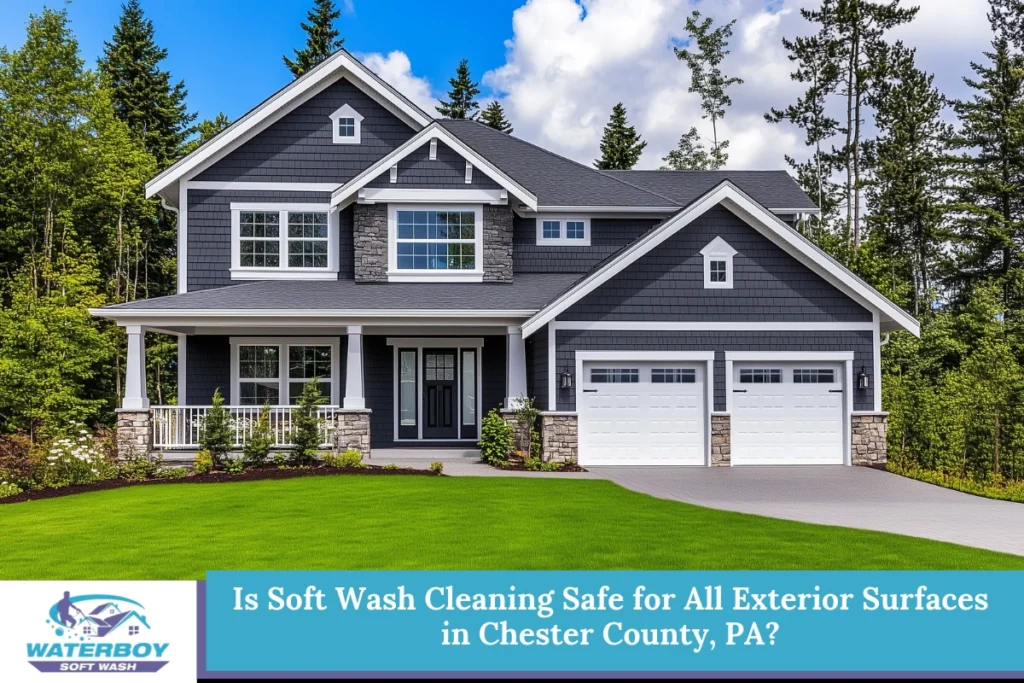
This approach is ideal for delicate surfaces common across Chester County homes, including vinyl siding, painted wood, stucco, asphalt shingles, fiber cement boards, and composite decking. Soft washing is safe for delicate surfaces like stucco and wood because there is no aggressive force water involved. Soft washing uses biodegradable solutions that are vegetation-safe, so landscaping around your foundation stays protected during the job.
Soft washing is distinct from high pressure washing in its methodology and effectiveness. Where house washing with low pressure water combined with detergents works best on siding, roofing materials, and painted surfaces, traditional pressure washing is still appropriate for hard surfaces like concrete driveways or heavily soiled masonry surfaces. Manufacturers of roofing and siding products frequently recommend low pressure methods to keep warranties intact, which is why soft washing follows those guidelines closely.
Organic Growth: Algae, Mildew, and Mold Stains
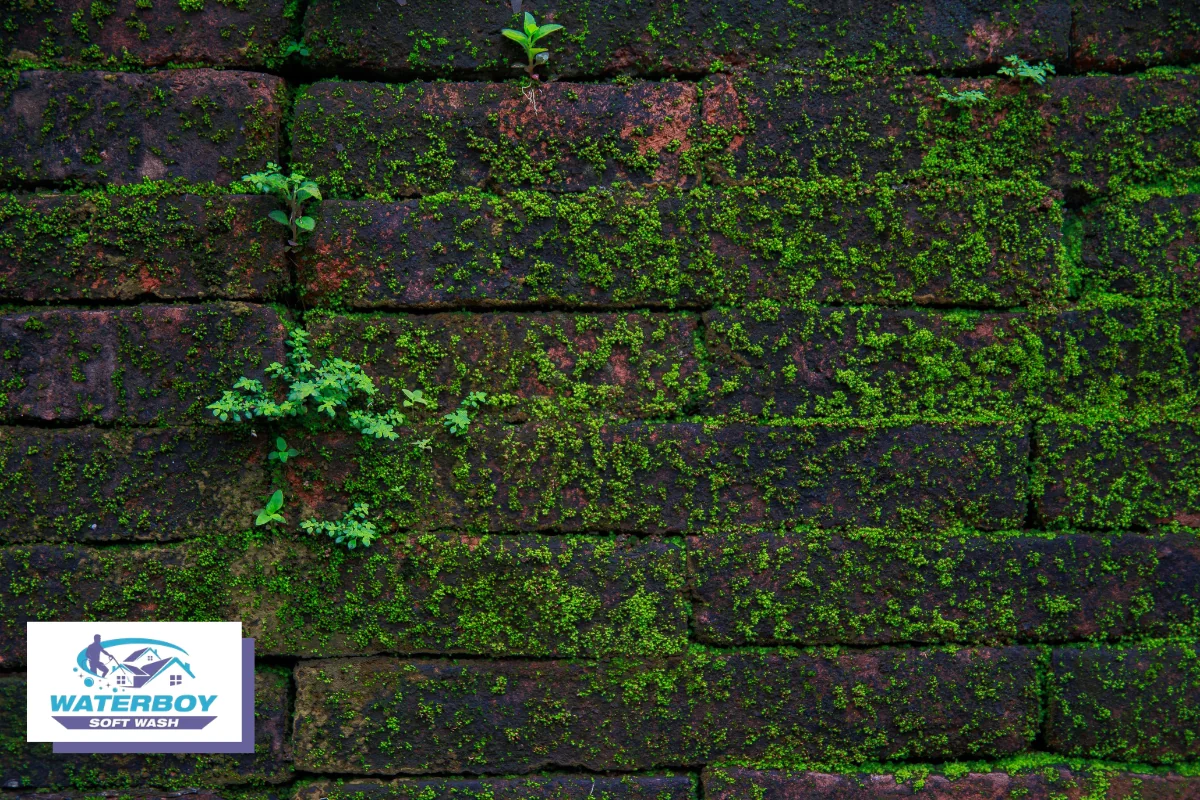
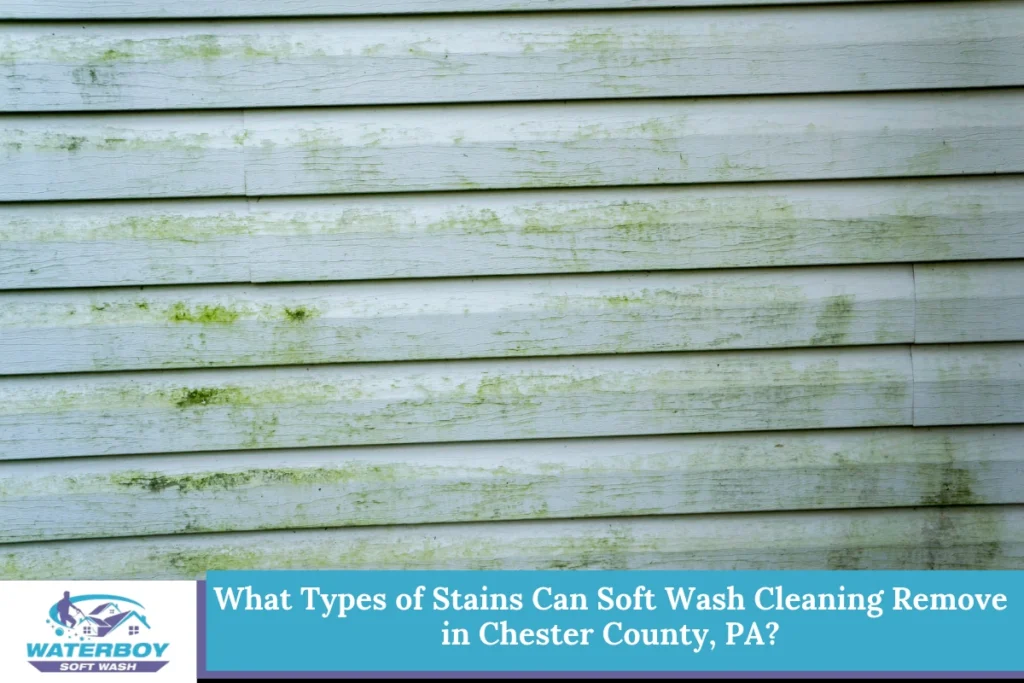
Green algae film, dark patches of mildew, and fuzzy mold colonies rank as the most common stains on homes across West Chester and the broader Chester County region. If you have mature trees shading your property, odds are good that at least one side of your home is showing signs of biological growth right now.
The soft washing process can safely remove algae from siding, soffits, trim, foundations, and virtually any exterior surface where organic growth has taken hold. Here is what makes it so effective:
- Soft washing kills algae and mold at the root, which means the organism is eliminated rather than just rinsed off the surface. This is why soft washing targets organic growth at the root for lasting results instead of the temporary fix that a garden hose or standard rinse provides.
- Black and green staining on north-facing walls, under large trees, and near landscaping beds typically comes from organisms like Gloeocapsa magma and similar cyanobacteria that thrive in moisture and shade. These colonies feed on organic material in paint, shingle granules, and wood fibers.
- Because biological staining is destroyed at the source, the method prevents regrowth of biological stains for one to three years depending on shade exposure and moisture levels.
- Common stains that soft washing removes include algae, mold, mildew, and dirt, making it a comprehensive treatment for most organic surface problems.
This approach is especially important for older brick and mortar joints, painted wood, and historic exteriors found in and around downtown West Chester. Soft washing effectively cleans older brick and mortar surfaces without eroding the material, while high pressure washing on those same surfaces could blow out aging mortar or strip decades-old paint. Soft washing is recommended for delicate painted wood surfaces where even moderate pressure could cause peeling or chipping.
Roof Discoloration and Black Streaks
Those dark streaks running down asphalt shingle roofs all over Chester County are not just accumulated dirt. They are colonies of algae, specifically Gloeocapsa Magma, an algae that causes black streaks on roofs by feeding on the limestone filler in shingles and thriving in the humid air that settles over the region each summer.
Roof cleaning through soft washing addresses this staining with carefully controlled low pressure and properly diluted detergents. Soft washing removes algae and mildew from roofs without damage to shingles, flashing, or underlayment. The soft washing technique prevents water intrusion into building materials because there is no high pressure driving moisture under shingles or behind flashing.
- Treating the full roof plane avoids patchy, uneven results and helps slow future algae regrowth for several seasons. Soft washing results last two to three years under normal conditions, which means your roof stays cleaner far longer than it would after a simple rinse.
- Homeowners should never have roofs aggressively pressure washed. High pressure can strip the protective granules embedded in asphalt shingles and force water under the shingle layers, leading to leaks, wood rot, and shortened roof lifespan.
- Common roofing industry standards recommend low pressure soft wash methods rather than power washing on asphalt shingles, particularly in climates with high humidity like Chester County.
Stains on Siding: Green Growth, Dirt, and Oxidation
Vinyl siding, fiber cement, wood siding, and painted surfaces across Chester County collect a layered mix of green biological staining, traffic film, seasonal pollen, spider webs, and dull oxidation over time. Pollution and smog can also leave a film on exterior walls that soft washing effectively removes, restoring a surface that may look permanently discolored.
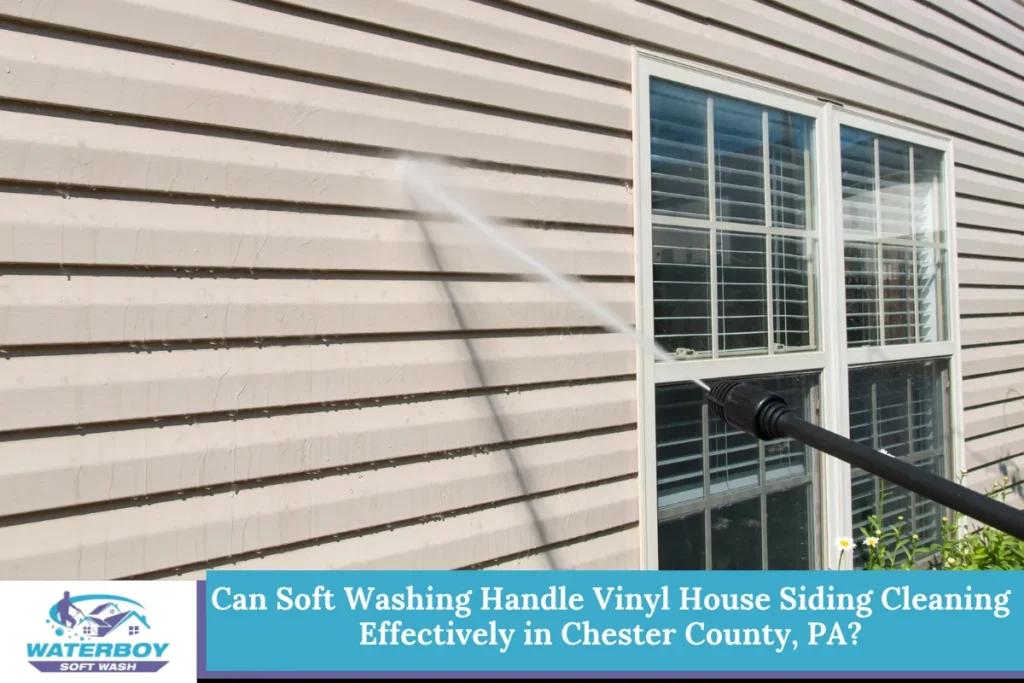
Soft washing is ideal for house washing on materials like vinyl siding, aluminum, and fiber cement boards because it removes grime without forcing water behind panels or into seams. Soft washing is safe for vinyl siding and stucco, two of the most common cladding types in Chester County subdivisions and older homes alike.
- Light to moderate oxidation, the chalky white residue that develops on aluminum or vinyl over years of sun exposure, responds well when trained technicians adjust their cleaning solution strength and dwell time. Heavily oxidized surfaces may still need mechanical restoration, but most homes see a noticeable brightening after a single wash.
- Low pressure helps protect caulked joints, window trim, and paint that can peel or chip under aggressive high pressure water.
- Soft washing is ideal for porous materials like stucco and stone, which are common on accent walls, foundations, and chimney faces throughout the area.
- Regular exterior cleaning every one to three years around West Chester properties and other Chester County townships maintains curb appeal and extends siding lifespan. Common surfaces treated with soft washing include vinyl siding, roofs, and decks, so a single service visit can address multiple areas of your home.
Rust, Fertilizer, and Battery Acid-Related Stains
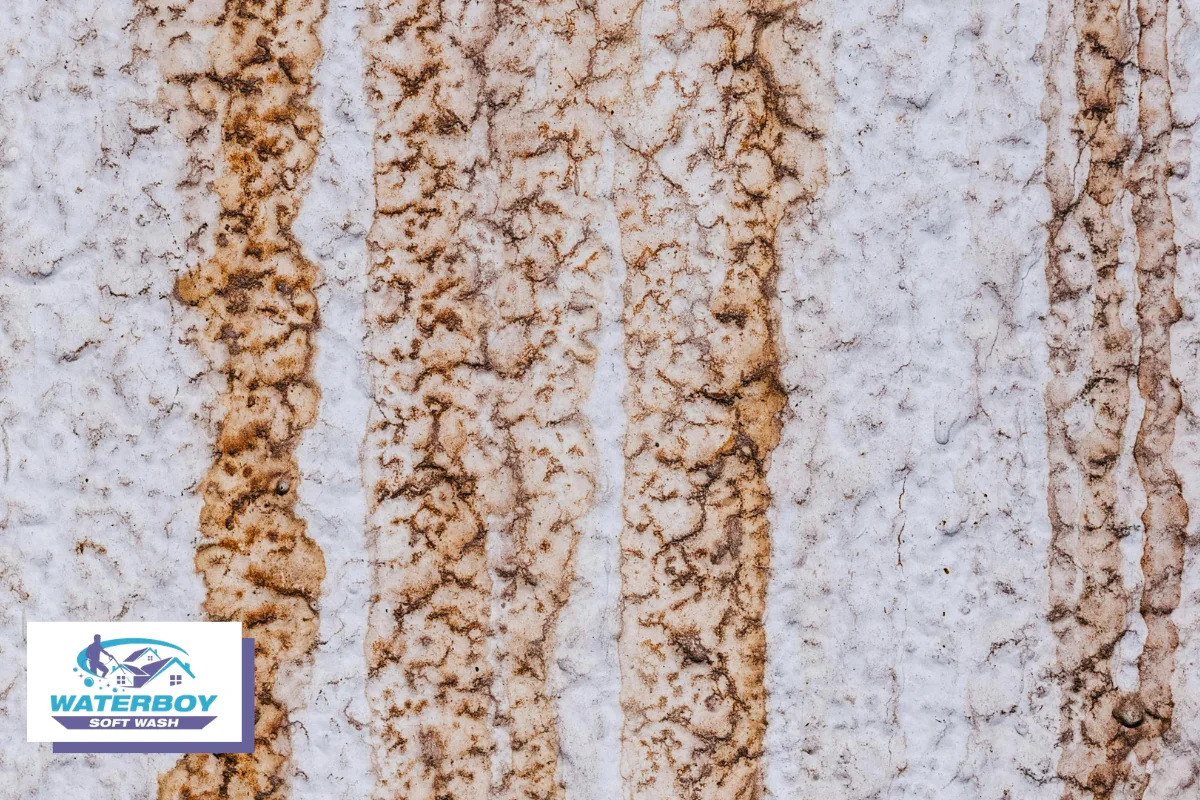
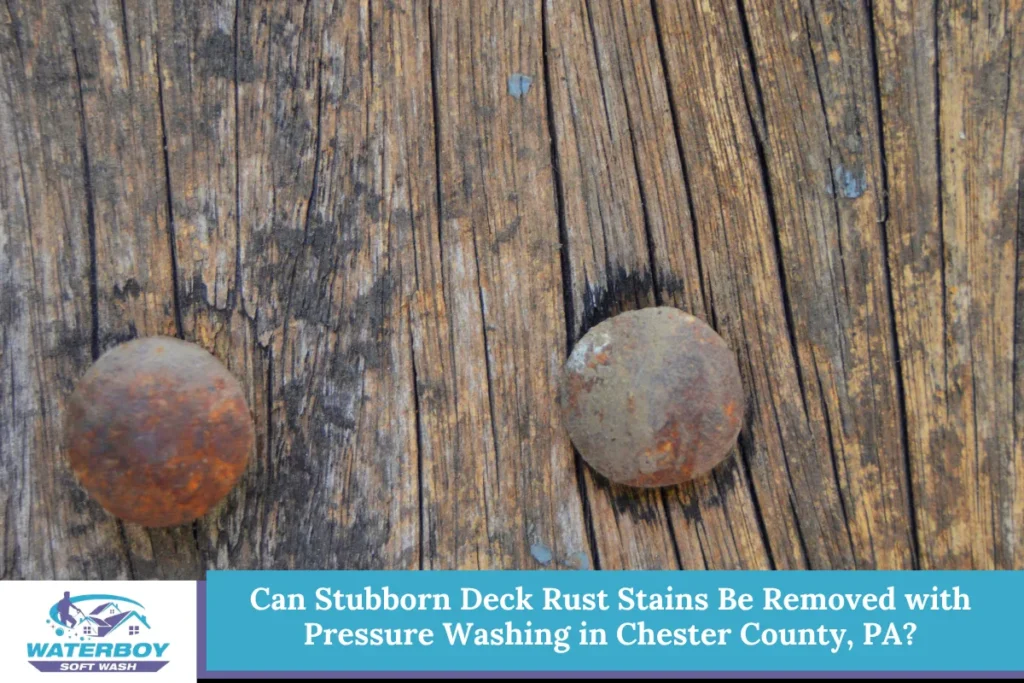
Orange rust streaks and brown fertilizer marks frequently appear on concrete, pavers, lower siding, and near irrigation systems or metal fixtures like downspouts, vents, and flashing. These stains come from a different chemical process than organic growth and require a different approach.
Standard bleach-based soft wash solutions do not dissolve rust. However, professional exterior cleaning crews carry specialty detergents, including oxalic acid and proprietary rust removers, that can significantly reduce or eliminate many common rust marks on exterior surfaces without harsh grinding or etching.
- Some orange or brown stains around driveways, garage thresholds, and Chester Springs properties where well water is iron-rich are caused by mineral deposits, battery acid drips, or lawn fertilizers containing iron. These may require targeted chemical treatments beyond standard house washing formulas.
- These treatments are typically paired with low pressure rinsing to protect the surface. High pressure alone is usually ineffective on deep rust staining because the discoloration penetrates into porous material.
- A professional evaluation is the right method for setting realistic expectations, especially on older concrete or heavily etched surfaces. Some stains can be lightened significantly but may not disappear entirely if the material itself has been chemically altered.
Decks, Fences, and Outdoor Living Areas
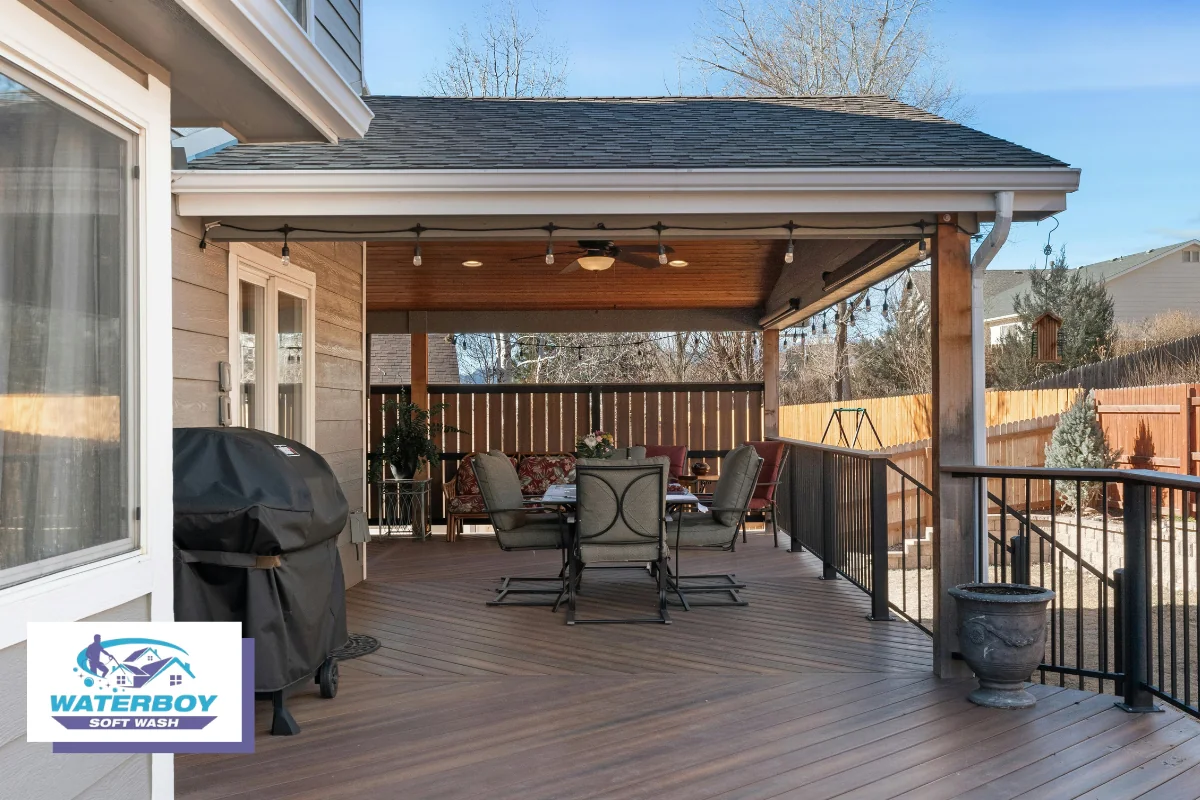
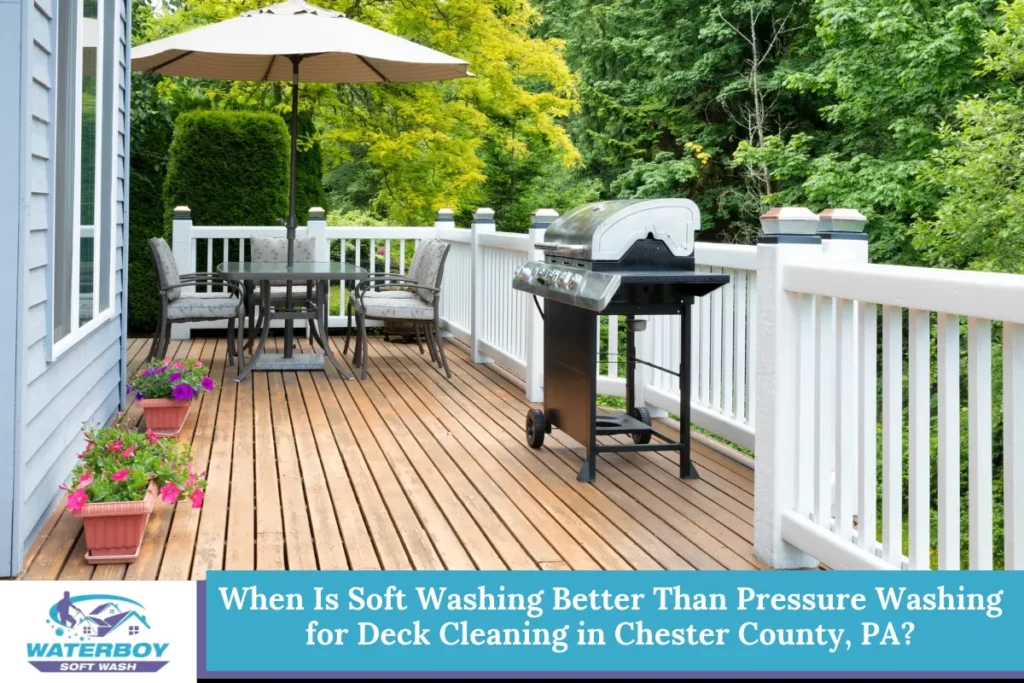
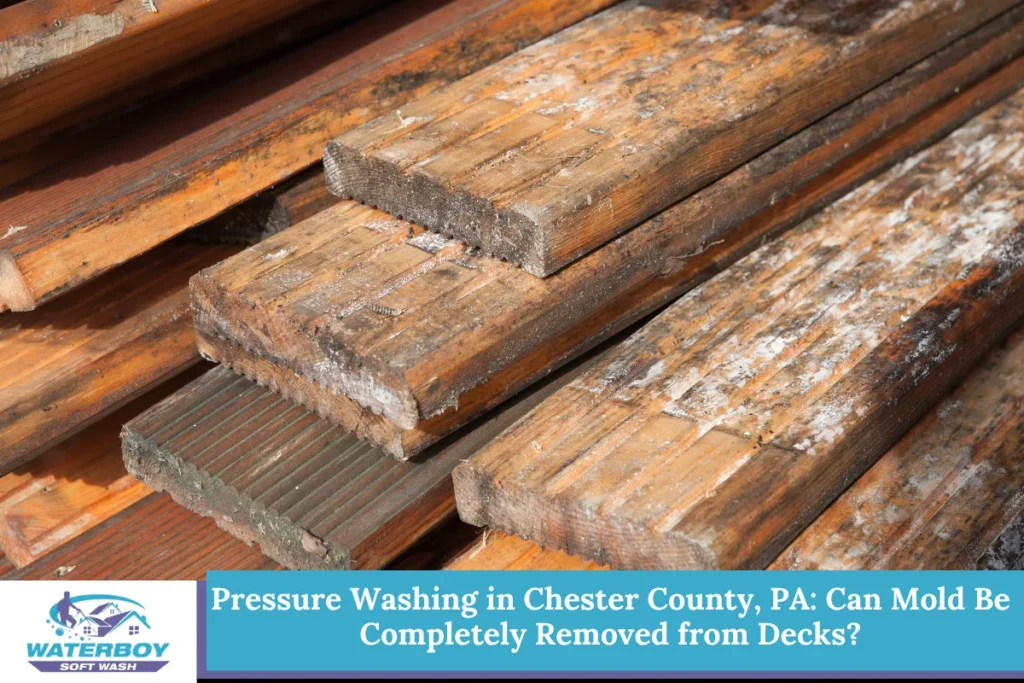
Wood decks, railings, fences, and composite surfaces in Chester County backyards accumulate algae film, gray weathering, food and drink spills, and mildew growth season after season. These surfaces see constant foot traffic and weather exposure, which accelerates staining.
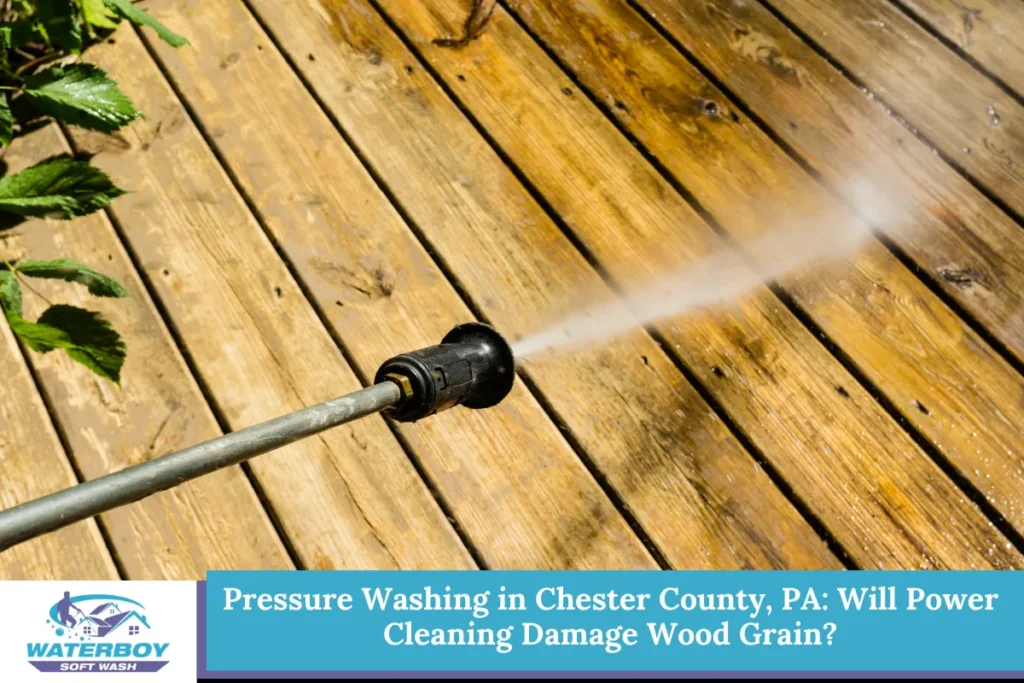
A low pressure soft wash can safely clean pressure-treated wood, cedar, and composite materials using carefully balanced detergents that avoid gouging the wood grain or degrading composite coatings.
- Removing slippery algae and mildew on deck boards, pool surrounds, and steps improves safety as well as appearance. Green algae on shaded deck boards is one of the most frequent service calls in the area.
- Some decks may need follow-up services like brightening or staining after cleaning. The surface must be allowed to dry fully to ensure good coating adhesion if you plan to seal or stain afterward.
- Nearby surfaces such as outdoor kitchens, railings, screens, and windows are protected and rinsed during the washing services to prevent spotting or chemical residue from drifting onto unintended areas.
When Pressure Washing Is Still the Better Option
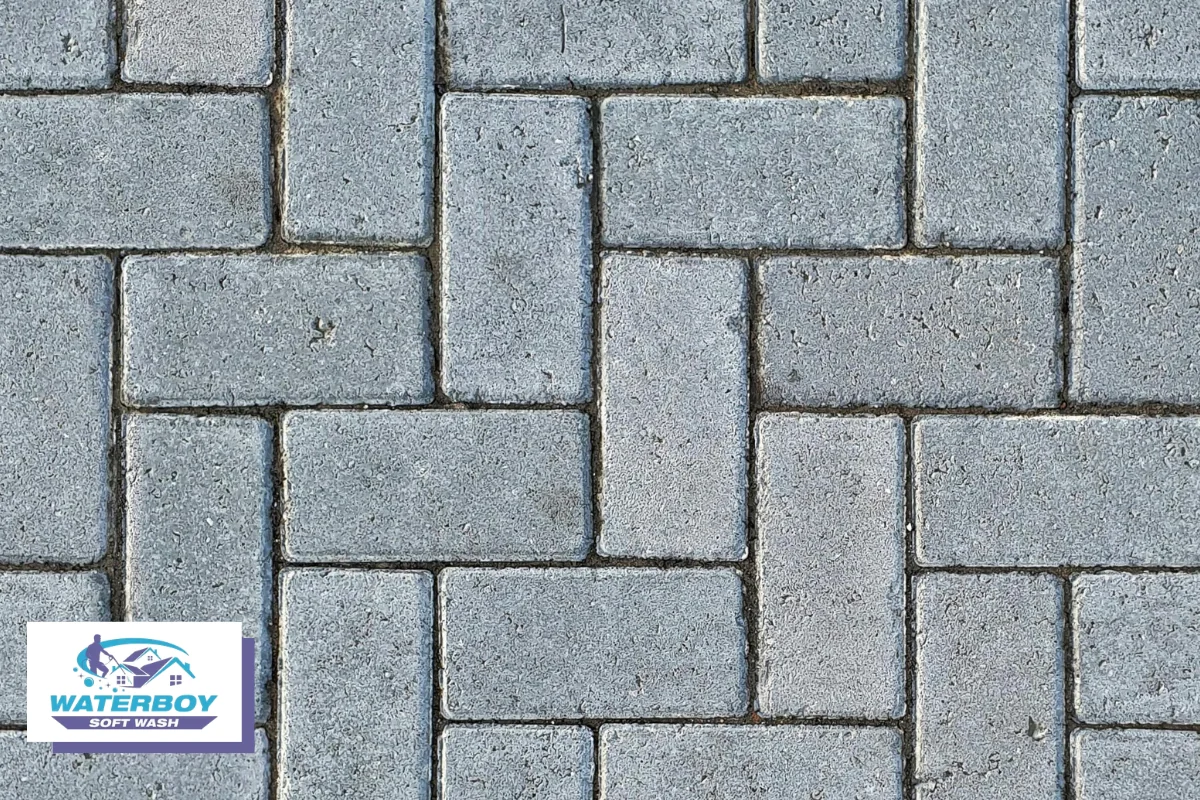
While soft washing is the best choice for many exterior surfaces, some hard materials across Chester County still benefit from traditional pressure washing. The two methods are not interchangeable, and knowing which to use matters.
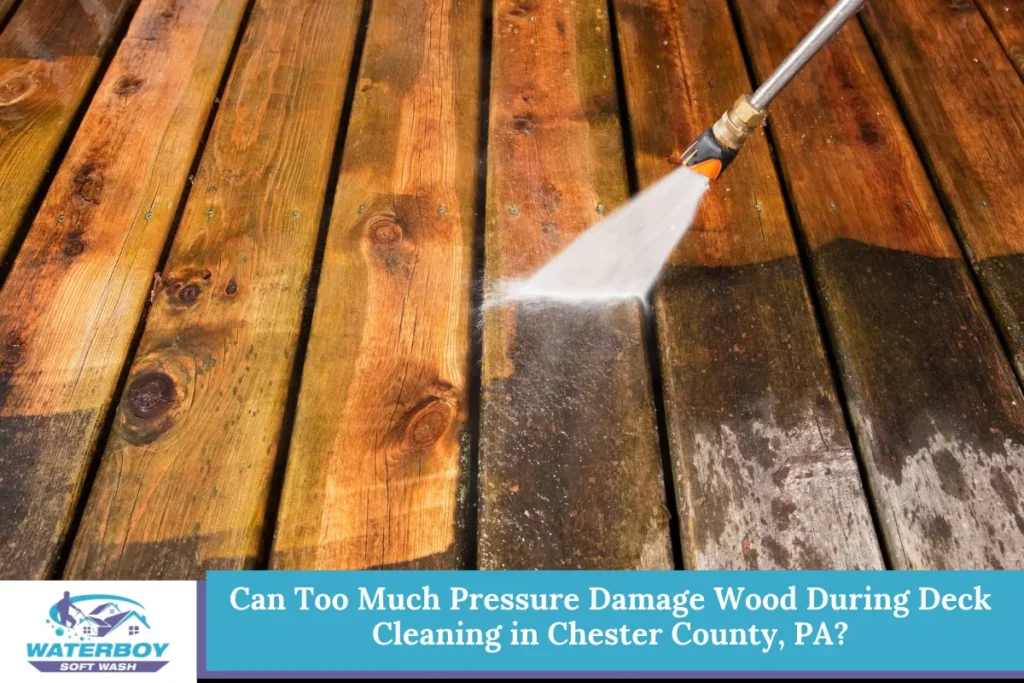
Concrete driveways, sidewalks, certain pavers, and heavily soiled masonry may require higher pressure combined with detergents to tackle deep-set grime, tire marks, or oil stains that low pressure cannot dislodge. High pressure washing can damage sensitive exterior materials like vinyl and wood, but on thick concrete or stone flatwork, that same force is exactly what is needed.
- Experienced professionals decide whether a surface should be soft washed or pressure washed based on age, condition, and stain type. That judgment call is one of the main reasons to hire a trained crew rather than renting equipment and guessing.
- Combining both methods on the same property is common. For example, a crew might soft wash the siding, roof, and fence while using higher pressure on the driveway and walkways.
- Improper DIY high pressure use can etch concrete, cut visible lines in siding, or damage mortar joints on older brick. Professional evaluation in Chester County is especially valuable given the mix of newer construction and historic properties in areas bordering Delaware County and beyond.
How Chester County’s Climate Affects Exterior Staining
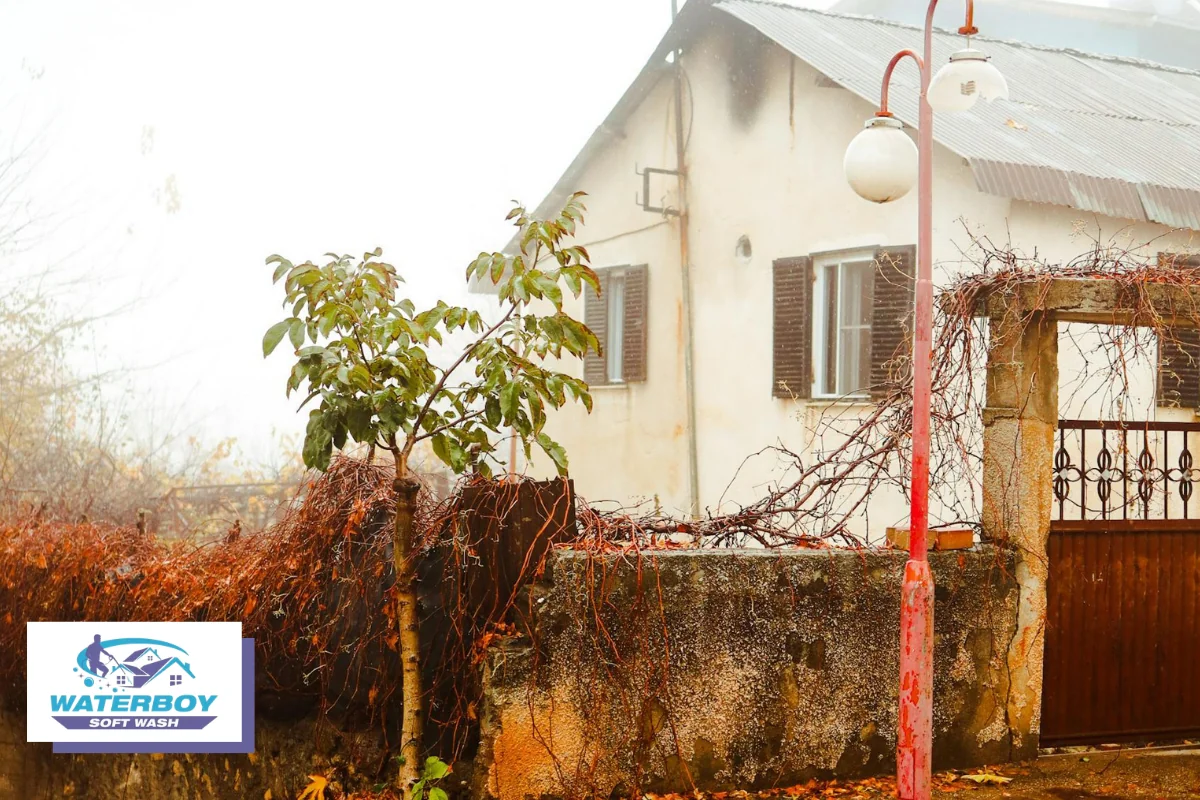
Chester County’s pattern of warm summers, long humid stretches, and heavy tree canopy across residential neighborhoods creates a near-perfect environment for biological growth on homes. Soft wash cleaning is particularly effective in areas with humid climates and shaded environments, which describes much of the county from Downingtown to West Chester homeowners and the rural corridors in between.
- Frequent shade, morning dew, and limited airflow around structures in these communities encourage algae and mildew development on every exterior surface that stays damp for extended periods. Environmental conditions in Chester County promote organic growth on exterior surfaces more aggressively than drier regions.
- Seasonal pollen adds a yellow or gray film to siding, windowsills, and decks. That film combines with moisture to hold more dirt and organic spores, accelerating staining if not addressed.
- Freeze-thaw cycles in winter can open small cracks in masonry and paint, giving algae and mildew places to anchor. Once those cracks form, biological staining sets in faster and deeper until a professional soft washing service removes the growth and clears those footholds.
- A typical maintenance schedule of soft washing every one to three years works well for most homes. Properties with heavy shade or proximity to wooded, low-lying areas may benefit from more frequent service. Soft washing can keep surfaces clean for one to three years, making it a cost-effective part of routine home maintenance. When the job is performed correctly, you get lasting protection and a noticeably cleaner exterior that holds up through multiple seasons.
Soft Wash Cleaning in Chester County, PA – Water Boy Soft Wash
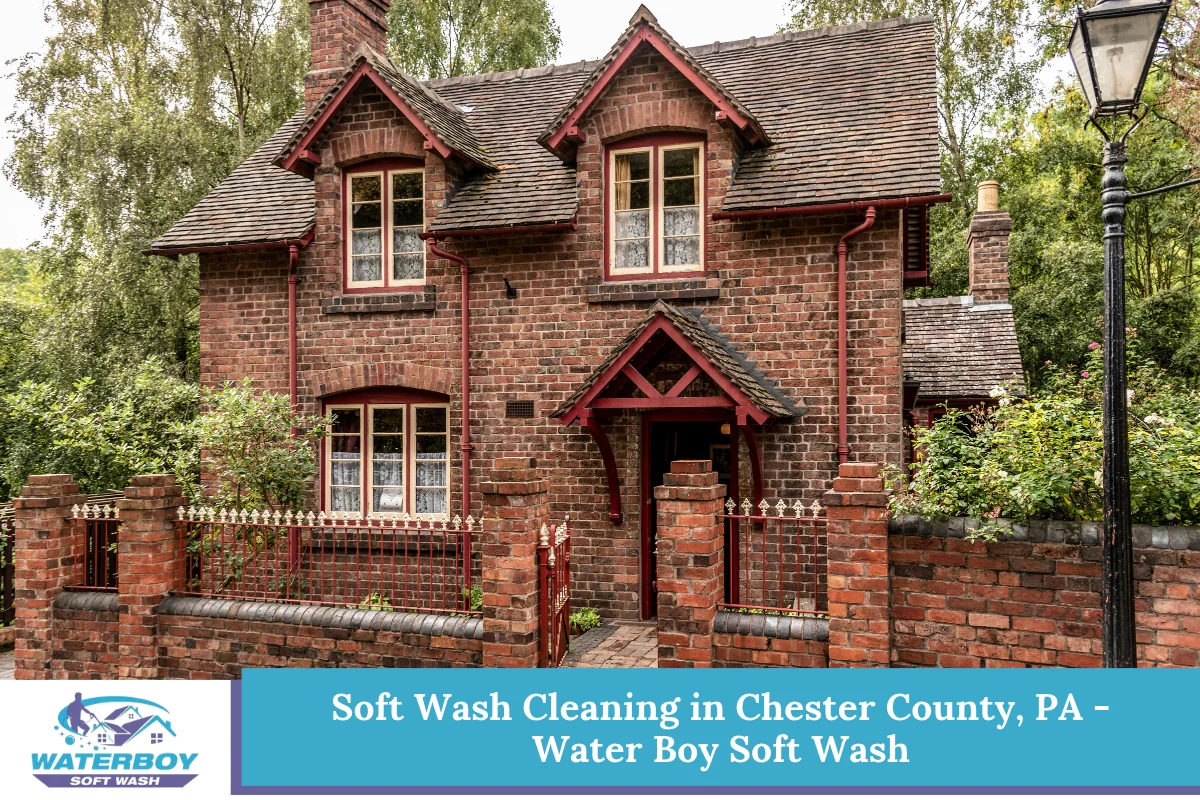
At Water Boy Soft Wash, we specialize in professional soft washing for homes and businesses throughout Chester County, Pennsylvania. Our team serves the West Chester area and surrounding communities with expert house washing, roof cleaning, gutter cleaning, and complete exterior cleaning designed to remove algae, mold, black streaks, dirt, and oxidation safely. We use low pressure methods that protect your vinyl siding, stucco, roofs, and every other surface we touch. We pre wet and shield your landscaping before every job, so nothing gets damaged. There are no hidden fees and we stand behind our work with a satisfaction guarantee. Call us at (610) 812-7378 or fill out our contact form to get a free estimate tailored to your property. Water Boy Soft Wash is here to restore and protect your home’s curb appeal.
Frequently Asked Questions
How long does a soft wash cleaning service usually take for a Chester County home?
Most single-family homes in Chester County take roughly two to four hours to complete, though this varies based on several factors. A smaller ranch-style home with minimal staining might wrap up in under two hours, while a larger two-story property with heavy algae on multiple sides, a roof treatment, and deck cleaning could take the better part of a day. The number of stories, total square footage of exterior surfaces being treated, severity of staining, and whether additional services like gutter cleaning are included all influence the timeline. Your service provider should give you an estimated duration when they assess the property before starting work.
Do I need to be home while my exterior surfaces are being soft washed?
In most cases, you do not need to be present as long as the crew has access to an outdoor water spigot and the agreed-upon areas of your property. Many homeowners simply leave instructions and go about their day. However, being available for a first-time service can be helpful so you can walk the property with the crew, point out specific stain concerns, and confirm which surfaces need attention. If you have pets, make sure they are secured indoors or in a separate area away from the work zone. Locking gates or providing entry codes ahead of time helps the crew work efficiently without delays.
What should I do to prepare my property before a soft washing appointment?
A few simple steps help the crew get started quickly and protect your belongings. Close all windows and doors completely to prevent any moisture or cleaning solution from entering your home. Move vehicles away from the house and out of the driveway if driveway cleaning is included. Clear patio furniture, potted plants, grills, and decorative items from areas being cleaned. If you have delicate garden beds right against the foundation, let the crew know so they can take extra care during the pre wet and rinse stages. Most professional crews will cover or rinse sensitive plantings, but pointing out anything you are particularly concerned about is always a good idea.
How long do I need to wait before using my deck, driveway, or yard after a soft wash?
Generally, treated surfaces are safe to walk on within a few hours once they have dried and residual cleaning solution has been thoroughly rinsed. Decks and patios can be slippery while still damp, so wait until the surface is fully dry before placing furniture back or allowing foot traffic. If you plan to apply a stain or sealant to your deck after cleaning, most professionals recommend waiting at least forty-eight hours so the wood dries completely and absorbs the new coating properly. Grass and landscaping that were rinsed during the service typically recover quickly, especially when biodegradable solutions were used during the wash.
Can soft washing be combined with gutter cleaning on the same visit?
Yes, many exterior cleaning companies in Chester County routinely schedule house washing and gutter cleaning together on the same visit because the crew and equipment are already on site. Typically, gutter cleaning is performed first so that debris flushed from gutters does not dirty freshly washed siding or walkways below. After the gutters are cleared and downspouts are flowing properly, the crew moves on to the soft washing portion of the job. Bundling these services together saves time, reduces the number of appointments you need to schedule, and often costs less than booking each service separately. Ask your provider about combining services when you request your estimate.
Disclaimer: This article provides general information about exterior cleaning methods in Chester County, PA. It is not a substitute for professional structural, safety, or legal advice. Consult a qualified contractor for property-specific recommendations.