

The Hidden Damage Behind Red Clay Stains
Concrete cleaning is often the only effective way to remove stubborn red clay stains that seem impossible to wash away with basic methods. If you live in areas with clay-rich soil, you’ve likely noticed how quickly driveways, sidewalks, and patios become discolored. The problem doesn’t stop at appearance—these stains can sink deep into porous concrete, making them harder to remove over time. Ignoring the issue allows buildup to worsen, reducing curb appeal and even shortening the lifespan of your surfaces. The solution lies in professional techniques designed to penetrate, lift, and fully remove these stains, restoring your concrete to its original condition.
Why Red Clay Is So Difficult to Remove
Red clay is not like typical dirt or surface grime. Its composition makes it particularly stubborn and resistant to standard cleaning methods.
The Science Behind the Stain
Red clay contains high levels of iron oxide, which gives it its signature reddish color. When wet, it bonds tightly to porous materials like concrete. As it dries, it hardens and embeds itself into the surface.
This leads to:
- Deep staining below the surface
- Resistance to simple rinsing or scrubbing
- Long-term discoloration if untreated
Why Rain and DIY Methods Fail
Many homeowners assume rain or a quick rinse will clean concrete. Unfortunately, water alone often makes things worse by pushing clay particles deeper into the pores.
Even store-bought concrete cleaner products can struggle because:
- They are not formulated for iron-rich soils
- They lack the pressure needed to lift embedded particles
- Improper use can cause uneven cleaning
The Role of Concrete Washing in Stain Removal
Concrete washing goes beyond basic cleaning. It involves specialized equipment and techniques that address both surface and deep-set stains.
How Professional Cleaning Works
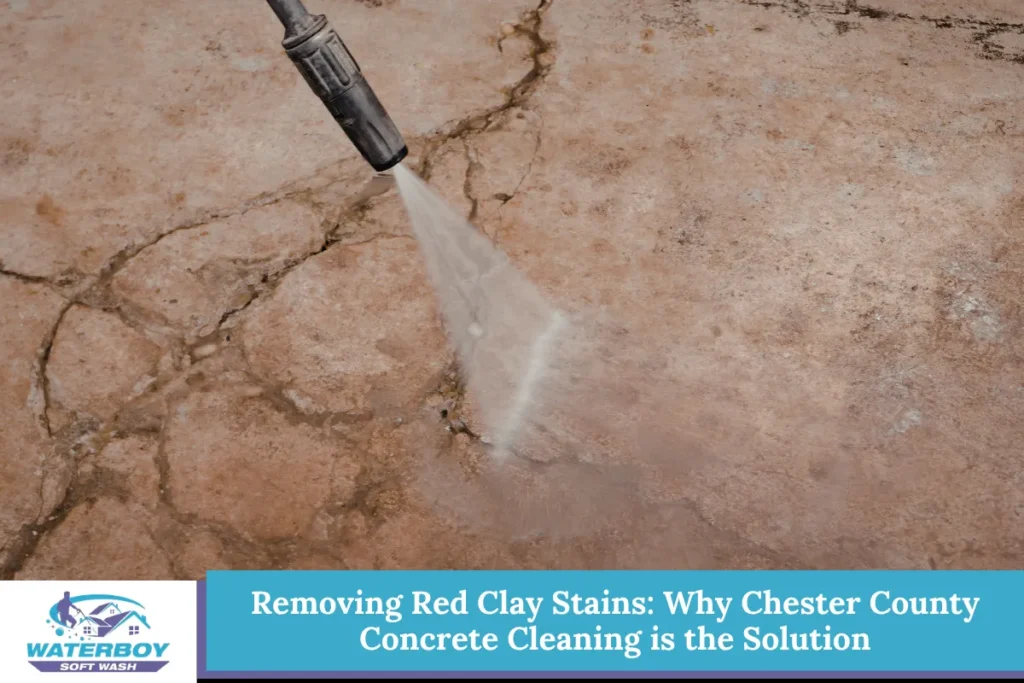
Professional pressure washing concrete uses high-powered equipment to break apart hardened clay deposits. When paired with the right cleaning solutions, it becomes far more effective.
Key steps include:
- Pre-treatment with a targeted cleaning agent
- Controlled pressure cleaning concrete surfaces
- Thorough rinsing to remove residue
- Optional sealing for protection
Why Technique Matters
Using too much pressure can damage concrete, while too little won’t remove stains. That’s why trained technicians balance:
- Pressure levels
- Water flow
- Cleaning solution strength
This ensures effective results without surface damage.
Pressure Washing vs Soft Washing: What’s Best?
Understanding the difference between pressure washing and soft washing is essential when dealing with red clay stains.
When Pressure Washing Concrete Is Needed
Pressure washing is ideal for:
- Deep, embedded stains
- Heavily soiled driveways
- Long-neglected surfaces
It uses high pressure to physically remove buildup.
When Soft Washing Is the Better Option
Soft washing uses lower pressure combined with specialized solutions. It is better suited for:
- Delicate or older concrete
- Decorative surfaces
- Areas near landscaping
Combining Both Methods
In many cases, professionals use a combination of pressure cleaning concrete and soft washing. This hybrid approach ensures:
- Deep stain removal
- Surface protection
- Longer-lasting results
Common Areas Affected by Red Clay Stains
Red clay doesn’t discriminate—it can stain nearly any outdoor surface.
Driveways and Parking Areas
These are the most commonly affected due to constant vehicle traffic. Tires track in clay, grinding it into the surface.
Sidewalks and Walkways
Foot traffic spreads clay across walkways, creating uneven staining patterns.
Patios and Outdoor Living Spaces
These areas are especially noticeable when stained, impacting the overall appearance of your home.
Garage Floors
Clay residue often gets carried indoors, leading to stains inside garages as well.
Read Can Professional Concrete Cleaning Remove Algae? A Chester County Guide
Why Store-Bought Concrete Cleaner Often Falls Short
Many homeowners turn to retail solutions first. While convenient, they rarely deliver professional results.
Limitations of DIY Products
- Lower concentration of active ingredients
- Inconsistent application methods
- Lack of proper equipment
Risks of Improper Use
Using the wrong product or technique can:
- Etch or damage concrete
- Leave streaks or uneven patches
- Fail to remove stains completely
Professional-grade concrete cleaner solutions are designed specifically for tough stains like red clay.
The Long-Term Benefits of Professional Concrete Cleaning
Investing in professional services offers more than just visual improvement.
Enhanced Curb Appeal
Clean concrete instantly improves the appearance of your property. This is especially important for:
- Homeowners preparing to sell
- Businesses attracting customers
Increased Surface Longevity
Removing contaminants helps prevent:
- Surface erosion
- Cracking and deterioration
- Mold and mildew growth
Improved Safety
Clean surfaces reduce the risk of slips and falls caused by buildup.
Environmental Considerations in Chester County
Cleaning concrete in Chester County, Pennsylvania requires attention to environmental regulations.
Responsible Water Use
Local guidelines emphasize:
- Minimizing water waste
- Preventing runoff into storm drains
Safe Chemical Application
Professional services follow best practices by:
- Using biodegradable cleaning solutions
- Avoiding harmful chemicals
- Containing and managing runoff
Compliance Matters
Hiring professionals ensures compliance with local environmental standards, protecting both your property and surrounding ecosystems.
Preventing Future Red Clay Stains
Once your concrete is clean, maintenance becomes key.
Simple Preventative Measures
- Rinse surfaces regularly
- Clean spills and mud quickly
- Use mats in high-traffic areas
Sealing Your Concrete
Applying a sealant creates a protective barrier that:
- Reduces stain absorption
- Makes future cleaning easier
- Extends surface lifespan
Choosing the Right Concrete Cleaning Service
Not all services are equal. Choosing the right provider makes a significant difference.
What to Look For
- Experience with local soil conditions
- Knowledge of pressure washing concrete techniques
- Proper equipment and cleaning solutions
- Commitment to environmental compliance
Questions to Ask
- What methods do you use?
- Are your solutions safe for surrounding areas?
- Do you offer sealing services?
What Clean Concrete Says About Your Property
Clean surfaces do more than look good—they reflect care and attention to detail. Whether residential or commercial, properly maintained concrete sends a strong message about upkeep and pride.
Regular concrete washing not only preserves your investment but also enhances the overall experience for visitors, guests, or customers.
Concrete Cleaning in Chester County, PA – Water Boy Soft Wash
We understand how frustrating red clay stains can be, especially in Chester County where soil conditions make them unavoidable. At Water Boy Soft Wash, we specialize in concrete cleaning that delivers real, lasting results. Our team uses a combination of pressure washing concrete and soft washing techniques to safely remove deep stains without damaging your surfaces. We tailor every job to your property, ensuring effective cleaning while protecting your landscaping and complying with local environmental standards. If your driveway, patio, or walkway needs professional care, call us at (610) 812-7378 or fill out our contact form today. Let us restore your concrete and improve your property’s appearance.
Frequently Asked Questions
How often should concrete cleaning be done in areas with red clay?
In regions with high clay content, concrete cleaning should typically be done once or twice a year. However, frequency depends on traffic, weather conditions, and exposure. Properties with heavy vehicle or foot traffic may require more frequent cleaning to prevent buildup. Regular maintenance helps avoid deep staining and reduces the need for more aggressive cleaning methods. Scheduling routine service also extends the life of your concrete and keeps surfaces looking consistently clean.
Can red clay stains permanently damage concrete?
Red clay stains are rarely permanent, but they can become extremely difficult to remove if left untreated for long periods. The iron oxide in clay penetrates deep into the concrete’s pores, causing long-lasting discoloration. While professional pressure cleaning concrete can remove most stains, older or neglected surfaces may require multiple treatments. Acting quickly after staining occurs greatly improves the chances of complete removal.
Is pressure washing safe for all types of concrete?
Pressure washing is generally safe when performed correctly, but not all concrete surfaces can handle high pressure. Decorative, stamped, or older concrete may be more vulnerable to damage. That’s why professionals often combine pressure washing with soft washing techniques. Adjusting pressure levels and using the right cleaning solutions ensures effective cleaning without causing cracks, etching, or surface wear.
Will concrete cleaning help with mold and mildew as well?
Yes, concrete cleaning can effectively remove mold, mildew, and algae in addition to red clay stains. These organic growths thrive in damp, shaded areas and can make surfaces slippery. Professional cleaning uses specialized solutions that not only remove visible growth but also kill spores to prevent regrowth. This improves both the appearance and safety of your concrete surfaces.
What is the best time of year to schedule concrete washing?
Spring and fall are typically the best times for concrete washing. Spring cleaning removes winter buildup, while fall preparation helps protect surfaces before colder weather arrives. However, concrete cleaning can be done year-round as long as temperatures are above freezing. Scheduling during mild weather ensures optimal results and allows cleaning solutions to work effectively.
Important Notes Before Scheduling Your Cleaning: This article provides general information about concrete cleaning methods and best practices. Specific results may vary depending on surface condition and environmental factors. Always consult a qualified professional to assess your property and ensure safe, compliant cleaning solutions are used.
Read Chester County Pressure Washing: How to Clean Your Home Without Stripping Paint