
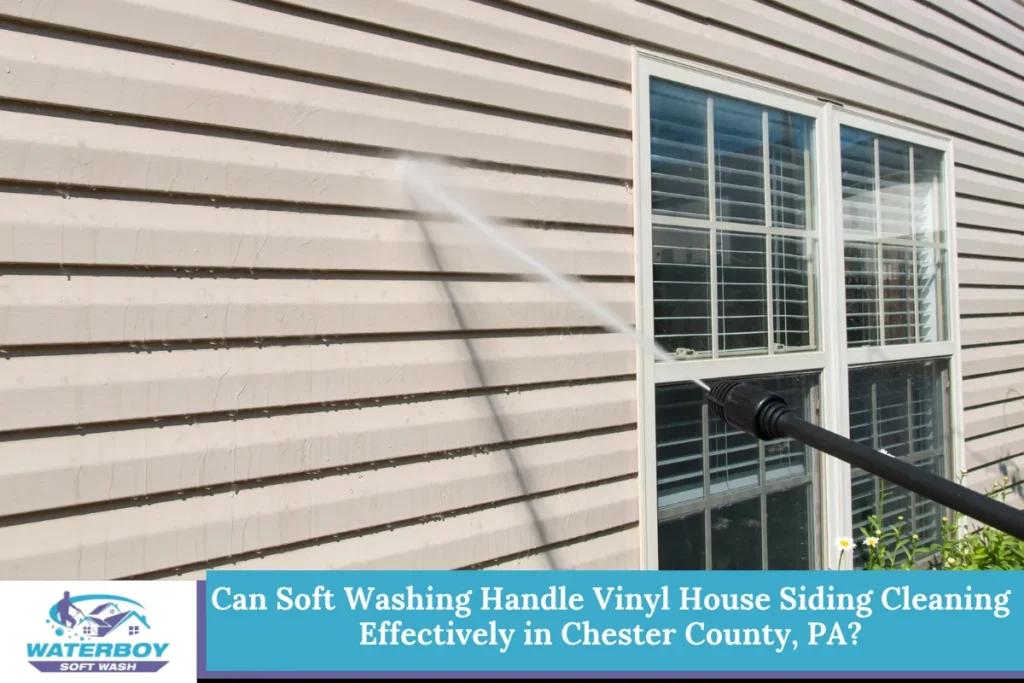

House siding cleaning is one of those tasks that seems straightforward until you realize how much can go wrong with the wrong approach. Across Chester County neighborhoods like West Chester, Downingtown, and Exton, homeowners watch green algae films, black mildew streaks, and layers of grime creep across their vinyl exteriors every season. The temptation is to grab a high-powered pressure washer and blast it all away. But that kind of force can push water behind panels, strip surface finishes, and even void your siding warranty. Soft washing solves this problem. It pairs low pressure with specialized cleaning solutions to kill organic growth and release grime safely. In this guide, you will learn how soft wash cleaning works, how it compares with traditional pressure washing, what local best practices apply, and what to expect from a professional service in Chester County.
Key Takeaways
- Soft washing is the safest and most effective cleaning method for vinyl siding, using low pressure and cleaning solutions rather than brute force.
- In Chester County, PA, soft wash cleaning effectively removes algae, mildew, and dirt buildup without risking water intrusion or panel damage.
- Pressure washing still has a role, but it is best suited for hard surfaces like concrete driveways, brick walkways, and stone patios rather than vinyl cladding.
- A professional soft washing service extends siding life, improves curb appeal, and helps prevent moisture-related issues behind panels.
- Most vinyl siding should be cleaned every year or two, with shaded properties needing more frequent attention.
Why Vinyl Siding in Chester County Needs a Gentle Cleaning Approach
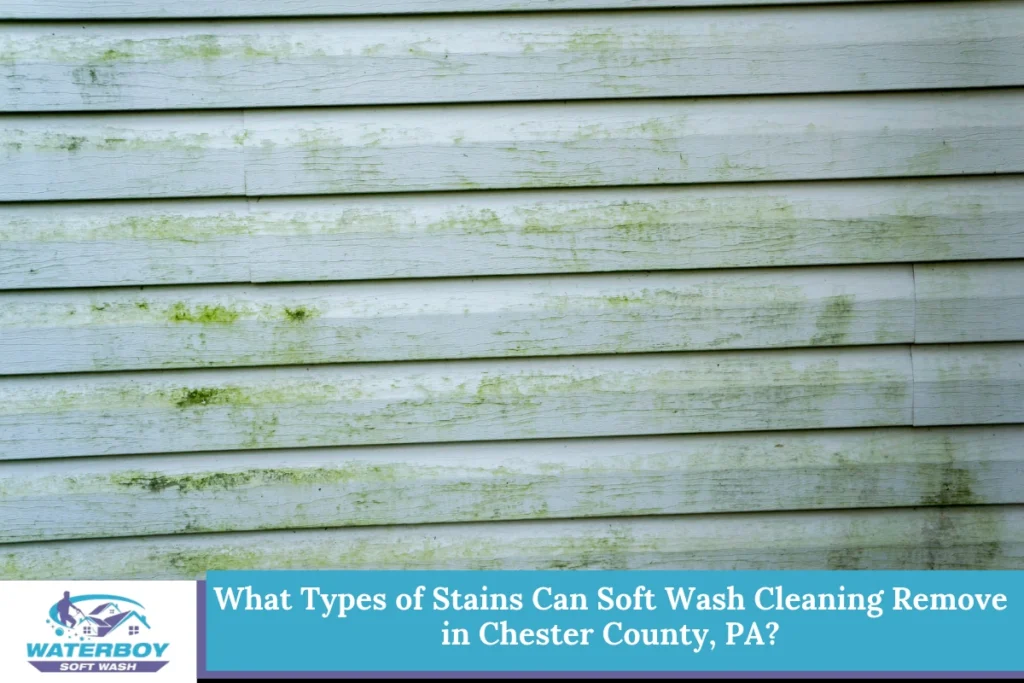
Chester County’s humid climate fosters rapid growth of algae, mold, and mildew on exterior surfaces throughout the warmer months. Shaded lots in towns like West Chester, Malvern, and the surrounding West Goshen and East Goshen areas are especially prone. Dense tree canopy slows drying after rain, and moisture lingers on north-facing walls long enough for biological films to establish themselves.
Common buildup patterns include:
- Green algae forming on shaded siding beneath tree lines and overhangs
- Black mildew spots concentrated around gutters, downspouts, and above planting beds
- Airborne dirt and road debris settling in textured vinyl grooves
- Cobwebs and insect residue accumulating near eaves and soffit vents
Vinyl siding can collect algae on shaded walls faster than most homeowners expect, turning a clean exterior into a dingy one in a single season.
Modern vinyl siding systems are designed with weep holes and seams that allow moisture to escape from behind panels. When high pressure is aimed at these areas, it can force water past the cladding and into sheathing or insulation. High-pressure washing can void manufacturer warranties on vinyl siding, a risk that many homeowners do not realize until damage has already occurred.
The Vinyl Siding Institute recommends low-pressure washing methods for routine maintenance. Major siding manufacturers like CertainTeed explicitly advise against power washing and instead suggest garden hose rinsing or soft bristle brushing with mild detergent. Following these guidelines protects the material, preserves the factory finish, and keeps warranty coverage intact.
Soft Washing vs. Pressure Washing: What’s Safest for Vinyl Siding?
The distinction between these two methods matters more than most people think. Soft washing uses low pressure and cleaning solutions applied through specialized equipment, relying on chemistry and controlled dwell time to do the work. Pressure washing uses high pressure to clean durable surfaces like concrete, masonry, and some stone, directing concentrated streams at 1,200 to 3,000 or more PSI.
Here is where problems arise when pressure washing is used on vinyl:
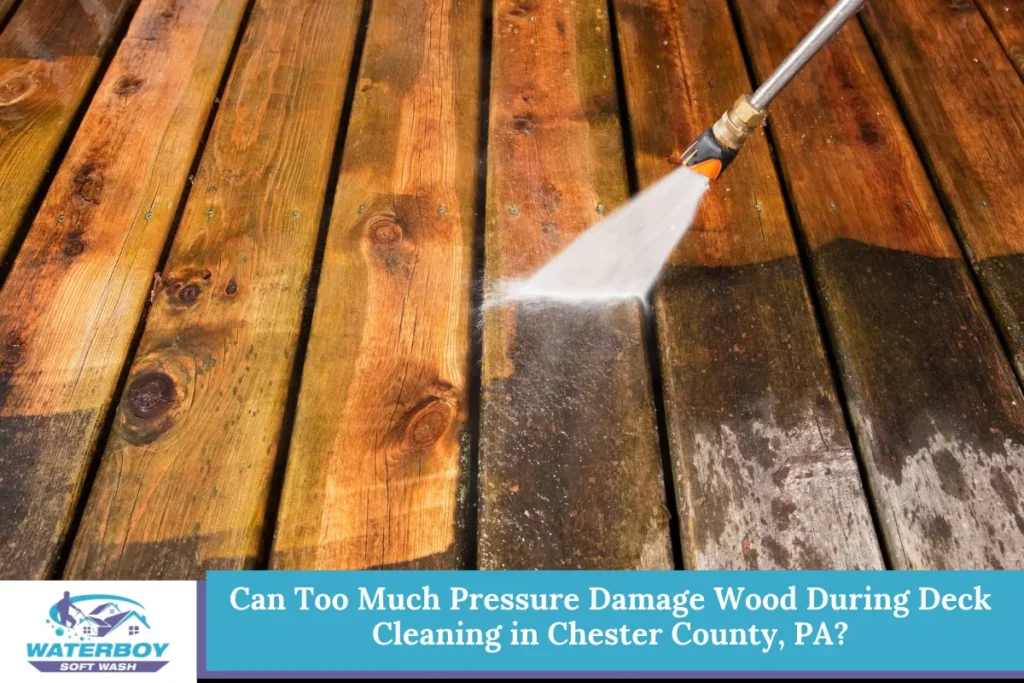
- High pressure can damage vinyl siding by cracking panels, especially older ones that have become brittle
- Aggressive nozzle angles can blow off J-channel trim and push water behind lap joints
- Uneven cleaning patterns create tiger stripes or oxidation streaks that are difficult to reverse
- Overspray at close range can damage painted trim, window seals, and caulking
Soft washing is safer for vinyl siding than pressure washing because the cleaning power comes from the solution, not from water velocity. The detergent breaks down organic contamination at its root, and the low-pressure rinse carries it away without stressing the material. Soft washing kills mold and mildew at the root, which means the results last longer than surface-level scrubbing or blasting.
That said, pressure washing is not obsolete. It is the right tool for concrete driveways, brick walkways, pavers, and certain stone patios where the surface type can handle the force. Many professional exterior cleaning visits combine both methods, applying soft wash to siding and painted surfaces while using calibrated pressure on hardscapes during the same job.
How Professional Soft Wash Cleaning Works on Vinyl Siding
The goal of a professional soft wash is straightforward: remove organic contamination and atmospheric soil from exterior surfaces while preserving the siding’s original finish. The process involves more planning and chemistry than most people realize.
A typical professional soft washing service follows these steps:
- Inspection of the siding material, condition, and contamination level
- Pre-wetting and protecting landscaping, outdoor furniture, and delicate plants
- Mixing cleaning solutions to the correct dilution, typically around one to two percent sodium hypochlorite combined with a surfactant
- Applying the solution at low pressure, working from the bottom up to prevent streaking
- Allowing proper dwell time of five to ten minutes, longer on heavily shaded sections where growth is dense
- Rinsing with a gentle, controlled stream directed downward along the siding laps
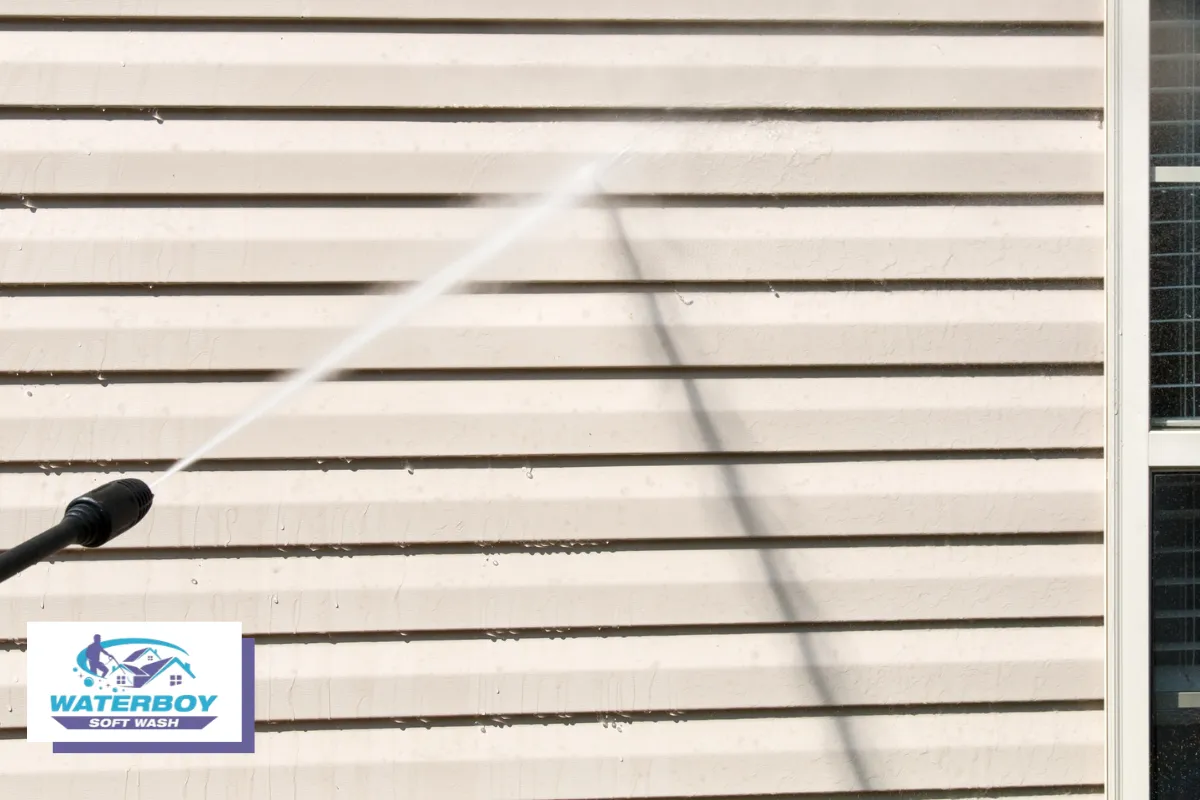
Soft washing uses pressure below 100 PSI for cleaning, which is dramatically lower than what even a standard garden hose attachment can produce at the nozzle. This controlled approach prevents damage to vinyl siding and trim while still delivering thorough results. Soft washing minimizes the risk of water intrusion that can lead to rot and mold behind the wall assembly.
The final rinse also cleans window frames, painted trim, gutters, and downspouts, leaving the entire exterior looking consistent without the need for separate treatment passes on those surfaces.
Read Does Soft Washing Work for Wood House Siding Cleaning in Chester County, PA?
Common Contaminants on Vinyl Siding in Chester County, PA
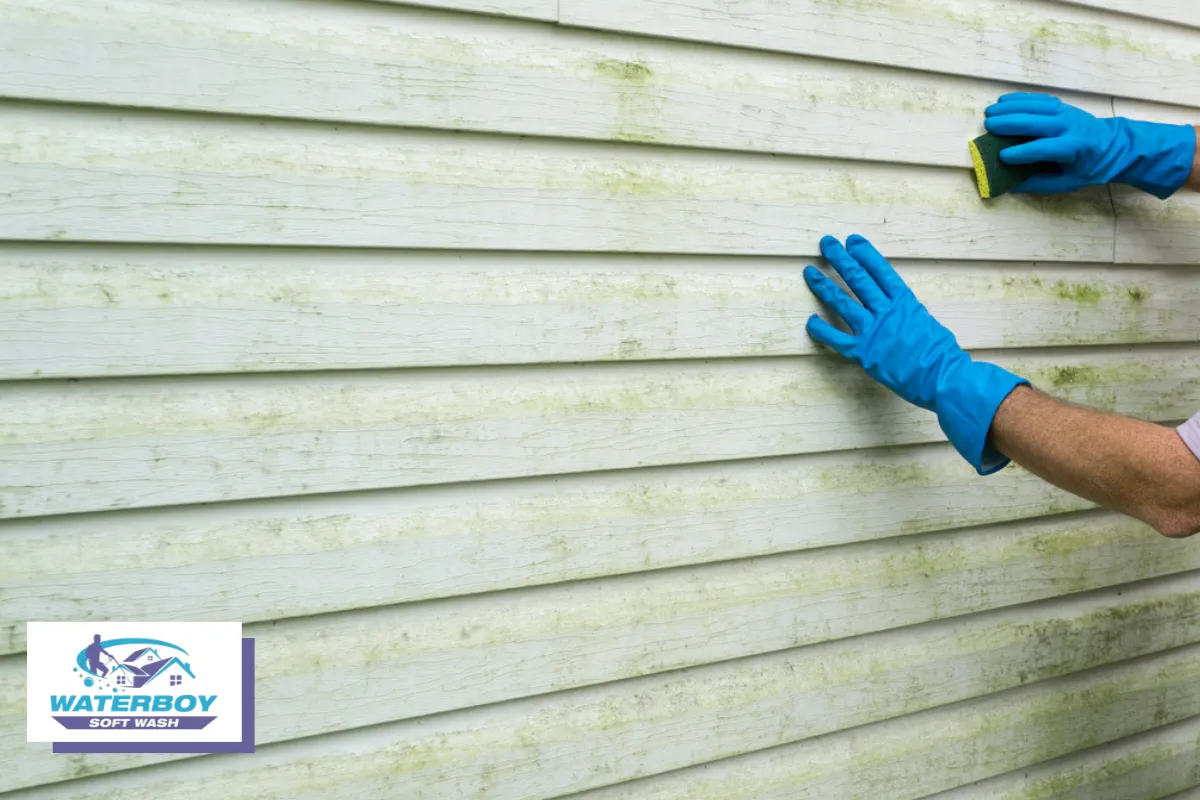
The local climate and landscape create a consistent set of challenges for homeowners trying to keep their exteriors clean. Warm, humid summers paired with heavy tree cover and frequent overcast skies give biological organisms everything they need to thrive.
The most common issues on Chester County vinyl siding include:
- Green algae films, especially on walls facing north or shaded by mature trees
- Black mildew spots that cling to textured vinyl surfaces and around vent penetrations
- Airborne dirt and road grime that settles into panel grooves and around seams
- Cobwebs and insect debris near soffits, eaves, and light fixtures
- Light oxidation on sun-exposed walls that dulls the original color
Each contaminant adheres differently to the vinyl surface. Algae growth forms a biofilm that bonds at a microscopic level, making it resistant to simple rinsing or scrubbing. Soft washing effectively removes algae and mildew from siding because the solution penetrates and destroys these organisms rather than just pushing them around.
Soft washing also addresses biofilm accumulation on downspouts, painted trim, and around utility penetrations, improving the overall appearance of the home from every angle. It is worth noting that exterior mold and mildew staining is different from interior mold issues, but keeping siding clean does reduce organic buildup at potential entry points and around vents.
Safety, Regulations, and Environmental Considerations in Chester County
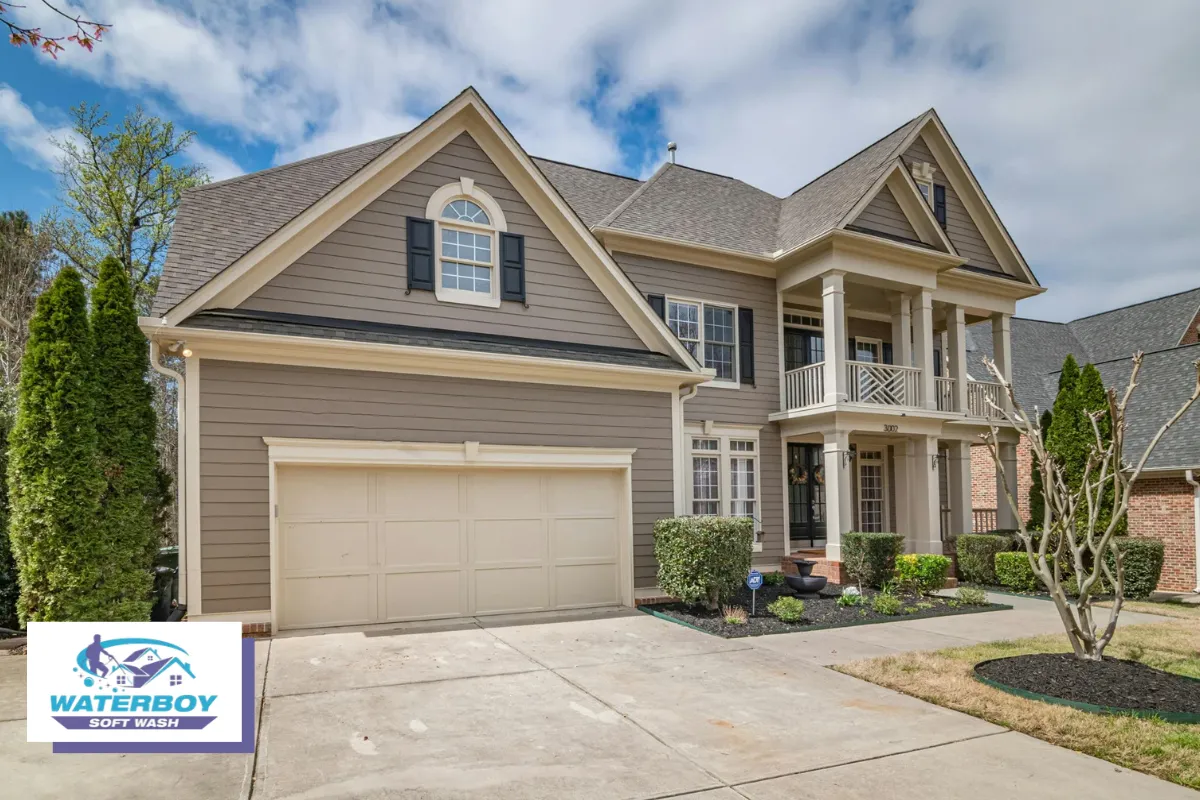
Professional soft washing requires careful techniques to protect landscaping and painted surfaces during every service visit. Safety and compliance are not optional extras. They are part of what separates a reputable service from a careless one.
In Chester County, Pennsylvania, stormwater management and water quality standards are strictly enforced under Pennsylvania’s Clean Streams Law (35 P.S. § 691.1 et seq.) and Municipal Separate Storm Sewer System (MS4) ordinances. Discharging wash water containing bleach, detergents, or loosened sediment into storm drains or local waterways is prohibited, requiring professional providers to neutralize solutions and divert runoff onto permeable landscaping.
Responsible exterior cleaning practices include:
- Following manufacturer cleaning guidelines for each surface type and material
- Using measured chemical dilutions that are effective yet formulated for safe exterior use
- Directing rinse water away from storm inlets wherever possible
- Pre-wetting shrubs, turf, and garden beds before applying any solution
- Covering delicate plants when needed and thoroughly rinsing all landscaping in work areas after the job is complete
- Using appropriate personal protective equipment during chemical application
These precautions protect the property, the surrounding environment, and the crew performing the work.
How Often Should You Soft Wash Vinyl Siding in Chester County?
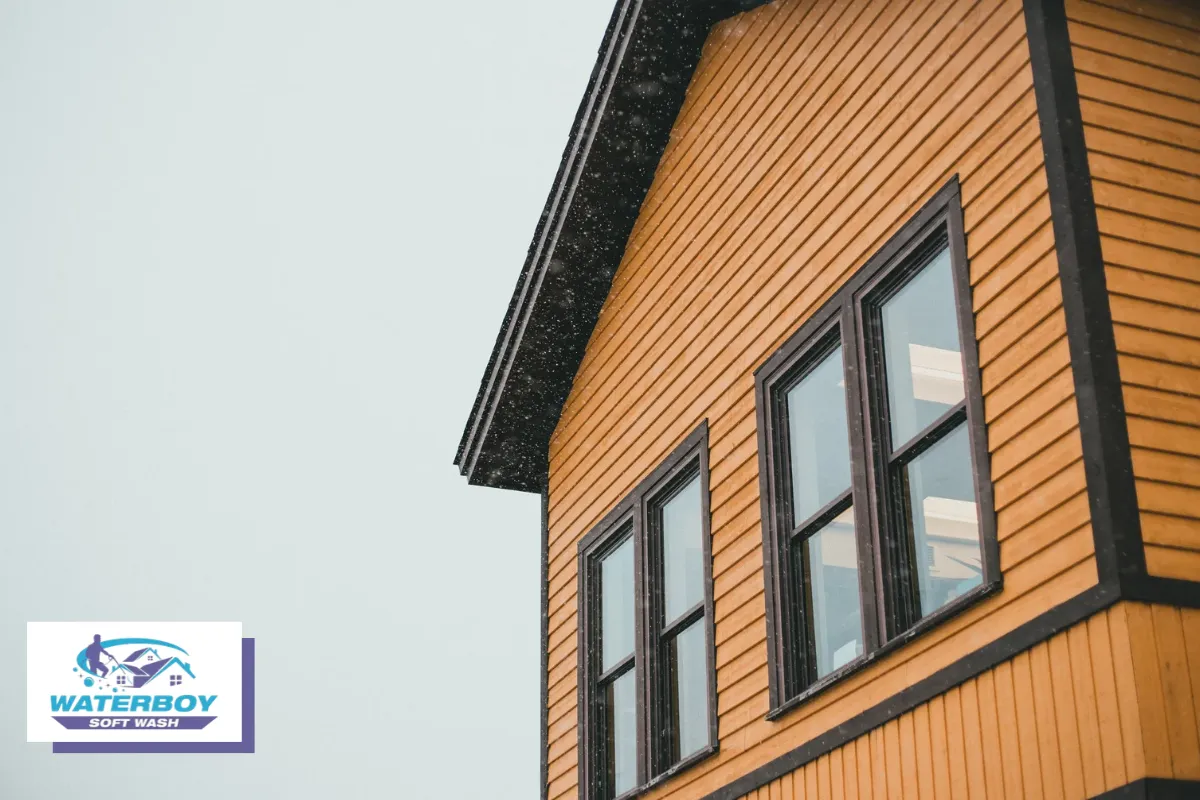
Most Chester County homes benefit from house washing every one to three years, depending on their exposure to shade, moisture, and biological growth. Vinyl siding should be cleaned every year or two as a general guideline, but your specific property may need more or less attention.
- Homes surrounded by dense trees or with heavily shaded siding may need annual soft wash cleaning to prevent thick algae and mildew accumulation
- Properties in open, sunnier locations like parts of Exton or newer developments may go two to three years between services
- Homes near active construction or busy roads may collect dirt and debris faster
Watch for early signs that it is time to schedule service: a faint green film on lower panels, dark streaks below gutters, or visible cobwebs along eaves. Addressing buildup early means shorter dwell times, lighter solution concentrations, and a more efficient job overall.
Combining siding cleaning with roof cleaning, gutter brightening, or walkway washing during the same visit keeps the entire property looking consistent and can reduce overall cost compared to scheduling each service separately.
Soft Washing for Mixed Exteriors: Vinyl, Brick, and Painted Surfaces
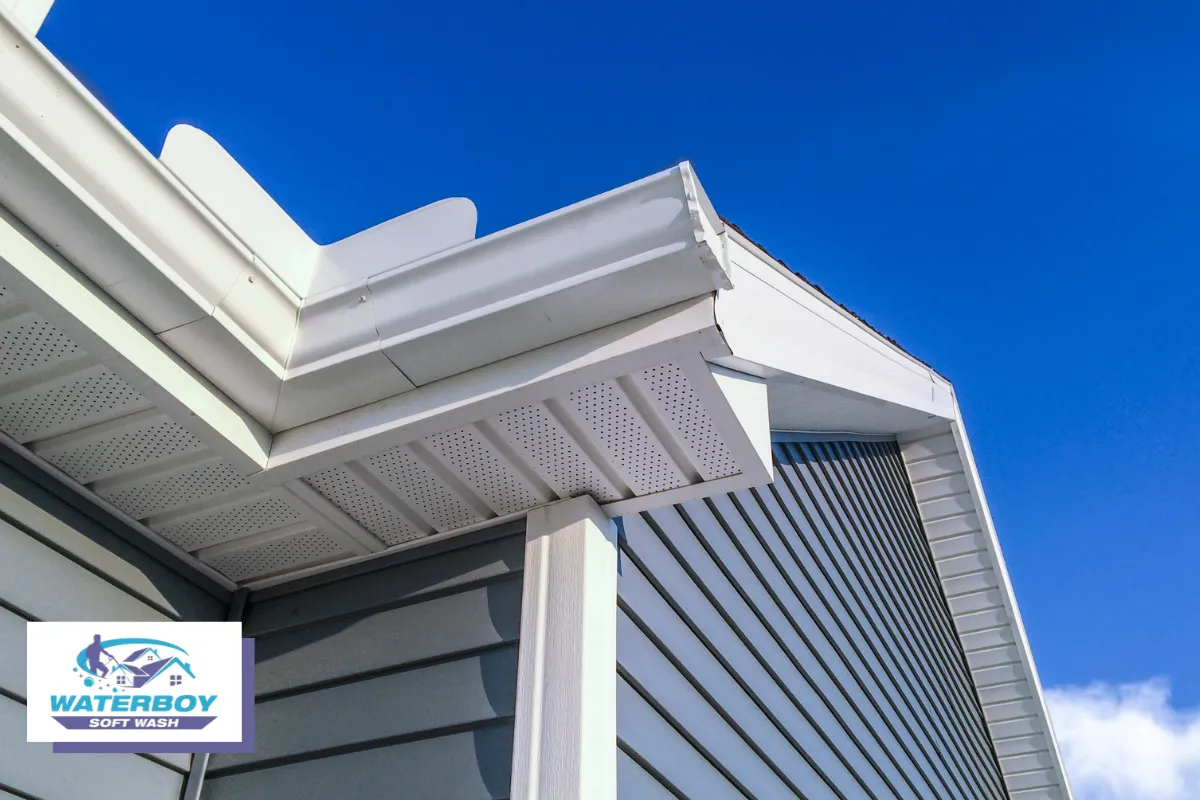
Many Chester County homes, including those in older neighborhoods around West Chester and surrounding towns, combine vinyl siding with brick foundations, stone steps, stucco accents, or painted trim. A one-size-fits-all approach does not work well across these different materials.
A professional soft wash service adapts to each surface:
- Vinyl siding and painted surfaces receive low-pressure treatment with appropriate cleaning solutions
- Delicate painted trim, older mortar joints, and decorative wood elements benefit from the same gentle method used on vinyl
- Adjoining hard surfaces like concrete porches, paver walkways, or brick walls may be cleaned separately with calibrated pressure washing at higher PSI
Soft washing is safer for delicate surfaces like painted trim, where high pressure could chip or peel finishes. Pressure washing can damage older surfaces like brick and wood if applied carelessly, so matching the method to the material is essential. This approach preserves both modern and historic elements of a property while delivering a unified, clean look across the entire exterior.
What to Expect When You Hire a Professional Soft Washing Service
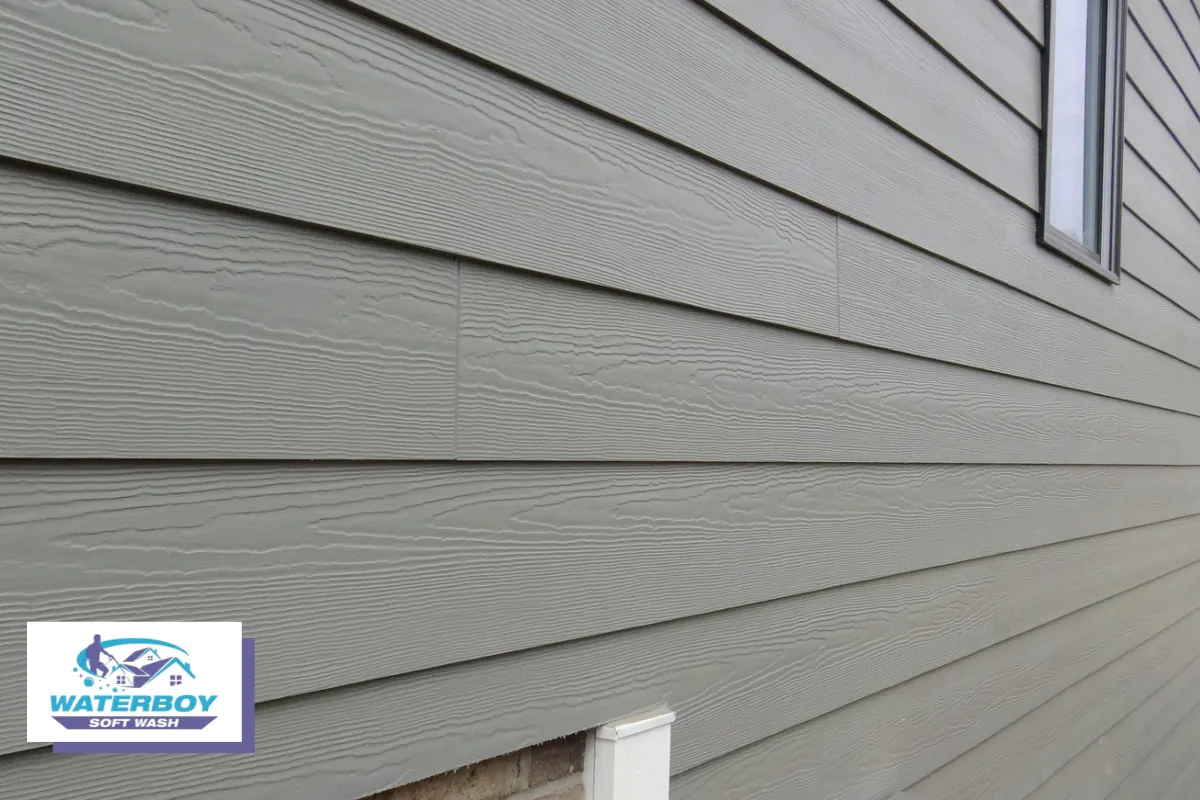
Hiring a professional for house washing takes most of the risk and effort off the homeowner’s plate. Here is what a typical service visit looks like from your perspective:
- You receive an estimate based on siding type, home size, access, and condition, with pricing in the Chester County area typically running between $250 and $500 or more for an average single-family home
- The crew schedules around favorable weather, avoiding heavy rain, high wind, or extreme heat
- Before work begins, technicians confirm water access, ask that windows and doors are closed, and note any sensitive landscaping or outdoor furnishings to protect
- Treatment proceeds one elevation at a time, with solution applied, allowed to dwell, and rinsed methodically
- Runoff and plant health are monitored throughout the job
After the wash is complete, a final walkthrough confirms results. Most providers will also share simple guidance on future maintenance and recommend when to schedule the next house washing based on your property’s specific conditions.
Maximizing the Life and Appearance of Your Vinyl Siding
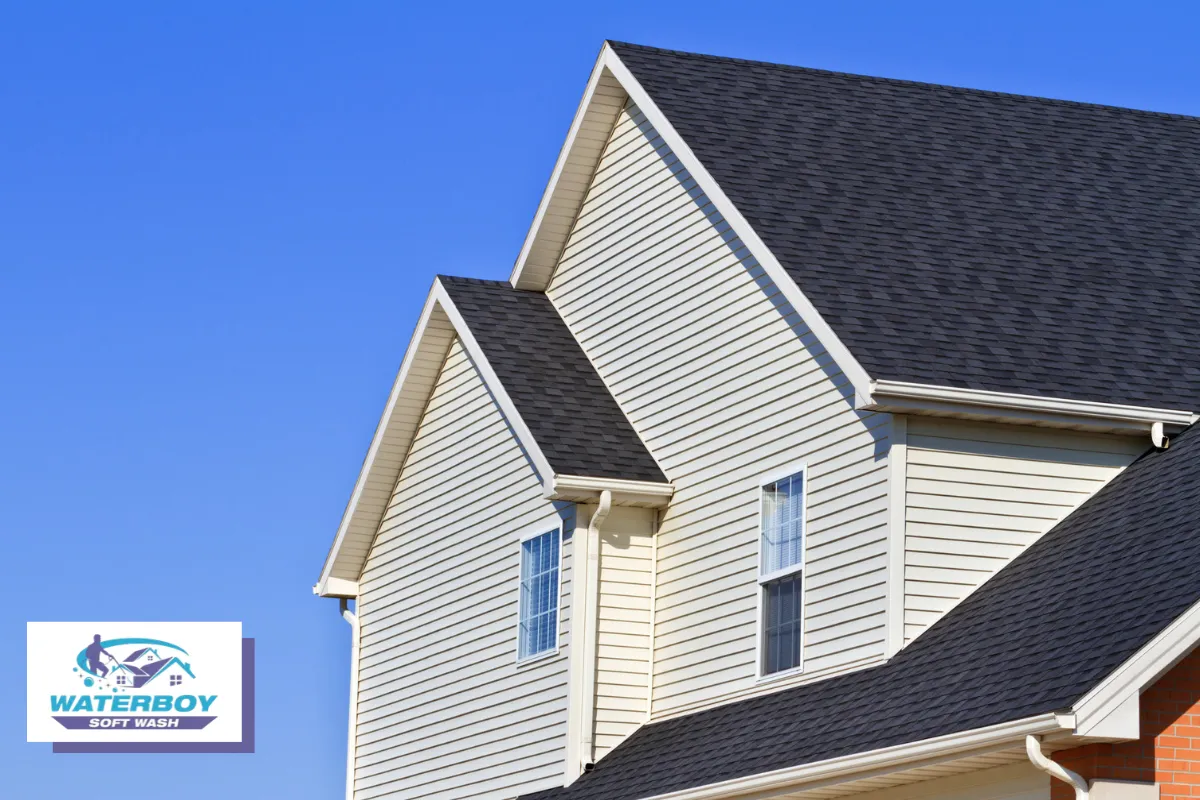
Regular soft washing, combined with basic maintenance habits, helps vinyl siding last longer and look better throughout its service life. Soft washing can extend the lifespan of exterior materials by preventing the moisture retention and staining that accelerate deterioration.
Simple homeowner practices that complement professional cleaning:
- Trim back heavy vegetation and tree branches that shade walls and trap moisture against siding
- Keep gutters clear so overflow does not streak down the exterior
- Avoid harsh DIY cleaners or high-pressure wands that can damage panels and void warranties
- Inspect siding periodically for cracks, loose panels, or areas where debris collects behind trim
Soft washing helps maintain curb appeal by cleaning effectively without the risks of aggressive methods. A well-maintained exterior supports property value whether the home is listed for sale, appraised for refinancing, or simply enjoyed by the people who live there.
Partnering with a trusted local power washing company for recurring soft wash cleaning makes long-term care easier. Instead of reacting to heavy buildup, you stay ahead of it with a consistent schedule that keeps your home looking sharp year after year.
House Siding Cleaning in Chester County, PA – Water Boy Soft Wash
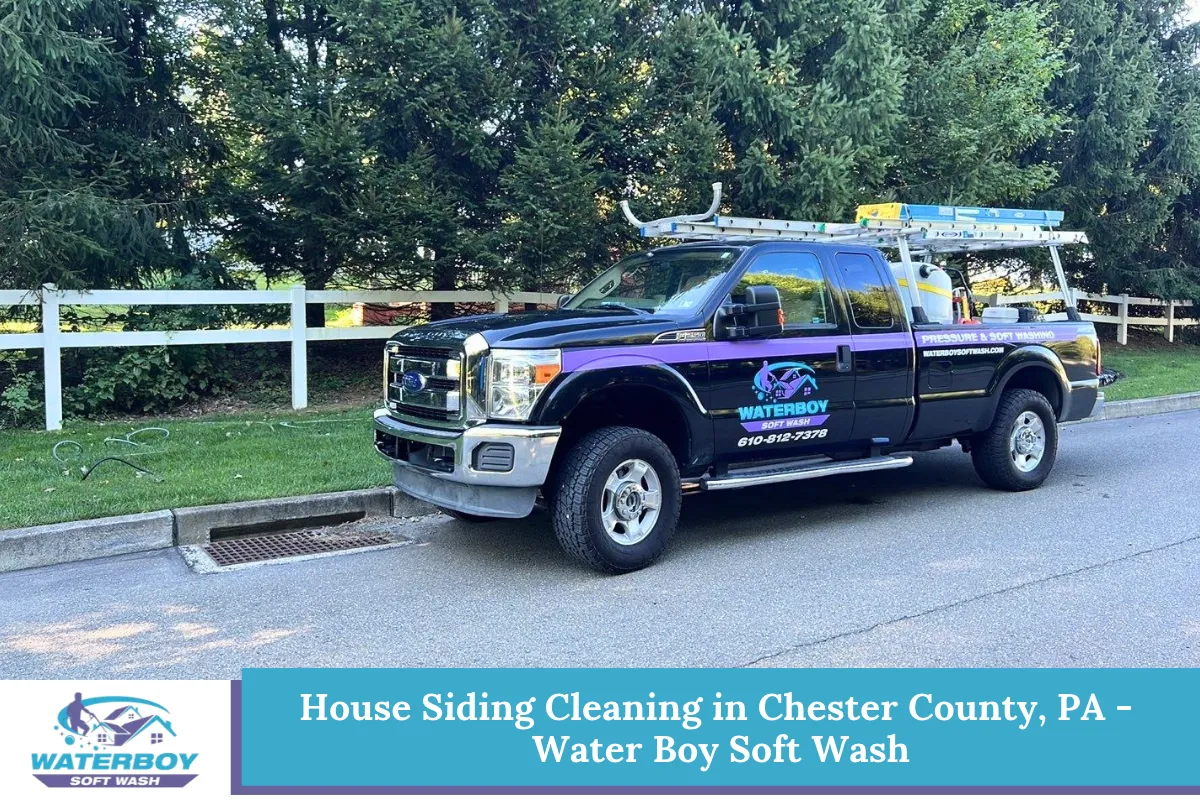
We are Water Boy Soft Wash, and we specialize in house siding cleaning for homeowners throughout Chester County, Pennsylvania. Our team uses a professional soft wash method designed to safely clean vinyl siding, painted trim, and other exterior surfaces without the risks that come with high-pressure equipment. We reserve pressure washing for hard surfaces like concrete, stone, and pavers where it is appropriate.
Every job starts with a thorough inspection and ends with a walkthrough to make sure you are completely satisfied. We protect your landscaping, respect your property, and deliver results that speak for themselves. If you are ready to schedule an estimate or have questions about your home’s exterior, call us at (610) 812-7378 or fill out our contact form. We look forward to helping you keep your home clean, protected, and looking its best.
Frequently Asked Questions
Is Soft Washing Safe for Older Vinyl Siding That’s Faded or Brittle?
Aging vinyl siding loses some of its flexibility and color over time, making it more vulnerable to cracking or flaking during aggressive cleaning. Soft washing is still typically the safest option for older panels because it avoids the mechanical stress that high pressure creates. A professional technician will assess the condition of the siding before starting, looking for cracks, impact damage, or heavy chalking. If panels are fragile, solution strength can be reduced and rinse patterns widened to minimize stress. It is important to know that vinyl siding can develop a chalky oxidation film over time that soft washing cannot fix. Cleaning can improve appearance, but it cannot reverse structural deterioration. If panels are beyond cleaning, a professional can identify areas that may need repair or replacement.
Can I Perform My Own Soft Wash Cleaning with a Store-Bought Sprayer?
Homeowners can handle light cleaning with a low-pressure garden sprayer and manufacturer-approved cleaners, but there are real limitations. Reaching upper stories safely without ladders and spray equipment is difficult. Properly diluting solutions, managing runoff near plants, and avoiding damage to windows, doors, and landscaping all require experience. Mixing incompatible chemicals, especially bleach with ammonia-based products, creates dangerous fumes. For a small single-story home with light soiling, a careful DIY approach can work if you follow product labels exactly and wear protective eyewear and gloves. Multi-level homes, heavy staining, or properties with complex landscaping around the perimeter are better handled by trained technicians with commercial soft wash equipment.
What Weather Conditions Are Best for Soft Washing Vinyl Siding?
Mild, overcast days with light wind and moderate temperatures are ideal for soft wash cleaning. The solution needs to remain wet on the surface during its dwell time, and direct midday sun or extreme heat can cause it to dry prematurely, leading to streaks or uneven results. Cool mornings and late afternoons in Chester County’s spring and fall seasons tend to provide the most consistent conditions. Wind is a factor too, since gusts can carry solution spray onto areas where it is not intended. Professional crews monitor forecasts closely and will reschedule if rain is imminent or if conditions would compromise the quality of the work. Discussing scheduling flexibility with your provider helps ensure the job is done under the best possible conditions.
Will Soft Washing Harm My Plants, Lawn, or Outdoor Furnishings?
When performed correctly, soft washing poses minimal risk to plants and landscaping. Standard plant-protection steps include pre-wetting all shrubs, turf, and garden beds with clean water before treatment begins. This dilutes any solution that may reach the soil during application. Sensitive ornamentals or recently planted material can be covered with wet tarps if needed. After the job, all vegetation in the work area is thoroughly rinsed. Moving or covering patio cushions, grills, outdoor decor, and vehicles before the crew arrives prevents overspray from causing spots or discoloration. If you have prized landscaping or delicate garden features near the house, communicate that to your cleaning crew ahead of time so they can take extra precautions in those areas.
How Soon After Soft Washing Can I Repaint or Caulk Exterior Areas?
Soft washing is actually an effective preparation step before painting or caulking because it removes dirt, mildew, and chalky residue that can interfere with coating adhesion. However, surfaces need to dry thoroughly before any coatings are applied. Most paint and caulk manufacturers recommend waiting at least 24 to 48 hours after cleaning, depending on weather conditions, humidity, and whether the wall receives direct sunlight or stays in shade. Shaded sections of a home may take longer to dry completely. Check the specific recommendations on your paint or caulk product labels for minimum surface dryness requirements. Planning your cleaning and painting projects in sequence with a buffer of dry, stable weather between each step gives you the best chance of long-lasting results on your exterior walls and trim.
Disclaimer: This article provides general information about soft washing vinyl siding in Chester County, PA. It is not a substitute for manufacturer instructions, professional on-site assessment, or legal advice regarding local environmental regulations. Always consult qualified professionals for your specific property needs.
Can Too Much Pressure Damage Wood During Deck Cleaning in Chester County, PA?