

Deck Cleaning Choices That Protect Your Outdoor Space
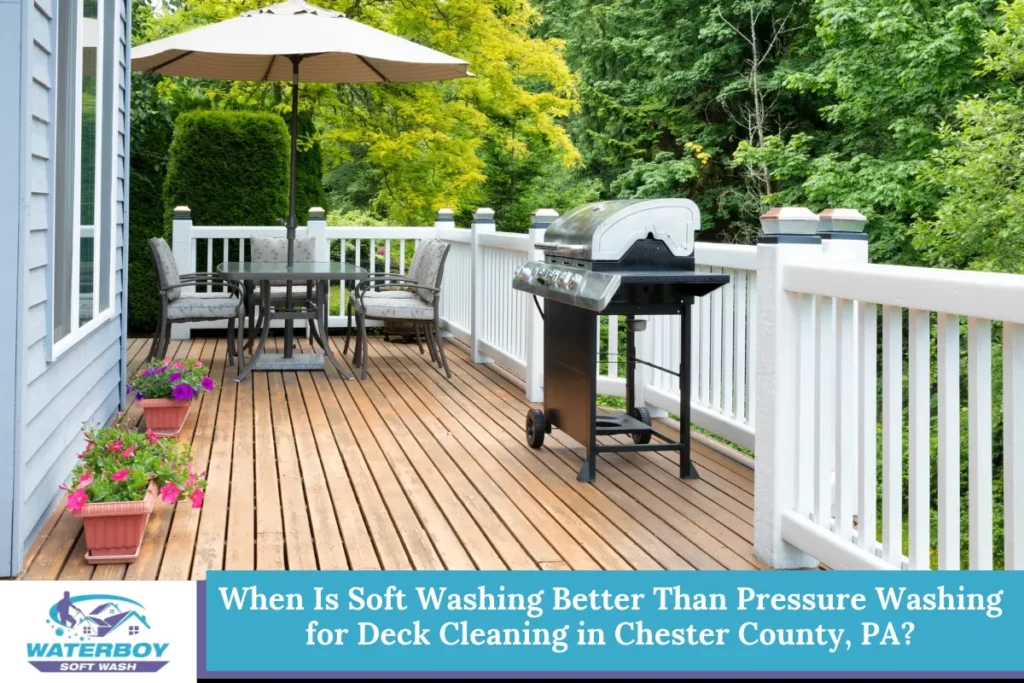
Deck cleaning is one of those seasonal tasks that most people think is simple until something goes wrong. If you own a home in Chester County, you already know what happens after a wet spring and a sticky summer: green, slippery boards covered in algae, pollen, and mildew that make your outdoor space feel neglected and unsafe. The temptation is to rent a pressure washer and blast it all away in an afternoon. But that approach can gouge boards, lift stain unevenly, and force water deep into the structure where rot begins silently. Soft washing offers a safer, chemistry-based alternative that uses low pressure instead of brute blasting to get the job done without the collateral damage. This article breaks down when deck soft washing is the right method, when controlled pressure still makes sense, and how to tell the difference for your property.
Key Takeaways
- Soft washing is usually better than high pressure washing for older, stained, or composite decks in Chester County’s humid climate because it relies on cleaning solutions rather than mechanical force.
- Controlled low pressure paired with the right cleaners removes algae and mildew without shredding wood fibers or lifting sound finishes.
- Pressure washing still has a place for stripping failed coatings and prepping bare, sturdy lumber, but only when done correctly with a wide fan tip and moderate PSI.
- Chester County homeowners should consider deck age, wood species, and level of organic growth before choosing a method.
How Soft Washing and Pressure Washing Actually Differ
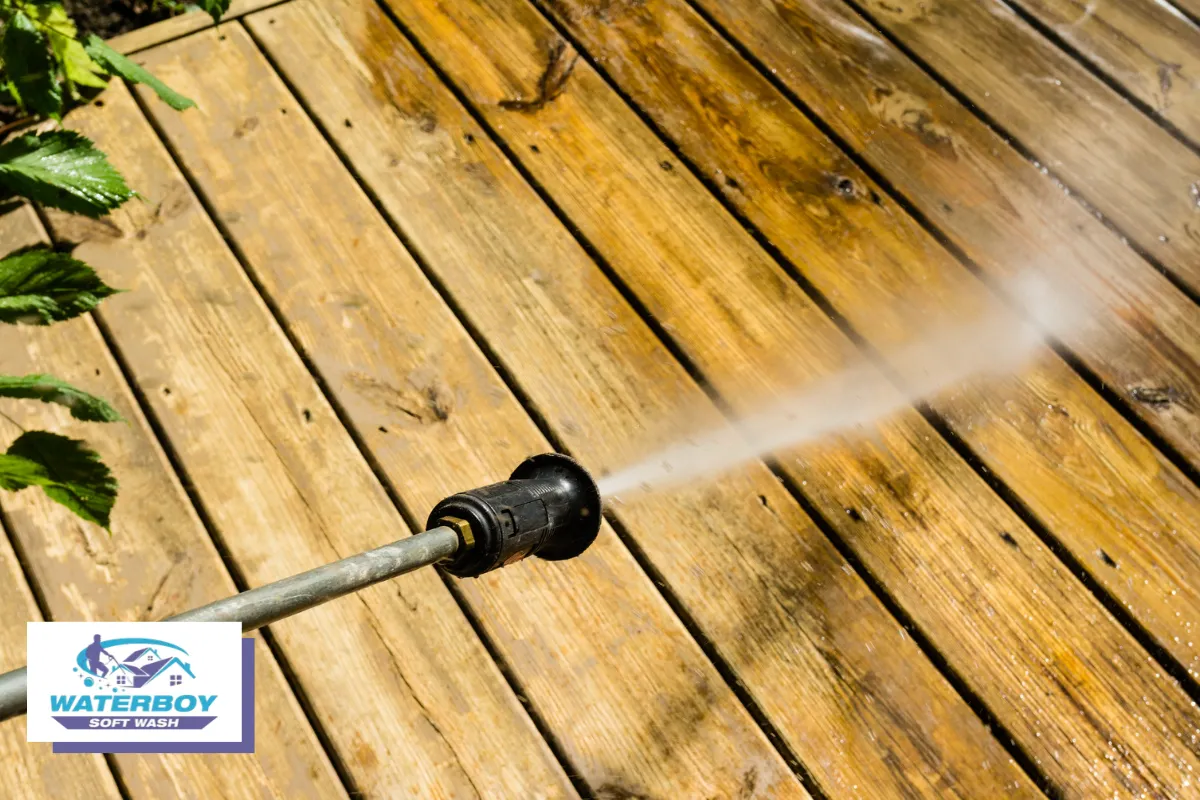
At the core, the split between these two approaches comes down to mechanical force versus chemical action. One method relies on water velocity to physically blast dirt and buildup off a surface. The other lets specialized cleaning agents do the heavy lifting while water simply carries the solution and rinses the result.
Soft washing uses under 500 PSI to prevent wood damage, delivering water at a rate similar to a strong garden hose. The process pairs that gentle rinse with solutions built around sodium hypochlorite as a primary agent, along with biodegradable surfactants that cling to the surface, penetrate organic growth, and break it down. Soft washing typically uses one-third less water than pressure washing, which also means less runoff to manage.
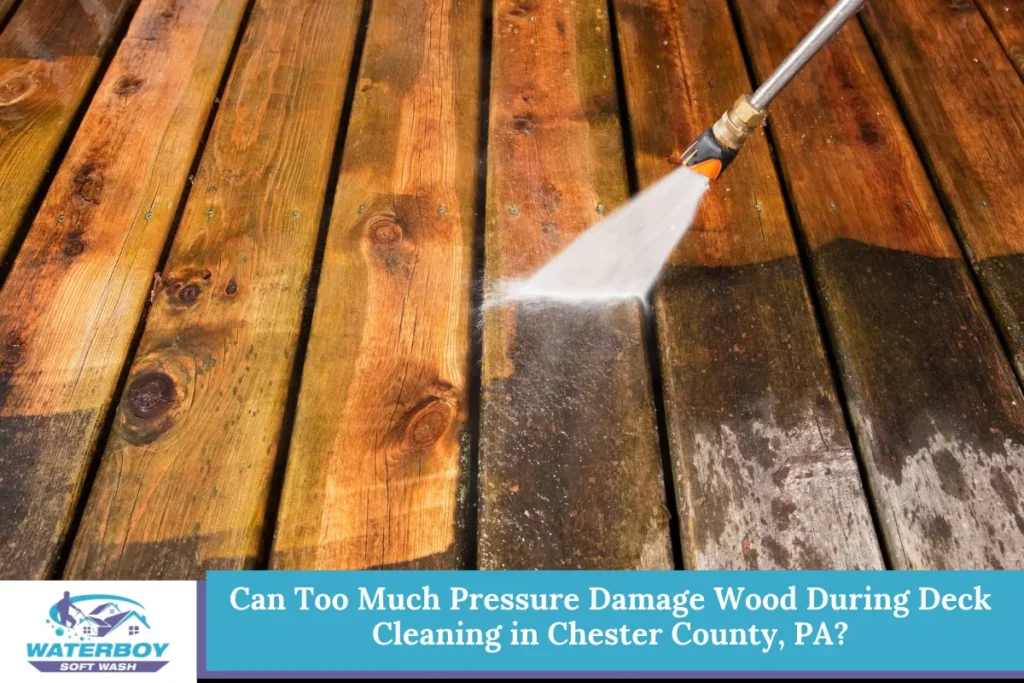
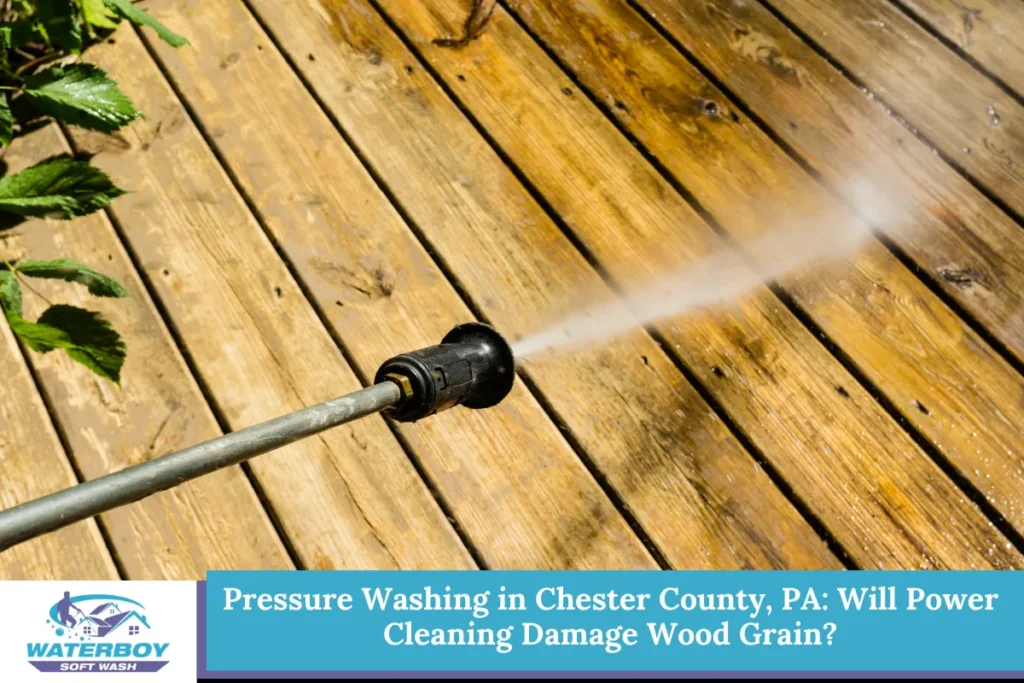
Pressure washing, sometimes called power washing, operates at the other end of the spectrum. A standard pressure washer produces anywhere from 1,500 to 3,500 PSI of high pressure water. Some units even use hot water for tougher jobs on hard surfaces like concrete driveways and stone walkways. That level of force is effective on materials that can take it, but a wood deck is not concrete. Pressure washing can exceed 1,200 PSI easily during normal use, and that kind of energy poses real risk to softer materials.
Both methods can be part of a complete exterior cleaning plan that covers everything from vinyl siding to an asphalt shingle roof. However, decks demand more care than a patio made of poured concrete or a set of brick steps. The surface is more vulnerable, the stakes for damage are higher, and the right tool depends heavily on what you are cleaning and why.
Why Chester County’s Climate Makes Soft Washing Ideal for Many Decks
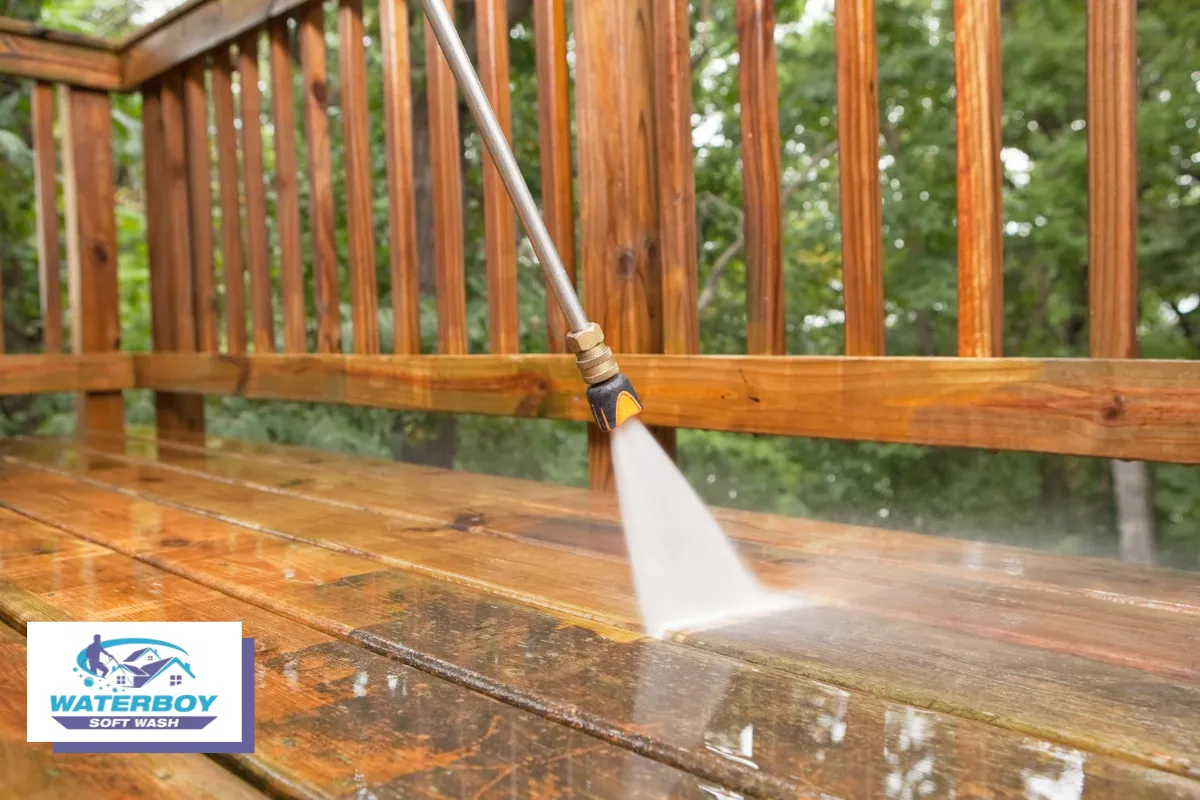
Chester County experiences humid summers and heavy rainfall contributing to organic growth on nearly every exterior surface. With roughly 45 to 50 inches of annual precipitation spread across the year and relative humidity regularly climbing above 70 percent from June through September, conditions are perfect for algae, mold, and mildew to take hold fast.
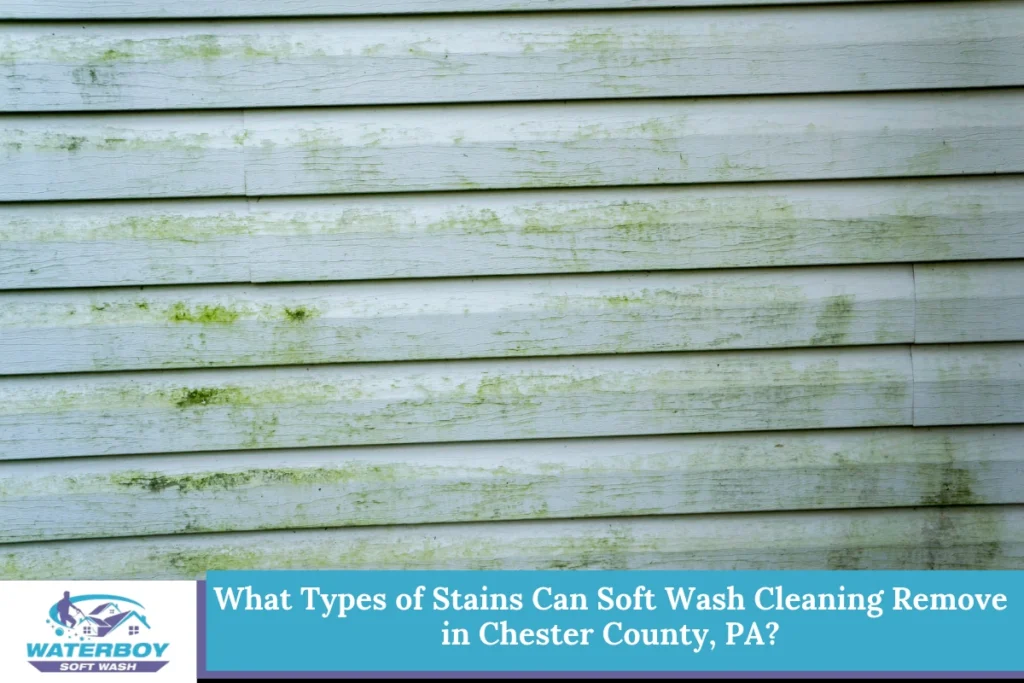
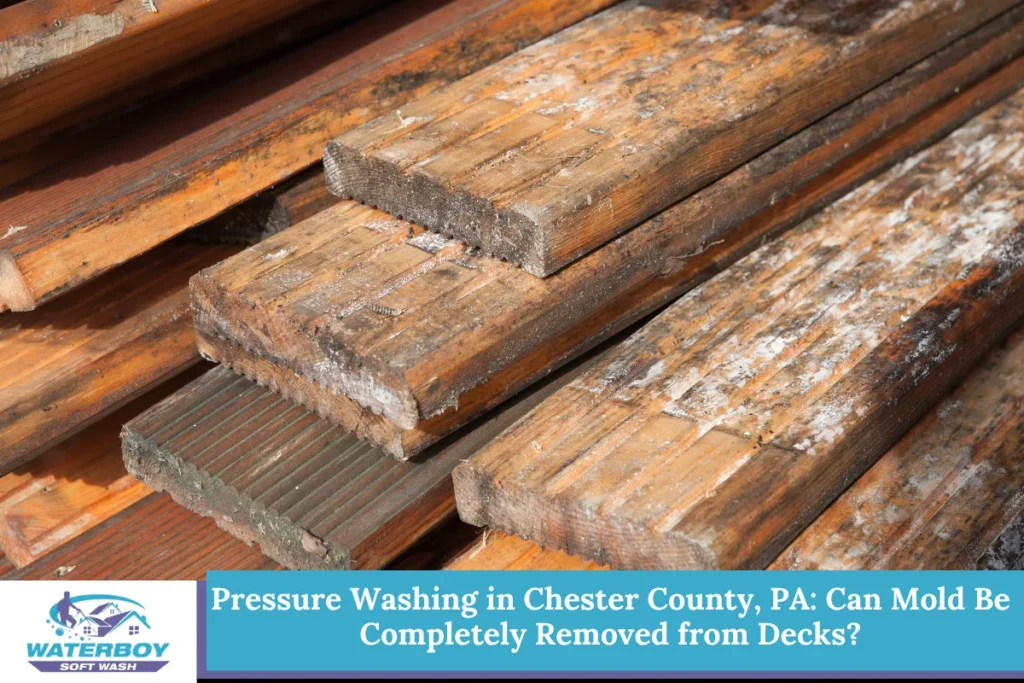
North-facing decks in towns like West Chester, Downingtown, and Phoenixville often sit under mature tree canopies that block direct sunlight. These shaded areas stay damp longer after each rain, and the combination of lingering moisture and warm temperatures turns deck boards into a breeding ground for slippery green biofilm. The problem runs deeper than appearance. Spores and root structures work their way into the grain, and if you only remove the visible layer, regrowth is inevitable.
That is exactly why soft washing makes sense for so many local decks. Soft washing kills mold at the root, preventing regrowth rather than just scrubbing the surface clean temporarily. A high pressure wash can knock off the top layer of green, but without a biocidal cleaning agent addressing the source, the algae comes back within weeks in a humid Chester County summer.
Soft washing is particularly useful for shaded decks where moisture accumulates and organic growth is a recurring battle. Routine cleaning with soft washing is important for deck maintenance in humid climates like ours, and many professionals recommend an annual wash or a biennial schedule for decks protected by durable sealing or composite materials. The best timing is late spring or early summer, when temperatures are high enough for wood to dry thoroughly after the process. Soft washing can help reduce the regrowth of organic materials on decks, keeping the surface cleaner longer between maintenance cycles.
ReadCan Too Much Pressure Damage Wood During Deck Cleaning in Chester County, PA?
When Soft Washing Is Clearly Better Than Pressure Washing Your Deck
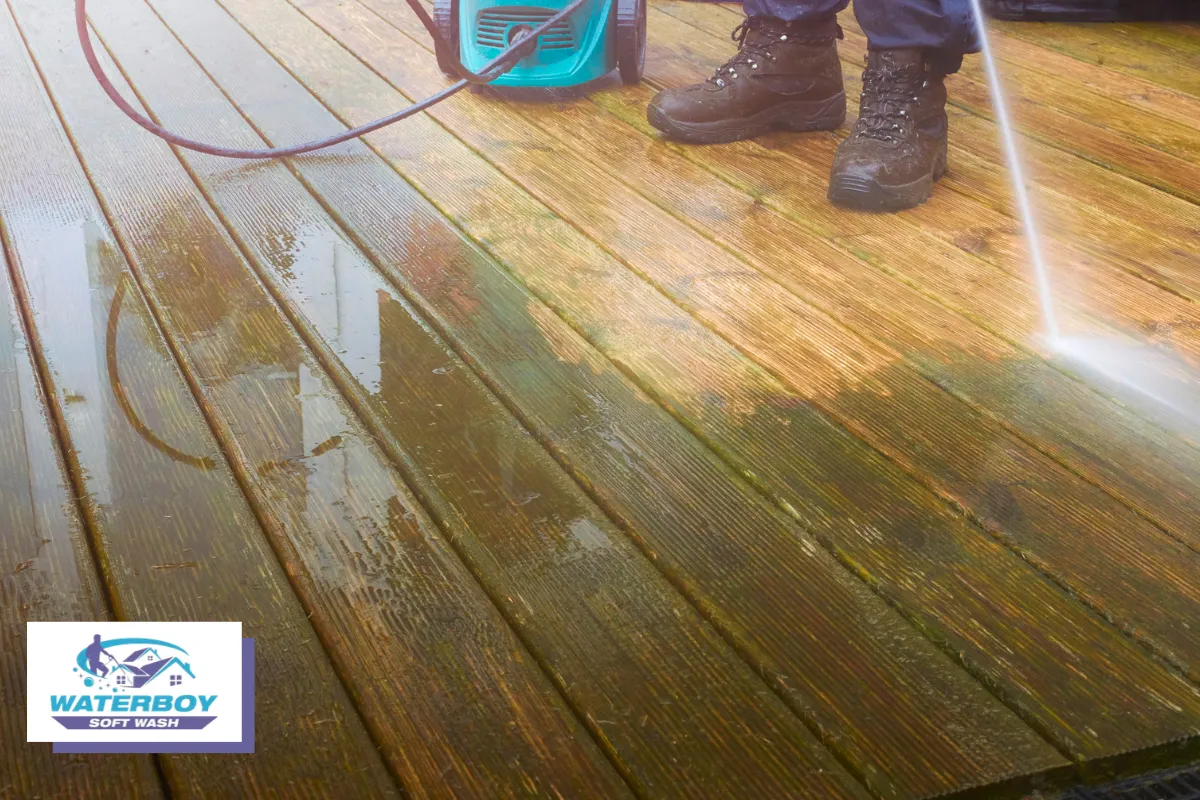
In most everyday residential situations, soft washing is the safer choice and the smarter first step before considering anything more aggressive.
Older decks, those in the 15- to 25-year range, are prime candidates. Boards at that age often show hairline cracks, raised grain, and previous damage from past over-washing. Pressure washing can damage wood by causing fuzzing or splintering, and on already-compromised boards that damage compounds quickly. Soft washing preserves the natural texture of wood and avoids turning a cosmetic cleaning job into an expensive repair project.
Soft washing is safer for painted or stained wood surfaces because it loosens dirt and mildew without aggressively stripping sound coatings. If your deck still has a functional finish, deck washing with low pressure protects that investment. Harsh high pressure water strips paint and stain unevenly, leaving a patchy look that forces you into a full refinishing cycle sooner than planned.
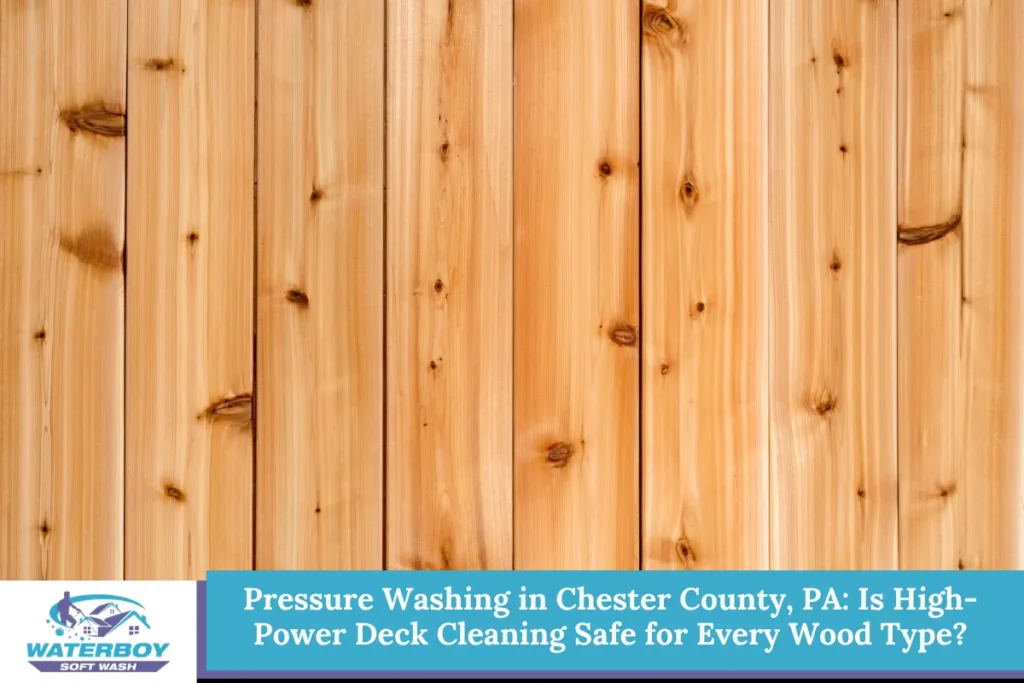
A cedar deck or any softwood structure deserves extra caution. Soft washing is recommended for cleaning aged or soft woods like cedar and pine because those species have lower density and their fibers lift and fuzz easily under high pressure washing. That damage is not just cosmetic; it creates rough spots that catch moisture, accelerate wear from foot traffic, and shorten the life of any future stain application.
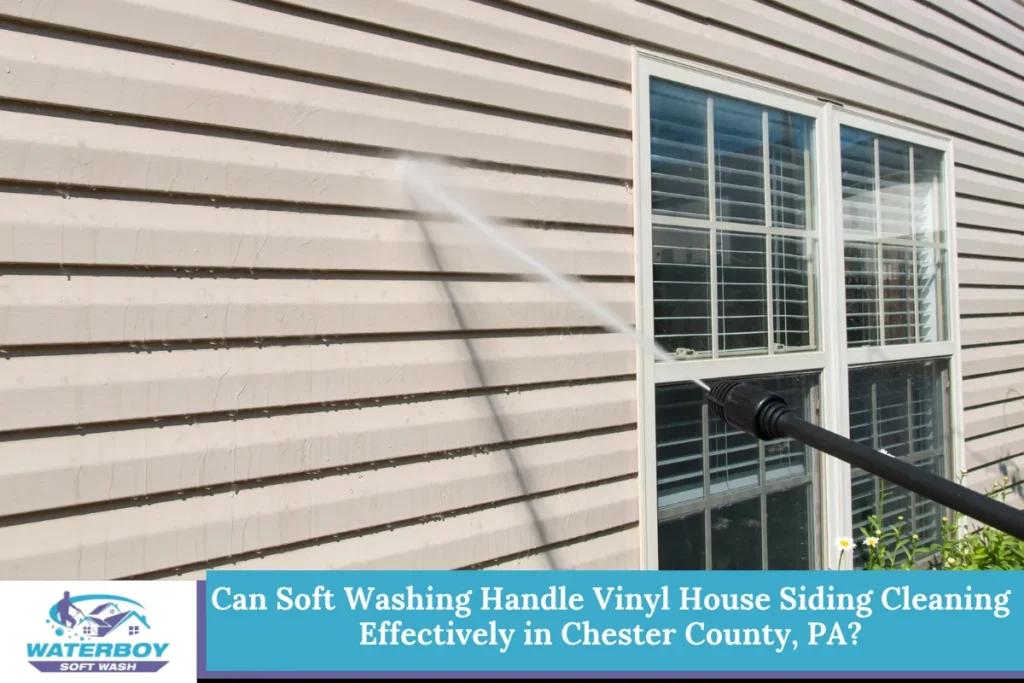
Many composite decks require cleaning methods that do not exceed manufacturer’s PSI limits. Brands typically cap acceptable pressure around 1,500 PSI for rinsing only, and narrow nozzles are almost always off-limits. Soft washing stays well below those thresholds. The same goes for delicate surfaces nearby, including vinyl railings and siding, where soft washing uses under 500 PSI for delicate surfaces and avoids the kind of accidental damage an errant spray wand can cause at full power.
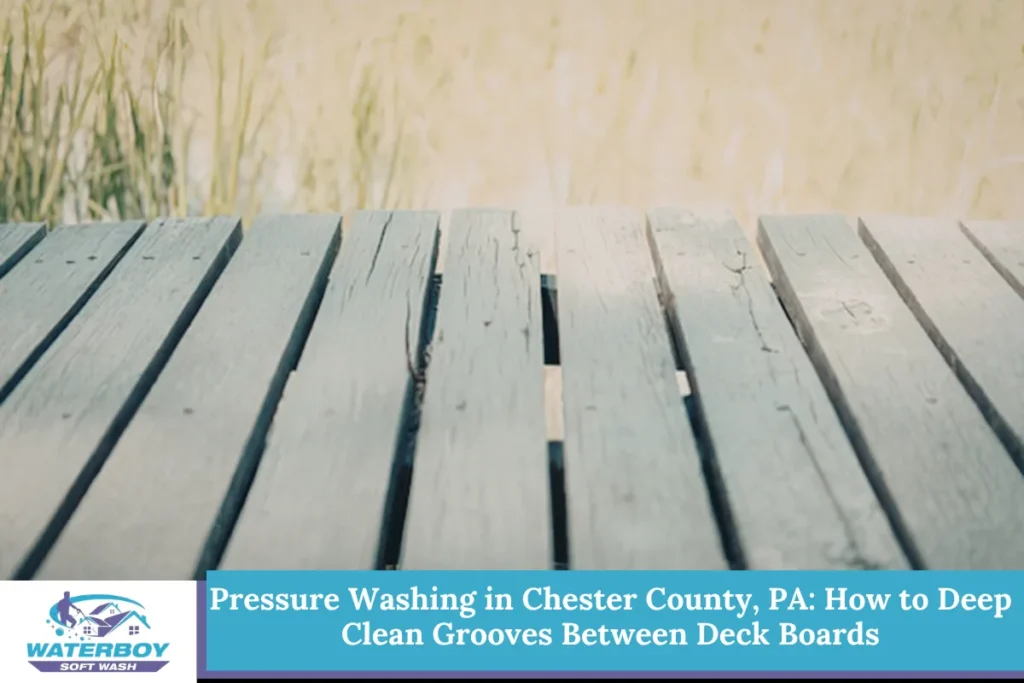
Soft washing uses biodegradable cleaning solutions to break down organic matter safely, and the lower pressure minimizes the risk of forcing water into joints, post connections, and fastener holes where trapped moisture causes hidden rot.
When Controlled Pressure Washing Still Has a Role in Deck Maintenance
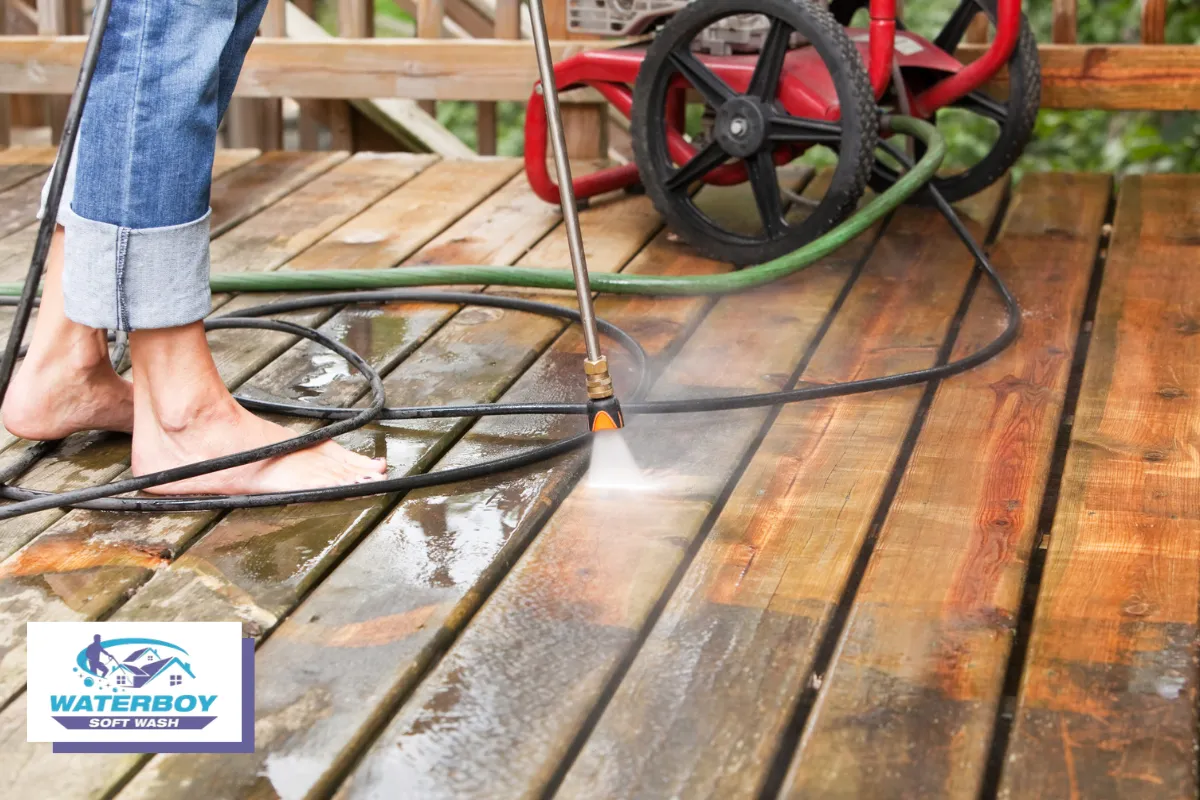
Low pressure deck washing is not the enemy. The issue is how and when it gets used. There are legitimate scenarios where controlled pressure makes sense, and writing off pressure washing decks entirely would be wrong.
When a deck’s stain or sealer has failed completely, with flaking, peeling, and heavy surface degradation, chemical cleaners alone may not strip the old finish efficiently enough. Controlled pressure washing at moderate levels, roughly 800 to 1,200 PSI with a wide fan tip, can remove that failed coating and open the wood grain for staining or sealing. The spray wand should move with the wood grain at a steady pace, maintaining a distance of 10 to 18 inches from the surface to prevent etching or tiger-striping.
Pressure washing often exceeds 1,500 PSI on standard equipment, so operators need to dial machines down deliberately. Pressure washing can leave visible wand marks if misused, and those marks are essentially grooves carved into the board surface that collect dirt and moisture going forward.
Pressure washing can damage wood if done improperly, and that risk rises sharply with soft or aged lumber. For homeowners unsure about their deck’s condition, the best move is to skip the DIY high pressure attempt and consult a local professional. Hard surfaces like driveways, stone patios, and concrete can absorb that kind of force, but a wood deck cannot. Knowing when to hold back is what separates a clean deck from a damaged one.
Wood Type, Age, and Condition: How They Dictate Your Cleaning Method
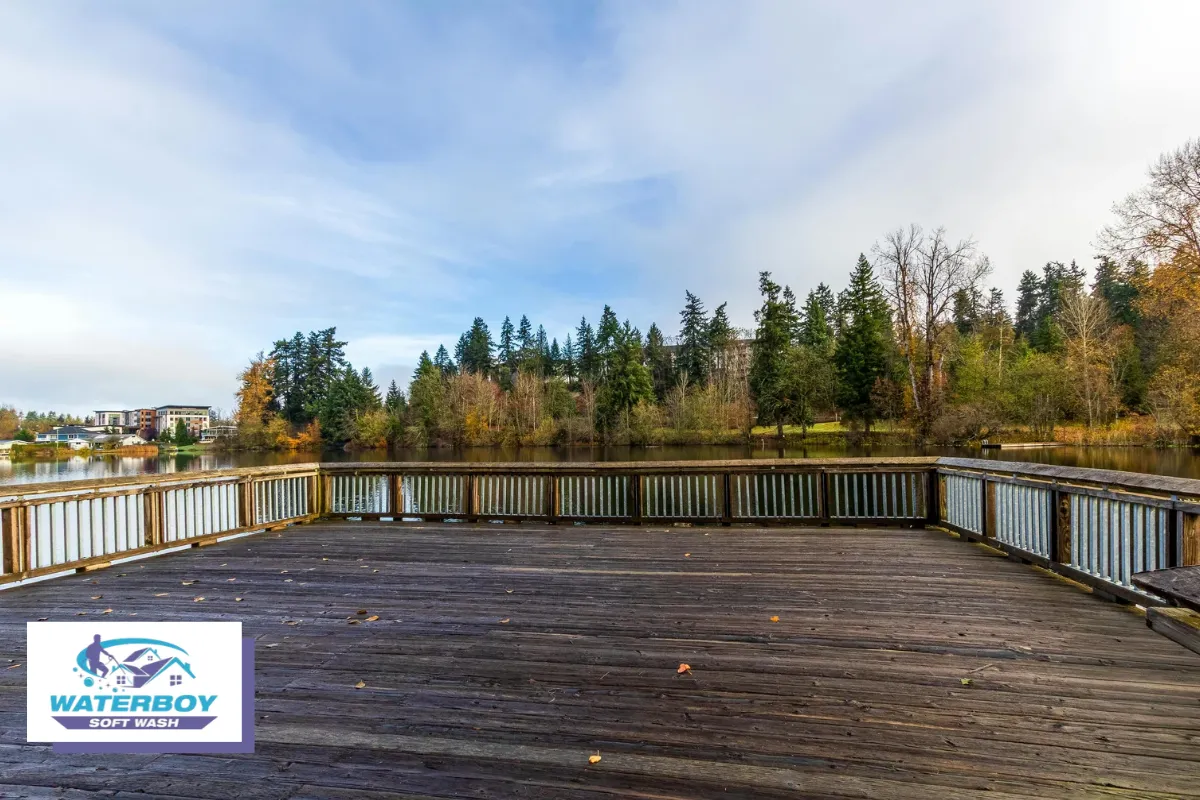
The right method for your deck depends just as much on the material underneath as it does on what is growing on top. Different wood species respond very differently to pressure and chemicals, and ignoring that reality leads to avoidable damage.
You should always inspect wood condition before choosing a cleaning method. Here is a simple homeowner checklist before any deck cleaner touches the surface:
- Run your hand along boards and railings. Feel for raised fibers, rough patches, or soft spots that indicate prior damage or rot.
- Look for old gouge marks, uneven wear patterns, or cupping from previous pressure washing.
- Check stair treads and high-traffic edges, which wear faster and are more vulnerable.
- Note whether existing paint or stain is intact, peeling, or gone entirely.
- Examine the underside of the deck near joists and posts for signs of mold or moisture damage.
Softer woods and older boards with checks, splinters, or rot pockets are far more vulnerable to high pressure damage. A 20-year-old cedar board with hairline cracks will not react the same way as a five-year-old pressure-treated pine plank. Dense hardwoods and newer treated lumber can sometimes tolerate carefully controlled pressure for prep work, but even then, technique matters enormously.
If your inspection reveals fiber fuzz, cupping, or old gouge marks, those are signals that past cleaning was too aggressive and soft washing is the safer path forward.
Safety, Runoff, and Environmental Considerations in Chester County
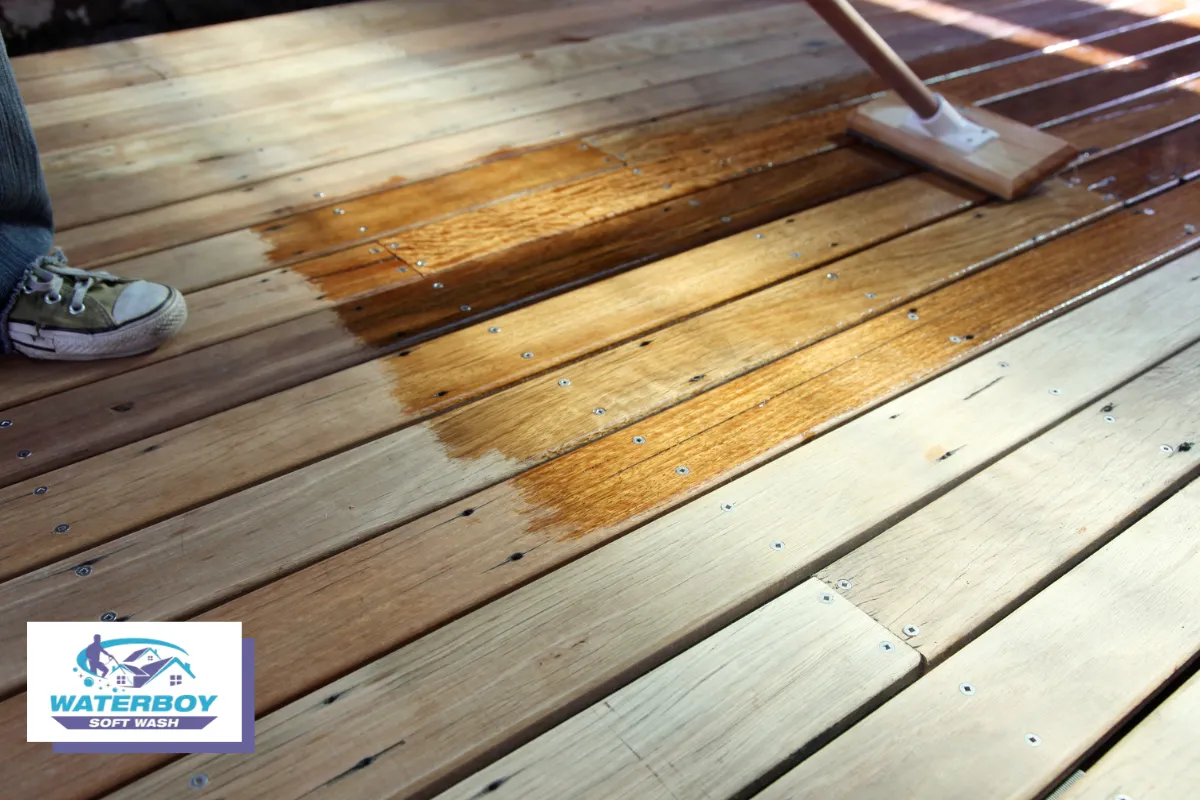
Responsible exterior cleaning means thinking beyond the deck surface itself. Homeowners in Chester County share the landscape with streams, wetlands, and neighbors whose landscaping sits just a few feet from the work area.
Soft washing minimizes the risk of damaging surrounding landscaping because the process uses properly diluted, biodegradable solutions applied with care and thoroughly rinsed. Pre-watering plants and garden beds before and after treatment is standard practice among professionals who understand the local environment. Cleaning should be directed so that runoff does not flow toward storm drains or sensitive plantings whenever possible.
Pennsylvania’s environmental regulations, including the Clean Streams Law, require that wash water containing cleaning agents, sediment, or oil not be discharged into waterways untreated. Chester County stormwater management rules reinforce those requirements at the local level. Whether you are handling an oil stain on a garage apron or rinsing a deck, managing what goes down the drain matters.
Appropriate personal protective equipment and slip-prevention practices are important on elevated or wet decks. Professionals working on a roof, siding, or deck should have proper safety gear. Homeowners should choose contractors who understand these local regulations and follow best practices for managing wash water and surface cleaners.
How a Professional Evaluates Your Deck Before Choosing a Cleaning Method
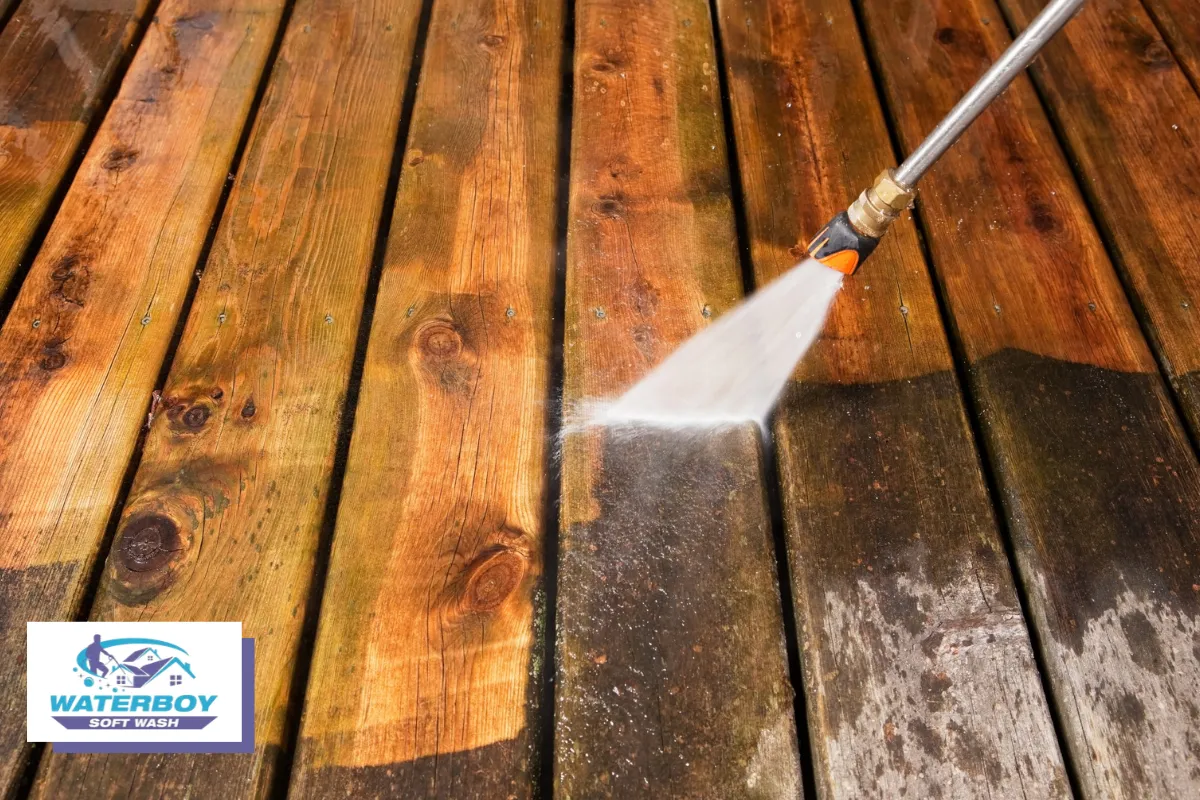
A qualified contractor does not just show up with equipment and start spraying. There is a process that determines what your deck actually needs.
The evaluation typically follows this sequence:
- Identify the wood species and confirm whether the deck is natural lumber or composite material.
- Assess the structural condition of boards, joists, railings, and fasteners.
- Determine the age of the deck and the state of any existing finish, whether it is bare wood, solid stain, semi-transparent stain, or paint.
- Evaluate contamination levels: how much dirt, pollen, mildew, black mold spots, or green algae is present on boards and railings.
- Survey the surrounding property, including landscaping, nearby siding, patio surfaces, and drainage patterns.
Based on those findings, a contractor might recommend pure soft washing, a soft wash combined with a controlled rinse, or limited targeted pressure cleaning on specific areas. For most decks, soft washing operates below 500 PSI using cleaning solutions that handle the contamination without harming the material. When prep for staining or sealing is needed, a professional might use a wood brightener after the wash and follow with light sanding.
Homeowners should feel comfortable asking questions. Find out what PSI levels will be used, what chemicals are in the mix, and how the crew plans to protect nearby plants, hardscape, and any shingles or roof edges within the splash zone. Great communication between the contractor and the homeowner is a sign of a crew that does the job right. Not every company can give you all the answers upfront, but the ones worth hiring will.
Deck Cleaning in Chester County, PA – Water Boy Soft Wash
At Water Boy Soft Wash, we specialize in professional deck cleaning throughout Chester County, Pennsylvania. Our soft washing methods are tailored to the local climate and the wood types we see every day on properties across the region. We use low pressure equipment paired with effective, biodegradable cleaners to remove algae, mildew, and grime without chewing up your boards or stripping finishes that are still doing their job.
We treat every outdoor space as if it were our own, and our recent reviews reflect the care and attention we bring to each property. Whether you need a seasonal wash for a cedar deck or a full exterior cleaning that covers siding, roof surfaces, and walkways, we have the right tool and the experience to handle it properly.
Call us at (610) 812-7378 or fill out our contact form to schedule a free estimate. Let us show you why homeowners across Chester County trust Water Boy Soft Wash to protect what matters most.
Frequently Asked Questions
How Often Should I Have My Deck Professionally Cleaned in Chester County, PA?
For most decks in Chester County, an annual cleaning in late spring or early summer is ideal. That timing aligns with the end of the heavy pollen season and positions the deck for the humid months ahead. Decks that sit in full sun with good airflow and a durable sealer may only need professional attention every two years. However, shaded decks surrounded by trees or those near water features often benefit from yearly service because moisture and organic matter accumulate faster. Pay attention to how quickly green film returns after your last wash. If you notice slippery spots forming within a few months, it is time to move to an annual schedule to stay ahead of the growth cycle.
Can I Safely Use a Store-Bought Deck Cleaner with a Garden Hose Instead of Hiring a Professional?
A garden hose and a consumer-grade deck cleaner can handle light surface dirt and minor pollen buildup on a relatively new, well-maintained deck. The limitation is that retail products are formulated at lower concentrations than professional-grade solutions, so they struggle with established mildew colonies, deep algae staining, or heavily soiled boards. There is also the question of technique. Without understanding dwell times, proper dilution ratios, and rinse patterns, you risk either under-cleaning or leaving chemical residue that damages finishes. For routine spot maintenance between professional cleanings, a store-bought product can extend the life of your last service. For anything beyond light upkeep, professionals bring the right equipment, chemistry, and experience to deliver consistent results safely.
Will Soft Washing Remove the Gray, Weathered Color from My Deck, or Do I Need Additional Restoration?
Soft washing excels at removing biological growth, dirt, and surface grime, but the gray color on weathered wood is caused by UV degradation of the lignin in the wood itself. A standard soft wash will not reverse that discoloration on its own. To restore the original warm tone, a wood brightener containing oxalic acid is typically applied after the cleaning process. This step neutralizes any remaining alkalinity from the wash solution and lifts tannin stains and gray oxidation from the surface. In many cases, the combination of soft washing followed by brightening prepares the deck beautifully for a fresh coat of stain or sealer. If the wood is deeply weathered with significant fiber damage, light sanding may also be necessary before refinishing.
Is It Safe to Be Home and Have Pets Outside While My Deck Is Being Soft Washed?
You can absolutely be home during the process, but pets and children should be kept away from the work area until the deck is fully rinsed and dry. The cleaning solutions used in soft washing, while biodegradable, are irritating to skin, eyes, and paws in their concentrated form during application and dwell time. Most professionals will ask you to move pets indoors or to a separate area of the yard and to cover or relocate any pet water bowls or food dishes near the deck. Once the rinse is complete and the surface has dried, the treated area is safe for normal use. A responsible crew will let you know when it is clear to return to the space.
How Long Do I Need to Wait Before Walking on or Using My Deck After Cleaning?
After a professional soft wash, most decks are safe to walk on once the surface is dry to the touch, which usually takes two to four hours in warm, sunny conditions. On overcast or humid days in Chester County, drying can take closer to six or eight hours. If the deck was cleaned as preparation for staining or sealing, you will want to wait at least 24 to 48 hours before applying any finish so that moisture in the wood has time to evaporate completely. Placing furniture back on the deck too soon can trap moisture underneath and leave marks. Your contractor should provide specific guidance based on the weather forecast and the condition of your deck that day.
Disclaimer
This article provides general guidance and is not a substitute for on-site inspection or professional advice. Always follow manufacturer instructions and applicable Chester County, Pennsylvania regulations when cleaning decks or hiring contractors.
ReadIs Soft Wash Cleaning Safe for All Exterior Surfaces in Chester County, PA?