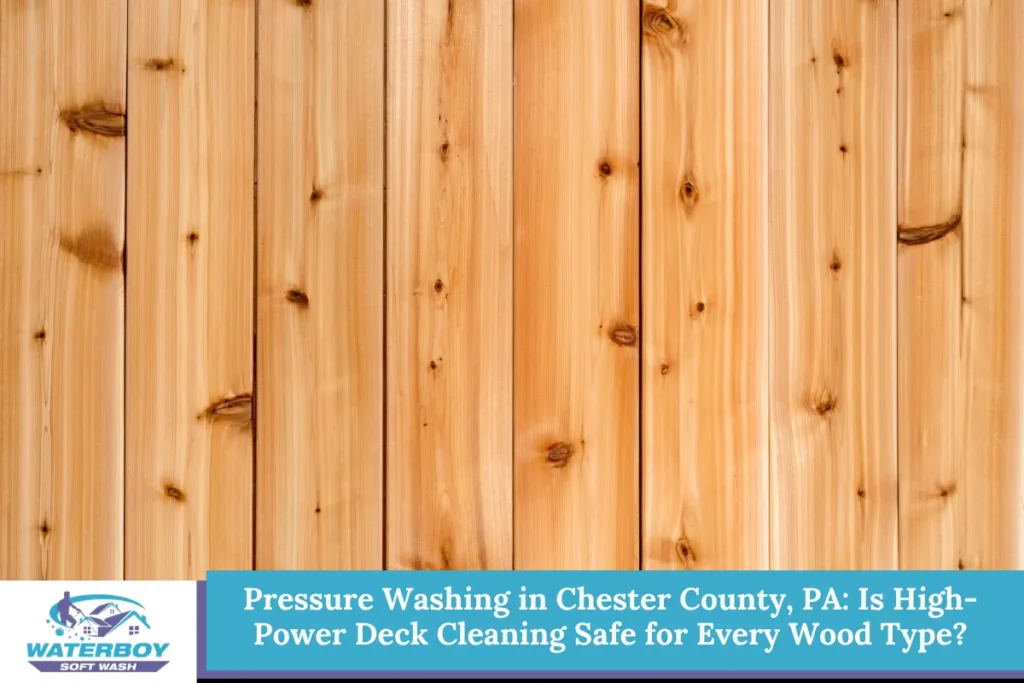

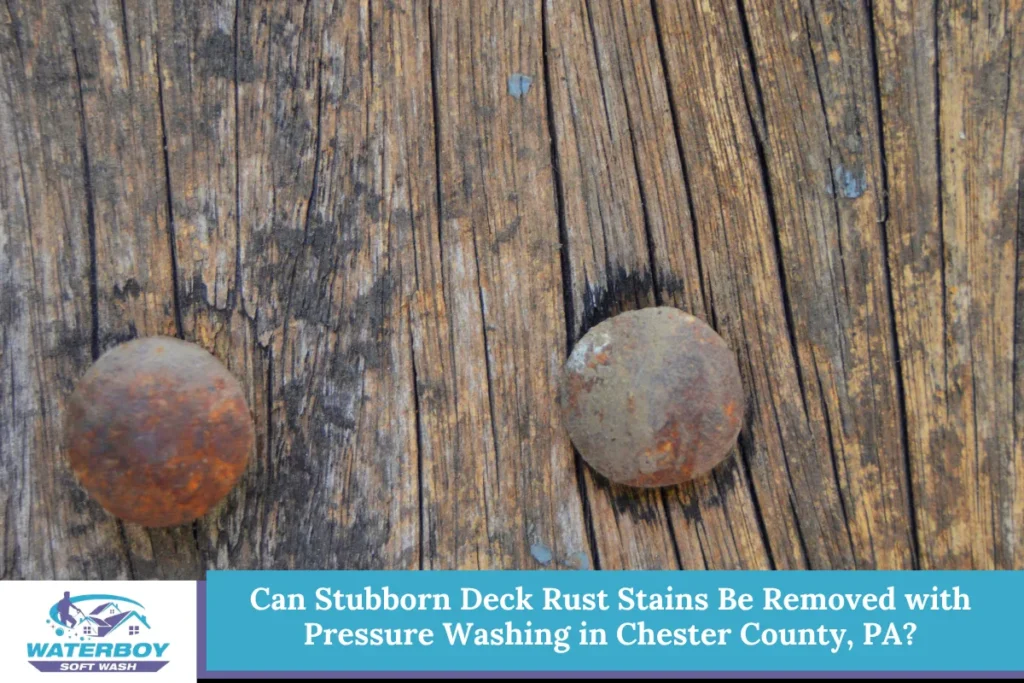

Can Pressure Washing Really Remove Rust Stains from Decks?
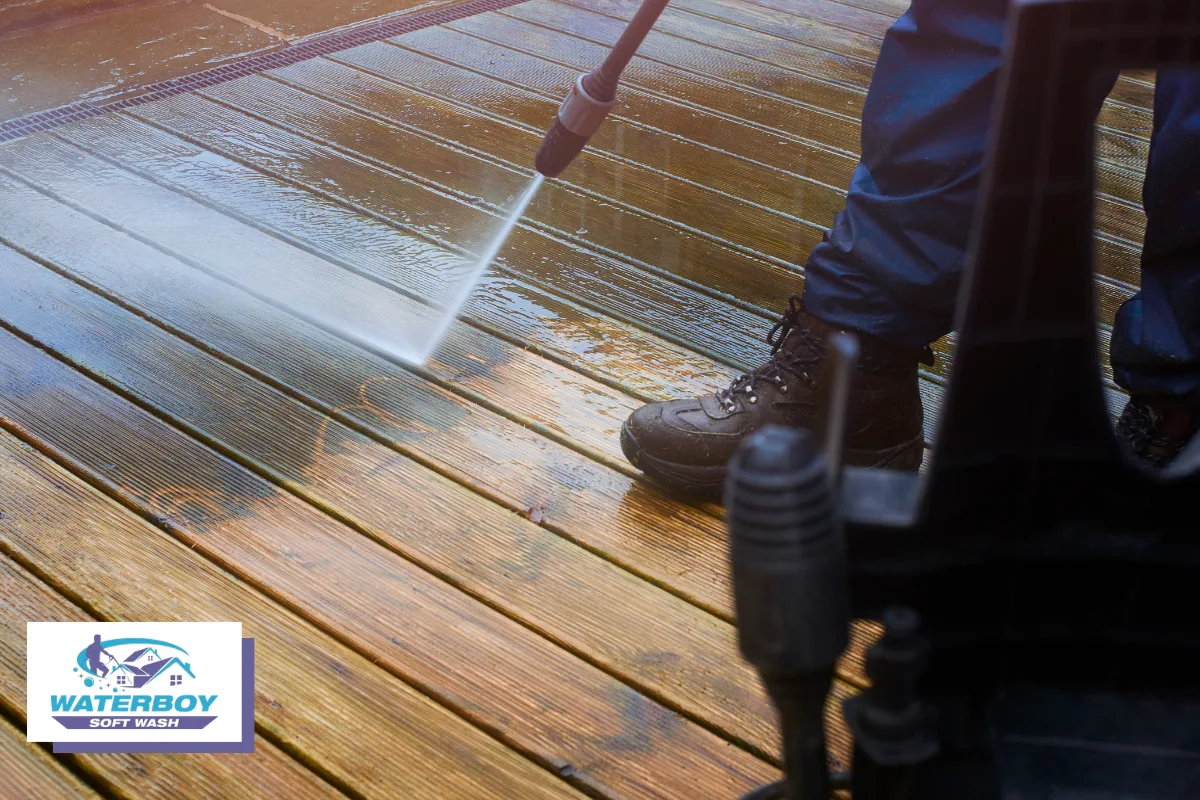
Pressure washing in Chester County, PA is one of the most common ways property owners tackle dirty outdoor surfaces, but when it comes to stubborn rust marks on deck boards, a standard rinse is rarely enough on its own. Those orange and brown streaks left behind by metal furniture, old fasteners, and corroded railings can make an otherwise beautiful deck look neglected, and the longer you wait, the deeper the discoloration sets into the grain.
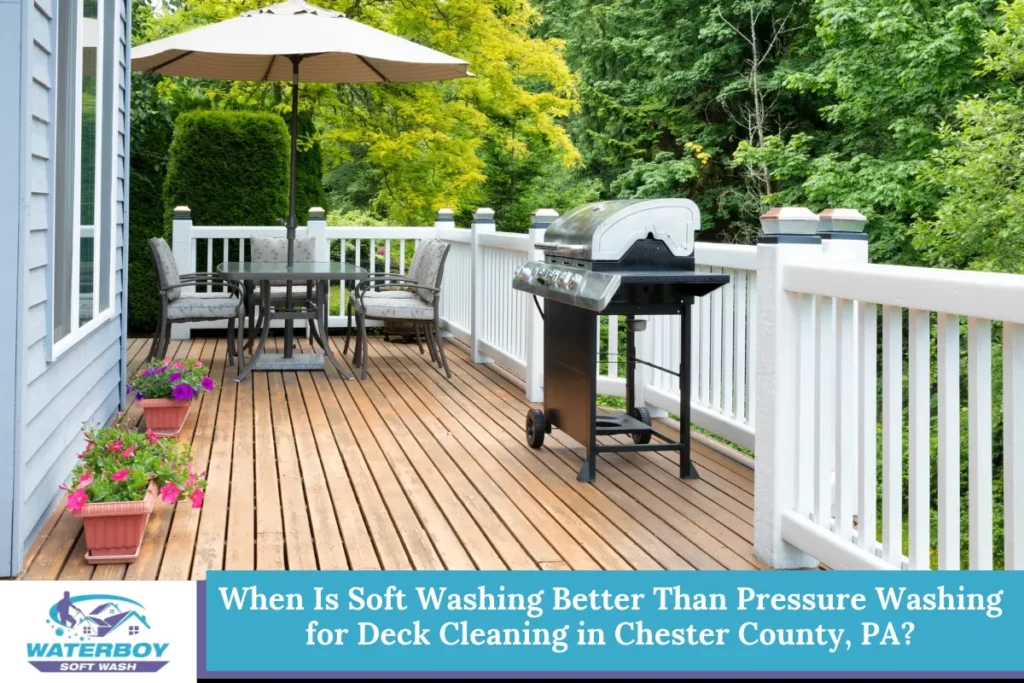
The good news is that pressure washing can remove rust stains from wood or composite decks when it is paired with the right chemical pre-treatment and careful technique. Surface rust film, the kind that sits on top of the boards, is usually fully removable. Deep, long-term rust staining that has bonded with tannins inside the wood fibers may only lighten rather than vanish completely, but even partial improvement makes a dramatic difference. Different decking materials require specific rust removal products and techniques, so understanding what your deck is made of matters before you pick up a wand or a bottle of cleaner. Local factors in Chester County, including mineral-heavy well water, older homes with original steel fasteners, and metal patio furniture exposed to seasonal weather, often cause recurring rust problems that this guide will help you manage safely.
Key Takeaways
- Most light-to-moderate rust stains on decks can be removed with carefully controlled pressure washing combined with proper chemical cleaners such as oxalic acid.
- Very deep rust stains may not disappear entirely, but they can usually be lightened significantly without damaging wood or composite decking.
- Soft washing and low-pressure rinsing are safer than high-pressure blasting, especially on older lumber and composite boards.
- Hiring a local Chester County professional familiar with deck materials, local water conditions, and environmental rules gives the best result.
- This article covers DIY options, when to call a pro, and how to prevent rust stains from returning season after season.
How Rust Stains Form on Wood and Composite Decking
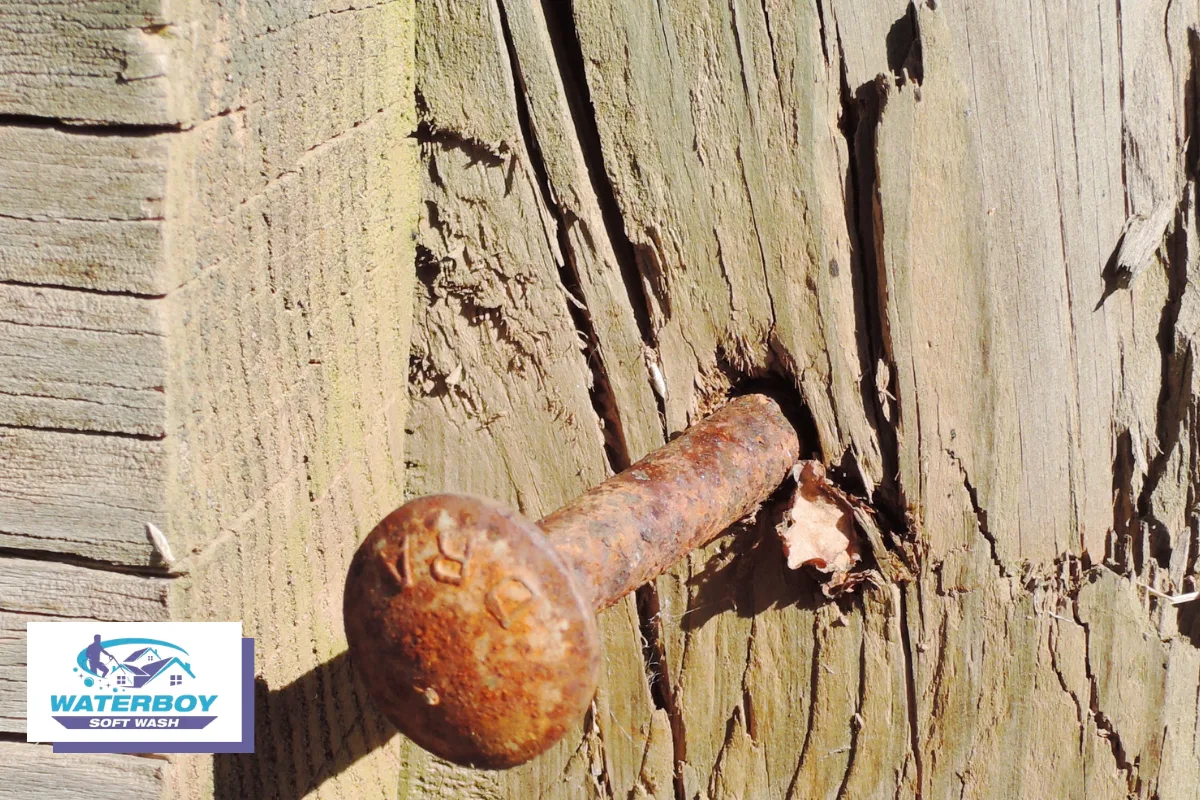
Rust on a deck usually starts small. A grill frame drips condensation onto the boards. An iron planter sits through a week of spring rain. Old screws and nails corrode beneath the surface and bleed orange streaks outward. Metal railings exposed to snow, ice, and road salt also contribute. In Chester County neighborhoods from West Chester to Phoenixville and Kennett Square, these scenarios play out every season.
The way rust behaves depends heavily on the material underneath it. Pressure-treated wood and natural species like cedar have open grain and porous fibers. When iron particles dissolve in moisture, they seep into those fibers and can react with natural tannins in the wood, creating a chemical bond that produces blue-black or dark grey iron-tannate staining. This type of discoloration is far more difficult to address than simple orange surface deposits. Composite decking, especially modern capped varieties, has a polymer shell that resists deep absorption. Rust on composite typically appears as orange surface streaks that respond well to cleaning before the stain has time to set.
Elevated humidity levels can increase rust and staining on decks, and Chester County delivers that humidity in abundance. The region's freeze-thaw cycles, heavy spring rainfall, summer heat, and even pollen deposits keep deck surfaces damp for extended periods. That constant moisture accelerates metal corrosion and gives iron particles more time to penetrate the boards. Ignoring early light stains allows iron to work deeper into the material, making later removal more difficult even with specialty cleaners and a thorough wash.
Is Pressure Washing Safe for Rust-Stained Decks?
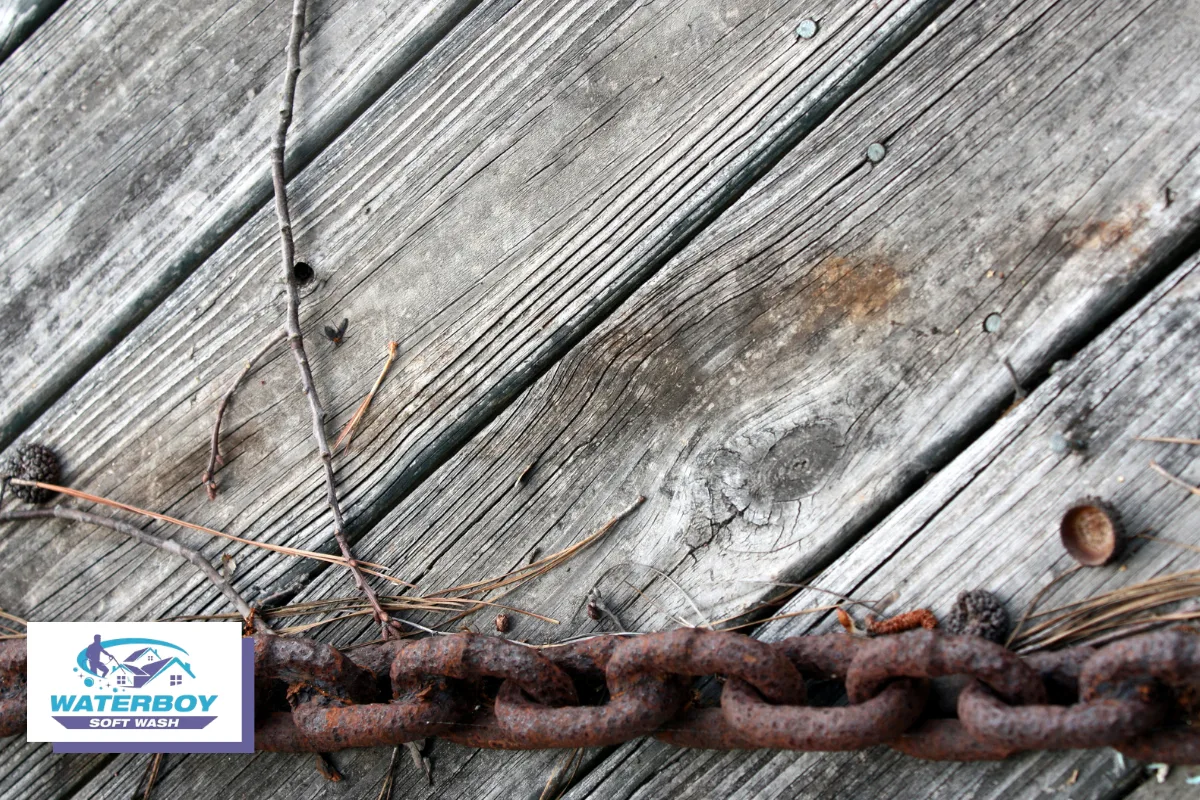
Safety is a legitimate concern. Not every deck responds well to aggressive cleaning, and the wrong approach can leave you with damage that costs more to repair than the stains themselves. Rust stains require a specialized chemical approach for effective removal, meaning that pressure washing alone cannot remove rust stains from a wood deck. Water force handles dirt, grime, mold, and mildew well, but iron oxide deposits need chemistry to break down before rinsing can carry them away.
Here is what matters when it comes to safe practices on residential decks:
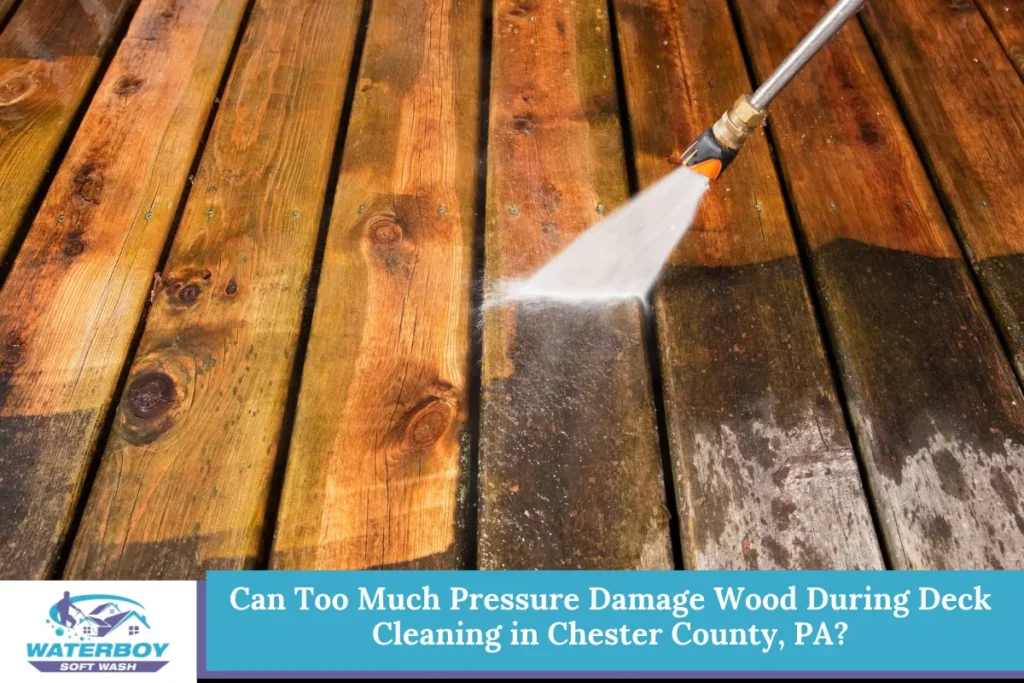
- Using high water pressure can gouge or splinter wood fibers, especially on softwood species and older pressure-treated boards. Keep PSI within a safe range, roughly 500 to 1,200 for most softwood decks, and start at the lowest effective setting.
- Power washing effectively removes dirt, mold, and mildew from decks, but a narrow nozzle aimed at rust without pre-treatment will only drive iron particles deeper into the grain.
- For composite decking, manufacturers typically set maximum PSI limits. Many brands recommend staying at or below 1,500 PSI with a wide fan tip held at least eight to twelve inches from the surface.
- Controlled washing services that rely more on cleaning solutions and proper detergents than raw force consistently deliver better outcomes than aggressive blasting.
- In Chester County, homeowners should avoid directing high water pressure into gaps between deck boards. Forcing water against joists, flashing, or nearby house siding creates hidden moisture problems that lead to premature wear and structural risk over time.
Pressure washing removes dirt, mold, and mildew effectively, but rust demands an extra step. Treating rust stains with a chemical agent is necessary before pressure washing if you want clean, even results without surface damage.
Step-by-Step: Removing Rust Stains from a Deck with Pressure Washing
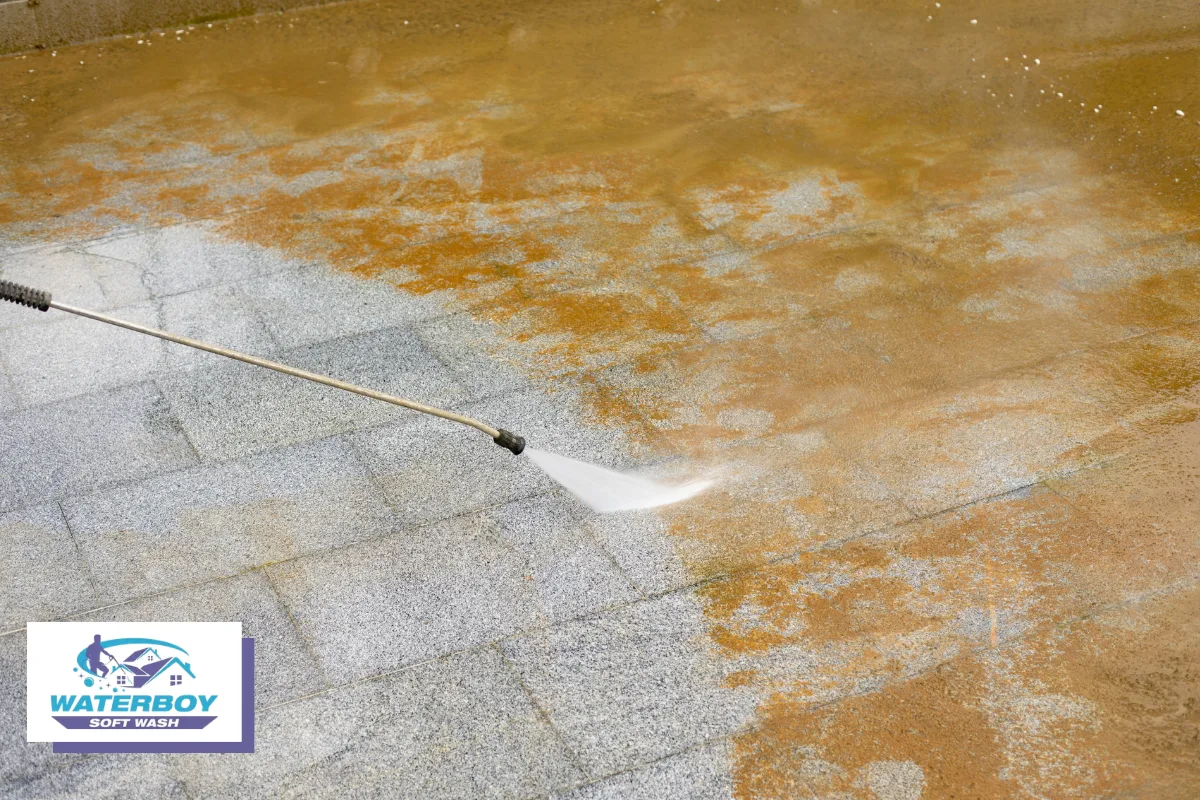
A methodical process makes all the difference between a restored deck and a damaged one. Follow these steps in order for the safest and most complete rust removal.
- Identify your deck material. Confirm whether you have pressure-treated pine, cedar, hardwood, capped composite, or uncapped composite. Check for loose boards, popped nails, and cracks that could worsen under pressure.
- Move all furniture, planters, grills, and decorative items off the deck. This exposes every stained area and prevents obstacles during cleaning.
- Debris should be cleared from the deck before applying rust treatment. Sweep away leaves, dirt, pollen, and any loose grime with a broom so the cleaner can make direct contact with the stained surface.
- Pre-rinse the entire deck with low-pressure water to dampen the boards and remove remaining loose material.
- Choose a deck-safe rust stain remover. Oxalic acid is the gold standard for removing rust stains from wood. It brightens weathered wood while breaking down rust stains and iron-tannate discoloration. Dilute according to label directions, typically around four to six ounces per gallon of water. For composite boards, select a cleaner rated for that specific material.
- Surrounding vegetation should be pre-wet to prevent chemical absorption. Spray down nearby plants, grass, and landscaping beds with clean water, and consider laying plastic sheeting over sensitive areas.
- Apply the rust remover directly to stained areas, working in manageable sections. Use a pump sprayer or garden sprayer for even coverage. A soft-bristle brush should be used to agitate stubborn rust spots, working the solution into the grain without scratching the surface. Allow the rust remover solution to dwell for 5 to 15 minutes for best results, keeping the area wet.
- Set up your pressure washer at the lowest effective PSI. Attach a 25-degree or 40-degree fan tip. Wood decks should be rinsed using a wide-angle fan nozzle to distribute force evenly. Hold the wand at a consistent distance of ten to twelve inches, and always move with the grain of the wood.
- Rinsing should be done using low pressure to avoid damaging the wood. Make steady, overlapping passes rather than lingering on any single spot. Use warm water and mild detergent mixed into the supply if your equipment allows it, as this combination helps lift residual staining.
- After rinsing, let the deck dry for 24 to 48 hours. Evaluate the results once the boards are completely dry. If faint marks remain, a second light application of the oxalic acid solution followed by a gentle rinse usually finishes the job. Once satisfied, consider sealing or staining the deck to protect the clean surface.
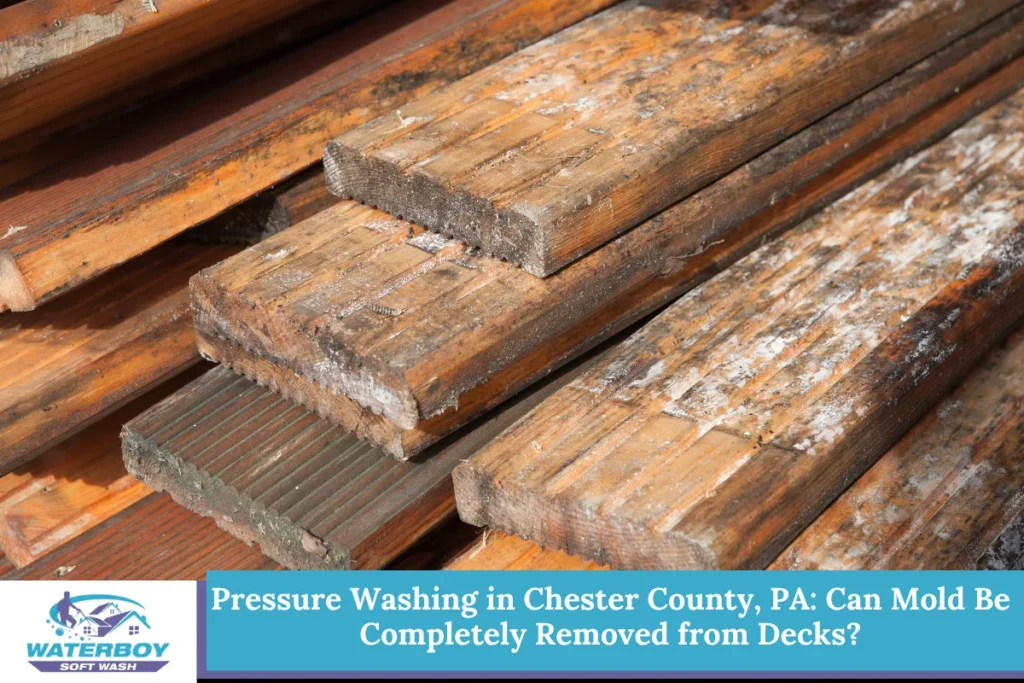
Read Pressure Washing in Chester County, PA: Can Mold Be Completely Removed from Decks?
When Soft Washing Is Better Than High Pressure on Decks
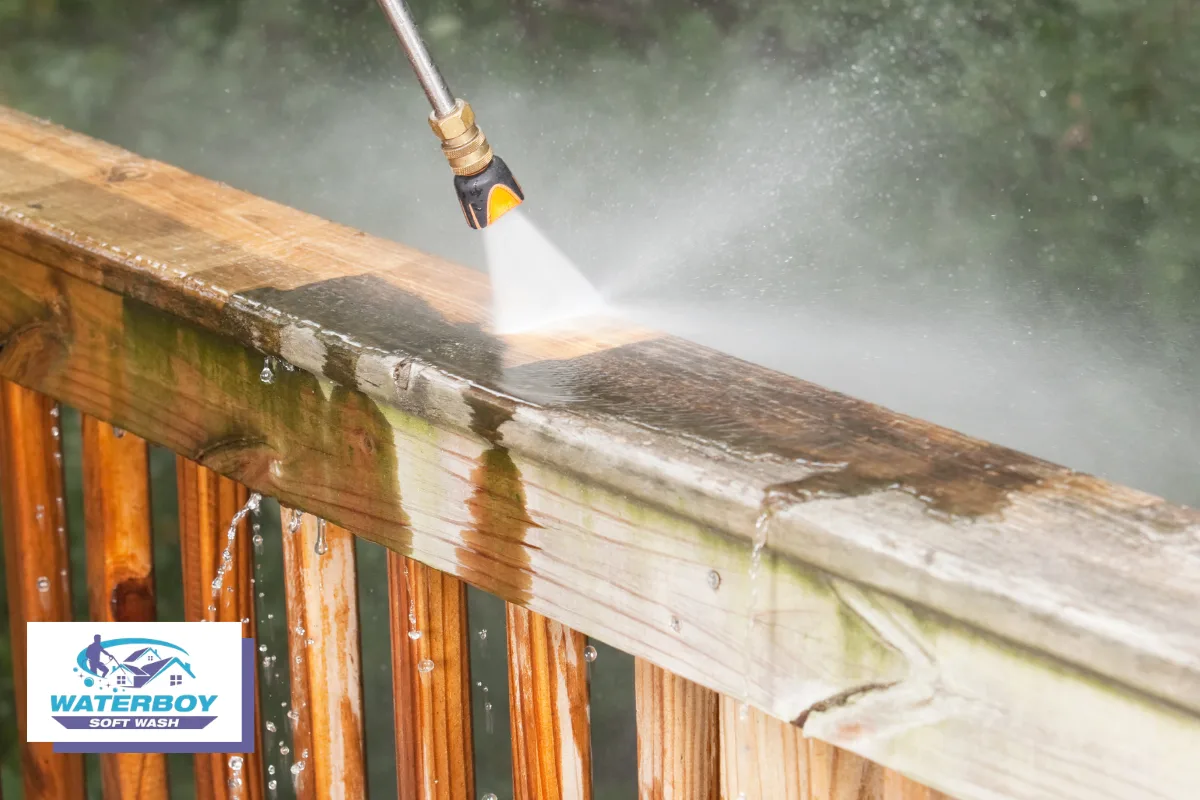
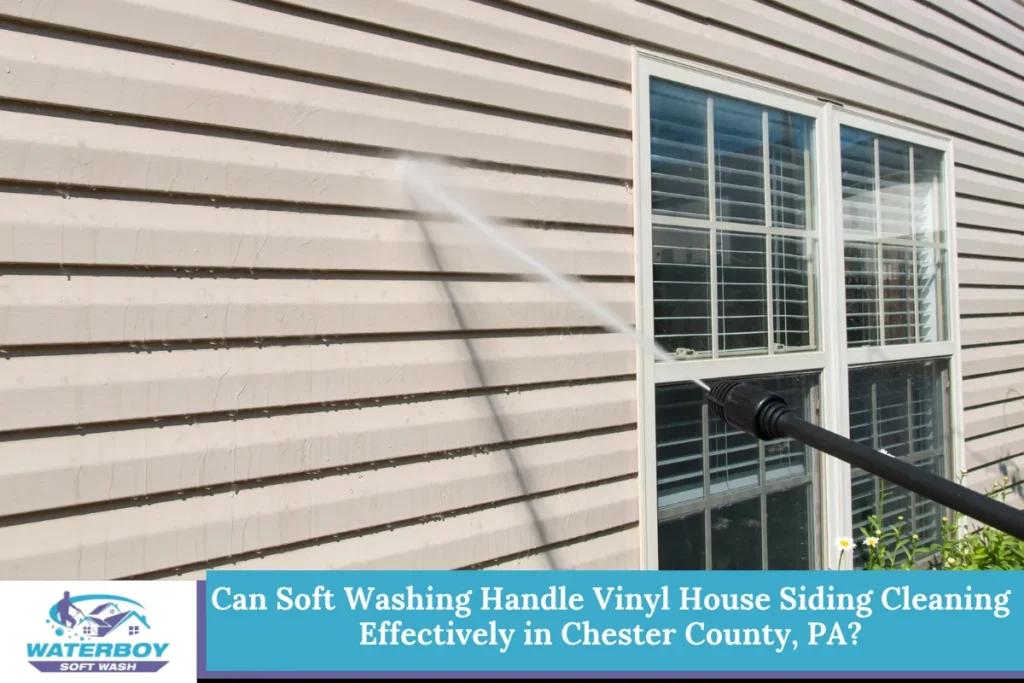
Soft washing is safer for delicate surfaces like composite decking, and it is increasingly the preferred method among professionals working on residential properties. Instead of relying on raw force, a soft wash uses low pressure combined with specialized cleaning solutions to break down staining at a chemical level before rinsing everything away gently.
This approach is especially valuable on railings, older boards with existing wear, and any deck where too much pressure could cause gouging or strip protective coatings. The process relies on surfactants, mild acids, and rust-specific chemistry to do the heavy lifting. By the time the rinse happens, the stain has already been dissolved, and minimal force is needed to carry it off the surface.
Soft washing also makes sense when deck cleaning transitions into house washing around siding, trim, vinyl, and stone accents. These areas are easily damaged by aggressive spray, and a low-pressure approach protects everything from the fascia boards to the door frames. Using eco-friendly products minimizes environmental impact and reduces the chance of harming plants, pets, or local waterways. When stronger cleaners are necessary, protecting surrounding hardscape and garden beds with pre-wetting, tarps, or sheeting keeps the job contained.
Special Considerations for Composite Decking with Rust Stains
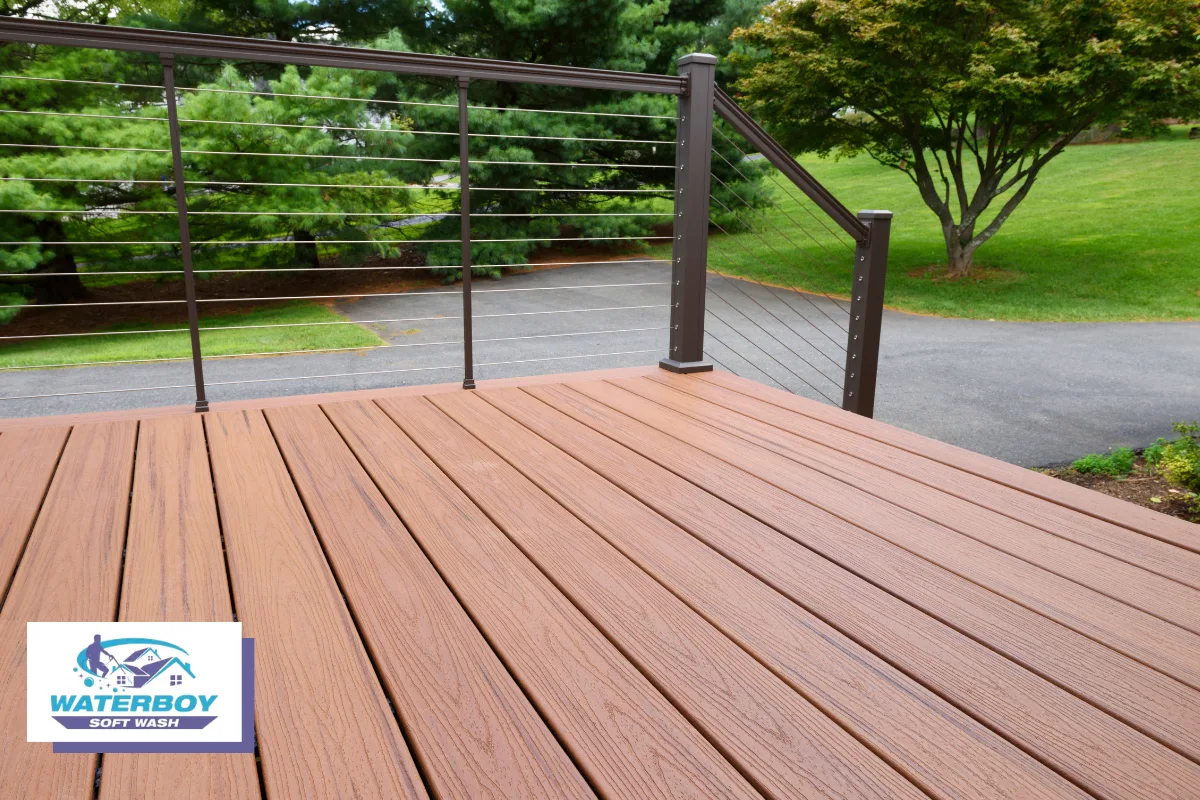
Composite decking has become a popular investment for Chester County property owners who want low-maintenance outdoor living space. When rust appears on these boards, the removal process differs from wood in several important ways.
Many capped composite boards feature a polymer shell that prevents deep absorption. This means most rust is sitting on the surface and often responds well to gentle cleaners before any power washer is needed. However, uncapped composite acts more like wood and is more vulnerable to staining and surface etching if you use the wrong methods or soap formulations.
Manufacturers often set a strict maximum PSI and specify fan tips only. Before you clean, check your composite decking brand's care guidelines. Exceeding those limits or using unapproved chemical solutions can void warranty coverage, leaving you responsible for any resulting damage.
A practical cleaning sequence for composite starts mild and escalates only as needed:
- Begin with dish soap, warm water, and a brush to see if light rust lifts on its own.
- If the stain persists, try a diluted vinegar or lemon juice solution applied directly to the mark.
- Progress to an oxygen-based cleaner designed for composite materials.
- Resort to low-pressure washing only if gentler methods fall short.
Avoid harsh chemicals not labeled for composite decking. Always test any new product in an inconspicuous area first to check for lightening or surface etching before treating the entire deck.
Preventing Rust Stains from Returning After Cleaning
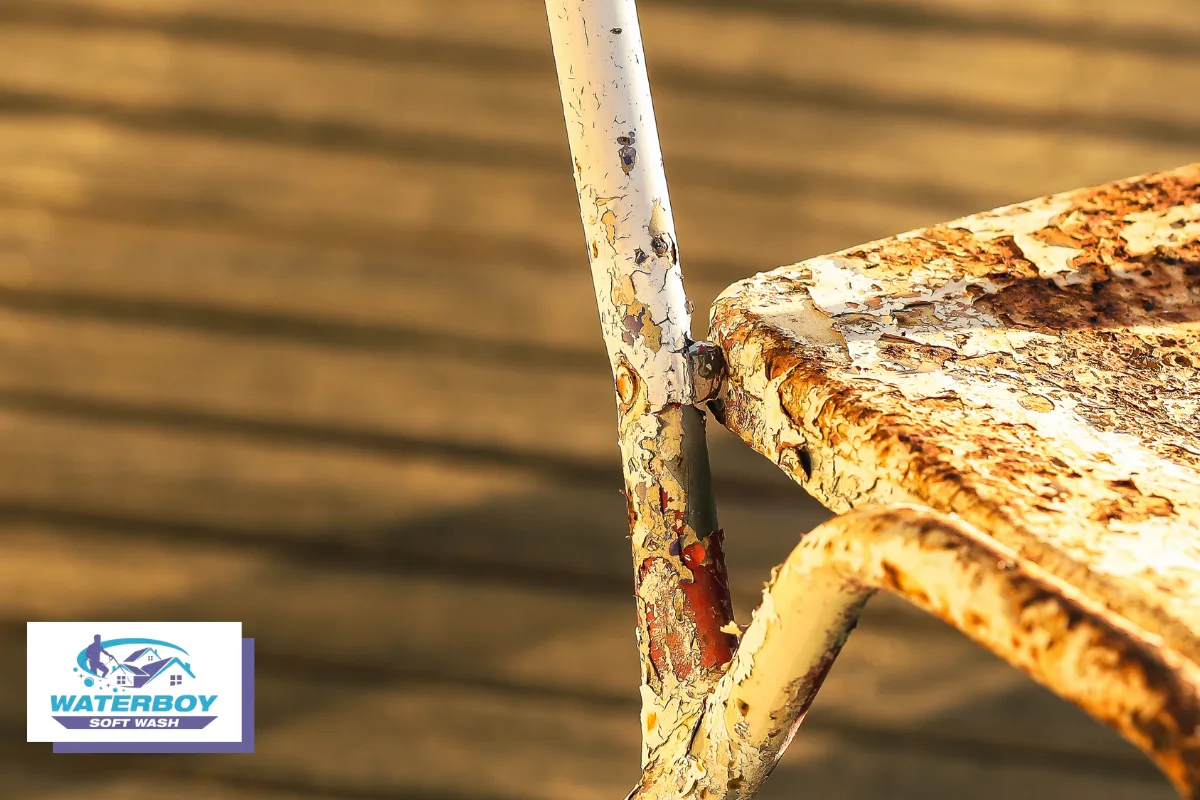
Once your deck is clean, keeping it that way requires a few deliberate habits. Rust returns when the source of iron remains in contact with moisture on the boards.
- Swap bare metal furniture feet for rubber or plastic caps, and add protective pads under grills, planters, and decorative items. Replace heavily corroded fasteners with stainless steel or coated hardware that resists corrosion.
- Rinse the deck after storms, lawn fertilizing, or de-icing to wash away metal particles, soil, oil residue, and debris that may accelerate staining.
- Sealing or staining wood decks after they are fully dry creates a barrier that slows absorption of future rust streaks and other discoloration. Quality sealants also protect against mildew, fading, and moisture damage.
- Cleaning decks at least once a year helps maintain their appearance and catches light rust marks before they become deeply set stains. A schedule of routine exterior cleaning every 12 to 24 months keeps patios, fences, driveways, and the deck itself looking their best.
- Regular cleaning can restore the appearance of decks and patios while helping to enhance curb appeal and property value across the entire property's exterior.
DIY Rust Removal vs. Hiring a Chester County Pressure Washing Professional
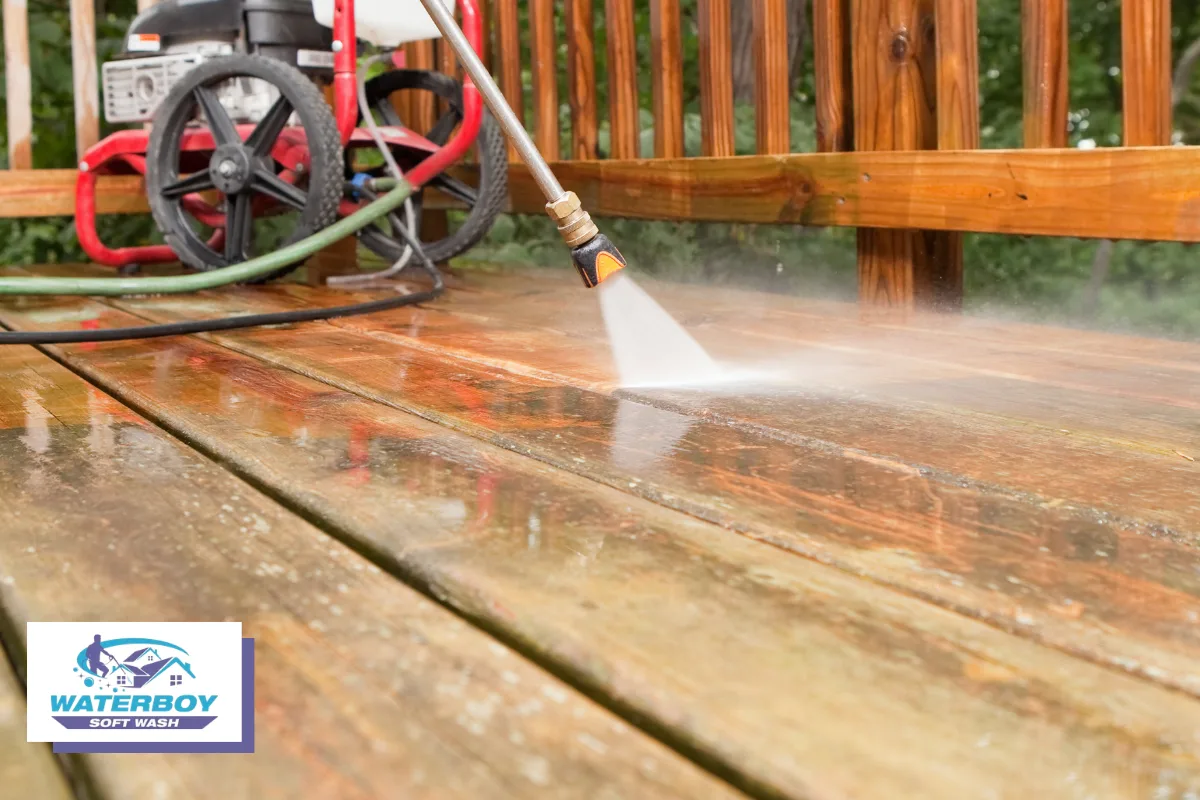
Handling rust removal yourself has clear advantages. The immediate cost is lower, you can schedule the work around your own calendar, and you build useful knowledge about maintaining your outdoor space. For light surface rust on a small deck, a quality stain remover, a brush, and a rented pressure washer can deliver satisfying results.
However, DIY carries risks. Choosing the wrong PSI, selecting an incompatible cleaner, or holding the wand too close can leave visible spray lines, raised grain, or stripped composite caps. Without experience, it is easy to apply too much pressure or miss a critical step in the process.
Professional washing services bring several advantages that matter on tougher jobs:
- Commercial-grade equipment with precise PSI and nozzle control matched to each deck material.
- Access to pro-grade rust removers and eco-friendly products that many retail stores do not carry.
- Knowledge of local runoff and safety guidelines, including Pennsylvania DEP regulations and municipal rules about wastewater containment and chemical discharge.
- Professional power washing minimizes the chance of property damage and prevents costly repairs from damage caused by inexperience.
- Experienced professionals can complete the job efficiently, often handling detail work like spot sanding, board replacement, or restaining as part of a single visit.
Homeowners should consider calling a professional if the deck is large, elevated, structurally aging, or built from high-end composite where warranty language restricts certain cleaning methods. Professional help may be required for deeply embedded rust stains or valuable decks where mistakes are expensive to fix. Experienced professionals bring a depth of expertise that is difficult to replicate with a weekend rental and a trip to the hardware store.
For severe or long-neglected rust staining, a professional evaluation can determine whether the cleaning alone will do the job or whether additional steps like sanding, sealing, or replacing individual boards are necessary to protect your investment for the long term.
Pressure Washing in Chester County, PA – Water Boy Soft Wash
At Water Boy Soft Wash, we proudly serve homeowners throughout Chester County, Pennsylvania, with expert deck, patio, and exterior cleaning solutions tailored to every surface and material. Our team understands that stubborn stains demand more than just high pressure. We use carefully calibrated equipment and deck-safe cleaners, including soft wash techniques, to remove stains without causing unnecessary wear or damage to your property. Whether your deck is wood, composite, or a mix of materials, we know how to restore its appearance and protect its longevity. We treat every customer's home as if it were our own. Call us at (610) 812-7378 or fill out our contact form today for a free quote and let us handle the dirty work so you can enjoy your outdoor space again.
Frequently Asked Questions
Will Rust Stains Come Back After Pressure Washing My Deck?
Rust stains can return if the original source of iron remains in contact with the deck surface. Metal furniture legs, corroded screws, steel planters, and even mineral-rich well water common in Chester County will continue depositing iron particles onto the boards after every rain. The key to lasting results is removing or isolating the rust source after cleaning. Replace corroded fasteners with stainless steel, add rubber caps to furniture feet, and rinse the deck after heavy storms. Applying a quality wood sealer or stain creates an additional barrier. Without these preventive steps, even a professionally cleaned deck will develop new marks within a season or two.
Can I Pressure Wash a Painted Deck That Has Rust Spots?
Painted decks present an extra challenge because the paint layer can trap iron particles beneath it, and aggressive cleaning may peel or chip the finish. Start by testing a small hidden area with your chosen rust remover and low-pressure rinse to see how the paint responds. If the paint is in good condition and well-adhered, a gentle application of an oxalic acid-based cleaner followed by a rinse at 500 to 800 PSI with a wide fan tip usually lifts surface rust without disturbing the coating. If the paint is already flaking or bubbling, you may need to strip, sand, and repaint after rust treatment. In that scenario, consulting a professional ensures the job is done right and the new finish adheres properly.
Is It Safe to Pressure Wash My Deck Near a Pool or Water Feature?
Cleaning a deck adjacent to a pool requires extra caution. Chemical runoff from rust removers, even mild acids like oxalic acid, can alter pool water chemistry, harm filtration systems, or damage surrounding stone and concrete coping. Cover the pool with a tarp or solid pool cover before starting, and direct all rinse water away from the pool edge. If your deck surrounds an in-ground pool, work in sections and use barriers to channel wastewater toward a landscaped area rather than the drain. Pennsylvania environmental guidelines also discourage allowing cleaning chemicals to enter storm drains or waterways, so containment is both a practical and regulatory concern in Chester County.
How Long Should I Wait to Restain My Deck After Rust Removal?
Patience here protects your results. After pressure washing and chemical treatment, wood fibers absorb a significant amount of water and need time to release it before any stain or sealer will bond correctly. Allow a minimum of 24 to 48 hours of drying time in warm, dry weather. If conditions are cool, overcast, or humid, which is common during Chester County's spring and fall seasons, extend that window to 72 hours or more. Test readiness by sprinkling a few drops of water on the surface. If the water beads up, the wood is still too damp. If it absorbs within a few seconds, the boards are ready for staining or sealing.
What Should I Ask a Pressure Washing Company Before Hiring Them?
Before signing with any company, ask a few targeted questions. Find out what PSI range they plan to use on your specific deck material and whether they adjust their methods for wood versus composite boards. Ask whether they pre-treat rust stains with a chemical agent or rely solely on water pressure. Inquire about their insurance coverage and whether they follow local environmental regulations for wastewater containment. Request references from recent deck cleaning projects in Chester County, and confirm whether the estimate includes post-cleaning steps like brightening, neutralizing, or recommending a sealer. A reputable service provider will answer these questions in detail and offer a written estimate before any work begins.
Disclaimer: This article provides general guidance on deck rust stain removal and pressure washing practices relevant to Chester County, PA. Always verify local municipal regulations, manufacturer warranties, and product safety data before beginning any cleaning project on your property.
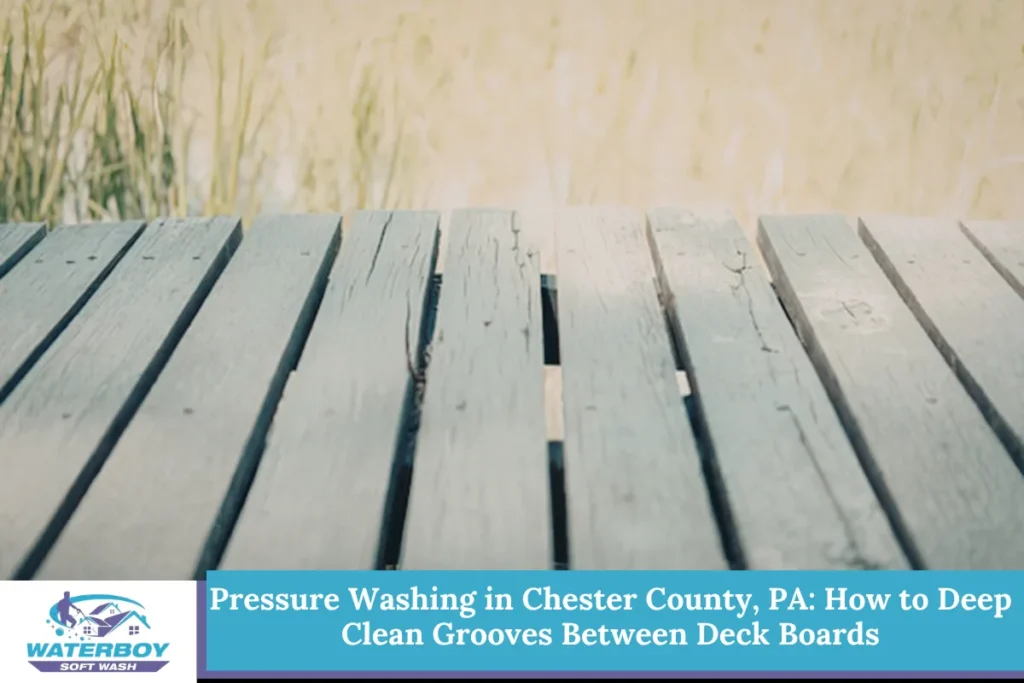
Read Pressure Washing in Chester County, PA: How to Deep Clean Grooves Between Deck Boards