
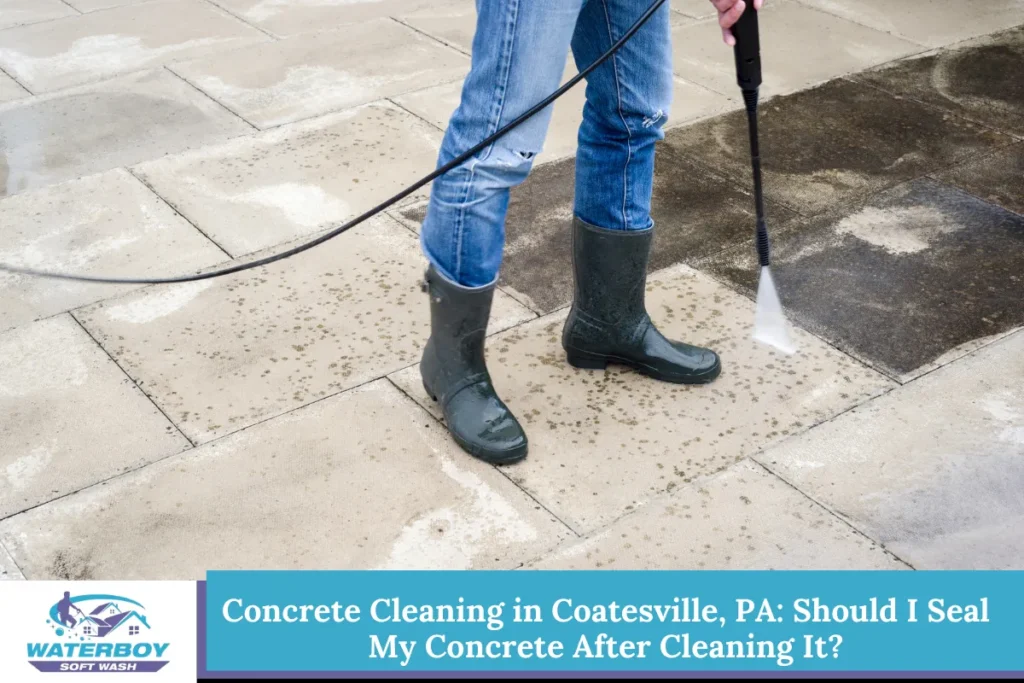

Concrete Cleaning in Coatesville, PA is one of the most requested exterior services for homeowners who want their driveways, patios, sidewalks, and pool decks to look fresh again. Over time, concrete collects oil stains, algae, mildew, tire marks, rust, and dirt. You invest in professional concrete cleaning, the surface looks bright and renewed—and then the question hits: should I seal it now?
If you skip sealing, will stains return faster? Will moisture seep in and cause cracks during Pennsylvania’s freeze-thaw cycles? Or is sealing just an unnecessary upsell?
The answer depends on your surface type, exposure, and long-term goals. In this guide, you’ll learn when sealing makes sense, when it might not, and how proper concrete washing and sealing can protect your investment for years.
What Happens to Concrete in Coatesville’s Climate?
Coatesville experiences humid summers and cold winters. That combination creates specific challenges for exterior concrete surfaces.
Freeze-Thaw Cycles and Surface Damage
When water enters porous concrete and temperatures drop below freezing, the water expands. This expansion can:
- Cause surface spalling (flaking or chipping)
- Widen existing cracks
- Weaken structural integrity
- Shorten the lifespan of driveways and sidewalks
Concrete pressure washing removes contaminants, but it does not change the porosity of the material. Once cleaned, unsealed concrete remains vulnerable to moisture intrusion.
Organic Growth and Staining
Pennsylvania’s humidity encourages:
- Algae
- Mold
- Mildew
- Moss
These growths don’t just discolor surfaces; they can create slippery hazards. Soft washing techniques are often used for delicate areas to remove biological growth safely. However, without a protective barrier, spores can return more quickly.
What Does Concrete Cleaning Actually Remove?
Before discussing sealing, it’s important to understand what professional concrete cleaning does.
The Role of a Concrete Cleaner
A professional-grade concrete cleaner breaks down:
- Oil and grease stains
- Rust marks
- Tire residue
- Organic buildup
- Dirt and pollutants
In many cases, concrete washing involves a combination of detergents and surface cleaning equipment. For heavily soiled areas, concrete pressure washing is used to lift embedded debris. For more delicate or decorative surfaces, soft washing may be preferred.
What Cleaning Does Not Do
Even after thorough cleaning, concrete remains:
- Porous
- Absorbent
- Vulnerable to UV exposure
- Susceptible to staining
Cleaning restores appearance. Sealing protects it.
What Is Concrete Sealing and How Does It Work?
Concrete sealers create a protective barrier that either penetrates the surface or forms a coating on top.
Types of Concrete Sealers
- Penetrating Sealers
- Soak into concrete pores
- Repel water and de-icing salts
- Maintain a natural look
- Acrylic Sealers
- Form a thin protective film
- Enhance color slightly
- Often used on decorative concrete
- Epoxy or Polyurethane Sealers
- Create a thicker coating
- More common in garages or commercial settings
- Provide strong stain resistance
After concrete washing, applying the correct sealer helps reduce moisture penetration and future staining.
Should You Seal After Concrete Pressure Washing?
In most residential cases in Coatesville, sealing after cleaning is recommended—but not always required.
Situations Where Sealing Makes Sense
- Newly cleaned driveways exposed to vehicle fluids
- Patios exposed to heavy rain and shade
- Pool decks prone to algae growth
- Concrete surfaces with minor cracking
- Commercial concrete cleaning projects where appearance and durability matter
Situations Where Sealing May Not Be Necessary
- Temporary cosmetic cleaning before a home sale
- Interior concrete floors not exposed to moisture
- Concrete scheduled for resurfacing soon
The decision comes down to long-term protection versus short-term improvement.
The Benefits of Sealing Concrete in Pennsylvania
1. Moisture Protection
Sealers reduce water absorption. In freeze-prone regions, this dramatically lowers the risk of cracking and surface deterioration.
2. Stain Resistance
Sealed surfaces resist oil, grease, and rust more effectively. Cleanup becomes easier.
3. Mold and Algae Reduction
Although sealers do not prevent growth entirely, they make it harder for organic matter to attach to the surface.
4. Enhanced Appearance
Some sealers enhance color and create a subtle sheen, improving curb appeal.
5. Extended Lifespan
Proper maintenance, including periodic concrete cleaning and sealing, can add years to your driveway or patio.
Timing Matters: When to Seal After Concrete Cleaning
Sealing should never happen immediately after concrete pressure washing.
Why Dry Time Is Critical
Concrete must fully dry before applying sealer. Moisture trapped beneath a sealer can cause:
- Cloudiness
- Peeling
- Poor adhesion
In Coatesville’s climate, drying may take 24 to 72 hours depending on humidity and temperature.
Ideal Conditions for Sealing
- Temperatures between 50°F and 85°F
- No rain forecast for 24 hours
- Low humidity if possible
Professional contractors monitor weather forecasts closely to ensure proper curing.
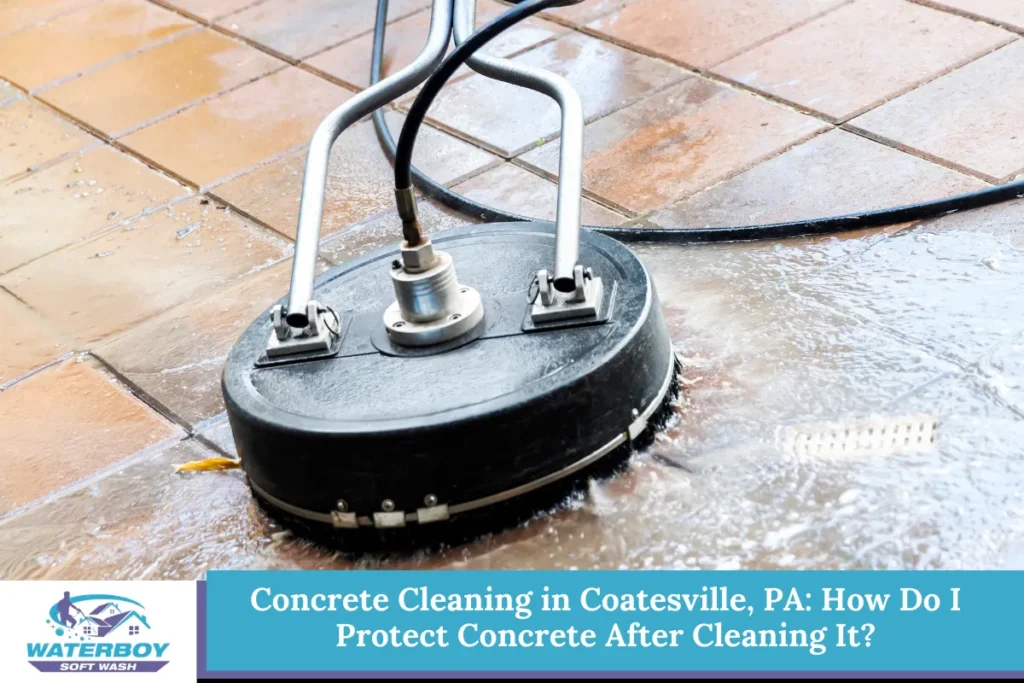
Read Concrete Cleaning in Coatesville, PA: How Do I Protect Concrete After Cleaning It?
Residential vs. Commercial Concrete Cleaning Considerations
Sealing needs differ depending on the property type.
Residential Surfaces
Common areas include:
- Driveways
- Sidewalks
- Patios
- Garage floors
These benefit from moderate sealing schedules every 2–3 years.
Commercial Concrete Cleaning Projects
Businesses often deal with:
- Heavy foot traffic
- Oil spills
- Frequent pressure washing
- Parking lots
Commercial concrete cleaning projects typically require more durable sealers and stricter maintenance schedules to maintain safety and appearance.
Environmental and Local Compliance Considerations
In Pennsylvania, including Chester County, stormwater regulations prohibit improper discharge of wash water into storm drains. During professional concrete washing:
- Wastewater should be managed responsibly.
- Harsh chemicals must be handled according to environmental guidelines.
- Contractors must avoid contaminating waterways.
Reputable providers follow EPA best practices and local stormwater management rules to prevent runoff issues.
Homeowners performing DIY cleaning should also avoid allowing chemical-laden water to enter storm drains.
DIY vs. Professional Concrete Washing and Sealing
DIY Risks
- Overuse of pressure causing etching
- Inconsistent sealer application
- Using the wrong type of concrete cleaner
- Applying sealer on damp surfaces
Improper concrete pressure washing can permanently damage the surface.
Professional Advantages
- Commercial-grade surface cleaners
- Correct pressure calibration
- Appropriate chemical ratios
- Even sealer application
- Knowledge of regional weather patterns
A professional understands when soft washing is more appropriate than high-pressure cleaning, especially on decorative or stamped concrete.
How Often Should Concrete Be Cleaned and Sealed?
Cleaning Frequency:
- Residential driveways: once every 1–2 years
- Shaded patios: annually
- Commercial areas: as needed based on traffic
Sealing Frequency:
- Penetrating sealers: every 3–5 years
- Acrylic sealers: every 2–3 years
- High-traffic commercial areas: possibly sooner
Regular concrete cleaning helps maintain surface condition, while sealing extends durability.
Signs Your Concrete Needs Resealing
Look for:
- Darkening after rain (indicates water absorption)
- Faster staining
- Fading color
- Surface roughness
- Increased organic growth
If water no longer beads on the surface, it may be time to reseal.
Cost Considerations: Is Sealing Worth the Investment?
While sealing adds upfront cost, it can reduce long-term expenses by:
- Preventing early replacement
- Reducing repair frequency
- Minimizing deep stain treatments
Replacing a driveway costs significantly more than routine maintenance.
Final Thoughts on Protecting Your Concrete Investment
Concrete cleaning restores beauty, but sealing protects it. In a climate like Coatesville’s, where moisture and freeze-thaw cycles are common, sealing after cleaning often provides meaningful long-term benefits. While not every surface requires it, most exterior driveways, patios, and commercial walkways benefit from added protection.
If your goal is durability, stain resistance, and extended lifespan, sealing after professional concrete washing is a smart move. Cleaning improves appearance today. Sealing protects tomorrow.
Concrete Cleaning in Coatesville, PA – Water Boy Soft Wash
At Water Boy Soft Wash, we specialize in professional concrete cleaning that restores and protects your property. We understand how Pennsylvania weather affects driveways, sidewalks, patios, and commercial surfaces. Our team uses advanced concrete pressure washing and soft washing methods to safely remove stains, algae, and buildup without damaging your surface.
We don’t just clean—we help you protect your investment. Whether you need residential service or commercial concrete cleaning, we provide reliable results and honest recommendations about sealing. Our equipment and proven techniques ensure long-lasting results.
Call us today at (610) 812-7378 or fill out our contact form to schedule your service. Let Water Boy Soft Wash in Coatesville, Pennsylvania handle your concrete cleaning the right way.
Frequently Asked Questions
1. Does sealing change the color of my concrete?
Some sealers enhance color slightly, especially acrylic-based products. Penetrating sealers typically maintain a natural appearance. If you prefer no visual change, a breathable penetrating sealer is often recommended. Always test a small section before full application. Decorative or stamped concrete may benefit from a color-enhancing sealer, while standard gray driveways often look best with a natural finish. The type of finish you want should guide the product selection.
2. Can sealing make concrete slippery?
Certain film-forming sealers can increase slipperiness when wet. However, professionals can add anti-slip additives during application. Penetrating sealers usually do not create a slick surface because they do not form a thick coating. If you’re sealing pool decks, walkways, or commercial entrances, slip resistance should be discussed before application to ensure safety.
3. Is sealing safe for older concrete?
Yes, but the surface must be in good structural condition. Severely cracked or deteriorating concrete may need repairs before sealing. Sealing damaged surfaces without repair can trap moisture and worsen issues. A professional inspection after concrete cleaning can determine whether minor repairs or crack filling should occur before applying a protective product.
4. Can I seal concrete myself after renting a pressure washer?
While possible, sealing requires careful preparation. The surface must be completely clean and dry. Uneven application can lead to streaks or peeling. Using the wrong product for your climate may also reduce effectiveness. Professionals understand drying times, humidity conditions, and product compatibility. For best results, especially in Pennsylvania’s changing weather, professional application is often more reliable.
5. Will sealing prevent all future stains?
No sealer provides 100% stain prevention. However, sealing significantly reduces how quickly liquids absorb into the surface. Oil, grease, and organic matter are easier to clean when sealed. Maintenance still matters. Regular concrete cleaning combined with resealing every few years offers the best long-term protection.
Disclaimer: This article is for informational purposes only and does not constitute professional construction or legal advice. Always consult a qualified professional for site-specific recommendations and ensure compliance with local and state regulations before performing exterior cleaning or sealing services.
Read Power Washing in Coatesville, PA: Are Electric Washers as Powerful as Gas Washers?